Editorial
Every Woman Matters in the Battle Against Breast Cancer

- /home/u249204778/domains/spectator.com.gh/public_html/wp-content/plugins/mvp-social-buttons/mvp-social-buttons.php on line 27
Warning: Trying to access array offset on false in /home/u249204778/domains/spectator.com.gh/public_html/wp-content/plugins/mvp-social-buttons/mvp-social-buttons.php on line 27
&description=Every Woman Matters in the Battle Against Breast Cancer', 'pinterestShare', 'width=750,height=350'); return false;" title="Pin This Post">
- Share
- Tweet /home/u249204778/domains/spectator.com.gh/public_html/wp-content/plugins/mvp-social-buttons/mvp-social-buttons.php on line 72
Warning: Trying to access array offset on false in /home/u249204778/domains/spectator.com.gh/public_html/wp-content/plugins/mvp-social-buttons/mvp-social-buttons.php on line 72
&description=Every Woman Matters in the Battle Against Breast Cancer', 'pinterestShare', 'width=750,height=350'); return false;" title="Pin This Post">
October is marked as Breast Cancer Awareness Month, a global campaign to increase attention and support for the early diagnosis, treatment, and palliative care of breast cancer.
The campaign aims to raise awareness about the disease’s warning signs, promote regular screenings like mammograms, and provide support for patients and survivors. The pink ribbon serves as a global symbol of hope and support during this time.
So far, organisations have already started reminding women about the importance of breast self-examinations. Free breast cancer screenings are being organised for women, and survivors have also been sharing their experiences to encourage others to know their status.
According to health experts, breast cancer is the most common cancer among women in most countries. The majority of women who die from breast cancer live in low- and middle-income countries, where most cases are diagnosed at late stages due to a variety of factors.
Reports indicate that in low- and middle-income countries, the incidence of breast cancer has been rising steadily due to increased life expectancy, changing reproductive patterns, and the adoption of Western lifestyles.
Although breast cancer can often be cured when detected early and when adequate diagnosis and treatment are available, many cases are detected late, making curative treatment no longer an option.
Last weekend, thousands of Ghanaians joined Breast Care International (BCI), a leading breast cancer advocacy organisation, and its partners in a walk through the streets of Kumasi, echoing a resounding message: “No woman should die from breast cancer because she is poor.”
Painting a picture of the ceremony, our reporter indicated that the city — right from the Post Office at Adum to the revered grounds of Manhyia Palace — was covered in pink and white, the colours of breast cancer, as participants marched under the theme, “A Cure Worth Fighting For.”
The Spectator gives a thumbs up to the Founder and President of BCI, Dr. Mrs. Beatrice Wiafi Addai, who joined the procession with a sobering message: “Breast cancer can be conquered, but we must fight together and save lives, especially those of young women who die needlessly and prematurely.”
She speaks against the stigma and myths that still surround breast cancer and is particularly vocal about the dangers of misinformation and the belief that the disease is caused by witchcraft.
Another message she shares is that men must stand by their wives during diagnosis and treatment rather than abandon them. She added that although over 2,300 women in Ghana die from breast cancer every year, early detection and prompt treatment save lives.
Join our WhatsApp Channel now!
https://whatsapp.com/channel/0029VbBElzjInlqHhl1aTU27


Dear Editor,
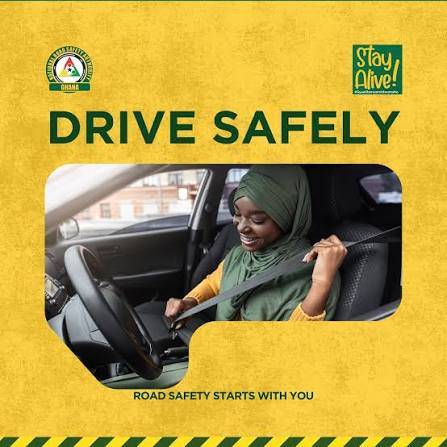
Before we start blaming the government, the authorities and how bad our roads are, perhaps we should first ask ourselves what role we played in making our roads unsafe.
Road safety is often discussed as though it is solely the responsibility of the government and law enforcement agencies, neglecting our roles we play to make the roads unsafe.
While authorities have an important role to play, the behaviour of individual road users remains equally important.
A driver who speed, overtakes recklessly, uses phone while driving or drives when tired is making a decision that could affect many lives.
A motorcyclist who ignored traffic light and also refuse to wear a helmet, passengers who encourage the driver to speed and the pedestrians who crosses a busy road carelessly can also contribute to danger.
We must therefore develop a strong culture of personal responsibilities on our roads.
Drivers should obey speed limit, avoid distractions and ensure their vehicles are road worthy, passengers should also not encourage reckless driving simply because they want to arrive at their destination quickly whiles pedestrians must also exercise greater caution when crossing roads.
At the same time authorities must continue to improve road infrastructures, enforce traffic regulations consistently and educate the public about responsible road use.
Road safety cannot succeed through enforcement alone; it requires change in attitude. If each road user understand that another person’s life may depend on their decision, our road can become safer.
Let us not wait for another crash before we remember the value of life. Thank you for the space.
From Akwasi Aaron
Accra.
Dear Editor,
I was concerned by a point raised during a radio review about the growing expectation among some parents that once their children attend government schools, particularly under the Free SHS programme, the government must provide virtually everything they need.
This mindset deserves serious public discussion.
The introduction of Free SHS has undoubtedly lifted a significant financial burden from parents. Government is already absorbing substantial costs associated with the education of thousands of Ghanaian children. Students in public second-cycle institutions also benefit from provisions such as tuition support, meals and other essential services.
However, Free SHS should not be interpreted as free parenting. A parent should not expect the government to provide every personal item a child needs simply because the child attends a public school. Items such as mattresses, sponges, toiletries, clothing, chop boxes and other personal necessities should, where possible, remain part of the parent’s responsibility.
The same principle applies at the basic-school level. Government has a responsibility to provide quality education and create an enabling environment for children to learn. Parents, however, have an equally important responsibility to support their children’s education and welfare.
Government cannot and should not replace the family. When parents gradually transfer every responsibility to the state, we risk creating a culture of dependency in which citizens expect government to solve every personal problem. That is neither sustainable nor healthy for our development as a nation.
We must therefore appreciate the support government provides while recognising that education is a shared responsibility. Parents must continue to contribute according to their means, schools must do their part, and government must continue providing the necessary educational infrastructure and support. Rather than asking, “What else will government give us?” parents should also ask, “What can I do to support my child’s education?”
Free education is a public investment, not an invitation for parents to abandon their responsibilities. Ghanaians must therefore change the mentality that government must provide everything. The state can carry a significant portion of the burden, but the family must never surrender its responsibility.
Free SHS should make education more accessible not make parenting optional.
From Desmond Aidoo
Sowutuom