Fruitful Living
Eucharistic celebration in honour of Very Rev Fr Kyei


- /home/u249204778/domains/spectator.com.gh/public_html/wp-content/plugins/mvp-social-buttons/mvp-social-buttons.php on line 27
https://spectator.com.gh/wp-content/uploads/2023/10/Very-Rev-Fr-Bernard-Kyei-in-the-middle.jpg&description=Eucharistic celebration in honour of Very Rev Fr Kyei', 'pinterestShare', 'width=750,height=350'); return false;" title="Pin This Post">
- Share
- Tweet /home/u249204778/domains/spectator.com.gh/public_html/wp-content/plugins/mvp-social-buttons/mvp-social-buttons.php on line 72
https://spectator.com.gh/wp-content/uploads/2023/10/Very-Rev-Fr-Bernard-Kyei-in-the-middle.jpg&description=Eucharistic celebration in honour of Very Rev Fr Kyei', 'pinterestShare', 'width=750,height=350'); return false;" title="Pin This Post">
Very Rev Fr Bernard Kyei, the Priest in-charge of the St John of God Catholic Church, Amrahia, in the Adentan Municipality, has commemorated his 15th priestly ordination with a Eucharistic celebration in gratitude to God.
The celebrant, who was joined by six other priests, said he would forever remain grateful to God who has found him worthy to serve in his vineyard.
Very Rev Fr Edmund Donkor- Banie, the Parish Priest of St John the Evangelist Catholic Church, Adentan, in his homily, said though Fr Kyei had the desire to become an engineer, God, the arbiter of our lives, chose him to preach the gospel to all the ends of the world.
He said just as Jesus Christ commissioned his disciples to preach the word of God, so has God chosen the celebrant to work for the salvation of souls.
He described the priesthood vocation as an enjoyable one which has offered the ministers of God the opportunity to raise the cup of salvation and call on the name of God.
He reminded Fr Bernard Kyei that irrespective of the challenges and the difficulties in his ministry, he should remember that Jesus had gone through myriad of sufferings, pains, humiliation and eventually death on the cross for our salvation.
He called on Christians to persevere in prayer and also pray for the priest to enable them to carry out their pastoral work on earth.
He prayed that God would continue to bless, protect and direct the ministers of the gospel to work according to his purpose.
By Raymond Kyekye

Fruitful Living
Environmental stewardship is an act of worship: The Islamic response to climate change, environmental degradation (Part 3)

Within the Ghanaian context, environmental degradation has reached alarming proportions.
The destruction of forests, pollution of major rivers, indiscriminate dumping of refuse, bushfires, coastal erosion, and rapid urban expansion continue to undermine public health, agricultural productivity, and economic resilience (Environmental Protection Agency Ghana, 2024).
Particularly concerning is the widespread contamination of water bodies through illegal mining activities, which has rendered several rivers unsafe for domestic use and increased the cost of water treatment. These realities illustrate the tangible consequences of fasād described in the Qur’an more than fourteen centuries ago.
Islam does not merely prohibit environmental destruction; it encourages believers to become agents of restoration (iṣlāḥ). The Qur’an consistently contrasts corruption with reform, calling believers to promote justice, preserve creation, and contribute positively to society.
Environmental restoration through reforestation, river conservation, responsible waste management, and sustainable agriculture therefore constitutes an important dimension of iṣlāḥ.
Every effort to restore degraded ecosystems is not only a contribution to national development but also an act of obedience to Allah.
Understanding environmental degradation as fasād fundamentally reshapes the Muslim response to today’s ecological crises.
Pollution is no longer viewed merely as poor sanitation, nor deforestation as simply an economic issue. They become moral failures that violate humanity’s covenant as Khalifah and threaten the balance established by Allah.
This ethical perspective provides a compelling foundation for addressing one of Ghana’s most pressing environmental challenges—illegal mining, commonly known as galamsey-which represents one of the clearest manifestations of environmental corruption in contemporary society.
Illegal mining (Galamsey): An Islamic and national crisis
Among the many environmental challenges confronting Ghana today, none has generated greater national concern than illegal small-scale mining, popularly known as galamsey.
Although mining has contributed significantly to Ghana’s economic development for decades, illegal mining has evolved into a major environmental, social, and governance crisis.
The indiscriminate use of heavy machinery, excavation of farmlands, destruction of forest reserves, and pollution of rivers with mercury and other toxic substances have left lasting scars on the nation’s natural resources.
Beyond its environmental consequences, galamsey raises profound moral and ethical questions that demand reflection from an Islamic perspective.
Ghana continues to experience substantial forest loss due to illegal mining, illegal logging, agricultural expansion and human settlement.
The degradation of forest reserves weakens biodiversity conservation, reduces carbon sequestration, and increases vulnerability to climate-related disasters such as flooding and drought (Forestry Commission Ghana, 2024).
The environmental cost of illegal mining is staggering. Rivers that once supplied clean drinking water and supported fishing communities have become heavily polluted. Productive agricultural lands have been rendered infertile, forests have been cleared indiscriminately, and biodiversity has suffered extensive loss.
These developments threaten food security, increase the cost of water treatment, reduce agricultural productivity, and compromise the health and livelihoods of millions of Ghanaians (United Nations Development Programme [UNDP], 2023; Environmental Protection Agency Ghana, 2024).
Climate resilience is also weakened by illegal mining. Forests serve as important carbon sinks, regulate rainfall patterns, protect watersheds, and reduce soil erosion. Their destruction accelerates land degradation and increases communities’ vulnerability to flooding and drought.
Consequently, the environmental damage caused by galamsey extends far beyond mining sites, affecting entire ecosystems and future generations.
From an Islamic standpoint, such destruction constitutes a clear violation of humanity’s responsibility as Khalifah. Allah entrusted human beings with the care of the earth, not its reckless exploitation.
While Islam recognises the legitimacy of earning a lawful livelihood through commerce, agriculture, industry, and the responsible extraction of natural resources, these activities must be conducted within the limits of justice, public welfare, and environmental responsibility.
Economic benefit can never justify the destruction of Allah’s creation or the endangerment of human life.
The Qur’an repeatedly condemns those whose pursuit of worldly gain results in widespread destruction. Allah says, “And when he goes away, he strives throughout the land to cause corruption therein and destroy crops and animals.
And Allah does not like corruption” (Qur’an 2:205, Sahih International). Although revealed in a broader ethical context, this verse powerfully illustrates the destructive consequences of human greed.
The deliberate destruction of fertile land, vegetation, water bodies, and wildlife for short-term financial gain closely reflects the type of corruption condemned by the Qur’an.
The Prophet Muhammad (peace be upon him) established another enduring principle when he declared, “There should be neither harming nor reciprocating harm” (Sunan Ibn Majah, Hadith 2341; Al-Muwatta of Imam Malik, Hadith 1461).
This legal maxim (lā ḍarar wa lā dirār) has become one of the foundational principles of Islamic jurisprudence. It requires Muslims to avoid actions that cause unjustifiable harm to individuals or society.
Illegal mining clearly violates this principle because its consequences extend far beyond those directly involved. Entire communities lose access to clean water, farmers lose their livelihoods, children face long-term health risks, and future generations inherit degraded ecosystems.
The crisis of galamsey also illustrates the relevance of the higher objectives of Islamic law (Maqāṣid al-Sharī’ah). The preservation of life (Hifz al-Nafs) is threatened when polluted rivers expose communities to toxic chemicals and waterborne diseases.
The preservation of wealth (Hifz al-Māl) is undermined through the destruction of farms, fisheries, and other sustainable sources of income. The preservation of intellect (Hifz al-‘Aql) is endangered by exposure to hazardous substances such as mercury, which can impair neurological development and cognitive function.
The preservation of lineage (Hifz al-Nasl) is compromised as environmental degradation jeopardises the health, livelihoods, and welfare of future generations. Even the preservation of religion (Hifz al-Dīn) is affected because Islam calls believers to uphold justice, fulfil trusts, and refrain from causing corruption on earth. Thus, galamsey undermines every major objective that Islamic law seeks to protect.
The issue is not solely an environmental problem but also a governance challenge. Weak enforcement of environmental regulations, corruption, inadequate land-use planning, and economic hardship have all contributed to the persistence of illegal mining.
Ghana has enacted laws to regulate mining activities and protect the environment, including the Minerals and Mining
Act, 2006 (Act 703), as amended, and the Environmental Protection Act, 2025 (Act 1124).
Furthermore, Article 41(k) of the 1992 Constitution of Ghana places a civic duty on every citizen “to protect and safeguard the environment. Effective implementation of these legal frameworks requires political commitment, institutional integrity, and active public participation.
Fruitful Living
Environmental stewardship is an act of worship: The Islamic response to climate change, environmental degradation (Part 2)
Clean air and safe water protect human life; fertile land supports livelihoods and wealth; a healthy environment safeguards future generations; and responsible use of natural resources enables communities to fulfil their religious obligations without unnecessary hardship.
Conversely, environmental degradation threatens all five objectives by exposing populations to disease, undermining food security, destroying economic opportunities, and jeopardising the welfare of future generations.
This understanding transforms environmental stewardship from an optional charitable activity into a religious obligation. Caring for creation is an expression of gratitude to Allah, fulfilment of the trust of Khalifah, and practical implementation of the higher objectives of Islamic law.
Muslims are, therefore, called not only to avoid harming the environment but also to actively restore and protect it. Every tree preserved, every river protected, every piece of land rehabilitated, and every effort to promote sustainable development as it becomes part of fulfilling humanity’s covenant with Allah.
Recognising ourselves as Khalifah fundamentally changes how we view the environment. Rather than seeing nature as a limitless resource for exploitation, Islam teaches believers to regard it as a sacred trust to be preserved with wisdom, justice, moderation, and compassion. This theological foundation provides the basis for understanding why environmental destruction is condemned in Islam as a form of corruption on earth.
Environmental degradation as fasād (corruption on earth)
One of the most profound contributions of Islam to contemporary environmental discourse is its moral framing of ecological destruction. While modern environmental science describes pollution, deforestation, biodiversity loss, and climate change in technical terms, the Qur’an characterises actions that disrupt the natural order as fasād—corruption, disorder, or mischief on the earth. This concept elevates environmental degradation from a scientific and policy concern to a moral and spiritual issue for which humanity will ultimately be accountable before Allah.
The Qur’an unequivocally warns against causing corruption after the earth has been set in order. Allah says, “And do not cause corruption upon the earth after its reformation. And invoke Him in fear and aspiration. Indeed, the mercy of Allah is near to the doers of good” (Qur’an 7:56, Sahih International). This verse portrays the earth as a divinely ordered system, created with balance, harmony, and purpose. Human activities that destroy this balance—whether through pollution, reckless extraction of natural resources, or unsustainable consumption—represent violations of Allah’s intended order.
The consequences of such misconduct are vividly described in another powerful verse: “Corruption has appeared throughout the land and sea by what the hands of people have earned so He may let them taste part of the consequence of what they have done that perhaps they will return [to righteousness]” (Qur’an 30:41, Sahih International).
This verse is remarkably relevant to contemporary environmental challenges. Climate change, contaminated rivers, desertification, coastal erosion, declining biodiversity, and increasingly frequent floods are not merely natural phenomena; they are, in many cases, the cumulative consequences of human behaviour. The Qur’an therefore invites humanity to reflect upon these environmental crises as opportunities for repentance, reform, and responsible stewardship rather than continuing on a path of ecological destruction.
The principle of environmental balance (Mīzān) is another defining feature of the Islamic worldview. Allah declares, “And the heaven He raised and imposed the balance, that you not transgress within the balance. And establish weight in justice and do not make deficient the balance” (Qur’an 55:7–9, Sahih International). Although these verses emphasize justice in human affairs, many Muslim scholars also understand Mīzān as reflecting the harmony embedded within creation (Nasr, 1996). Every ecosystem functions through delicate relationships among living organisms, water, soil, forests, wildlife, and the atmosphere. Human activities that upset this balance ultimately threaten both nature and human survival.
Environmental pollution provides a clear example of fasād in practice. Across many urban centres, indiscriminate disposal of solid waste clogs drainage systems, contributes to flooding, contaminates water bodies, and creates breeding grounds for disease. Plastic waste has become one of the most visible environmental threats, polluting rivers, beaches, and agricultural land while endangering aquatic life. Such practices are fundamentally inconsistent with Islamic teachings, which emphasise cleanliness, public welfare, and the prevention of harm.
According to the Intergovernmental Panel on Climate Change (2023), West Africa is projected to experience increasing temperatures, erratic rainfall patterns, prolonged droughts and more frequent extreme weather events. These changes threaten agricultural productivity, food security, public health and economic development, particularly in climate-sensitive economies such as Ghana.
The Prophet Muhammad (peace be upon him) consistently encouraged behaviours that protected public spaces and safeguarded community health. He said, “Removing harmful things from the road is an act of charity” (Sahih al-Bukhari, Hadith 2989; Sahih Muslim, Hadith 1009).
Although this Hadith refers to clearing pathways of hazards, its underlying principle extends naturally to contemporary environmental responsibilities. Proper waste disposal, maintaining clean public spaces, preventing pollution, and protecting shared resources all embody this Prophetic ethic of removing harm from society.
Islam further condemns extravagance and wastefulness, both of which contribute significantly to environmental degradation. Allah commands, “Eat and drink, but be not excessive. Indeed, He likes not those who commit excess” (Qur’an 7:31, Sahih International).
Modern patterns of overconsumption, excessive plastic use, food waste, and unsustainable exploitation of natural resources stand in stark contrast to this Qur’anic call for moderation. Sustainable living is, therefore, not simply an environmental strategy; it is an expression of Islamic ethics that reflects gratitude for Allah’s blessings.
By Imam Alhaji Saeed Abdulai
The author is the Chief Imam of Kpone Katamanso Municipal and a certified Counsellor and Governance Expert.

 Entertainment1 week ago
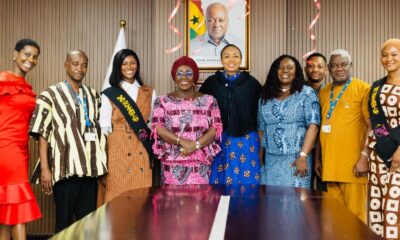
Miss Ghana 2026 winners presented to Tourism Minister
- News1 week ago
Eight Injured after Toyota Hiace somersaults on Tema–Akosombo highway
- Features1 week ago
Environmental stewardship is an act of worship: The Islamic response to climate change, environmental degradation (Part 3)