News
Emotional wounds from stigma, discrimination painful than cancer — Mrs Kumah-Dzagah


- /home/u249204778/domains/spectator.com.gh/public_html/wp-content/plugins/mvp-social-buttons/mvp-social-buttons.php on line 27
https://spectator.com.gh/wp-content/uploads/2025/10/Georgina-Kuma-Dzagah-2-600x600.jpg&description=Emotional wounds from stigma, discrimination painful than cancer — Mrs Kumah-Dzagah', 'pinterestShare', 'width=750,height=350'); return false;" title="Pin This Post">
- Share
- Tweet /home/u249204778/domains/spectator.com.gh/public_html/wp-content/plugins/mvp-social-buttons/mvp-social-buttons.php on line 72
https://spectator.com.gh/wp-content/uploads/2025/10/Georgina-Kuma-Dzagah-2-600x600.jpg&description=Emotional wounds from stigma, discrimination painful than cancer — Mrs Kumah-Dzagah', 'pinterestShare', 'width=750,height=350'); return false;" title="Pin This Post">
The Executive Secretary of the Breast Cancer Society of Ghana (BCSG), Mrs Georgina Kumah-Dzagah, has revealed that the emotional wounds caused by stigma and discrimination are often more painful than the physical suffering of the cancer disease itself.
In an interview with The Spectator in Accra, Mrs Kumah-Dzagah said that while the surgeries, chemotherapy, and radiotherapy were challenging, the reactions of people around her left deeper scars on her heart than the illness did on her body.
“For many survivors like me, the deepest wound does not come from the cancer itself, it comes from how people respond — the silence from people I once called family, the friends who drifted away as if cancer was contagious, and the stares at social gatherings — those were far more painful,” she said.
According to her, stigma and misconceptions about breast cancer leave many survivors feeling isolated and unloved at a time when they need the most care and encouragement.
“Stigma is cruel because it isolates survivors when we need love the most. It takes away hope, dignity, and the strength we fight so hard to hold on to,” she added.
Mrs Kumah-Dzagah urged the public to understand that breast cancer was not a death sentence and certainly not contagious, stressing that patients and survivors deserve empathy, not avoidance.
Survivors, she said, need encouragement, not judgment, and that they need people to remind them that they are still whole, valuable, and capable of living fully.
She also encouraged survivors to be proud of their scars, describing them as symbols of courage and endurance, saying every scar is proof of survival, not a mark of shame.
Mrs Kumah-Dzagah called on families, friends, and the wider public to offer emotional support to breast cancer survivors, noting that even small gestures of kindness can help restore confidence and hope.
She urged stakeholders to fight not only the disease but also the stigma surrounding it.
By Esinam Jemima Kuatsinu
Join our WhatsApp Channel now!
https://whatsapp.com/channel/0029VbBElzjInlqHhl1aTU27


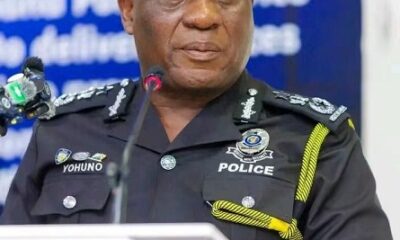


The Ghana Police Service, through the Motor Traffic and Transport Department (MTTD), will commence full implementation of its automated traffic law enforcement programme, TRAFFITECH-GH, from October 1, 2026.
According to the Service, the programme forms part of efforts to address indiscipline on Ghana’s roads and improve compliance with road traffic laws and regulations.
TRAFFITECH-GH will use cameras and Personal Data Assistant (PDA) devices to detect traffic offences and support the enforcement of road traffic regulations.
Under the programme, detected offences will be reviewed and Electronic Notices of Violation (ENV) issued to vehicle owners or drivers through SMS. The notice will indicate the offence committed and the prescribed fine.
The Service has therefore urged all motorists, drivers and vehicle owners to comply with road traffic regulations and support the implementation of TRAFFITECH-GH to promote safer roads and reduce road traffic crashes and casualties.
By Edem Mensah-Tsotorme

Entrepreneur, Henry Brew Gardner has officially declared his intention to contest for the position of Agona West Constituency Youth Organizer of the National Democratic Congress (NDC) in the upcoming constituency elections.
In a declaration statement, Mr. Gardner said he is stepping forward with humility, courage and commitment to the progress of the constituency.
“I am stepping forward because Agona West deserves a Youth Wing that is active, united, organized, visible, disciplined, and ready to work,” he stated.
According to him, his decision to serve the NDC in Agona West is not for personal glory but a call to service, to unite the youth, strengthen the grassroots and build a formidable youth front capable of winning elections.
“Our youth are not merely the future — we are the energy, strength, voice, and engine of our party today. We must therefore create a youth wing where every young person feels valued, heard, represented, and empowered to contribute,” he added.
Mr. Gardner said he believes in leadership that listens, engages, builds bridges and puts collective interest above personal ambition.
He outlined his vision to organize the grassroots, mobilize the youth, strengthen structures, promote unity, identify opportunities, support young people and build a stronger political force in every branch and ward of Agona West.
“I am not coming to divide. I am coming to unite. I am not coming to compete with our youth. I am coming to work with them. I am not coming for a title. I am coming to serve,” he declared.
He called for prayers, support and guidance, rallying the youth with the message: “Agona West Youth, Our Time Is Now!”
By Edem Mensah-Tsotorme

 Entertainment1 week ago
Sarkodie to SarkNation: You don’t have to tear someone down to prove your loyalty
- Entertainment1 week ago
“Without principle, advice is just an opinion” – Stonebwoy replies Sarkodie
- Entertainment4 days ago
Fiifi Coleman Productions adapt ‘I Told You So’ stage play into feature film