Hot!
ECOWAS Committee of Chiefs of Defence Staff to meet in Accra today

- /home/u249204778/domains/spectator.com.gh/public_html/wp-content/plugins/mvp-social-buttons/mvp-social-buttons.php on line 27
https://spectator.com.gh/wp-content/uploads/2023/08/FB_IMG_1692262213998.jpg&description=ECOWAS Committee of Chiefs of Defence Staff to meet in Accra today', 'pinterestShare', 'width=750,height=350'); return false;" title="Pin This Post">
- Share
- Tweet /home/u249204778/domains/spectator.com.gh/public_html/wp-content/plugins/mvp-social-buttons/mvp-social-buttons.php on line 72
https://spectator.com.gh/wp-content/uploads/2023/08/FB_IMG_1692262213998.jpg&description=ECOWAS Committee of Chiefs of Defence Staff to meet in Accra today', 'pinterestShare', 'width=750,height=350'); return false;" title="Pin This Post">
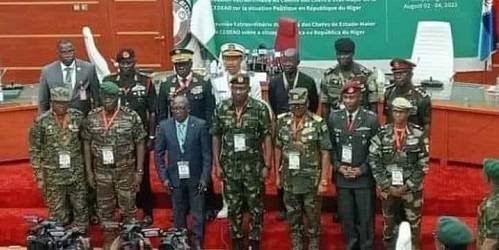
Economic Community of West African States (ECOWAS) Committee of Chiefs of Defence Staff is set to begin its meeting today, Thursday, August 17, in Accra.
The emergency two-day summit seeks to finalise plans for the deployment of the standby force to Niger. The West African regional bloc revealed its decision to assemble a standby force while working on other diplomatic means to resolve the crisis in Niger.
Soldiers in the West African country of Niger announced a coup on national TV, on July 27.
They said they had dissolved the constitution, suspended all institutions and closed the nation’s borders. President Mohamed Bazoum was also held captive and is expected to face charges of high treason. ECOWAS had initially given the junta a week’s ultimatum to return the country to constitutional rule or risk military action.
Following the deadline, the regional bloc agreed to create a standby force for the military intervention. Already some countries including Ivory Coast have agreed to provide troops for the force.
However, some leaders of countries like Nigeria and Ghana are facing criticisms from the opposition who do not approve of the use of a military intervention.
Reacting to ECOWAS’ decision to assemble a force, security analyst Rtd Colonel Festus Aboagye, on Tuesday, said that the bloc may take a while to deploy a military force to Niger in its attempt to restore constitutional rule.
He explained that a standby force relies on contributions from member states adding that some countries do not have enough troops or assets to provide.
Credit: Myjoyonline.com


The University of Ghana Medical Centre (UGMC) has disputed claims made on social media by comedian Michael Blackson concerning the treatment given to his late mother, saying a review found that the allegations did not accurately reflect what happened during her stay at the hospital.
In a statement issued in Accra on August 5, 2026, the management of UGMC expressed condolences to Mr. Blackson and his family over the death of his 83-year-old mother, who died at the facility on July 16, 2026.
The hospital said it had taken the concerns raised by Mr. Blackson seriously and conducted a thorough review in line with its clinical and administrative procedures.
According to the statement, the facts presented by Mr. Blackson on social media contained “numerous inaccuracies” and did not accurately reflect the medical care provided to his mother.
UGMC explained that she was referred to the facility from another hospital and received treatment there from May 27 to July 16, 2026, a period of about eight weeks.
The hospital stated that it would not release details of her diagnosis, treatment, medical records or other aspects of her care because it had a duty to protect patient confidentiality, even after death.
It said the decision was intended to respect the dignity of the deceased and the privacy of her family.
UGMC further stated that all clinical decisions at the facility are made by qualified healthcare professionals based on medical judgment, established standards of care and the best interests of the patient.
The statement added that such decisions are made in consultation with authorised family representatives where necessary and that billing and financial procedures are governed by institutional policies and are separate from clinical decision-making.
The hospital noted that it values feedback from patients and their families and considers both positive and negative comments important for improving the quality of care.
Mr. Blackson had earlier used social media to criticise the care his mother received at UGMC, prompting the hospital’s response.
By: Jacob Aggrey
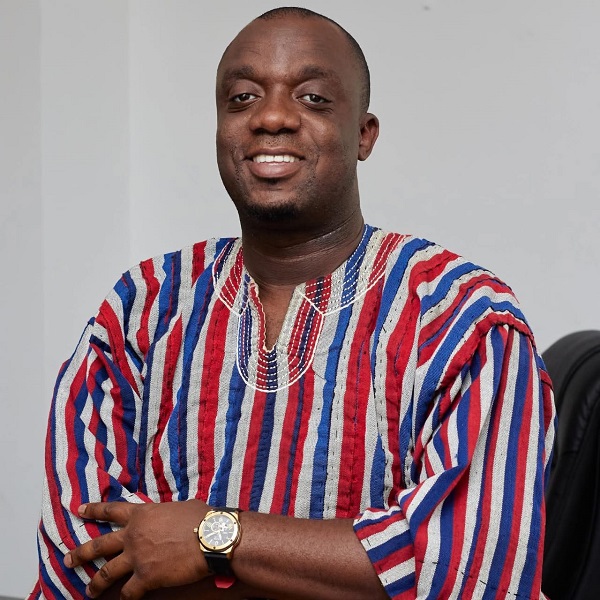
The New Patriotic Party (NPP) has directed all aspirants campaigning in the Greater Accra Region to suspend their campaign activities on August 5 and 6 and instead mobilise supporters for the party’s planned “Democracy Under Attack” demonstration.
The directive was issued by the party’s National Steering Committee in a statement signed by the NPP General Secretary, Justin Kodua Frimpong, on Tuesday.
According to the statement, the decision forms part of efforts to ensure a strong turnout for the demonstration, which is scheduled for Thursday, August 6, 2026.
The party said the protest would begin at 5:00 a.m., with participants expected to gather at the Supreme Court in Accra.
It further directed Regional, Constituency and Polling Station Executives in Greater Accra to work closely to mobilise members and supporters for the event.
“The National Steering Committee is calling on all aspirants currently campaigning across the Greater Accra Region to temporarily suspend their campaign activities on the 5th and 6th of August and join in mobilising support for the upcoming demonstration,” the statement noted.
The NPP appealed to party members and supporters to remain peaceful, disciplined and orderly throughout the protest.
The demonstration forms part of the party’s response to concerns it has raised over issues relating to Ghana’s democratic governance and the justice system.
The NPP leadership expressed confidence that party members would cooperate fully to ensure a successful and peaceful event.
By: Jacob Aggrey