News
Don’t use face shield without nose masks

The use of face shield is gradually gaining root in the country as some use it as facial protection to prevent the coronavirus disease (COVID-19).
It has now become more fashionable for people to use the face shield, especially women who think that because the shield is a transparent plastic cover, their makeup could still be visible.
While some say they feel more comfortable in the face shield compared with the nose mask, others claim they cannot wear the nose mask because of underlying medical conditions hence the use of the face shield only or none at all.
However, the Ghana Medical Association (GMA) and the Ghana Chapter of the West African College of Surgeons (WACS) have expressed concern over the use of face shield without masks as protection from COVID-19 and have described the practice as “very dangerous.”
In a press statement jointly signed by Prof. Peter Donkor, 1st Vice-President and Country Representative of WACS and Dr Frank Ankobea, President of GMA, the two bodies have warned the public to desist from that practise with immediate effect as it would rather lead to increased cases of COVID-19 in the country.
Although the face shield covers the face, it does not wrap around the face nor extend below the chin but there is space at the sides, the top and the bottom. The shield is not close to the face; therefore, it makes the wearer vulnerable to contracting the virus as it is spread through droplets.
Instead of using the face shield, members of the GMA and WACS have advised the public to rather use nose masks at all times since according to scientific evidence, the use of face shield alone (without a nose mask) does not protect the user from COVID-19 as there is potential airborne spread of the virus.
The statement again urged the public to disregard “unsubstantiated reports on some social media platforms about a decrease in blood oxygen concentration as well as a buildup of carbon dioxide when one uses a mask” because as doctors, they wear face masks all the time during work but have not observed any such thing.
The Spectator commends the GMA and WACS for their timely education on this practice as the public is ignorant of the dangers associated with using face shield without a mask and pleads with the public to adhere strictly to this directive by wearing the nose masks at all times.
Although the wearing of nose masks is now mandatory in Ghana some people still refuse to comply with the directive given by the President, Nana Addo Dankwa Akufo-Addo and their actions endanger the lives of others.
We fervently appeal to the authorities to ensure that this directive is strictly adhered to, to ensure public health, safety and protection.
Organisations, companies, institutions and shop owners among others should also enforce the “No mask-No entry” policy to help curb the spread of the virus which is increasing at an alarming rate. Currently, confirmed cases are 25,430 with 21, 511 recoveries/discharges and 139 deaths.
As an individual, there is the need to cooperate and once you step out of your home ensure that you wear a nose mask, even if you use a face shield.
Also, ensure that you wash your reusable nose mask regularly and iron it and clean or disinfect face shield after use. If you use a disposable nose mask wrap it well with tissue after use and dispose of it appropriately in a bin.
Remember, COVID-19 is no respecter of person so besides the wearing of face mask and shield, observe social distancing, wash your hands regularly with soap under running water, use sanitiser, and avoid shaking hands.
So, use both the face shield and nose mask as protection from COVID-19.


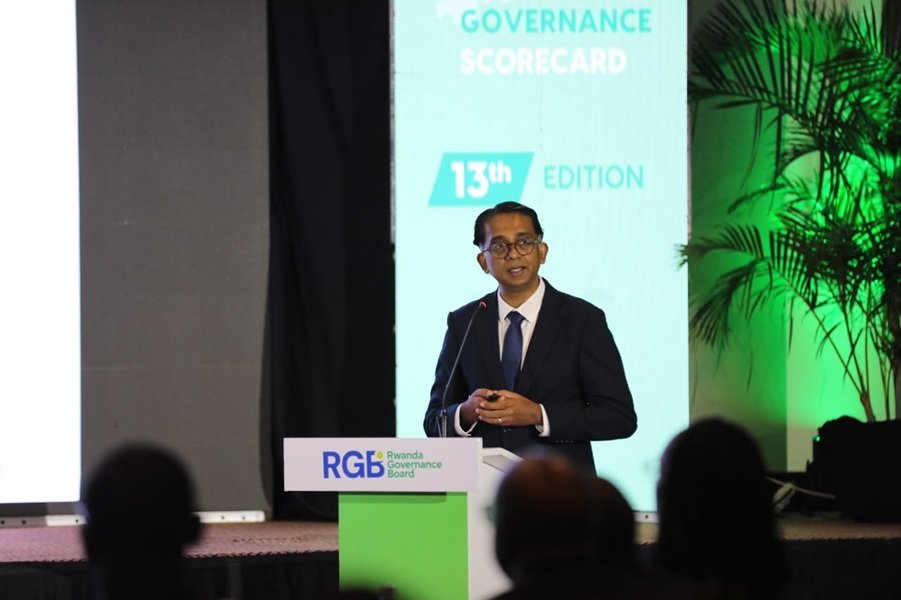
Ghana has made progress in the way it manages public resources and delivers services to citizens, with improvements in financial management and access to education and healthcare helping to raise its governance score.
The country ranked 92nd out of 133 countries worldwide and ninth in Africa in the 2026 Chandler Good Government Index (CGGI), according to a report released last Thursday.
The improvement offers a positive sign for Ghana, although the country still faces challenges in areas such as leadership, long-term planning and creating an attractive environment for businesses.
The index showed that Ghana’s performance in Financial Stewardship, which measures how governments manage public finances and maintain fiscal sustainability, almost doubled this year after declining between 2021 and 2024.
Its score in Helping People Rise, which looks at how government policies and services improve people’s lives, also increased for the second consecutive year, reflecting progress in areas including education and healthcare.
However, the country recorded declines in Leadership and Foresight and Attractive Marketplace, indicating areas where further attention may be needed.
Ghana’s performance comes at a time when several African countries are also making progress in governance. The report found that 71 per cent of African countries assessed in both 2025 and 2026 improved their overall scores.
Dinesh Naidu, Director of Knowledge at Chandler Governance Group, said the continent’s strongest gains were in financial management, followed by efforts to improve citizens’ lives.
He said the progress suggested that improvements in government capabilities were beginning to translate into tangible benefits, including better access to education and healthcare.
However, Africa continues to face significant challenges. Although average scores improved in six of the index’s seven pillars over the past year, the region’s overall average remains below its 2021 level.
The report also found that 23 of the 35 African countries assessed ranked outside the global top 100, while none made it into the top 50.
Globally, 61 per cent of the 120 countries assessed in both 2025 and 2026 recorded higher scores, representing the highest annual share of countries improving since the index began in 2021.
The Chandler Good Government Index assesses government capabilities and effectiveness across 133 countries, representing 94 per cent of the world’s population.
It uses 35 indicators grouped under seven pillars to help governments identify their strengths, recognise gaps and learn from the experiences of other countries.
Mr Naidu said rankings should not be treated as an end in themselves but as a guide to identifying areas that need improvement.
He said sustained progress depended on strong institutions, responsible use of public resources and the ability of governments to turn policies into meaningful outcomes for citizens.
For Ghana, the latest results point to progress in some important areas, while highlighting the need to strengthen other aspects of governance to ensure that improvements are felt in the daily lives of ordinary people.
By Esinam Jemima Kuatsinu
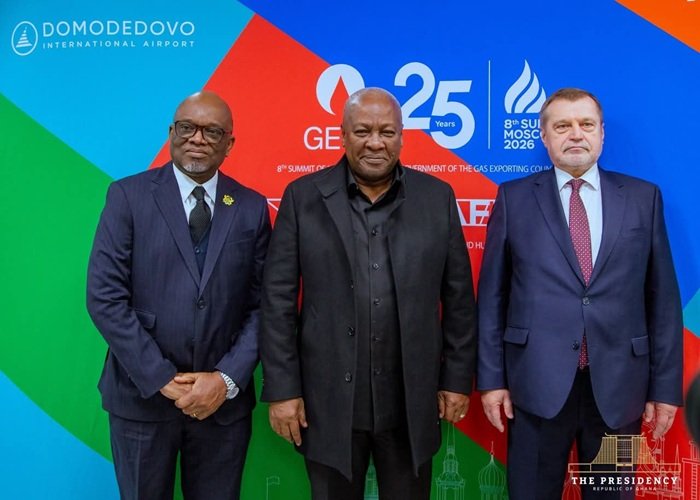
President John Mahama has arrived in Moscow, Russia, from Ethiopia to participate in the 3rd Russia-Africa Summit.
The summit is being hosted by Russian President Vladimir Putin.
During the visit, President Mahama will join fellow African leaders at the Economic and Humanitarian Forum and summit plenary sessions.
He is also scheduled to hold high-level bilateral talks with President Putin and attend a Kente exhibition organised by the Russia-Ghana Parliamentary Forum.
As part of the visit, the President will receive honorary doctorate degrees from the Russian University of Transport and the Peoples’ Friendship University of Russia.
He will also engage Russian businesses and state institutions to advance bilateral cooperation between Ghana and Russia.
By Edem Mensah-Tsotorme