Editorial
Don’t leave toll workers hanging

Dear Editor,
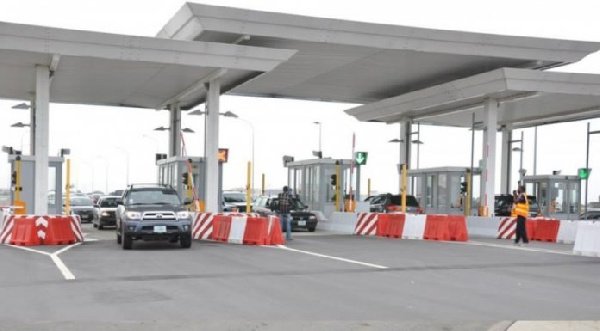
When the Government suspended the collection of road tolls in November 2021, I wrote to question the fate of the toll collectors, some of whom are physically challenged persons.
They had complained that life was getting tougher following the closure and called on the government to find alternative means of livelihood but it appears assurances given are yet to materialise almost a year after the closure.
The Deputy Minister for Employment and Labour Relations, Bright Wireko-Brobbey had explained recently in Parliament that although the workers currently do not have jobs, their salaries were paid in full during the period of their contract.
I have heard there were steps to reassign some of the workers under a different employment modules but I guess those statements were only to calm the nerves of the unemployed workers.
Leadership of the workers union had argued that the new modules could have been developed before the directive to close down the toll booths was implemented and I cannot agree with them any less.
Inasmuch as I want the ministry to respond quickly to the demand of the former toll collectors, they must as well be cautious in giving the workers false hope.
If there are no alternative jobs, it should be indicated as such. However, if there is certainly an alternative source of employment for the workers, then the ministry must endeavour to deliver on its promise as soon as possible instead of keeping the workers ‘hanging.’
Nobert Mensah,
Aburi.


Dear Editor,
I wish to draw the attention of the relevant authorities to the deplorable state of the road from McCarthy Hill Junction to Mallam Junction, where the deteriorating road surface is contributing to heavy traffic congestion and making commuting increasingly difficult for motorists.
The affected stretch is an important section of the Accra–Kasoa Highway, used daily by thousands of commuters, commercial drivers, private motorists and other road users travelling between Kasoa and Accra. However, the poor condition of portions of the road forces drivers to reduce their speed significantly, creating long queues, particularly during peak hours.
The situation is frustrating for commuters who already spend considerable time travelling between their homes and workplaces. Commercial drivers also lose valuable working hours, while passengers experience unnecessary delays that affect their daily schedules.
What should ordinarily be a relatively smooth journey often becomes a prolonged struggle as vehicles approach damaged sections of the road. The resulting slow movement disrupts traffic flow and contributes to congestion along an already busy corridor.
The situation also raises concerns about road safety. Drivers attempting to avoid potholes and other damaged portions may make sudden manoeuvres, potentially increasing the risk of collisions. Continued use of the affected sections could also lead to damage to vehicle tyres, suspension systems and other components, imposing additional costs on motorists.
While traffic congestion along the Accra–Kasoa corridor may have several causes, the condition of the road between McCarthy Hill Junction and Mallam Junction is an issue that requires urgent attention.
I therefore appeal to the Department of Urban Roads, the Ministry of Roads and Highways and other relevant authorities to inspect the affected stretch and undertake the necessary repairs without further delay.
Improving the road surface would help vehicles move more smoothly, reduce avoidable congestion and improve the safety and convenience of commuters.
The authorities must act promptly to prevent the situation from worsening and provide relief to the thousands of road users who depend on this route every day.
Yours faithfully,
Concerned Citizen
SKIP THE QUEUE, TAP THE NEWS
You can now read the Ghanaian Times and The Spectator newspapers from the comfort of your device via TimesNewsPlus.
Join our WhatsApp Channel: https://whatsapp.com/channel/0029VbBElzjInlqHhl1aTU27
A critical viewpoint on the function of Parent-Teacher Associations (PTAs) in guaranteeing child safety and upholding discipline in Ghanaian schools is highlighted in the statement made by Dr. Freda Prempeh, the former Deputy Minister of Gender, Children, and Social Protection.
According to the supporters of this viewpoint active PTA participation bridges the gap between parents and school administrations and acts as a crucial oversight mechanism.
They strongly believe that parents may better monitor school environments, support guidance and counselling, and hold staff members accountable to the Ghana Education Service (GES) code of conduct when they are involved in the basic and second-cycle school activities.
When school administration functions without external supervision, sexual abuse, exploitation, and indiscipline may result. This transparency is thought to be a crucial deterrent.
However, some educational experts point out that although strong PTAs are helpful, more than just parental supervision is needed to prevent deeply rooted problems like sexual misconduct and moral degeneration.
This viewpoint emphasises that the main instruments required to punish perpetrators and discourage future abuse are institutional enforcement, thorough investigations, and strong legal prosecution by state authorities rather than only school-level committees.
Furthermore, detractors frequently point out that if educational rules do not clearly specify the boundaries of oversight, an excessive reliance on PTAs may cause conflict with school administration.
A strong judicial and administrative proceedings shield victims from ongoing pain and intimidation, discourage potential offenders, and stop wrongdoing from becoming the norm.
In order to maintain high enrollment and completion rates among female students in basic and senior high schools, there should be strict implementation of the GES code of conduct to reassure families that schools are safe places.
Although legal analysts and administrative specialists note that speed is crucial, it must be carefully balanced with thoroughness and due process because hurried investigations might result in procedural mistakes that could lead to unfair sanctions.
Therefore, a comprehensive solution necessitates proactive measures like mandatory background checks and professional ethics training for educators.
The Spectator stresses the need to end sexual exploitation in schools while highlighting the continuous debate over the most effective ways for institutions to provide both prompt justice and legally sound results.
SKIP THE QUEUE, TAP THE NEWS
You can now read the Ghanaian Times and The Spectator newspapers from the comfort of your device via TimesNewsPlus.
Join our WhatsApp Channel: https://whatsapp.com/channel/0029VbBElzjInlqHhl1aTU27