Hot!
Domestic Debt Exchange: Potential financial sector impacts and mitigating safeguards

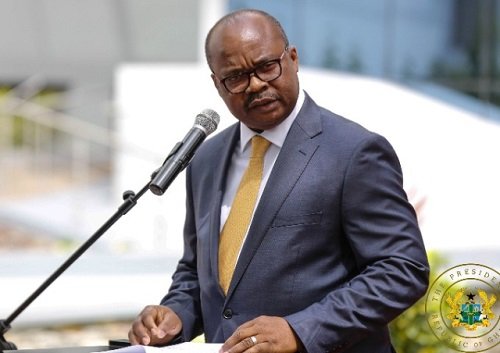
• Ernest Addison, Governor of Bank of Ghana
A. Background
ON December 5, 2022, the Government of Ghana launched Ghana’s Domestic Debt Exchange programme, an invitation for the voluntary exchange of approximately GHS137 billion of the domestic notes and bonds of the Republic, including E.S.L.A. and Daakye bonds, for a package of New Bonds to be issued by the Republic.
The Exchange excludes Treasury Bills in totality, and notes and bonds held by individuals (natural persons).
B. Potential Impacts on Debt Exchange on Financial Sector
Stress tests have been conducted by the relevant financial sector regulators to estimate the potential impact of the Debt Exchange for banks, specialised deposit-taking institutions (SDIs), insurance firms, asset managers, collective investment schemes, pension fund trustees, and regulated pension schemes, that could result from their participation in the debt exchange.
C. Regulatory Tools to Mitigate Financial Stability Risks from the Debt Operation
To help manage the potential impacts of the Debt Exchange on the financial sector, financial sector regulators will deploy all regulatory and supervisory tools to mitigate risks to financial stability. Regulators will assess impacts on a regular basis, and quickly address evolving risks in order to safeguard financial stability.
To support and encourage full participation of financial institutions in the voluntary debt exchange:
Regulatory Forbearance on Liquidity and Solvency
Financial sector regulators will temporarily reduce regulatory capital and liquidity requirements for regulated firms and schemes that voluntarily participate in the debt operation. Regulators will also suspend or delay any new rules that will have an adverse impact on liquidity or solvency. Each regulator will communicate more specific reliefs to its regulated firms/schemes in due course.
Ghana Financial Stability Fund (GFSF)
The GFSF is being established with a target size of GHC 15 billion to be provided by the Government of Ghana and its development partners.
The Fund will provide liquidity to financial institutions that participate fully in the Debt Exchange. All financial institutions (banks, SDIs, pension schemes, collective investment schemes, fund managers, broker/ dealers and insurance firms) that fully participate in the Debt Exchange can access the GFSF for augmented liquidity support, with effect from the date of completion of the Debt Exchange.
The Fund will be managed by the Bank of Ghana under unique operational guidelines being developed by the Financial Stability Council.
The Financial Stability Council will provide ongoing advice and oversight for the use of the GFSF.
Accounting Treatment
Regulators are already in discussions with external auditors of financial institutions and will provide guidance to ensure a standardized approach to the accounting treatment applied to the Debt Exchange.
D. Conclusion
In keeping with its mandate, the Financial Stability Council will continue to closely monitor the impacts of the Debt Exchange on financial institutions and on the financial system as a whole, as well as the effectiveness of the measures outlined above. These measures will be reviewed continuously and recalibrated as needed to ensure maximum effectiveness to safeguard the stability of our financial system and the protection of deposits, pensions, policy holders’ funds, and investor funds/assets.
The information above was issued by the Financial Stability Council on Wednesday, December 7, 2022. The Financial Stability Council was established in December 2018 by Executive Instrument, to “identify and evaluate the threats, vulnerabilities, and risks to the stability of the financial sector”.
The Council is chaired by the Governor of the Bank of Ghana, and has members from the Bank of Ghana (Deputy Governor), Ministry of Finance (Deputy Minister), Securities and Exchange Commission (Director General), National Insurance Commission (Commissioner), National Pensions Regulatory Authority (Chief Executive Officer), and Ghana Deposit Protection Corporation (Chief Executive Officer).


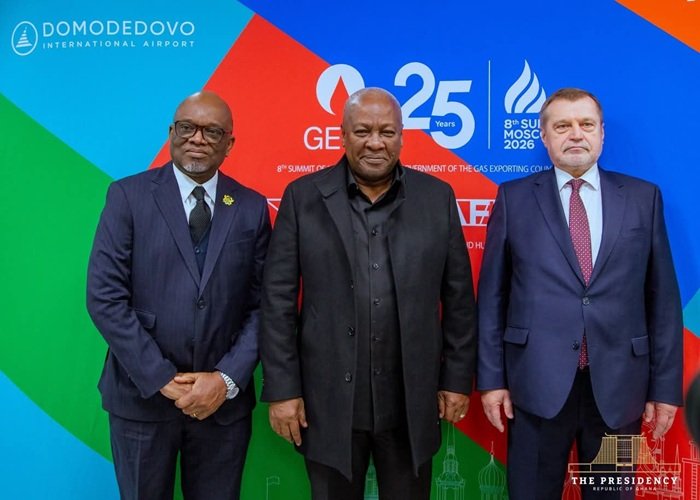
President John Mahama has arrived in Moscow, Russia, from Ethiopia to participate in the 3rd Russia-Africa Summit.
The summit is being hosted by Russian President Vladimir Putin.
During the visit, President Mahama will join fellow African leaders at the Economic and Humanitarian Forum and summit plenary sessions.
He is also scheduled to hold high-level bilateral talks with President Putin and attend a Kente exhibition organised by the Russia-Ghana Parliamentary Forum.
As part of the visit, the President will receive honorary doctorate degrees from the Russian University of Transport and the Peoples’ Friendship University of Russia.
He will also engage Russian businesses and state institutions to advance bilateral cooperation between Ghana and Russia.
By Edem Mensah-Tsotorme
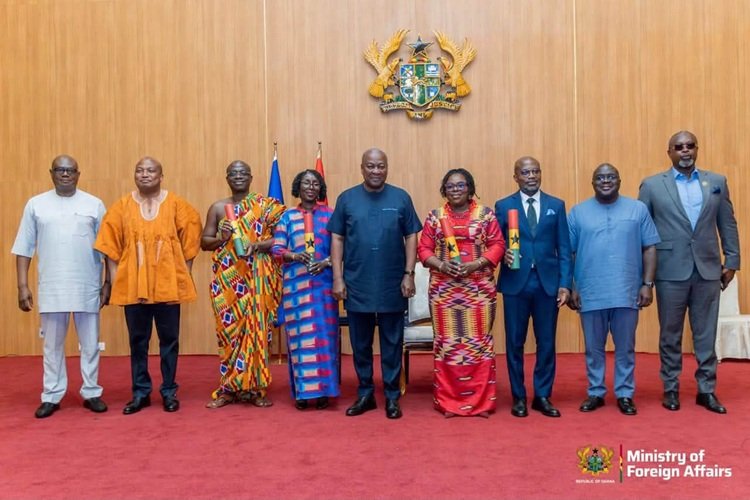
President John Dramani Mahama has commissioned four career diplomats as ambassador-designates to represent Ghana in four countries.
The commissioning ceremony took place on Friday, October 16, 2026.
The new envoys are Her Excellency Nana Antwiwaa Dodoo, Ambassador-Designate to Angola; His Excellency Louis Kwame Obeng, Ambassador-Designate to Qatar; Her Excellency Evelyn Korantemaa Ofosu-Amable, Ambassador-Designate to Israel; and His Excellency Jedidiah Reuben Adogla, Permanent Representative-Designate to Switzerland.
President Mahama charged them to advance Ghana’s national interests through strategic partnerships, economic diplomacy, investment mobilization, and expanded access to international markets.
He said Ghana’s diplomatic engagements must deliver tangible economic benefits, create jobs, and strengthen the country’s standing on the international stage.
The four envoys are career diplomats with over 27 years of experience.
On behalf of her colleagues, Her Excellency Nana Antwiwaa Dodoo thanked the President for the confidence reposed in them and pledged their commitment to emulate his leadership and deliver on the mandate given to them.
By Edem Mensah-Tsotorme