Sports
Does sex in camp worsen the trophy drought?

- /home/u249204778/domains/spectator.com.gh/public_html/wp-content/plugins/mvp-social-buttons/mvp-social-buttons.php on line 27
Warning: Trying to access array offset on false in /home/u249204778/domains/spectator.com.gh/public_html/wp-content/plugins/mvp-social-buttons/mvp-social-buttons.php on line 27
&description=Does sex in camp worsen the trophy drought?', 'pinterestShare', 'width=750,height=350'); return false;" title="Pin This Post">
- Share
- Tweet /home/u249204778/domains/spectator.com.gh/public_html/wp-content/plugins/mvp-social-buttons/mvp-social-buttons.php on line 72
Warning: Trying to access array offset on false in /home/u249204778/domains/spectator.com.gh/public_html/wp-content/plugins/mvp-social-buttons/mvp-social-buttons.php on line 72
&description=Does sex in camp worsen the trophy drought?', 'pinterestShare', 'width=750,height=350'); return false;" title="Pin This Post">
Sex is delectable. It is as pleasurable as alluring, so the experts say. But can it be enjoyed by players and officials at a football tournament, too, that has a trophy at stake?
The answer to this contentious question is probably embedded in the bosom of the former Deputy Minister for Youth and Sports, Vincent Oppong Asamoah, who has travelled on a couple of occasions to football tournaments involving the senior national team, Black Stars.
In an interview with Happy FM nearly a fortnight ago, the former Deputy Minister made statements that suggested that there is a ‘sex galore’ in the camp of the Black Stars during tournaments and the practice has contributed to the team’s failure to clinch the African Cup of Nations trophy – in decades.
According to the Dormaa West Parliamentarian, there were occasions when the players clashed with officials over girls at their hotels.
“Ghanaians are too undisciplined. They cannot close their zips when they travel for tournaments as they keep chasing girls and disrupt the attention of players.
“I have followed the Black Stars to many tournaments and seen some of the management members changing girls at the team’s hotel, competing with the players for girls – most of whom are foreigners,” he alleged, believing that it was the reason the nation had not won a trophy at the senior level for decades.
Indeed, the last time Ghana won the continental Golden Fleece was in Libya ’82 – 39 years ago when they outkicked Libya’s Mediterranean Knights in a thrilling shoot-out.
Since then, the Stars have managed to dazzle their way to three grand finales (1992, 2010 and 2015), but missed the Holy Grail – one of them (2015) – inexplicably, after taking a 2-0 lead during the shoot-out with Cote d’Ivoire.
That the Ivorians had to resurrect from the two-goal slump to win the Cup at the expense of Ghana, will for many years be etched bitterly on the memories of long-suffering Ghanaian football fanatics. Not ready to accept the result, some Ghanaians described the loss as football’s most Himalayan mystery.
For Mr Oppong Asamoah, it is no mystery – forbidding anyone to seek consolation in the metaphysics, but rather pointed to attitudinal.
In short, the former Deputy Minister believes the ‘curse’ is self-inflicted, arguing that the sex-escapade in camp affected the players’ focus and psyche in the tournament – hence the failure of the team to break the trophy drought.
However, Asamoah’s assertion has been ‘rubbished’ by a former Management Committee member of the Black Stars for many years, Fred Pappoe, who described the claims as “unguarded, loose and unsubstantiated.”
Well, perhaps, instead of cursorily brushing aside Oppong Asamoah, there is the need to put some measures in place to forestall a recurrence, if any, during the Cameroon 2021 Nations Cup. We know that the former Deputy Minister cannot be totally wrong, though he may have over exaggerated the situation.
Getting the players to focus on the tournament is very significant and appropriate.
Ahead of the Black Stars’ appearance at the Brazil World Cup in 2014, the team’s psychologist, Professor Joseph Mintah, submitted a proposal to the Ghana FA to consider players to bring their wives or girlfriends to the tournament, insisting that it would boost their performance during the competition.
He explained that the Stars were going away for more than six weeks, and research has confirmed that the players could stage some disturbance because of the absence of their spouses after 21 days of being away from their families.
In 2014, England permitted both wives and girlfriends to join their camp, as the long pre-tournament World Cup camping without sex, could hamper concentration.
He proposed that the spouses must stay at the nearby hotel while a timetable be drawn for players to meet them to ensure effective control and monitoring of the system.
What of asking our players to focus on the Big Prize and abstain from sex altogether. Too big a task for them?
In any case, Mexico’s football team were ‘banished’ from having sex during the 2014 World Cup in Brazil, in order to maximise their athletic performance. However, the team lost in the Round of 16, as they had in every World Cup since 1994.
Maybe, we could take a second look at Prof. Mintah’s proposal. For other officials of the team, the Argus-eye would definitely be feasted on them because of Mr Asamoah’s allegations and they would need no Angel to caution them to put up a good-as-gold behaviour.
PlainTalk with JOHN VIGAH


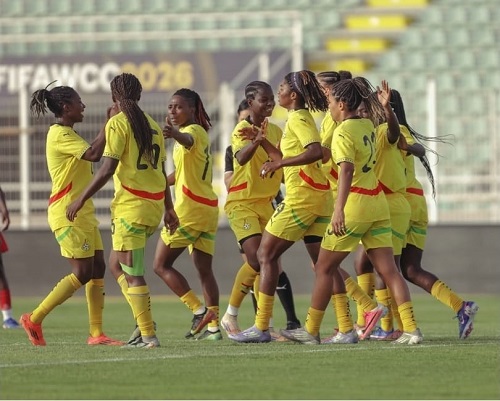
The Black Queens kick off their 2026 CAF Women’s Africa Cup of Nations journey on Wednesday, July 29, when they take on Cape Verde in their Group C opener in Morocco.
Coach Kim Lars Björkegren and his team go into the match full of confidence after weeks of intensive preparations.
The Queens held a successful pre-tournament training camp and played friendly matches to fine-tune ahead of the competition.
With morale high, Ghana’s senior women’s team will be targeting maximum points to get their campaign off to the perfect start.
The match is set for 5:00 PM GMT at the Moulay Rachid Stadium.
Football fans across Ghana will be watching closely, hoping the Queens can secure a positive result and lay the foundation for a memorable WAFCON 2026 run.
By Edem Mensah-Tsotorme
With the World Cup fever gradually dying down, attention would switch to other equally important competitions from now to the latter parts of the year.
Barely a week after the global football showpiece that saw Spain upstaged Argentina as World Champions, over 70 countries gathered in Glasgow, Scotland for the Commonwealth Games that is attracting hundreds of athletes from the Commonwealth community.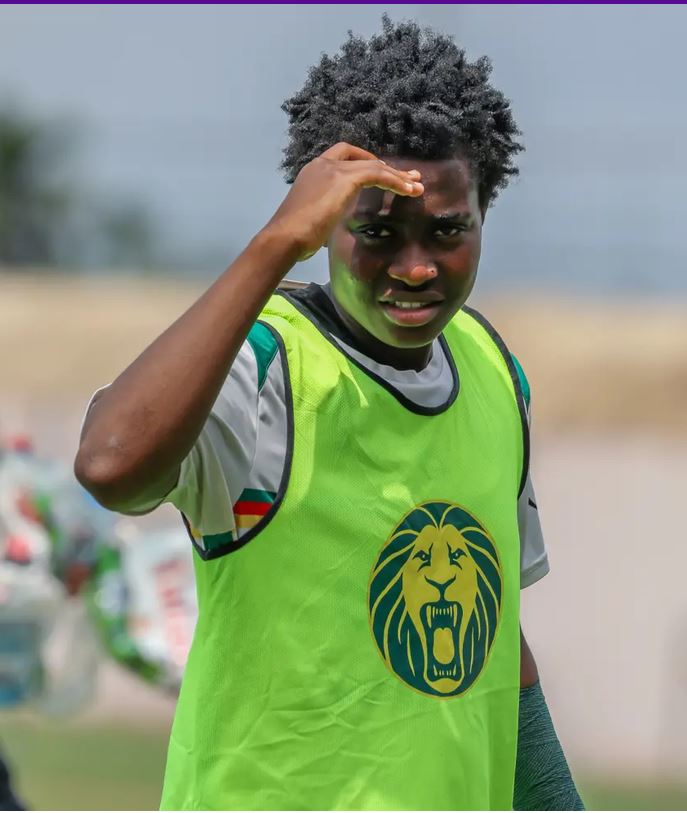
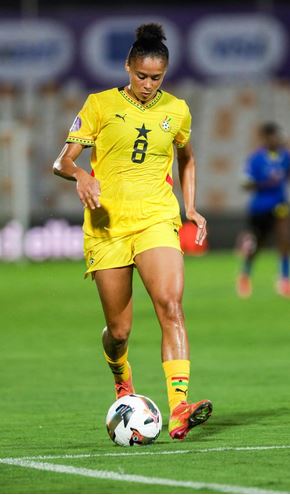
Equally, 16 top female national teams in Africa would commence competition for the bragging rights as African champions when the delayed Women’s Africa Cup of Nations 2026 kicks off in Morocco tomorrow.
The Super Falcons of Nigeria are usually considered favourites for this showpiece, having shown the strength and character to dominate the game on the continent.
As defending champions, they come in strongly again, expected to face a more difficult sides like the Black Queens of Ghana, Zambia and Morocco who have been touted as possible teams to cause an upset.
Of the 16 qualified teams, nine featured at the previous edition held in 2024.
Botswana, the Democratic Republic of the Congo and Tunisia, who qualified in 2024, missed out this time, while Cape Verde and Malawi will make their first appearance in the tournament.
Today, The Spectator Sports takes a look at some of the teams expected to rub shoulders with the big guns in the female game.
Cameroon
After missing the previous edition, Cameroon returns to the CAF Women’s Africa Cup of Nations Morocco 2026 determined to re-establish themselves among Africa’s elite.
The Indomitable Lionesses, one of the continent’s most successful women’s national teams, secured a place at the expanded 16-team tournament after receiving a second chance through CAF’s revised qualification system.
Now, under newly appointed head coach Valentine Nguele and inspired by emerging midfield star Naomi Eto, Cameroon will be aiming not only to reclaim their place among Africa’s leading nations but also to secure qualification for the 2027 FIFA Women’s World Cup.
Cameroon boasts one of the richest histories in the Women’s Africa Cup of Nations.
The Indomitable Lionesses have reached the final on three occasions—in 2004, 2014 and 2016—but are still searching for their first continental title.
Their consistency has also been reflected in three third-place finishes in 2002, 2012 and 2018, giving Cameroon six podium finishes overall.
Only Nigeria and South Africa have accumulated more top-three finishes in the history of the competition, underlining Cameroon’s long-standing status among Africa’s leading women’s football nations.
Zambia
After finishing third in 2022 and falling short of expectations at the 2024 edition, Zambia head to the TotalEnergies CAF Women’s Africa Cup of Nations Morocco 2026 determined to establish themselves among Africa’s elite.
With one of the continent’s most feared attacking units and new head coach Nora Häuptle at the helm, the Copper Queens will be aiming to lift the Women’s AFCON trophy for the first time.
Barbra Banda remains one of the biggest names in African women’s football.
The Orlando Pride striker has established herself among the leading forwards in the National Women’s Soccer League (NWSL) and returns to international competition after recovering from a hip injury suffered late last year.
Powerful, direct and clinical in front of goal, Banda will once again spearhead Zambia’s attack as the Copper Queens pursue their first continental title.
Burkina Faso
Burkina Faso (Stallions Ladies) return to the competition determined to make history after missing the 2024 edition. Encouraged by an impressive qualifying campaign, the Stallions Ladies head to Morocco aiming to progress beyond the group stage for the first time.
Burkina Faso secured qualification with convincing victories over Burundi and Togo.
The Stallions Ladies defeated Burundi 5-1 on aggregate, following a commanding 4-1 first-leg victory before completing the job with a 1-0 win in the return fixture.
They carried that momentum into the final qualifying round against Togo, winning 2-0 in the first leg before sealing qualification with another 1-0 victory to complete a 3-0 aggregate success.
Nigeria
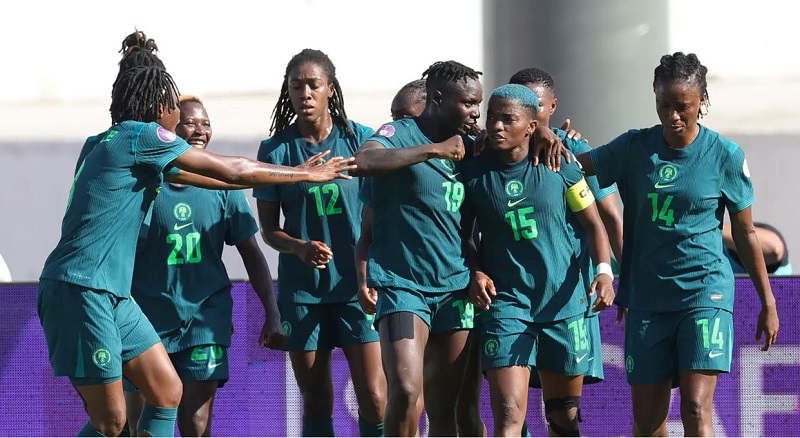
Reigning champions Nigerias head to Morocco 2026 looking to extend their remarkable record in the competition. With 10 continental titles to their name, the Super Falcons remain the most successful team in the tournament’s history..
Led by Captain Rasheedat Ajibade and head coach Justine Madugu, Nigeria once again begin the competition among the favourites.
Nigeria secured qualification to Morocco 2026 by defeating Benin 3-1 on aggregate in the second round of qualifying.
Having received a bye in the opening round, the Super Falcons took control of the tie with a 2-0 away victory in Cotonou.
They completed the job in Abeokuta, drawing 1-1 in the second leg after Ashleigh Plumptre opened the scoring before Benin equalised through Yasmine Djibril.
The result ensured another successful qualification campaign for the reigning African champions.
Cote d’Ivoire
After a 12-year absence from Africa’s biggest women’s football competition, Côte d’Ivoire returns to the TotalEnergies CAF Women’s Africa Cup of Nations aiming to re-establish themselves among the continent’s leading nations.
The Elephants secured an unexpected route back to the finals following the expansion of the tournament from 12 to 16 teams.
Now guided by experienced French coach Reynald Pedros and inspired by prolific striker Habibou Ouedraogo, Côte d’Ivoire believe they have the talent to challenge Africa’s established powers once again.
The Elephants were knocked out in the final qualifying round after a fiercely contested tie against Senegal. Neither side managed to score across the two legs, with Senegal eventually prevailing 5-4 on penalties to deny the Ivorians automatic qualification.
Following the expansion of the Women’s AFCON from 12 to 16 participating teams, CAF allocated the additional places based on the FIFA Women’s World Ranking.
⚽ Group A: Morocco, Algeria, Senegal, Kenya,
⚽ Group B: South Africa, Ivory Coast, Burkina Faso, Tanzania
⚽ Group C: Nigeria, Zambia, Egypt, Malawi
⚽ Group D: Ghana, Cameroon, Mali, Cape Verde
By Andrew Nortey