News
Discuss fertility preservation with young breast cancer patients -Gynaecologist

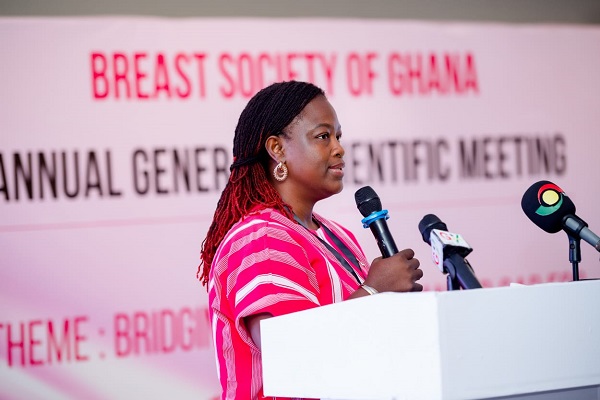
Healthcare professionals have been urged to discuss fertility preservation with young women diagnosed with breast cancer before they begin treatment.
A Gynaecologist at the Korle-Bu Teaching Hospital, Dr Mary-Ann Zuolo, said some cancer treatments could damage the ovaries and cause women to lose their fertility or enter menopause earlier than expected.
She said although cancer treatment remained the priority, the possible effects of treatment on a young woman’s ability to have children in the future should not be overlooked.
Speaking at the annual general meeting of the Breast Society of Ghana (BSG) a fortnight ago, Dr Zuolo explained that women were born with a fixed number of eggs, which naturally declined with age.
However, she said some cancer treatments could accelerate the loss of ovarian follicles and lead to early menopause.
According to her, early menopause could have effects beyond fertility, including an increased risk of high blood pressure, heart disease, cholesterol-related problems and sleep difficulties.
She said the emotional impact could also be significant, particularly for young women who were still planning to have children.
Dr Zuolo introduced oncofertility, a specialised area of care that brings together cancer and fertility specialists to help protect the reproductive health of patients undergoing cancer treatment.
She said fertility preservation should be discussed as early as possible, preferably before treatment began.
Available options, she said, included embryo freezing, egg freezing, ovarian tissue preservation and ovarian transposition.
She explained that embryo freezing involved collecting eggs, fertilising them and freezing the resulting embryos for possible future use, while egg freezing involved collecting and freezing unfertilised eggs.
Dr Zuolo noted that embryo and egg freezing services were available in Ghana, but ovarian tissue cryopreservation was currently not available in the country.
She stressed that fertility preservation should not delay effective cancer treatment and called for closer collaboration among fertility specialists, oncologists and surgeons.
Dr Zuolo also urged health professionals not to assume that fertility preservation was unimportant to a patient or that she could not afford the available options.
She said a Ghanaian study involving 78 clinicians found that although many were aware of fertility preservation, only 32 per cent routinely discussed it with eligible patients.
She, therefore, called for greater awareness and timely referral of young cancer patients to fertility specialists.
“Options for fertility preservation exist in Ghana, and we need to improve access to these treatment options,” she said.
The President of the Breast Society of Ghana, Prof. Josephine Nsaful, said between 60 and 80 per cent of breast cancer cases were still diagnosed at an advanced stage.
She said advanced disease required prolonged treatment, was more expensive and had less favourable outcomes.
Prof. Nsaful said a 2020 study involving 217 patients at three cancer centres in Ghana found that the average total cost of breast cancer treatment was GH¢34,631 per patient.
She said the financial burden made it difficult for some low-income patients to comply with treatment schedules.
Prof. Nsaful said breast cancer should not be treated only as a health issue because of its impact on families, productivity and the national economy.
She said 89 per cent of the economic losses from breast cancer occurred among women aged between 20 and 59, a group that formed a significant part of the country’s productive workforce.
She called for stronger referral pathways, better treatment coordination, multi-year health budgets and improved geographical and financial access to comprehensive breast cancer care.
By Esinam Jemima
SKIP THE QUEUE, TAP THE NEWS
You can now read the Ghanaian Times and The Spectator newspapers from the comfort of your device via TimesNewsPlus.
Join our WhatsApp Channel: https://whatsapp.com/channel/0029VbBElzjInlqHhl1aTU27










A member of the National Democratic Congress (NDC), Dr. Sammy Ayeh has picked up nomination forms to contest for the position of Deputy National Communications Officer position.
Announcing his intention, Dr. Ayeh said he is offering himself to help communicate the party’s vision clearly and connect its message with the aspirations of Ghanaians.
He expressed deep gratitude to the party’s National Communications Officer, Lawyer Sammy Gyamfi, describing him as an able leader on whose shoulders he has risen.
“His exceptional leadership, mentorship and confidence in me have shaped my journey and strengthened my resolve to serve,” Dr. Ayeh stated.
He said if elected, he will seek to build on that foundation by strengthening research-driven communication, empowering grassroots communicators, and enhancing strategic media engagement.
Dr. Ayeh humbly appealed to party members and supporters for their support.
By Edem Mensah-Tsotorme

The Data Protection Commission has called on the Minority Caucus in Parliament, the Ministry of Foreign Affairs, JoyNews and other media houses to protect the personal information of 1,964 Ghanaians evacuated from South Africa.
In a press release issued on Tuesday, October 20, 2026, the Commission expressed concern over the public disclosure of the evacuees’ personal details, including their names, signatures and records of financial assistance received.
It warned that making such information public could expose the affected individuals to identity theft, fraud and other forms of harm, especially given the threats to their safety that some of them may have faced.
The Commission explained that the 1992 Constitution protects the dignity and privacy of every individual. It also cited the Data Protection Act, 2012 (Act 843), which sets out rules for the lawful collection, use and disclosure of personal information.
While acknowledging the importance of transparency, parliamentary oversight, the right to information and press freedom, the Commission stressed that these principles do not automatically justify the unrestricted publication of personal details.
It said the disclosure of the records by the Minority Caucus, the Ministry of Foreign Affairs, JoyNews and other media organisations must be assessed based on the law, the purpose of the disclosure and the privacy rights of the individuals involved.
The Commission further noted that although the Ministry of Foreign Affairs and Parliament are registered data controllers in good standing, their registration does not exempt them from their legal responsibilities under the Data Protection Act.
It has therefore urged all the parties involved to take appropriate steps to protect the affected individuals, including immediately restricting access to or removing personal details from publicly available records where their continued disclosure is not legally justified.
The Commission announced plans to conduct a regulatory review to determine whether the disclosures had a lawful basis, what safeguards were applied and whether the privacy rights of the evacuees had been adequately protected.
It said it would engage the relevant parties as part of the review and take appropriate regulatory action if any breach of the law is established.
The Commission reiterated that protecting personal information and respecting human dignity must remain central to efforts to promote public accountability.
By: Jacob Aggrey