News
Discrimination; a social canker


- /home/u249204778/domains/spectator.com.gh/public_html/wp-content/plugins/mvp-social-buttons/mvp-social-buttons.php on line 27
https://spectator.com.gh/wp-content/uploads/2023/09/Discrimination-Pix.png&description=Discrimination; a social canker', 'pinterestShare', 'width=750,height=350'); return false;" title="Pin This Post">
- Share
- Tweet /home/u249204778/domains/spectator.com.gh/public_html/wp-content/plugins/mvp-social-buttons/mvp-social-buttons.php on line 72
https://spectator.com.gh/wp-content/uploads/2023/09/Discrimination-Pix.png&description=Discrimination; a social canker', 'pinterestShare', 'width=750,height=350'); return false;" title="Pin This Post">
In the cause of ups and downs, life has many unbalances and bias situations that have brought many to tight corners that is destroying the stages of progress and breeding dooms.
During a refracted form of peace and genuine thoughts, ideas and actions, the pressures of life has caused many to fall to the tricks of uncertainty and discrimination of every aspect of life.
There have been situations where people do not have the privilege to express their stands, feelings and support without biases although there is freedom of speech to everyone.
Man, in the wisdom of the creator was created without any form of indifference. Yet men opt to generate the root of differences amongst themselves without any form of sympathy but rather hardship and sorrows to their fellows.
The world now has the heart of wickedness that seems to bear and breed bitterness in the minds and hearts of many. The insecurity among fellow colleagues, friends and relatives is bleeding. Of which this has rooted into jealousy and aggressiveness for selfish gains and luxury.
When the weak cries, the powerful rides on it to greatness; our love for one another has no value nowadays which is causing more fear and panic in the world we live in.
At a point in time, one will no longer have the right to praise and cherish the good deeds achieved by their fellow members for transmission of success and morals but rather there will be silence and suffering that will take place in the bosom of the then Meek’s heart.
And when the piano wails for help, the horns and trumpets will sound the agony of pain, sorrow and bitterness that lead to hatred and dislike amongst our love. When this happens the strong then seem to zip the lips that play the sound from the horns and trumpets.
They rather compare the pains with rugs and broken jugs that cannot be mended and restored. Then the Meek who seems to be a lion fights bravely on the inside and sound like the “meow” of a cat on the outside.
And its strength is ridden upon as a horse that grows wings to fly above the sky without any discipline and principle. This tends to kill the ants that gather food for survival and dries up the blood of the mosquito that bites the body of man for survival.
If we do not take solid care of our actions toward preservation and perseverance, the ice cubes that were frozen and has been of great benefits shall lose its value of coldness that chills and cools the heart of pain.
Then the canker of discrimination shall grow its wings and fly like never before.
www.spectator.com.gh
Your Weekend Companion
By Berryvet Medenu



The Nae Wulomo, Nuumo Akwaa Mensah III, has described this year’s Homowo festival of the Ga Mashie people as one of the most peaceful and well-observed celebrations in recent years.
According to him, the festival was conducted without the tensions and disagreements that had characterised previous celebrations, particularly among chiefs, priests and other traditional groups.
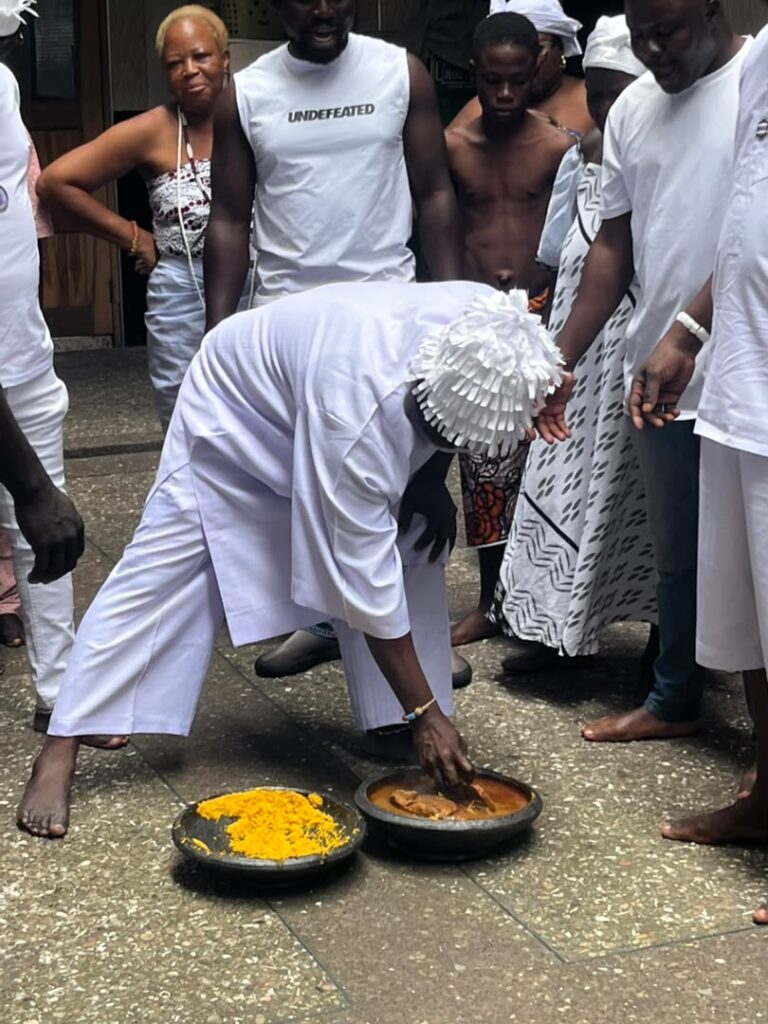
“This year’s Homowo has been one of the peaceful Homowo celebrations I have had so far. It has also been one of the well-observed Homowo celebrations,” the Nae Wulomo told The Spectator.
He said the various traditional rites associated with Homowo had been duly observed, including the lifting of the ban on drumming and noise-making and other ceremonies leading up to the main celebration.
This year’s celebration also marked 200 years since the Katamanso War, with renewed emphasis on preserving and protecting Ga culture and history, particularly among the youth.
Nae Wulomo said the focus on the youth was necessary because of the increasing influence of foreign cultures and lifestyles on the younger generation.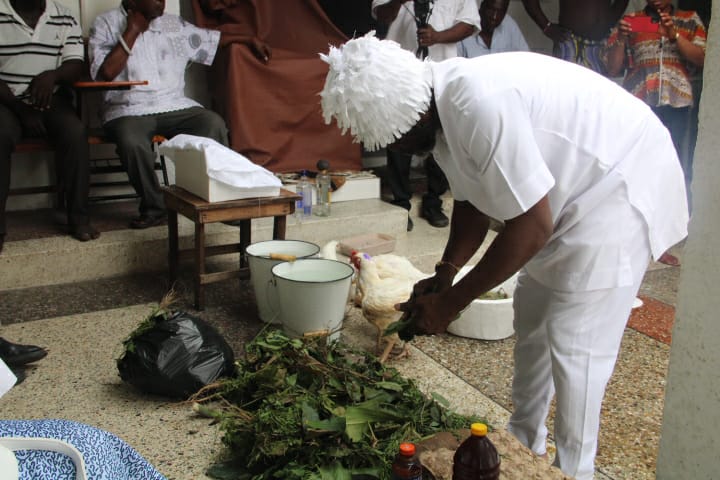

He said traditional authorities had therefore adopted approaches that combined cultural activities with social events to attract more young people to the celebration.
According to him, activities such as Womba and other social events had helped to generate interest among the youth while exposing them to important aspects of Ga culture and tradition.
He noted that some of the youth-led processions and cultural displays provided an opportunity for young people to learn about traditional practices and understand their significance.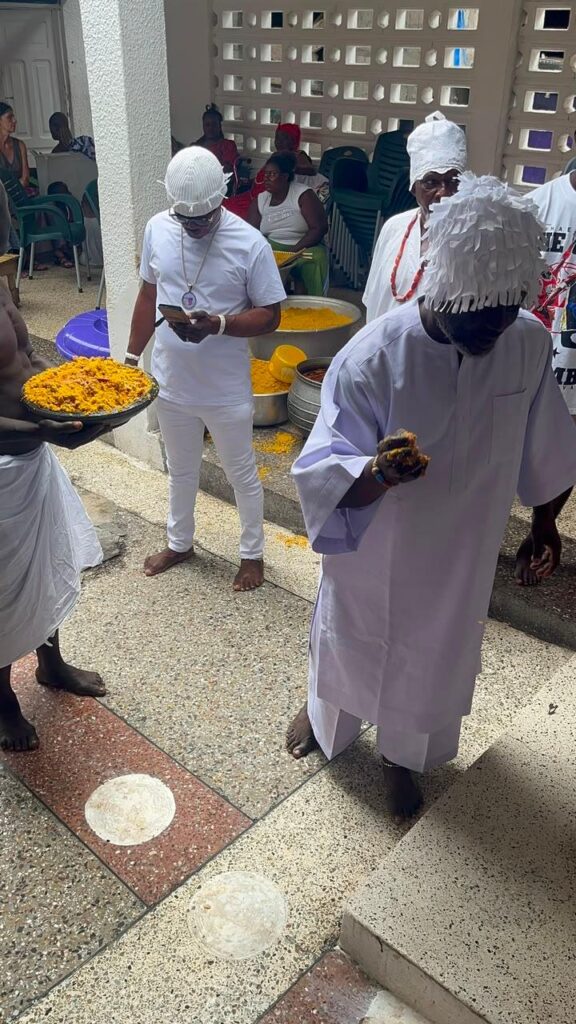
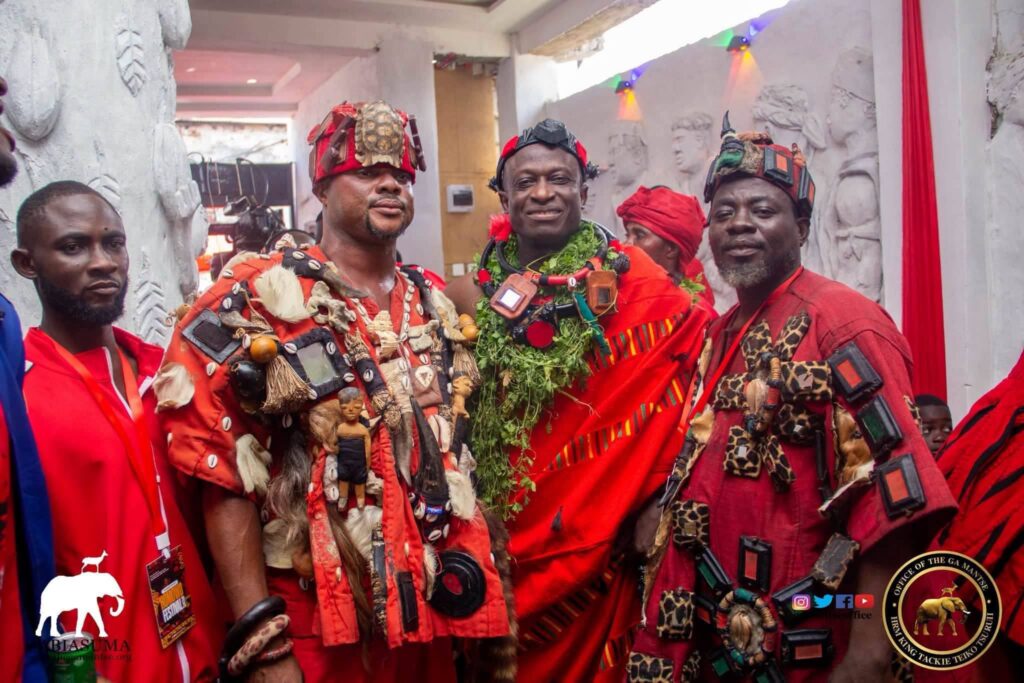
Nae Wulomo also used the occasion to caution the youth against drug abuse, describing substance abuse as a serious threat to the future of young people.
By Esinam Jemima Kuatsinu
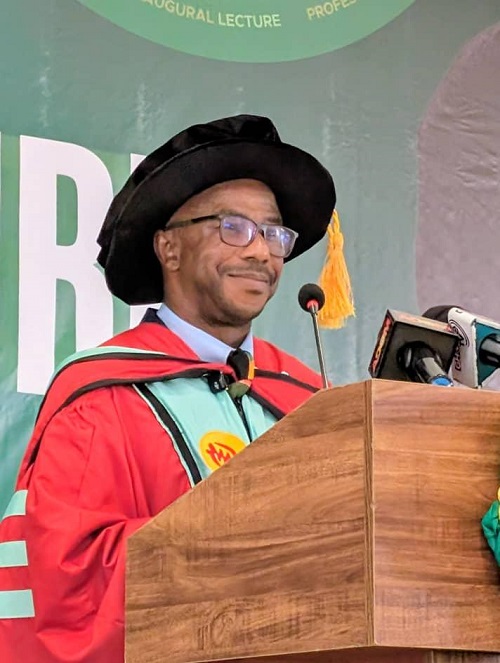
Many people have heard or even repeated the popular claim that because God gave mankind dominion over the earth, humans are free to consume anything they find in nature.
However, the Pro Vice-Chancellor of the University of Environment and Sustainable Development (UESD), Professor Edward Wiafe Debrah, says this widely held belief was a misconception that has contributed to the destruction of the environment and the depletion of natural resources.
Speaking on the relationship between religion, science and environmental conservation, Prof. Debrah explained to The Spectator in an exclusive interview that many Christians often cited Genesis 1:28, where God blessed humanity and instructed them to “be fruitful and multiply, fill the earth and subdue it; have dominion over the fish of the sea, the birds of the air and every living thing that moves on the earth.”
According to him, the verse had been wrongly interpreted to mean that people have unrestricted permission to consume every animal and natural resource on earth.
”The Bible did not ask mankind to destroy or exhaust creation. Dominion is about responsible leadership and stewardship, not exploitation,” he stressed.
He said God entrusted creation to humanity with the expectation that it would be managed wisely and preserved for future generations.
”Stewardship means nurturing what has been entrusted to you and being accountable to the Master one day. We must, therefore, use our natural resources wisely rather than consume everything without replacement,” he said.
Prof. Debrah pointed out that another misconception among some Christians was the belief that since the Bible spoke about the end of the world, there was little need to conserve the environment because no one knows when the earth would end.
He described this thinking as dangerous, explaining that no one knows when the end would come and, therefore, humanity had a responsibility to care for creation while it existed.
He also challenged the belief that animals cannot become extinct simply because human beings continue to exist despite people dying every day.
Drawing a distinction between human populations and wildlife, he explained that many animal species could disappear permanently if they were harvested without limits or conservation measures.
He cited indiscriminate hunting as an example, saying many hunters entered forests and killed whatever animals they found without considering whether the populations were sufficient to sustain future generations.
”If we continue consuming resources without strategic plans for replacement and conservation, we will eventually lose them,” he cautioned.
Prof. Debrah urged society to combine scientific knowledge with religious and cultural beliefs instead of relying solely on religious interpretations to address environmental challenges.
”We have to read and understand the Bible well while applying science to our culture and religion. Religious beliefs alone cannot solve all our environmental problems,” he stated.
He emphasised that biodiversity remained essential to human survival, noting that healthy ecosystems improve food quality, reduce diseases and help clean the air through trees that absorb carbon dioxide and other harmful gases.
Touching on agriculture, Prof. Debrah encouraged farmers to adopt sustainable farming practices that protect beneficial insects, especially bees, which naturally pollinate crops.
He mentioned that attempts at artificial pollination have proved costly, making natural pollination by insects a more practical and sustainable option.
”The irony is that we spray insecticides to kill every insect on our farms, including those that are beneficial. If we reduce indiscriminate use of insecticides, nature will regulate itself through the food chain, ensuring healthy ecosystems and improved crop production,” he said.
Prof. Debrah, therefore, appealed to the public to recognise that caring for nature was not contrary to faith but rather an important responsibility entrusted to humanity.
”The earth and its resources are gifts from God. Our responsibility is not to exhaust them but to protect and manage them wisely for ourselves and generations yet unborn,” he added.
By Ama Tekyiwaa Ampadu Agyeman, Koforidua

 Entertainment1 week ago
Miss Ghana 2026 winners presented to Tourism Minister
- News1 week ago
Eight Injured after Toyota Hiace somersaults on Tema–Akosombo highway
- Features1 week ago
Environmental stewardship is an act of worship: The Islamic response to climate change, environmental degradation (Part 3)