News
Democracy will not survive by itself if we don’t work for it– Pres. Mahama

- /home/u249204778/domains/spectator.com.gh/public_html/wp-content/plugins/mvp-social-buttons/mvp-social-buttons.php on line 27
https://spectator.com.gh/wp-content/uploads/2025/09/WhatsApp-Image-2025-09-18-at-08.33.38-1000x600.jpeg&description=Democracy will not survive by itself if we don’t work for it– Pres. Mahama', 'pinterestShare', 'width=750,height=350'); return false;" title="Pin This Post">
- Share
- Tweet /home/u249204778/domains/spectator.com.gh/public_html/wp-content/plugins/mvp-social-buttons/mvp-social-buttons.php on line 72
https://spectator.com.gh/wp-content/uploads/2025/09/WhatsApp-Image-2025-09-18-at-08.33.38-1000x600.jpeg&description=Democracy will not survive by itself if we don’t work for it– Pres. Mahama', 'pinterestShare', 'width=750,height=350'); return false;" title="Pin This Post">
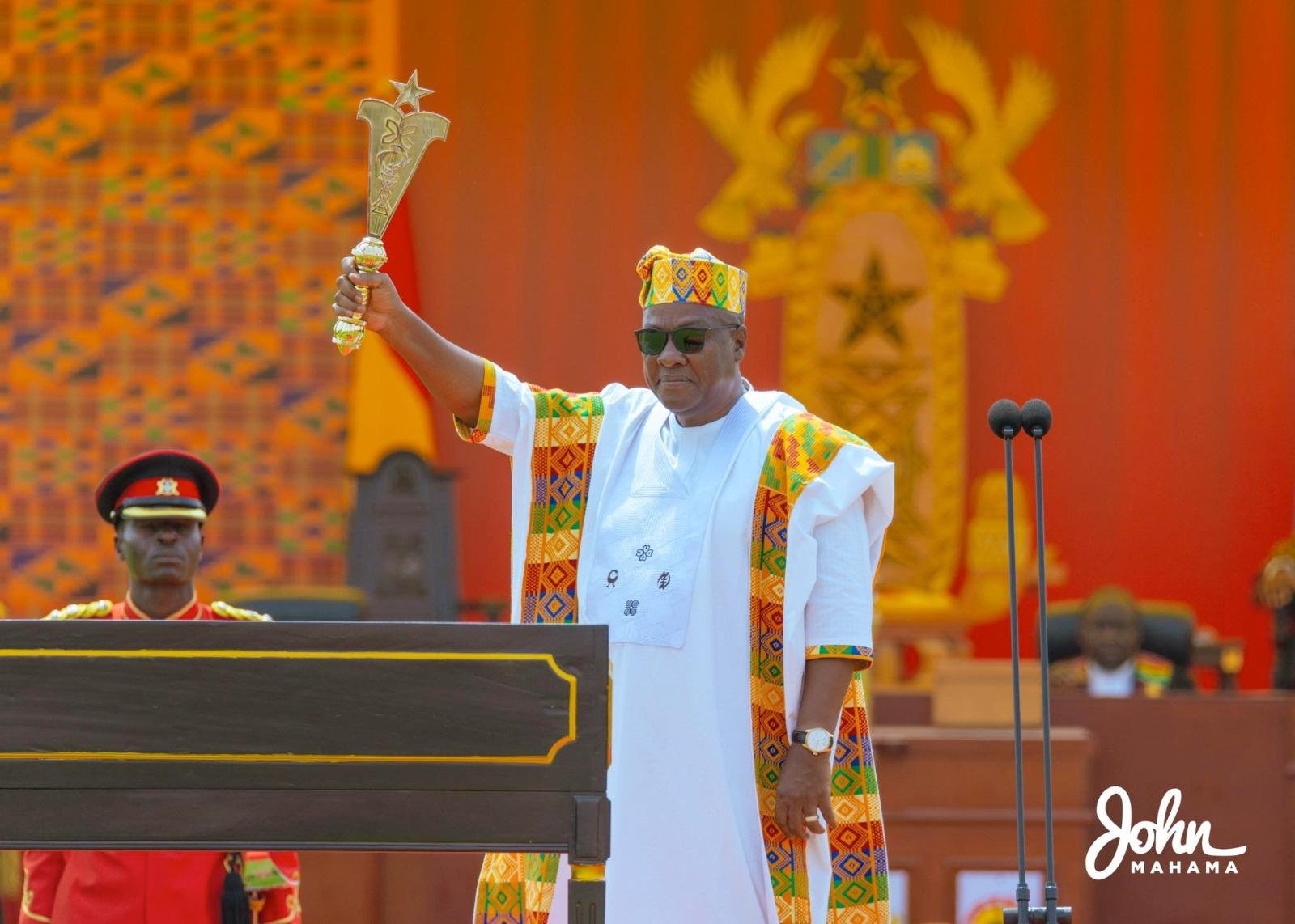
President John Dramani Mahama has warned that democracy cannot sustain itself unless leaders and citizens take deliberate steps to protect and strengthen it.
He was speaking at the 2025 Democracy League Dialogue, held at the Accra International Conference Centre yesterday.
The event is a high-level forum organised by the Goodluck Jonathan Foundation in partnership with the Government of Ghana to examine the state of democracy in Africa under the theme “Why Democracies Die.”
The Dialogue brought together former heads of state, policymakers, civil society leaders, faith figures, and scholars to reflect on the erosion of democratic norms, challenges facing governance in West Africa, and ways to make democracy more sustainable.
It aims to generate practical recommendations to prevent democratic backsliding and to strengthen institutions across the continent.
Recalling his inauguration years ago, President Mahama said the loudest applause at the time was reserved for leaders from countries under military rule, a reaction he described as troubling.
“That should give us a pause for thought. That should make us think and ask ourselves questions,” he said.
He stressed that democracy must deliver opportunities and prosperity to citizens if it is to remain relevant. Quoting Omar Touré, he noted, “Whatever system of government you have autocracy, democracy, theocracy, whatever, if it does not deliver opportunities and prosperity to the people, it will not survive.”
The President also cited surveys such as Afrobarometer, which reveal that many young Africans were losing faith in democratic governance.
He said it was alarming that some young people indicated they would prefer to live under military governments, warning that such sentiments pose a serious threat to democratic stability.
President Mahama urged African leaders and citizens to work together to strengthen institutions, deliver development, and restore confidence in democracy, insisting that the system can only endure if it truly works for the people.
By: Jacob Aggrey






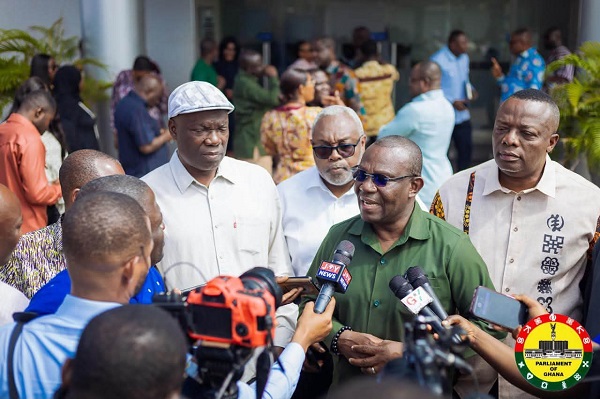
The Parliamentary Select Committee on Energy has appealed to the Ministry of Finance to release GH¢5.6 million to the Petroleum Commission to enable it to establish and operate a world-class data centre.
According to the Committee, access to the funds will strengthen the Commission’s capacity to manage critical upstream petroleum data and improve its operations.
Speaking during the appeal, Chairman of the Committee, Emmanuel Kwasi Bedzrah, said the move was crucial to efforts to revitalise Ghana’s upstream petroleum industry and increase oil production.
He noted that although investment and hydrocarbon production had declined in recent years, Parliament’s approval of an extension of the petroleum agreement to 2030 had attracted additional funding and contributed to an increase in production from about 80,000 to 120,000 barrels per day.
Meanwhile, concerns have been raised over repeated budget allocations for oil exploration in the Voltaian Basin.
Mr. Bedzrah stressed that funds approved for exploration must produce tangible results, adding that the Committee would require clear evidence of progress before supporting future budget allocations for the programme.
The appeal was made during a working visit to the Petroleum Commission as part of the Committee’s oversight activities to assess its operations and management procedures.
During the engagement, the Chief Executive Officer of the Petroleum Commission, Emeafa Hardcastle, took the Committee through the Commission’s working procedures and mandate, which includes regulating, managing and coordinating upstream petroleum activities.
She disclosed that since assuming office in 2025, government had pursued measures to reverse the decline in crude oil production, sustain output and reposition Ghana as an attractive destination for investment in Africa’s increasingly competitive petroleum sector.
In addition, she said government had secured fresh commitments of about US$35 billion to help revitalise the sector.
As part of the oversight exercise, the Committee is expected to conclude its monitoring visit with engagements at the National Petroleum Authority (NPA) and the Ghana Oil Company Limited (GOIL).
By Edem Mensah-Tsotorme
News
“No civilisation deserves to be annihilated” – Mahama calls for dialogue on global conflicts at UNGA 81
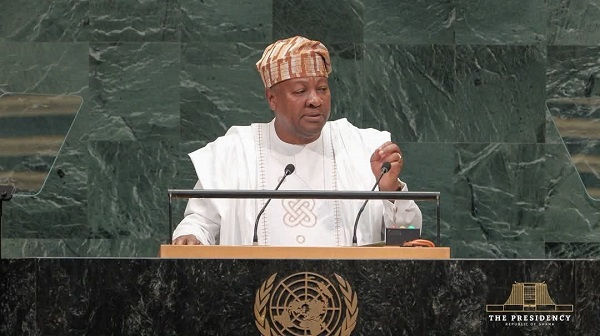
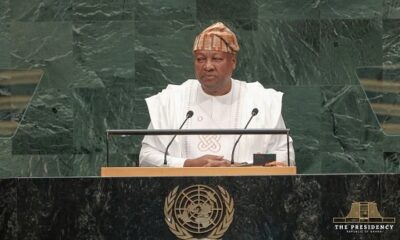
President John Dramani Mahama has called for solidarity and dialogue in resolving global conflicts, insisting that no civilisation deserves to be wiped out.
“No human civilisation deserves to be annihilated, certainly not a member state of the United Nations,” President Mahama stated in his address at the 81st United Nations General Assembly in New York.
He called for solidarity with nations facing terrorism, especially the Alliance of Sahel States (AES), and for a uniform approach to conflicts in Europe, the Middle East and Africa.
On the Middle East, the President called for a return to negotiations, saying “The current Middle East crisis is having a deleterious effect on the world economy.”
“I believe that dialogue can resolve even the most intractable of problems,” he added.
By Edem Mensah-Tsotorme

 Entertainment1 week ago
Rhythms On Da Runway returns November 28 with 16th edition themed ‘Unbound’
- Entertainment1 week ago
Ohemaa Mercy’s Tehillah Experience outfit was priestly regalia, not costume – Management clarifies
 News1 week ago
Janet Asana Nabla criticises Mahama over China curriculum controversy involving Haruna Iddrisu