News
COVID-19: 624 out of 695 workers of Tema fish processing company test negative

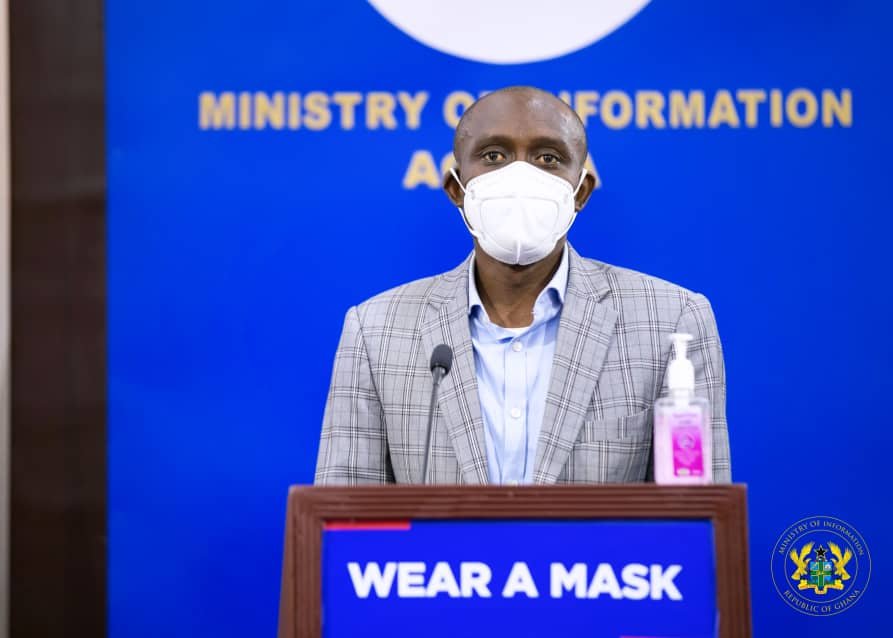
At least 624 out of a total of 695 workers who tested positive for coronavirus (COVID-19) at the Tema-based fish processing company have recovered as the factory prepares to resume operations.
According to the Ghana Health Service (GHS), after all 1,300 employees of the company were tested for the virus, an additional 162 workers were found to have been exposed, resulting in the shutdown of the factory.
It would be recalled that in his last address, President Nana Addo Dankwa Akufo-Addo disclosed that one person had initially infected 533 employees of the fish processing company.
The infections, he indicated, were identified as part of a backlog of nearly 921 cases going back as far as April 26 that was only recently being reported.
Updating the country yesterday following an assessment into the outbreak at the factory, the Head of Disease Surveillance at the Ghana Health Service (GHS), Dr Franklin Asiedu Bekoe said aside non-adherence to social distancing protocols, facilities like a staff bus and clock-in machines had exposed workers to the virus.
“Most of them were asymptomatic and currently we are aggressively identifying contacts of seven people who tested positive because we realise most of the workers live outside Tema and may have infected other people.”
To forestall any occurrence, Dr Bekoe said the GHS had ensured that the factory had in place hand washing facilities; “we have done floor marking to demarcate where people must stand, staff are to wear face mask and placed sanitisers at vantage points.”
“We have also created a holding room at the factory and a temperature check point at the entrance to quickly isolate workers in case of any event and with the level of compliance seen, they are ready to start operations soon,” he said.
In the case of Obuasi in the Ashanti Region, where a trader was said to have infected 17 others at the Obuasi central market, Dr Bekoe indicated that fact-finding visit to the area found, among others, that most individuals refused to wear face masks, “despite how densely populated the area is.”
“Although AngloGold Ashanti has a prominent hospital, we found that they did not have a treatment facility. You also do not see people wearing face masks and there is no holding or quarantine facility,” he observed.
To this end, the Head of Disease Surveillance said the GHS has initiated measures, including a voluntary mass testing programme, for high risk populations to curtail the spread of COVID-19 in the area.
“We are going to carry out enhanced contact-tracing in the very high-risk areas. Obuasi has very densely populated areas like Central Market, Anyinam, Asankore, Wawaso, among others. We are also going to do mass voluntary testing among certain risk groups, including taxi drivers and food vendors as a way of trying to address surveillance and contact management in Obuasi,” he said.
Dr Bekoe announced that in addition to resourcing the Kumasi Centre for Collaborative Research (KCCR) to improve testing, government had secured a 100-bed facility as an isolation centre to help in case management.
Ghana now has 5, 918 confirmed cases of COVID-19, with 1,754 recoveries and 31 deaths.
BY ABIGAIL ANNOH



Management and staff of Owass FM have announced the passing of media personality, comedian and politician Seth Kwame Dzokoto following a medical emergency during a live morning show discussion at the station earlier today.
According to the station, Dzokoto was participating in a panel discussion on its morning show “Oman Nkoso” when he suddenly took ill and collapsed.
A statement from the station said its team immediately rushed him to the hospital for medical attention, but he was pronounced dead by the attending medical doctor upon arrival.
“We are deeply saddened by this unfortunate incident, which occurred in the course of our regular programming. Our thoughts and prayers are with his family, loved ones, colleagues, and all those who have been affected by his passing,” the statement said.
Management acknowledged that information about the incident is already circulating in the public domain, but appealed to the public and colleague media houses to respect the privacy of the bereaved family and refrain from circulating unverified information or speculation regarding the circumstances of his death.
Owass FM extended its heartfelt condolences to the family of Seth Kwame Dzokoto.
By Edem Mensah-Tsotorme

The State through the Attorney General (AG) has filed an appeal at the Supreme Court challenging the suspension of the trial in the case of The Republic v Hanan Aludiba and Faiza Seidu.
On Monday, the Court of Appeal suspended the trial in the case. But the prosecution says it has filed an appeal against the suspension order.
According to the update, the law does not allow a criminal trial to be suspended simply because an accused person has complained about some of the charges on the charge sheet, particularly when those complaints were dismissed as meritless.
It argues that if the Court of Appeal’s decision is allowed to stand, no prosecution will ever be possible, since all it would take for a trial to be suspended is an accused person complaining about anything on the charge sheet.
By Edem Mensah-Tsotorme