News
Confusion in Tema (Final part)

- /home/u249204778/domains/spectator.com.gh/public_html/wp-content/plugins/mvp-social-buttons/mvp-social-buttons.php on line 27
https://spectator.com.gh/wp-content/uploads/2026/06/A-taxi-station-1000x600.jpg&description=Confusion in Tema (Final part)', 'pinterestShare', 'width=750,height=350'); return false;" title="Pin This Post">
- Share
- Tweet /home/u249204778/domains/spectator.com.gh/public_html/wp-content/plugins/mvp-social-buttons/mvp-social-buttons.php on line 72
https://spectator.com.gh/wp-content/uploads/2026/06/A-taxi-station-1000x600.jpg&description=Confusion in Tema (Final part)', 'pinterestShare', 'width=750,height=350'); return false;" title="Pin This Post">
Tema is a city that has something truly mysterious about it. Check Site 21 and ask to see Lama and he’d brief you all about the genesis, exodus and revelations of the harbour city.
Crash into Kwame Korkorti and he’d analyse the chemistry underlying the behaviour of Tema residents. And I invite you to meet honourable Kofi Owuo alias Death-By-Poverty who is happiest when cost of living is high.
It started as an industrial city, a workers’ paradise, born of Kwame Nkrumah, suffered under Busia (he sold TDC houses), was crucified on the cross of scanty rainfall and high cost of cocoyam. Today, Tema is like Hong Kong, a very expensive city. You even have to pay for rubbish you dispose yourself.
Even Ashaiman otherwise known as Hanoi is better, enjoying a very low cost of living. The only difference is that in Hanoi, you sometimes have to live with pigs, and pigs are not gentlemen at all. They don’t have character!
Yes, talk about Tema and you’re talking about a place like Bronx or Manhattan, a boiling pot of all ethnicities and races.
People come from the deepest jungle of Brong Ahafo where monkeys are next-door neighbours. You’ll find a confused teenager fresh from Jamasi shoe-shining and addicted to kokonte. You won’t fail to notice a retired seaman who has forgotten he is from Elmina and needs to go back home and die. And you’d find an array of East Asians but you’ll never know which is the Chinese, Japanese, Korean or Filipino. They sneeze the same way!
Home life in Tema is serene except that when a housewife is peeling cassava for fufu, a stubborn goat may approach her and ask for a bite. If she refuses, the goat may decide to take a chunk by force. You can’t drive it away using a kitchen-fan, so you have to use blows. But if the animal is a southpaw, it becomes a challenge for the angry housewife.
The cosmopolitan nature of the city makes night life interesting. You’ll meet people of all kinds, shapes, haircuts and mentality and you learn a lot from each other. It is even more enjoyable when you can blow beer and kebab regularly without developing financial constipation.
Tema used to be a very peaceful, orderly place until recent times when the Black Cat incident caused a big stir. Instead of the Tema Metropolitan Assembly (TMA) taking time to review the method used in dealing with the floating drivers, they discharged Black Cat and replaced him with a more formidable gun-wielding task force. The move was seen largely as a sure recipe for imminent clash, because the LTs and minibuses were still being chased around in the metropolis, this time with warning shots.
At least, Black Cat wasn’t using firearms for the operation. He used muscle and ferociousness. Compared to the new task force, Black Cat was a more benevolent enforcer. And with the new task force, even taxi drivers were not permitted to stop and pick passengers. What a regulation!
It didn’t take a prophet of the calibre of Elijah to predict that another nasty incident was in the pipeline. What beat the imagination of everybody was why the Metropolitan Chief Executive still endorsed the use of the task force following the turbulent Black Cat incident.
Well it happened again that a taxi driver was arrested by task force men and during the confrontation, the man was allegedly brutalised and killed. News spread city-wide about the death and angry drivers, allegedly supported by other residents, charged on the premises of the TMA.
On the occasion, the Chief Executive, Nii Armah Ashittey, was reported to have been smarter than a rat. With incredible speed, he dashed downstairs, dived into his car, and his experienced driver changed gears and fired the accelerator and wheeled him to safety. God bless his soul!
There was wanton destruction of property and looting. By the following day, it turned out that the dead man whose obituary notice caused the commotion was alive, after all, hale and hearty. Another miraculous resurrection was registered in the annals of the harbour city. The dead man was said to have only been treated and discharged.
The next day, suspects were rounded-up- 239 of them including a few women. They were brought to the Community One Police Station, screened and 18 put before court. The courts will decide their innocence or guilt and punishment thereof.
Meanwhile, certain issues must be resolved once and for all. First, much as the offending drivers are misconducting themselves and defying metropolitan rules and regulations, the mode of arresting them is crude and uncivilised.
You don’t forcibly arrest a taxi driver and start dragging him for stopping to pick a passenger. If anything, he must be given a ticket or summoned.
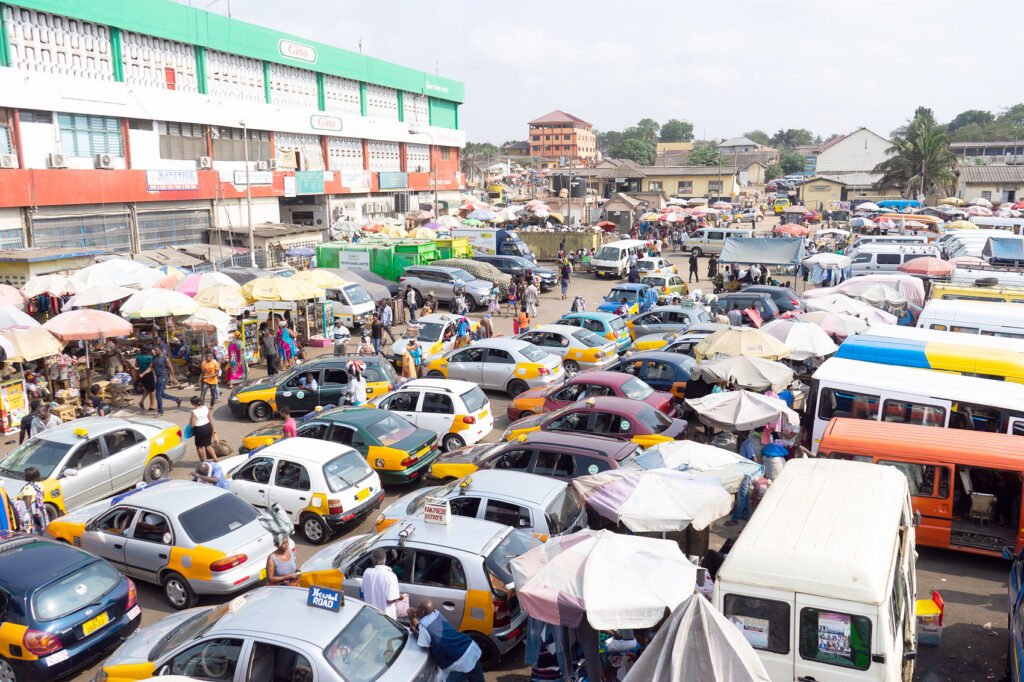
In any case, Tema is the only city taxis are mandated to operate from a rank and must not pick passengers in town. So if you’re three miles from the taxi rank, you must walk there to pick a taxi. I don’t think this is fair to anybody!
Secondly, the GPRTU must find a solution to the problem of floating drivers without causing pandemonium because using a task force is proving dangerous for everybody and it has caused a major disquiet twice already, aside many minor ones.
When President Rawlings visited Tema a day after the disturbances that is on May Day he stressed on the need to maintain peace and order in the city. It goes without saying that violence and disturbances must be prevented at all cost. And if the task force which is currently still operating is not disbanded, another, even nastier incident, is bound to happen.
If Nii Armah Ashittey is still unable to comprehend the intricacies of the problem and foresee that with the task force still in place, trouble is again inevitable, then it is very unfortunate. It has happened twice already and we have still not learnt a lesson!
I urge him to sit down with the GPRTU executives and do some brainstorming about how best to solve the problem without using a task force.
Residents of Tema want to live peacefully and deserve that right!
This article was first published on Saturday May 18, 1996


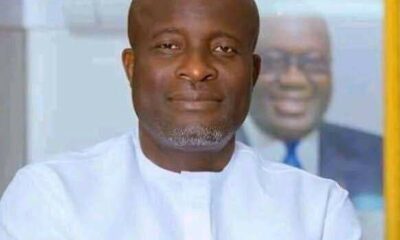

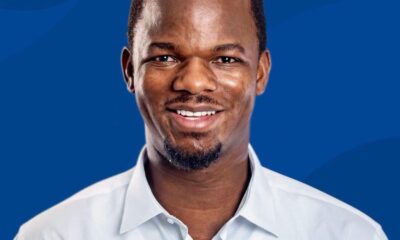




Dr Mahamudu Bawumia has become the new leader of the New Patriotic Party (NPP) after delegates approved a constitutional amendment making the party’s flagbearer its leader.
The amendment was approved on Saturday, October 3, 2026, at the NPP’s National Delegates Conference held at the Baba Yara Sports Stadium in Kumasi.
The decision makes Dr Bawumia the leader of the NPP as the party prepares for the 2028 general elections, having earlier been elected as its presidential candidate.
The change was contained in one of 14 constitutional amendments presented to delegates by the party’s Constitution Amendment Committee.
The amendments were approved through a voice vote, with delegates responding in favour of the motions.
The latest amendment reverses a provision approved at the party’s January 31, 2026 conference, which made the National Chairman the leader of the party at all material times.
The approved amendment provides for the flagbearer to assume the leadership of the party when the NPP wins an election and the flagbearer becomes President.
The amendment also reinstates the President as a member of the National Executive Committee when the party is in government.
The Chairman of the NPP Constitution Amendment Committee, Frank Davies, explained that the amendments were necessary to address gaps identified in the party’s previous constitutional review.
The constitutional amendments formed the first part of the conference before delegates proceeded to elect new national executives.
A total of 7,163 delegates from all 16 regions participated in the conference, with voting conducted at 31 polling stations for nine national executive positions.
The Electoral Commission supervised the elections and verified delegates.
Other approved amendments include changes to the election of Vice Chairpersons, allowing candidates to contest specific Vice Chairperson positions instead of being ranked according to the number of votes they receive.
Delegates approved the appointment of three additional Vice Chairpersons, the creation of Deputy Communications Officer positions and the elevation of the Information Technology Officer to an executive position.
Addressing delegates after the constitutional amendments and as the party prepared for the national executive elections, Dr Bawumia called for unity and peaceful voting.
He urged the 47 aspirants contesting nine national positions to accept the outcome of the elections and continue working together for the party.
“Let us vote in peace, accept the results in good faith and leave Kumasi as one family,” he told the delegates.
Dr Bawumia congratulated all the aspirants for putting themselves forward to serve the party and urged those who won to reach out to their fellow contestants.
He assured those who lost that the party would still need their experience and contribution.
The NPP flagbearer further reflected on the party’s reorganisation since the December 2024 general elections, saying the party had listened to its grassroots members and learnt lessons about its organisation, communication and engagement with supporters.
He noted that the party had elected its structures from the polling station to the regional level and had also begun preparations towards its next programme for government.
Dr Bawumia said his early election as the party’s presidential candidate had allowed him and the party to begin work on policy development ahead of the 2028 campaign.
He said various policy committees had been established and engagements with different groups and stakeholders were ongoing.
Turning to national issues, Dr Bawumia used his address to criticise the government over what he described as failures to fulfil several campaign promises.
He specifically questioned the progress of the NDC government’s proposed 24-hour economy, the women’s development bank, electricity tariffs, the cost of transportation and other economic challenges facing households and businesses.
On the economy, he defended the Domestic Gold Purchase Programme, arguing that the programme introduced under the previous NPP administration had contributed to stability in the Ghanaian currency.
Dr Bawumia further criticised the government over the stalled implementation of projects including Agenda 111 and raised concerns about the management of the Free Senior High School programme.
He addressed recent drug seizures involving consignments traced to Ghana, calling for a bipartisan parliamentary committee to investigate how such shipments were able to leave the country.
On the fight against illegal mining, popularly known as galamsey, he accused the government of failing to deliver on its promises to tackle the problem and restore polluted water bodies.
He criticised the government over promises relating to cocoa prices, teacher and nurse postings, the teacher licensure examination and payments to customers of collapsed financial institutions.
These claims formed part of Dr Bawumia’s political assessment of the NDC government’s performance and were presented by him as reasons why the NPP should return to government.
He accused the government of what he described as the “weaponization of state power” and alleged that different standards of justice were being applied to government supporters and opposition figures.
Dr Bawumia said the NPP would, if returned to power, pursue what he described as one standard of justice for all citizens regardless of political affiliation.
He ended his address by urging the incoming national executives to build a strong party organisation, focus on holding the government to account and communicate the party’s policies to Ghanaians.
The NPP’s new leadership structure and national executive team will now oversee the party’s reorganisation and preparations towards the 2028 general elections.
By: Jacob Aggrey

Newly elected National Organiser of the New Patriotic Party (NPP), Daniel Nii Kwartei Titus Glover, has pledged to work to ensure peace, unity and respect within the party as it prepares for the 2028 general elections.
Mr Glover said he would work to strengthen the party and help actualise the vision of its flagbearer, Dr Mahamudu Bawumia, becoming President of Ghana in 2028.
He made the remarks in his victory speech at the Baba Yara Sports Stadium in Kumasi after winning the NPP National Organiser position at the party’s National Delegates Conference on Saturday, October 3, 2026.
Mr Glover polled 2,964 votes to win the election, defeating his closest contender, Ali Maiga Halidu, who obtained 2,231 votes.
Emmanuel Korsi Bodja polled 145 votes in the contest.
Mr Glover thanked delegates for electing him and promised to work hard to justify the confidence they had placed in him.
“I will work very hard. What I’ll bring is peace, unity, respect, and that we use for governance,” he said.
He explained that peace, unity and respect were necessary for the party to effectively organise and prepare for the elections.
“If you are doing governance and you don’t bring peace and unity and respect, the work will be hard,” he added.
Mr Glover acknowledged the task ahead of the newly elected national executives, describing it as a major responsibility that would require commitment from members.
“The job is big. There’s a lot of work ahead of us. We need love. We need peace. We need unity,” he said.
He urged members of the NPP to remain united and work together beyond the internal elections.
According to him, his focus would be to contribute to the party’s efforts to win the 2028 general elections, with Dr Bawumia’s presidential bid forming a central part of that objective.
“Dr Bawumia has to become the President of this country. That’s the vision for NPP, that we have to work hard for Dr Bawumia to become the President of the Republic,” Mr Glover stated.
He said he was determined to use his new position to contribute to the development of the NPP and Ghana.
Mr Glover’s election forms part of the new national executive team elected by delegates at the conference to lead the affairs of the party.
The newly elected executives are expected to oversee the party’s reorganisation and strengthen its structures as the NPP prepares for the 2028 general elections.
By: Jacob Aggrey