Hot!
Children abandon classroom school for game centres

- /home/u249204778/domains/spectator.com.gh/public_html/wp-content/plugins/mvp-social-buttons/mvp-social-buttons.php on line 27
https://spectator.com.gh/wp-content/uploads/2022/04/Some-of-the-children-at-the-game-centre.jpg&description=Children abandon classroom school for game centres', 'pinterestShare', 'width=750,height=350'); return false;" title="Pin This Post">
- Share
- Tweet /home/u249204778/domains/spectator.com.gh/public_html/wp-content/plugins/mvp-social-buttons/mvp-social-buttons.php on line 72
https://spectator.com.gh/wp-content/uploads/2022/04/Some-of-the-children-at-the-game-centre.jpg&description=Children abandon classroom school for game centres', 'pinterestShare', 'width=750,height=350'); return false;" title="Pin This Post">
Despite effort by the Gaming Commission to phase out analogue and non-digital slot machines within the gaming landscape in Ghana, it appears the taskforce still has a long way to go.
The ‘clampdown’ initiated on January 1, 2022, formed part of measures by the Comission to upgrade the industry to meet international best practices and protect minors.
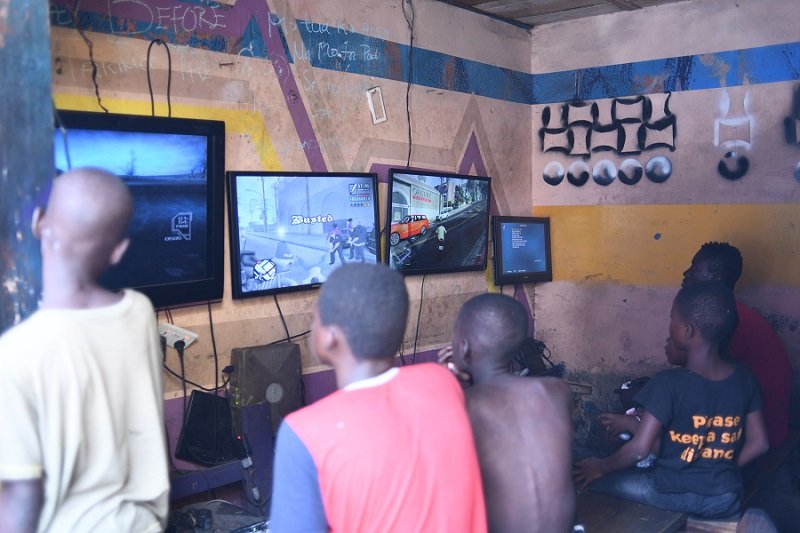
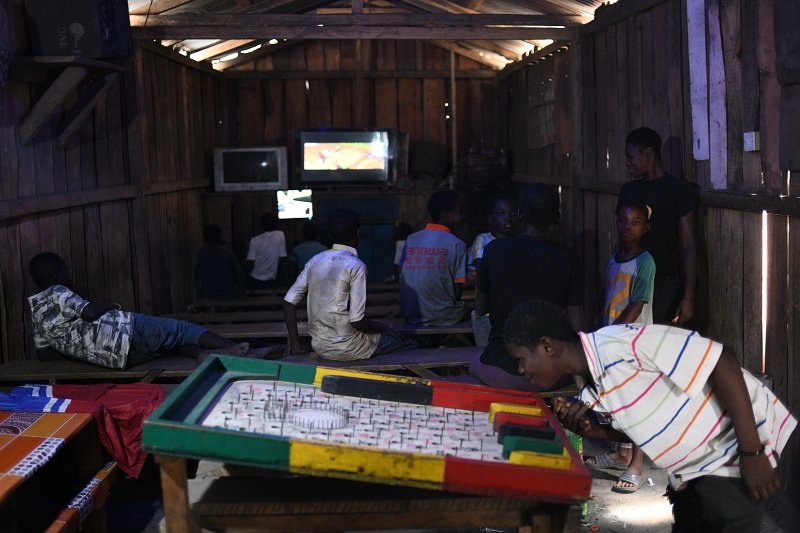
However, a number of these children at Alabar in the Kumasi Metropolis in the Ashanti Region and some parts of Accra continue to while away time at gaming centres at the expense of their education.
These children aged between eight and 12 are often seen in makeshift wooden structures in the early hours of the morning playing their favourite video games while others gamble with slot machines.
Mr. Mohammed Kudus, a game centre owner at Alabar, admitted the centre was opened to adults but the children found their way to the place at odd times.
According to him, some of them lived in the slum with single parents who struggled to cater for their basic needs and that some of the parents also tried to prevent their wards from patronising the venue but “they kept coming.”
He said the centre had strict rules of conduct including sacking children who came there in school uniforms.
Madam Beatrice Baiden, Public Affairs Manager of the Gaming Commission, said the proliferation of slot machines and exposure of children to raffles in obscure places were against the law.
She said the Commission would continue to ensure that persons below 18 years were not exposed to gaming, as stipulated in the Gaming Act, 2006 (Act 721) and appealed to the public to report operators who assembled such machines.
Ms Baiden added that the regulator was committed to the development of an industry that supported gaming as a recreational or leisure activity in a responsible manner.
Speaking to Ms. Daniela Ruedisueli Sodjah, one of the founders and the Executive Director of Chance for Children, a Non-Governmental Organisation, commenting on the issue of street children attributed the challenge to weak social support systems.
She, therefore, called on partners and the government to develop strategies to protect vulnerable children and help secure their future.
By Geoffrey Buta



The Tema Regional Police Command has arrested a 32-year-old man for allegedly posing as a soldier and extorting money from unsuspecting members of the public at Ashaiman.
The suspect, identified as Bright Atsu Kudiabor, was arrested by the Ashaiman Police on Wednesday, September 16, 2026, at about 7:00 a.m.
According to the Police, he was arrested at an area known as “I Shall Return”, where he was allegedly parading himself as a soldier and demanding money from people.
The Police said Kudiabor, who is an ex-convict, was initially arrested by personnel of the Ghana National Fire Service in Ashaiman with assistance from other members of the public.
A search conducted on him after he was handed over to the Police reportedly led to the recovery of a set of military camouflage uniform.
The suspect is currently in Police custody and assisting with investigations.
The Tema Regional Police Command said he would be processed for court after investigations are completed.
The Police urged the public to remain vigilant and report anyone who falsely presents themselves as a soldier or a member of another security agency to deceive or extort money from the public.
By: Jacob Aggrey

Volta Regional Minister, James Gunu, says the Volta Region holds enormous agricultural potential and efforts must be geared towards connecting farmers to the needed resources to unlock that potential.
He said focus must be on linking farmers to resources, technology, financing and markets to increase production, create jobs and build sustainable livelihoods.
Hon. Gunu made the remarks at the national launch of the Ghana Tomato Self-Sufficiency Initiative (GHATSI) held at Anloga in the Volta Region on Tuesday, September 15.
The initiative, under the theme “Produce at Home. Feed the Nation. Export the Surplus,” seeks to boost local tomato production, processing and marketing while reducing Ghana’s heavy reliance on imported tomatoes.
The launch was attended by the Minister for Food and Agriculture, Eric Opoku, his Deputy, John Setor Dumelo, Feed Ghana Coordinator, Bright Demordzi, Members of Parliament, traditional leaders, MMDCEs, farmers and other stakeholders.
Mr.Gunu expressed appreciation to the Minister for Food and Agriculture for the support announced for the region, including two excavators, 200 cartons of organic fertiliser, and GH¢200,000 for Ms. Kuatudzo Esther Dela, a tomato farmer and processor from Ziope.
He described the initiative as an important step towards making agriculture a stronger driver of food security, job creation and economic growth in the Volta Region.
By Edem Mensah-Tsotorme