News
‘Check up on wards who don’t visit after getting married’

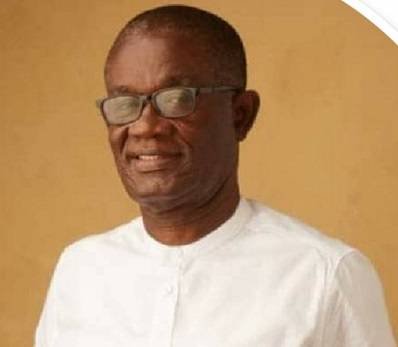
Rev Albert Seth Ocran, the Former General Director
for the Torchbearers Mission Incorporated
A former General Director of the Torchbearers Mission Incorporated (TMI) Rev. Albert Seth Ocran has advised parents to check up on their children, especially daughters, who are unable to visit them after getting married.
TMI is a missionary organisation at Korle Gonno in Accra. “Sometimes even the parents do not visit their children and they always give excuses. When you observe this trend, do not take it for granted because there is usually more to the story” he said.
Rev. Ocran was speaking in an interview with The Spectator on Friday on the need to draw the attention of parents to the subject of controlling behaviours of spouses.
According to him, this issue causes isolation among spouses, family and friends, hence there was the need for parents to be vigilant to address such issues.
He said there were signs to indicate when a spouse was being abused, which include restricting access to financial resources, employment, education or even medical care.
Rev. Ocran said most often when parents of such spouses try to make enquiry about why their children do not visit them, they always give excuses, with the most common one being “I am busy”.
He observed that in some cases, children of such spouses were not spared, as they had to endure the abuse of not being able to get in touch with others.
He said abusers ensure that their victims do not get access to the outside world to communicate their pain with them. “It is even worse when the couple lives abroad or far from their families
From Dzifa Tetteh Tay, Tema.

News
GES directs Ashanti Regional, Obuasi Municipal Education Directors to step aside over Obuasi SHTS scandal

The Management of the Ghana Education Service (GES) has directed the Ashanti Regional Director of Education, Dr. William Amankrah Appiah, and the Obuasi Municipal Director of Education, Mr. Kwamena Owusu-Nketiah, to step aside with immediate effect.
The directive forms part of ongoing investigations into allegations of sexual misconduct involving the headmaster of Obuasi Senior High Technical School (SHTS), Mr. Zakaria Abdulai.
According to GES, the decision is intended to ensure that the investigations proceed without potential interference, nor the perception of it.
The two directors are to hand over their offices and all state property in their possession to the Deputy Ashanti Regional Director of Education, Mr. Thomas Kwame Boateng.
Management added that the headmaster, Mr. Zakaria Abdulai, also remains interdicted and therefore urged the public to ignore any news circulating that he has been cleared.
Management is calling for calm, support and cooperation as thorough investigations into the matter continue.
By Edem Mensah-Tsotorme
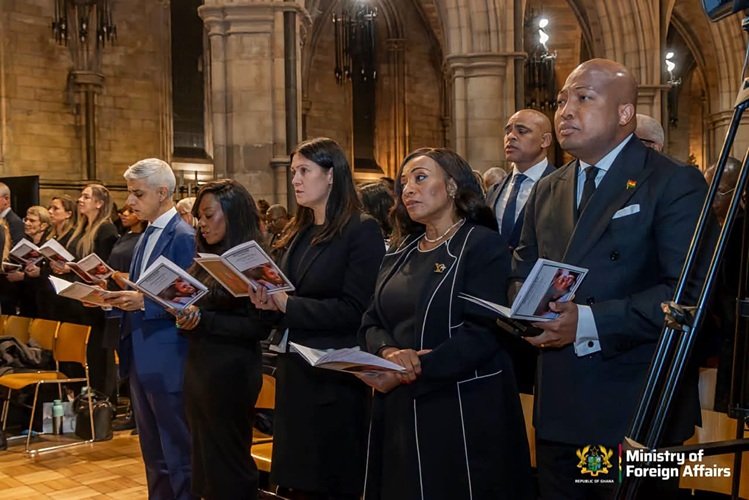
The Minister for Foreign Affairs, Samuel Okudzeto Ablakwa, has joined the family of the late Professor Jason Atta Kwei Arday, the Ghanaian community in the UK, and other dignitaries for a memorial service in Southwark, UK.
In a post, Mr. Ablakwa described the service as deeply moving and unforgettable, held in honour of the late professor’s memory.
According to him, in keeping with the government’s pledge, he joined the family, Ghana’s High Commissioner to London, British MPs, Ministers, the Mayor of London, Cambridge scholars, Prof. Arday’s students and loved ones to pay respects and honour his inspiring legacy.
Mr. Ablakwa noted that Prof. Arday’s accomplishments as the youngest Black professor appointed at the University of Cambridge and his widely appreciated charitable contributions will continue to inspire generations.
“The Government and People of Ghana will continue to stand by our compatriots everywhere they are in the world. As we do so, we profess our commitment to justice, equality and the creation of a new world,” he said.
He prayed for fortitude for the family in what he described as an extraordinarily difficult time.
“We shall always remember Prof. Arday for his response when asked what he will wish to do to change the world: ‘I would take a thread and a needle, and I’d interweave love into our society’,” Mr. Ablakwa added.
By Edem Mensah-Tsotorme