Features
Celebrating Ghana’s 65th Independence Anniversary for what achievement?


The nation Ghana, celebrated its 65th independence anniversary after freeing itself from British colonial administration in 1957. This year’s celebration took place in the Central Regional capital, Cape Coast, on Sunday, March 6, 2022, under the theme, “Working together, bouncing back together”. The usual euphoria, ecstasy and funfair that were associated with past celebrations were in vogue.

It was delightful to watch a match past of combined team from the security services and school children drawn from the Cape Coast Municipality. The Head of State, President Nana Addo Dankwa Akufo-Addo, took the salute. In attendance were the Vice President, Alhaji Mahamadu Bawumia and his wife Samira, Mrs Rebecca Akufo-Addo, wife of the President and other dignitaries including the Prime Minister of Barbados who was the Special Guest of Honour.
TRIBUTE TO THE ‘BIG SIX’
The achievement chalked so far by the country would not have been possible without paying tribute to the efforts of the Founding Fathers of the United Gold Coast Convention (UGCC), popularly referred to as “The Big Six”. They were, Osagyefo Dr. Kwame Nkrumah, Ebenezer Ako-Adjei, Edward Akufo-Addo, Joseph Boakye Danquah, Emmanuel Obetsebi-Lamptey and William Ofori-Atta, all of blessed memory.
History tells us that in August 1947, these great men laid the foundation for the Gold Coast’s struggle for independence of which Osagyefo Dr. Kwame Nkrumah became the first Prime Minister of Ghana. In his maiden speech, Dr. Nkrumah said, “At long last, the battle has ended, and thus, Ghana your beloved country is free forever.” He did not end there but went further to state that, “Our independence is meaningless unless it is linked up with the total liberation of Africa”.
Dr. Nkrumah later became Ghana’s first elected president, having won on the ticket of the Convention People’s Party (CPP). Nkrumah’s tenure as president was short-lived and was overthrown in a coup led by Col. Emmanuel Kwasi Kotoka on February 24, 1966.
FOURTH REPUBLICAN ERA
In 1992, Ghana ushered in the Fourth Republican era with Jerry John Rawlings being elected president on the ticket of the National Democratic Congress (NDC). It was during his reign that the 1992 Constitution of Ghana was drafted by some eminent citizens of the land. Since then, Ghanaians have continued to live under a democratic rule. After Rawlings, President John Agyekum Kufuor of the New Patriotic Party (NPP) took over from 2001 to January 6, 2009. The NDC assumed power again under the leadership of Prof. John Evans Atta Mills from 2009 until his demise on July 24, 2012. His vice, John Dramani Mahama, assumed the presidency and completed the term of his boss. In 2013, President Mahama assisted the NDC to retain power. He served his term until January 6, 2017, when he handed over to a newly elected President, Nana Addo Dankwa Akufo-Addo who rode on the ticket of the NPP to power. Currently, the NPP continues to govern the country after Nana Akufo-Addo being re-elected in 2020 general election.
VIEWS OF GHANAIANS ON THE CURRENT STATE OF THE ECONOMY
This brief history I have painted, tells us where we came from and where we are at the moment. Indeed, the country has made remarkable strides as far the democratic journey is concerned. However, we need to ask ourselves whether as Ghanaians, we are comfortable with the cost of living and, indeed, our living standards as we celebrate our 65th independence anniversary.
Sampling the views of Ghanaians about the current state of affairs as connected to the living standard of the people, one can conclude that times are very hard and people just cannot make ends meet. The general view is that the economy continues to go down and that nothing is working properly. To most Ghanaians, there is nothing to celebrate as far as the 65th independence anniversary is concerned because people are not in the right frame of mind. They allude that the general strike by workers of various public institutions, speaks volume of how the country has gone down the drain. Some allude that the country is suffering and currently is at the ‘intensive care unit of the hospital’.
WORLD BANK COUNTRY DIRECTOR’S ASSESMENT OF GHANA’S ECONOMY
In the words of the Country Director of the World Bank, “Ghana’s economic situation is very serious. Ghana faces a tough time to restore macro-economic sustainability. International rating agencies downgrade Ghana’s creditworthiness. Government struggling to pass key legislation in Parliament”.
Mr. Pierre Larporte, Director of World Bank for Ghana, who recently addressed an anniversary public lecture organised by OneGhana Movement on March 7, 2022, asked the government to be transparent with the citizens. “At the World Bank, we have not hidden the fact when we have held discussions with government officials and even Head of State that, even Ghana faces a very tough road ahead to restore macro sustainability. Yes, COVID-19 has not helped. But even before COVID-19, there were signs that the situation was getting a little bit challenging. So, the key thing is to be transparent with the people. Yes, the figures speak for themselves, but not everybody is educated as we are. Not everyone understands what the numbers mean, so it is important to talk about it like we are doing. More important is for us to find solutions to the problem,” the Country Director said
SUGGESTIONS FROM KWESI BOTCHWEY
On the other hand, a former Finance Minister, Prof. Kwesi Botchwey, has proposed some solutions to deal with the downward trend of the country’s economy and restore the confidence reposed in it over the years. According to him with the pace the country was going, it would not be able to move the bulk of its poor out of poverty in another generation. His suggestion was that the country needed to build consensus around the reforms that were necessary to resolve the nation’s creditworthiness.
To him, the real problem with our public finances was structural and would require a thorough review of all sources of pressure in the budget including every flagship programme and its sustainability and impact, all options must be on the table. We must not for instance, transition temporary spending incurred during the pandemic into public spending, when we are already struggling to collect revenues.
These are suggestions the government may have to consider irrespective of political party affiliation. We are in the boat together, and we can sink together when the situation demands. Therefore, it is important to welcome divergent and concrete suggestions and views from people with rich economic backgrounds to salvage the economy from total collapse.
INVESTORS’ POSITIONS ON CAPITAL MARKETS
Meanwhile on the international capital markets, we are being told that investors have signalled uncertainty about economic outlook and prospects of Ghana. Key rating agencies such as Moody’s Investor Services and Fitch Ratings we are told had all downgraded Ghana’s creditworthiness.
The on-going Russian-Ukraine terrible incident with serious ramifications in countries worldwide has aggravated the already hard conditions in Ghana affecting the generality of Ghanaians. Almost everything in Ghana, staple food items, water and even salt have seen an astronomical increase in price levels. As for the increases in fuel prices, there is nothing good to write about because almost every week, the prices are increased.
GHANAIANS NEED GOVERNMENT’S SUPPORT
Ghanaians are, indeed, suffering and are finding it difficult to make ends meet as goods and services are not affordable.For now, it is important for the government to find ways of mitigating the hardship of the suffering masses in the midst of the economic challenges, otherwise the celebration of the country’s 65th independence anniversary stands to be meaningless to the people.
Contact email/WhatsApp of author:
0277753946/0248933366
By Charles Neequaye


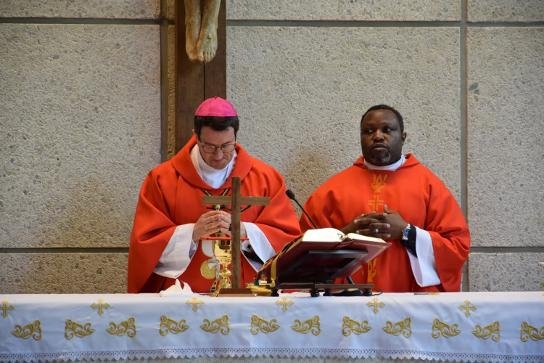
On Sunday, October 11, 2026, it was the turn of Ghanaian Catholics in Finland to lead the singing in the church service of the African Catholic Chaplaincy in Finland (ACCF).
It was indeed a spirit-filled feeling for worshippers present. And for the Ghanaian migrants, the occasion also brought back to them memories of church services in their home country, Ghana.
The ACCF has a roster for each country/community to sing from time to time. Next Sunday will be the turn of the Nigerian community. Other communities that usually sing are the Kenyan/Tanzanian community, the Cameroonian, the Ugandan, group, etc.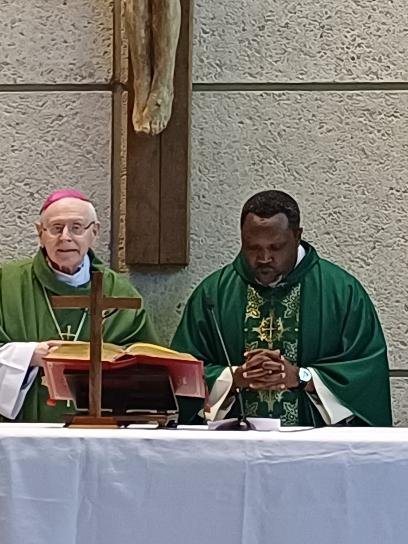
A powerful religious experience
The mass services of the Chaplaincy usually give a powerful religious experience and a display of cultural diversity, especially in occasions such as when the Bishop of Helsinki, Bishop Raimo Goyarrola, celebrated mass with the Chaplaincy on Pentecost Day, May 24, 2026.
There was a similar time of spiritual joy last month (September 27, 2026) when Emeritus Bishop Teemu Sippo, former Bishop of Helsinki, visited the Chaplaincy. Bishop Teemu was the main celebrant, assisted by the Chaplain, Reverend Father Thomas Otieno.
Last Sunday, Reverend Father Bernard Sor, a Ghanaian Catholic priest based in Austria, was the main celebrant in the mass service where he performed a rite of baptism. Fr Bernard had celebrated mass a few months ago when he visited his sister and her husband in Helsinki. 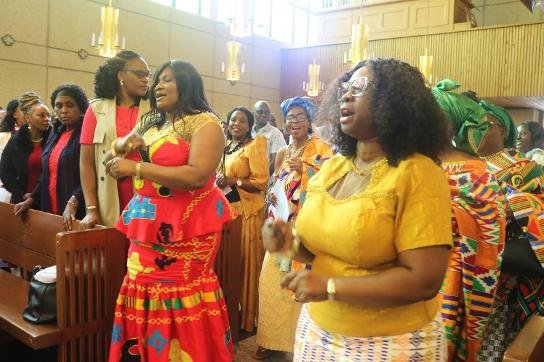
All these well-attended religious occasions indeed leave lasting memories. The homilies (peaching) by the priests usually emphasize religious tenets such as the importance of loving and serving God in truth, existing in peace with our fellow humans to promote unity in diversity, etc.
Unity in diversity and a colourful display of cultures
The African Chaplaincy church services usually produce impressive displays of diverse cultures from different parts of Africa and elsewhere. The events are often spiced by rich cultural displays of dances and colourful attires which are a delight to watch.
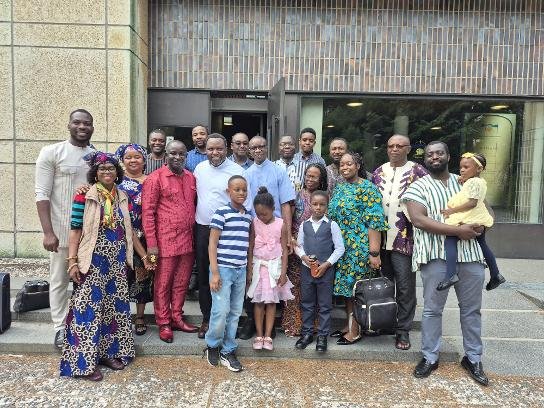
On special occasions, members of the Ghanaian Catholic community, in their gay and colourful kente attire and with adowa dance and music, usually lead the procession into the church. Other communities such as the Cameroonian, Nigerian, Kenyan and Tanzanian as well as Sudanese/South Sudanese groups also put up well-choreographed performances from their cultures.
The African Catholic Chaplaincy in Finland
The African Chaplaincy was founded on June 4, 2017, which was a Pentecost Sunday, in a Pontifical High Mass celebrated by Monsignor Emeritus Sippo S.C.I., the then Bishop of Helsinki, at the St. Mary’s Catholic Parish Church in Helsinki.
The Chaplaincy was created by Bishop Teemu in collaboration with the Diocesan body when they detected a great flocking of African immigrants to Finland, the majority of whom were Catholics. This was to give the immigrants a possibility to integrate into the Finnish society by worshiping as Catholics and in their African cultural identity.
The responsibility of the Chaplaincy was given by Bishop Teemu to Father Dr Leonard Wobilla Shwei, who is thus the first Chaplain and ably led the Chaplaincy. He was succeeded a few years ago by Father Thomas Otieno, who continues to move the Chaplaincy forward. Thank you!
GHANA MATTERS column appears fortnightly. Written in simple, layman’s terms, it concentrates on matters about Ghana and beyond. It focuses on everyday life issues relating to the social, cultural, economic, religious, political, health, sports, youth, gender, etc. It strives to remind us all that Ghana comes first. The column also takes a candid look at the meanings and repercussions of our actions, especially those things we take for granted or even ignore. There are key Ghanaian values we should uphold rather than disregard with impunity. We should not overlook the obvious. We need to search for the hidden or deeply embedded values and try to project them.
With Dr Perpetual Crentsil
SKIP THE QUEUE, TAP THE NEWS

You can now read the Ghanaian Times and The Spectator newspapers from the comfort of your device via TimesNewsPlus.
Join our WhatsApp Channel: https://whatsapp.com/channel/0029VbBElzjInlqHhl1aTU27
She did not find out he was cheating. She found out he was drowning.
It was two weeks after their beautiful wedding. The jollof was still in the fridge. A loan officer called her number-not his-and politely asked, “Madam, please tell your husband to pay his overdue loan. We have been calling him.”
That was how she discovered her new husband had entered their marriage with a hidden debt of over GH¢ 40,000. No cheating. No other woman. Just a financial secret.
And that is how many Ghanaian marriages begin to die. Not with a shout, but with a secret alert on a phone.
We prepare for the wedding. We do not prepare for the wallet.
What is money honesty?
Let me define it simply. Money honesty is not that you both earn the same. It is that you both know the same. It is the ability to sit down and say without fear:
“This is how much I earn.”
“This is how much I owe.”
“This is how I was raised to see money.”
“This is what scares me about money.”
Financial transparency is not about control. It is about clarity. You cannot build trust on top of secrets.
Many couples tell me, “Counsellor, we love each other, love will handle money.” I always answer, “Love is the car, but money honesty is the fuel. Love without honesty cannot move.”
How To Buy Your Marriage Insurance Today – My 5-Step Protocol
If you are engaged, newly married, or even 20 years in marriage, you can still fix this. At Counsellor Prince & Associates Consult—CPAC, this is what I give couples:
Step 1: The 90-Minute Money Naked Session.
No phones, no blame. Each partner writes down on paper: Monthly income, monthly debts, monthly family obligations, savings, and your biggest money fear. Then you exchange papers. Read it. Don’t react for 24 hours. Just absorb.
Step 2: Create OUR Money, YOUR Money, My Money.
You need three pots. OUR money for rent, food, school fees, utilities, properties, and the like— joint contribution. YOUR money and MY money—a small agreed allowance no one questions. This stops the feeling of being controlled.
Step 3: The No-Secret Debt Rule.
Agree from today: No new loan, no new hire purchase, no new family financial commitment above GHS 500 without telling each other first. Not permission, but information.
Step 4: Talk About Your Money Personality.
Are you a Spender or a Saver? Are you Risky or Safe? Most Ghanaian marriages are a Spender married to a Saver. Neither is wrong. But if you don’t understand your partner’s personality, you will call his saving “stinginess” and her spending “wastefulness.”
Step 5: Do a Monthly 30-Minute Money Date
Not an argument date. Light, with tea. “How did we do this month? What worried you? What should we plan for next month?” Couples who do this divorce far less.
My Final Word
Before you say “I Do” at the altar, have pre-marital counselling and also have the money talk on the sofa.
Ask your partner:
“If I lost my job today, how long can we survive?”
“What debt are you bringing into this marriage?”
“How much do you send to your family monthly and will that continue?”
If he or she gets angry that you asked, don’t get married yet. A person who is angry about accountability will be abusive about money.
Marriage insurance is not bought at Star Assurance or Enterprise. It is bought in honest conversations when no one is watching.
The wedding costs one day. The marriage costs a lifetime. Don’t enter a lifetime contract and covenant with hidden costs.
You can still insure your marriage today.
Source:
Counselor Prince Offei, CPAC’s founder, is a leading Mental Health Professional, Marriage Counsellor, Author, ADR Expert/Arbitrator, and Spectator Newspaper Columnist. He writes on relationships, marriage, parenting, special needs support, and their connection to mental health. For therapy, counselling, or enquiries, contact Counselor Prince & Associates Consult (CPAC) in Accra on 0559850604 / 0551428486.
SKIP THE QUEUE, TAP THE NEWS
You can now read the Ghanaian Times and The Spectator newspapers from the comfort of your device via TimesNewsPlus.
Join our WhatsApp Channel: https://whatsapp.com/channel/0029VbBElzjInlqHhl1aTU27