News
Caritas Ghana supports Old Fadama squatters

- /home/u249204778/domains/spectator.com.gh/public_html/wp-content/plugins/mvp-social-buttons/mvp-social-buttons.php on line 27
https://spectator.com.gh/wp-content/uploads/2020/05/A-benficiary-recieving-the-cash-donation.png&description=Caritas Ghana supports Old Fadama squatters', 'pinterestShare', 'width=750,height=350'); return false;" title="Pin This Post">
- Share
- Tweet /home/u249204778/domains/spectator.com.gh/public_html/wp-content/plugins/mvp-social-buttons/mvp-social-buttons.php on line 72
https://spectator.com.gh/wp-content/uploads/2020/05/A-benficiary-recieving-the-cash-donation.png&description=Caritas Ghana supports Old Fadama squatters', 'pinterestShare', 'width=750,height=350'); return false;" title="Pin This Post">
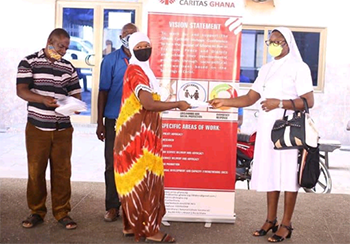
Caritas Ghana, the Relief and Development Agency of the Ghana Catholic Bishops’ Conference has supported 160 families made up of 630 people who were recently rendered homeless after their places of abode were demolished to pave way for the dredging of the Korle Lagoon.
Each displaced family received a token amount ranging between GH¢ 100.00 to GH¢ 200.00 at a ceremony held at the Sacred Heart Catholic Church, Derby Avenue in Accra.
The total disbursement with support from Star Ghana Foundation was GH¢ 20, 000.00
Old Fadama has been renamed City of God by the Catholic Archdiocese of Accra to replace what was popularly known as Sodom and Gomorrah.
Prior to the demolition on April 15, 2020, fire swept through the slum destroying hundreds of structures leaving over 800 people homeless.
Mr Samuel Zan Akologo, the Executive Secretary of Caritas Ghana, presenting the token to the beneficiaries, said the donation was part of the Ghana Catholic Bishops’ Conference’s COVID-19 National Response Plan to the vulnerable.
He said the plan was also to address the psychological and emotional needs of people and help provide authentic information about the pandemic together with the Ghana Health Service and the World Health Organisation (WHO).
He, however, described the demolishing exercise by the Assembly as unfortunate and prayed government and other organisations would support the needy.
“My wish is that these internally displaced persons from the recent demolitions in Old Fadama will eventually make the voluntary decision to return to their home communities.
“The misery and indignity that these families now live in Accra is just too painful to contemplate for any human being. Moreover, most of them have lost their jobs here in Accra due to the adverse impact of COVID-19,” Mr Akologo said.
“I am happy that Caritas Ghana can accompany and resettle them in their respective home communities. This is an opportunity to retrain them in new skills for more decent jobs in the future,” he added.
Rev. Fr. George Mensah, the Director of Caritas Accra admonished the beneficiaries, to make good use of the token presented to them and advised them to always ensure they wore face masks and practise social distancing to prevent them from contracting the coronavirus.
Yussif Alhassan Antabayim, the leader of the victims of the demolition thanked Caritas Ghana and Star Ghana Foundation for the support. The beneficiaries were mainly head potters and ‘okada’ riders.


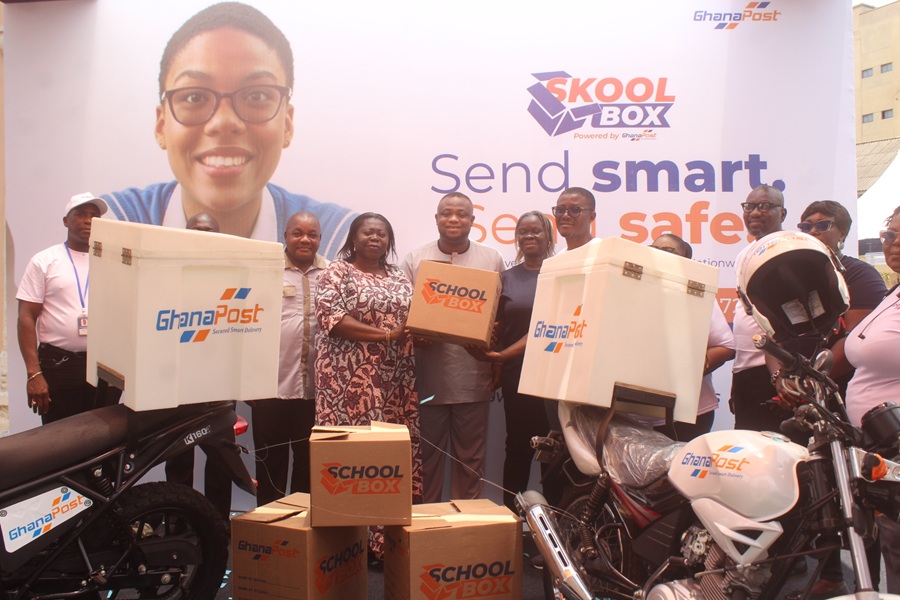
Ghana Post on Tuesday launched the ‘Skool Box’ initiative, one aimed at supporting education and delivery services to students in Accra.
The initiative forms part of Ghana Post’s broader transformation agenda to diversify its services and provide innovative solutions to everyday challenges faced by Ghanaians.
Launching the initiative, the Managing Director of the company, Mrs Rita Sraha, said the idea was inspired by the practical difficulties students and parents often faced in transporting school items, particularly at the beginning of the academic term.
According to her, the increasing space constraints in schools also makes it difficult for students to carry large quantities of belongings with them, creating the need for parents to find alternative ways of sending additional items to their children.
Mrs Sraha said the initiative aligns with the broader national agenda of using digital technology and innovation to expand opportunities, improve public services and strengthen Ghana’s economic capabilities.
The Managing Director however, stressed that the success of the initiative would depend on Ghana Post’s willingness to listen to users, learn from experience and continuously improve the service.
Mrs Sraha explained that Ghana Post was gradually expanding beyond its traditional postal operations through partnerships and services in areas including last-mile delivery, agency banking, logistics and insurance.
She said the School Box Service was another example of how the organisation was using its institutional capabilities to develop solutions to practical challenges within communities.
The Acting Chief Commercial Officer of Ghana Post, Mr Benard Yaw Atta-Sonno, said the service was designed to provide convenient and reliable delivery of school-related items while creating new business opportunities within the education sector.
According to him, the company was also strengthening its focus on digitalisation, customer experience, strategic partnerships and data-driven commercial decision-making.
“Our objective is clear: to build multiple sustainable revenue streams around the assets and capabilities that Ghana Post already possesses, while developing new capabilities for emerging markets,” he said.
He explained that, in the short term, the initiatives were expected to increase transaction volumes, improve the digitalisation of the company’s network, attract new customer segments and generate additional revenue from services that complemented its traditional postal operations.
He noted that the School Box, in particular, provided an opportunity for Ghana Post to develop recurring business around the annual school cycle, while creating opportunities to cross-sell other logistics and delivery services.
The launch forms part of Ghana Post’s wider efforts to modernise its operations and position the company as a diversified logistics and service provider beyond its traditional postal business.
By Linda Abrefi Wadie
SKIP THE QUEUE, TAP THE NEWS

You can now read the Ghanaian Times and The Spectator newspapers from the comfort of your device via TimesNewsPlus.
Join our WhatsApp Channel: https://whatsapp.com/channel/0029VbBElzjInlqHhl1aTU27
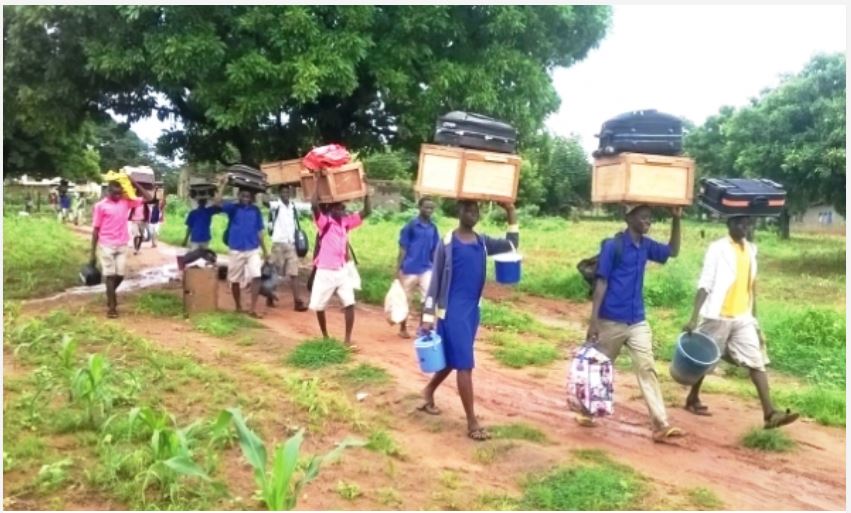
The Ghana Education Service (GES) has asked heads of schools not to turn away newly admitted students or refuse to accommodate them over metal trunks or wooden chop boxes.
“These practices may impose unnecessary financial burdens on parents and guardians who may be unable to afford alternative storage containers prescribed by individual schools,” the GES said in a statement.
“All students admitted to boarding accommodation should be treated fairly and accommodated without discrimination based on their economic circumstances or ability of their parents or guardians to purchase a particular brand or type of personal effects.”
The statement, signed by Professor Mrs Smile Dzisi, the Deputy GES Director-General, comes after Management of the Service received reports that some senior high schools and senior high technical schools (SHS/SHTS) were turning newly admitted students or refusing to accommodate them because they brought metal trunks, wooden chop boxes or other personal storage containers to school.
Consequently, the GES has asked regional directors to inform all heads to desist from turning away or refusing admissions to duly admitted students solely on the basis of the type of trunk, chop box, or personal storage container they bought to school.
Provided the item was reasonably sized, safe and did not pose risk to the health, safety or welfare of other students, those students must not be refused accommodation, it added.
The statement said: “Any reported case of a duly admitted student being denied accommodation or turned away solely because of the type of trunk, chop box or personal storage container brought to school should be investigated and same reported to management.”
“Any head of SHS/SHSTS who flouts this directive shall be dealt with in accordance with the applicable standards, regulation and laws of the service.” –GNA
SKIP THE QUEUE, TAP THE NEWS
You can now read the Ghanaian Times and The Spectator newspapers from the comfort of your device via TimesNewsPlus.
Join our WhatsApp Channel: https://whatsapp.com/channel/0029VbBElzjInlqHhl1aTU27