News
Capital Bank saga: Ato Essien ready to pay back GH¢27m to state


- /home/u249204778/domains/spectator.com.gh/public_html/wp-content/plugins/mvp-social-buttons/mvp-social-buttons.php on line 27
https://spectator.com.gh/wp-content/uploads/2020/05/Capital-Bank-Ato-Essien.jpg&description=Capital Bank saga: Ato Essien ready to pay back GH¢27m to state', 'pinterestShare', 'width=750,height=350'); return false;" title="Pin This Post">
- Share
- Tweet /home/u249204778/domains/spectator.com.gh/public_html/wp-content/plugins/mvp-social-buttons/mvp-social-buttons.php on line 72
https://spectator.com.gh/wp-content/uploads/2020/05/Capital-Bank-Ato-Essien.jpg&description=Capital Bank saga: Ato Essien ready to pay back GH¢27m to state', 'pinterestShare', 'width=750,height=350'); return false;" title="Pin This Post">
Lawyers of the former Chief Executive Officer (CEO) of Capital Bank, William Ato Essien, who is facing trial for the collapse of the financial institution, have indicated that their client is willing and ready to return about GH₵ 27 million to the state.
Mr Ato Essien has begun negotiations with the Attorney General to have some of the charges brought against him dropped.
His lawyers revealed that he has paid close to GH₵ 1.4 million and also given out some 19 newly cleared cars from the port to the state.
According to the lawyers, led by Thadeus Sory, engaging the AG based on section 35 of the Courts Act, which allows for an offer of compensation or restitution in respect of some of the charges brought against the accused persons is currently ongoing.
The lawyers have already indicated to the Economic and Organised Crimes Office (EOCO) that, their client was willing and ready to return about GH₵27 million to the state.
The Attorney General’s office in response confirmed the negotiations and informed the court that they will consider it.
The judge, Justice Kyei Baffour, adjourned the case to June 18, 2020, for the two parties to report back to him.
Mr Ato Essien is facing trial, with three former executives of the defunct bank; Fitzgerald Odonkor, Kate Quartey-Papafio and Tetteh Nettey for 26 charges levelled against them.
The prosecution, led by the Attorney General (AG), Ms Gloria Afua Akuffo, accused the four persons of engaging in various illegal acts that led to the dissipation of the GH¢620 million liquidity support given to Capital Bank by the Bank of Ghana between June 2015 and November 2016.
It is the case of the AG that Essien, with Odonkor’s aid, transferred the liquidity support to certain companies either controlled by him or in which he had an interest.
According to the AG, GH₵ 130 million of the liquidity support was transferred to MC Management Services, which was later presented to the BoG as the initial capital to set up Sovereign Bank, another bank in which Essien had an interest.
She further alleged that between June and October 2015, Essien, aided by Odonkor, appropriated GH¢27.5 million of the liquidity support by carrying it in jute bags.
“The money was purportedly used as payment for business promotion,” she told the court.
Ms Akuffo also accused Essien of giving some liquidity support to his cronies in the form of a loan to be used to buy shares in Capital Bank.
With regard to Quartey-Papafio, the A-G said as part of the scheme to further dissipate the GH¢620 million liquidity support, Essien transferred GH¢ 70 million of the money into Quartey-Papafio’s bank account at Cal Bank.
She further accused Quartey-Papafio of trying to withdraw the money in 2017, even though she was aware that Capital Bank had collapsed and was in receivership.
The withdrawal, the A-G submitted, was, however, prevented by the receivers of Capital Bank.
During his application for bail, counsel for Quartey-Papafio, Dr Dominic Ayine, a former Deputy A-G, rebutted the facts presented by the A-G.
He described the case as a ground-breaking one in the country’s jurisprudence.
“This is going to be the first case in the history of this country that stealing has occurred with the consent of the owner,” counsel contended.
Making his case, he argued that the GH¢620 million liquidity support was essentially a loan that was granted to Capital Bank by the BoG, which was supposed to be paid with interest.
“Essentially, this was money belonging to Capital Bank,” he said.
Counsel further submitted that per Section 60 of the Companies Act, 2019 (Act 992), there was nothing wrong with a lending institution giving out loans for people to buy in that institution.
Source: Citinewsroom.com


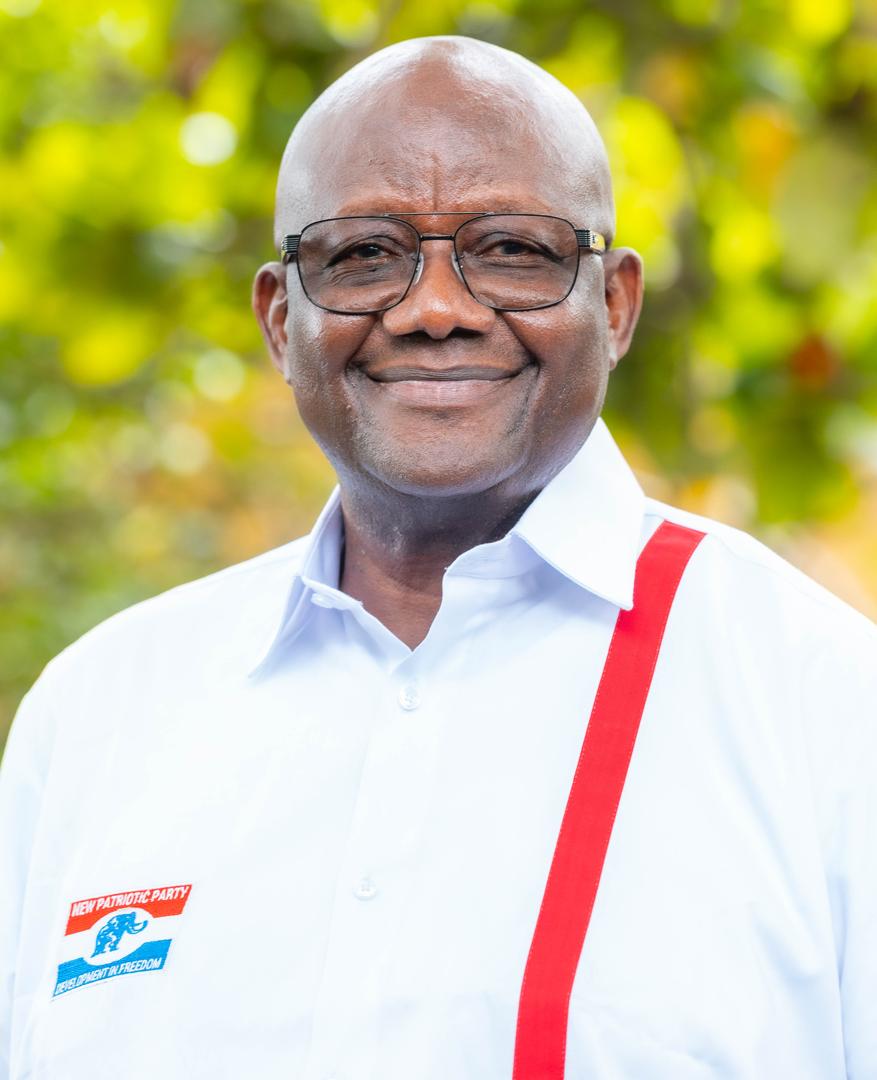
Private Legal Practitioner and New Patriotic Party (NPP) stalwart Charles Owusu Juanah says Awentami Paul Afoko has already started engaging members of opposing camps within the party as part of efforts to build a united front ahead of the 2028 elections.
Lawyer Juanah, who is the National Chairman of Friends of Bawumia, said some NPP members who have lost key positions have become disgruntled and now behave as though the party belongs to them.
He said this attitude has contributed to the divisions within the party and created the need for a leadership figure capable of bringing the various groups back together.
Juanah believes Afoko has the personality and relationships necessary to undertake that reconciliation.
He revealed that the former chairman has already started reaching out to people from opposing camps.
“He has even begun interacting with opposing camps in order to form a united front ahead of the 2028 elections,” Juanah said.
According to him, Afoko’s engagement with rival groups shows his focus is on building the party rather than deepening existing divisions.
Juanah said the former chairman understands that the NPP cannot successfully prepare for the next election while its members remain divided.
“He has foresight, the vision, and strategy to ensure there’s a united front,” he said.
Juanah added that Afoko had already begun talks with some members as part of the process.
He said these engagements demonstrate a willingness to listen to different sides and create a platform where members who have fallen out with one another can work together.
“He has even begun talks with some members,” Juanah said.
He argued that Afoko’s approach also shows his understanding of leadership.
According to Juanah, leadership in the current circumstances requires someone who can speak to different factions without treating political disagreements as permanent divisions.
He said Afoko’s charisma allows him to engage people who may not belong to the same camp.
Juanah therefore believes the former chairman can help bring back members who feel alienated from the party.
“If there’s anyone who can ensure all disgruntled members come together, then it’s no other than Paul Afoko,” he said.
For Juanah, the reconciliation effort is important because the NPP will need a united internal structure before it can effectively organise for the 2028 election. He said Afoko’s current engagement with rival camps is therefore consistent with the former chairman’s broader “Reunite, Rebuild, and Recapture” message.
By: Jacob Aggrey
Ghana is set to take centre stage in fashion, culture and the creative economy as the maiden Black Star Fashion Week (BSFW) takes off with a two-day national fashion experience designed to discover talent, convene the industry and showcase Ghanaian fashion on a global stage.
Put together by the Presidency-backed Black Star Experience Secretariat led by Rex Owusu Marfo, with support from the Ministry of Tourism, Culture and Creative Arts and its agencies such as the Ghana Tourism Authority (GTA) and Creative Arts Agency, it is structured across two connected experiences in Accra and Senchi.
The Black Star Fashion Week will move from inteligent industry dialogue and talent discovery to an exciting fashion celebration.
The first day will take place in Accra on November 4 and will centre on the Black Star Fashion Summit.
The Summit will bring together designers, fashion entrepreneurs, creatives, industry leaders, investors, buyers, manufacturers, policymakers, media and other stakeholders for a day of conversations, knowledge exchange, networking and talent development.
The Accra experience will feature keynote addresses, panel discussions, fireside conversations, masterclasses, industry presentations and practical workshops covering areas relevant to the growth of Ghana’s fashion industry, including entrepreneurship, branding, digital marketing, textile innovation, manufacturing, fashion finance, export readiness, e-commerce, artificial intelligence, sustainability and intellectual property.
A major component of Day One will be the 16-Region Designer Programme, bringing emerging fashion talent from across the country into one national platform.
Each participating designer will present a creative interpretation of their region, reflecting its identity, culture, heritage, materials, craftsmanship and contemporary design language.
The Accra programme will culminate in the selection of five designers. Out of the five, one will advance to the flagship fashion show at Senchi.
The second day will move to Royal Senchi on November 7, where the Black Star Fashion Show and experience will take place.
Beyond the runway, Senchi will host a Fashion Village, bringing together designer showcases, retail, textiles, artisan experiences, brand activations, beauty, technology, food and beverage, tourism and lifestyle experiences.
The event will also celebrate Ghana’s cultural diversity through music, dance, textiles, craft, food, storytelling, heritage and visual arts, demonstrating the deep connection between fashion and Ghana’s wider cultural ecosystem.
Honours will go out to outstanding contributors to Ghana’s fashion ecosystem, while networking and business engagements will connect designers and creative businesses with buyers, investors, manufacturers, retailers and other industry stakeholders.
Black Star Experience (BSE) is a Government of Ghana inititive for Culture, Arts, Tourism and Creative engagement.
As a national, year-round platform, the Black Star Experience brings together Ghana’s cultural, artistic, tourism and creative offerings to strengthen Ghana’s identity, promote the country as a preferred global destination and position Ghana as a leading cultural and creative capital of Africa.