Hot!
Bank of Ghana Governor should advise himself and resign – Bokpin

- /home/u249204778/domains/spectator.com.gh/public_html/wp-content/plugins/mvp-social-buttons/mvp-social-buttons.php on line 27
https://spectator.com.gh/wp-content/uploads/2023/08/Addison-Governor.png&description=Bank of Ghana Governor should advise himself and resign – Bokpin', 'pinterestShare', 'width=750,height=350'); return false;" title="Pin This Post">
- Share
- Tweet /home/u249204778/domains/spectator.com.gh/public_html/wp-content/plugins/mvp-social-buttons/mvp-social-buttons.php on line 72
https://spectator.com.gh/wp-content/uploads/2023/08/Addison-Governor.png&description=Bank of Ghana Governor should advise himself and resign – Bokpin', 'pinterestShare', 'width=750,height=350'); return false;" title="Pin This Post">
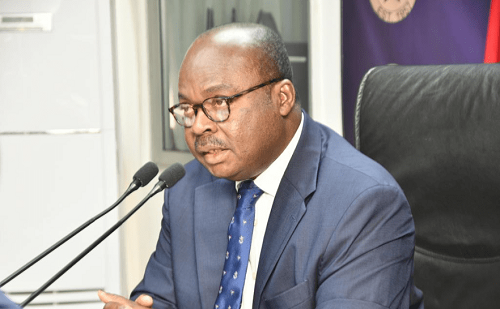
The Bank of Ghana (BoG) exposed itself too much to support the government of Ghana hence some of the financial difficulties it is facing currently, a Professor at the University of Ghana Business School, Godfred Bokpin, has said.
Prof Bokpin indicated that the financial challenges that the central bank is facing are undermining confidence in the financial sector.
To him, the Governor, Dr Ernest Addison should have resigned by now.
“We are undermining confidence in our financial system. Remember the central bank could be policy solvent but that doesn’t restore total confidence in our system. If you look at what has happened to the banks, many of them have had to revise their line of credit in terms of corresponding banking in line with the outside
“In any serious society, I believe that maybe the governor would advise himself and resign by now. Even though they find themselves in the situation, I think the central bank intentionally compromised its independence, sold it birthright to the government,” he said in an earlier recorded interview with Alfred Ocansey aired on the Ghana Tonight show on TV3 on Tuesday, August 8.
The Minority in Parliament has also demanded the resignation of the Governor and his two deputies – Dr Maxwel Opoku-Afari and Elsie Addo Awadzi.
This was after the Minority Leader Dr Cassiel Ato Forson said Dr Addison is spending $250million to build a new head office for the central bank at time the Bank is in financial difficulties.
Dr Forson accused the Governor of printing money to finance this project because the BoG has no money.
“The Bank of Ghana does not have money but spending GHS250million for a new head office, which means he is printing additional money to finance this project,” Dr Forson said.
He further gave the Governor and his two deputies up to 21 days starting today Tuesday, August 8 to resign after indicating that the governor just prints cash to support the government’s spending.
“We have to get this Governor out and let us have a new Governor. If we allow him to stay in the office, we will set bad precedence for future managers to do the same,” he said at a press conference in Accra on Tuesday, August 8.
Dr Forson stressed, “He has messed us so much that we cannot wait to see his back.”
“We demand the immediate resignation of the Governor and his deputies within 21 days. We will march to occupy the central bank to save the Bank of Ghana if he fails to reign. The March will ensure accountability,” he said.
Dr Forson’s comments follow the GHS60.8billion loss made by the BoG.
The Bank said this is due to the impairment of the Government of Ghana’s securities holdings of ¢48.45 billion, impairment of loans and advances granted to quasi-government and financial institutions amounting to ¢6.12 billion and the depreciation of the local currency resulting in net exchange loss of ¢5.27 billion.
The loss was occasioned by the Government of Ghana Domestic Debt Exchange Programme.
According to the BoG, its Board of Directors and Management assessed the policy solvency implications arising out of the negative net worth position and the group’s ability to continue to generate enough income to cover its monetary policy operations and other operational costs.
In the view of the directors, the Central Bank will continue to operate on a going concern basis due to a variety of factors underpinned by expectations of an improved macroeconomic situation and policy actions specifically targeted at improving its balance sheet.
In its Annual Report, the Central Bank, outlined these measures which it believed would help it recover.
These include Retention of profits to help rebuild capital until equity firmly returns to positive region.
Refraining from monetary financing of the Government of Ghana’s budget. In this respect, action has already been taken with a Memorandum of Understanding on zero financing of the budget signed between the Bank of Ghana and the Ministry of Finance on 26 April, 2023;
Taking immediate steps to optimise the Bank of Ghana’s investment portfolio and operating cost mix to bolster efficiency and profits; and
Assessing the potential need for recapitalisation support by the government in the medium-to-long term
It furthered that the Board of Directors and Management are of the view that “continued efforts at restoring macroeconomic stability and debt sustainability in addition to long-term efforts at building reserves, provide enough basis for continued operational policy efficiency existence for the foreseeable future”.
source:3news.com

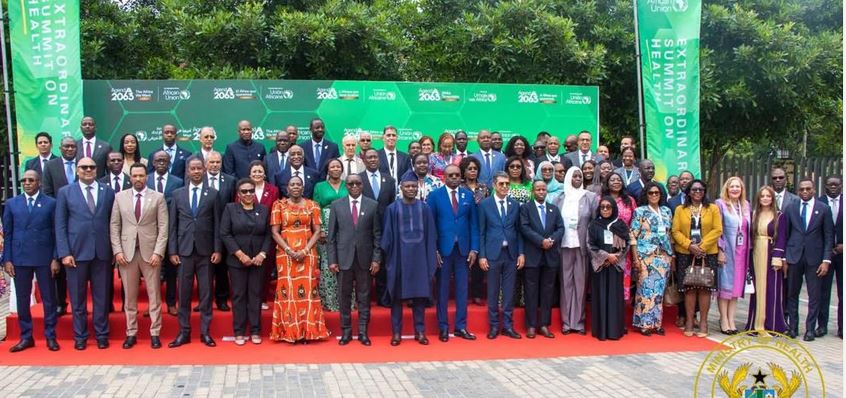
African leaders have been urged to strengthen political commitment and domestic investment to end preventable maternal deaths and AIDS by 2030.
The call comes as African health ministers and policymakers meet in Accra to deliberate on health financing, health security and universal health coverage across the continent.
Mr Edouard Bizimana, Burundi’s Minister of Foreign Affairs, Regional Integration and Development Cooperation, made the call on Tuesday at the opening of the African Union’s (AU) 25th Extraordinary Summit on Health in Accra.
He said Africa needed increased domestic investment to build resilient health systems as it continued to grapple with infectious diseases and the growing burden of non-communicable diseases (NCDs).
Mr Bizimana, who is also Chairperson of the AU Executive Council, said although Africa accounted for nearly 17 per cent of the world’s population, it bore 24 per cent of the global disease burden while having less than three per cent of the global health workforce and only one per cent of global health expenditure.
“Despite maternal mortality declining by nearly 40 per cent since 2000, Africa still accounts for about 70 per cent of maternal deaths globally, while almost two-thirds of people living with HIV reside on the continent,” he said.
Mr Bizimana said the growing burden of NCDs was placing additional pressure on already stretched health systems.
“These figures are not merely statistics. They represent painful human realities, preventable losses and unacceptable inequalities, they remind us that health is not an expense it is a strategic investment and a prerequisite for our sovereignty and development. “he said.
Mr Bizimana said recent global health emergencies had exposed Africa’s vulnerability and underscored the need to expand local production of medicines and vaccines, strengthen the health workforce and improve emergency preparedness.
“Our citizens expect resilient health systems where every mother can give birth safely, every child has access to essential healthcare and every African enjoys quality health services regardless of where they live,” he said.
The two-day summit, being held ahead of the 20th Extraordinary Session of the AU Assembly of Heads of State and Government, has brought together health ministers, policymakers and health stakeholders to identify solutions to Africa’s health financing and security challenges.
Madam Florence Samizi, Tanzania’s Deputy Health Minister, called for stronger collaboration among AU Member States to accelerate progress towards universal health coverage.
The summit is being held on the theme: “Advancing Justice, Equality and Universal Health Coverage: Ending AIDS, Tuberculosis, Improving Maternal Health, Addressing Endemic Non-Communicable and Neglected Tropical Diseases in Africa.”
The meeting is expected to adopt the Accra Declaration, a roadmap to strengthen Africa’s health systems and advance health sovereignty by 2030. -GNA


Senior Lecturer at the University of Ghana’s Department of Political Science, Dr. Joshua Jebuntie Zaato says the imprisonment of the Ashanti Regional Chairman of the New Patriotic Party (NPP), Bernard Antwi Boasiako, popularly known as Chairman Wontumi, will have little meaning unless it leads to a broader crackdown on illegal mining.
In a post on his Facebook page on the July 21, 2026, Dr. Zaato said the judgment should mark the beginning of efforts to completely eradicate galamsey and hold all those involved accountable, regardless of their political affiliation.
He said the country must work towards restoring polluted rivers, protecting forests and ensuring that people implicated in illegal mining activities are prosecuted.
According to him, those the President has publicly acknowledged to be involved in galamsey should face prosecution.
He called for the prosecution of district chief executives (DCEs), members of Parliament (MPs) and senior political party officials who have been accused of engaging in or supporting illegal mining.
Dr. Zaato further urged the government to take decisive action to end the destruction of the country’s forests caused by galamsey.
He maintained that the imprisonment of Chairman Wontumi would only have a lasting impact if it results in a comprehensive and impartial fight against illegal mining across the country.
By: Jacob Aggrey