News
Annual Bagre Dam Spillage — A Blessing or Curse?

- /home/u249204778/domains/spectator.com.gh/public_html/wp-content/plugins/mvp-social-buttons/mvp-social-buttons.php on line 27
https://spectator.com.gh/wp-content/uploads/2025/10/Bagre-Dam-spillage-1000x600.jpg&description=Annual Bagre Dam Spillage — A Blessing or Curse?', 'pinterestShare', 'width=750,height=350'); return false;" title="Pin This Post">
- Share
- Tweet /home/u249204778/domains/spectator.com.gh/public_html/wp-content/plugins/mvp-social-buttons/mvp-social-buttons.php on line 72
https://spectator.com.gh/wp-content/uploads/2025/10/Bagre-Dam-spillage-1000x600.jpg&description=Annual Bagre Dam Spillage — A Blessing or Curse?', 'pinterestShare', 'width=750,height=350'); return false;" title="Pin This Post">
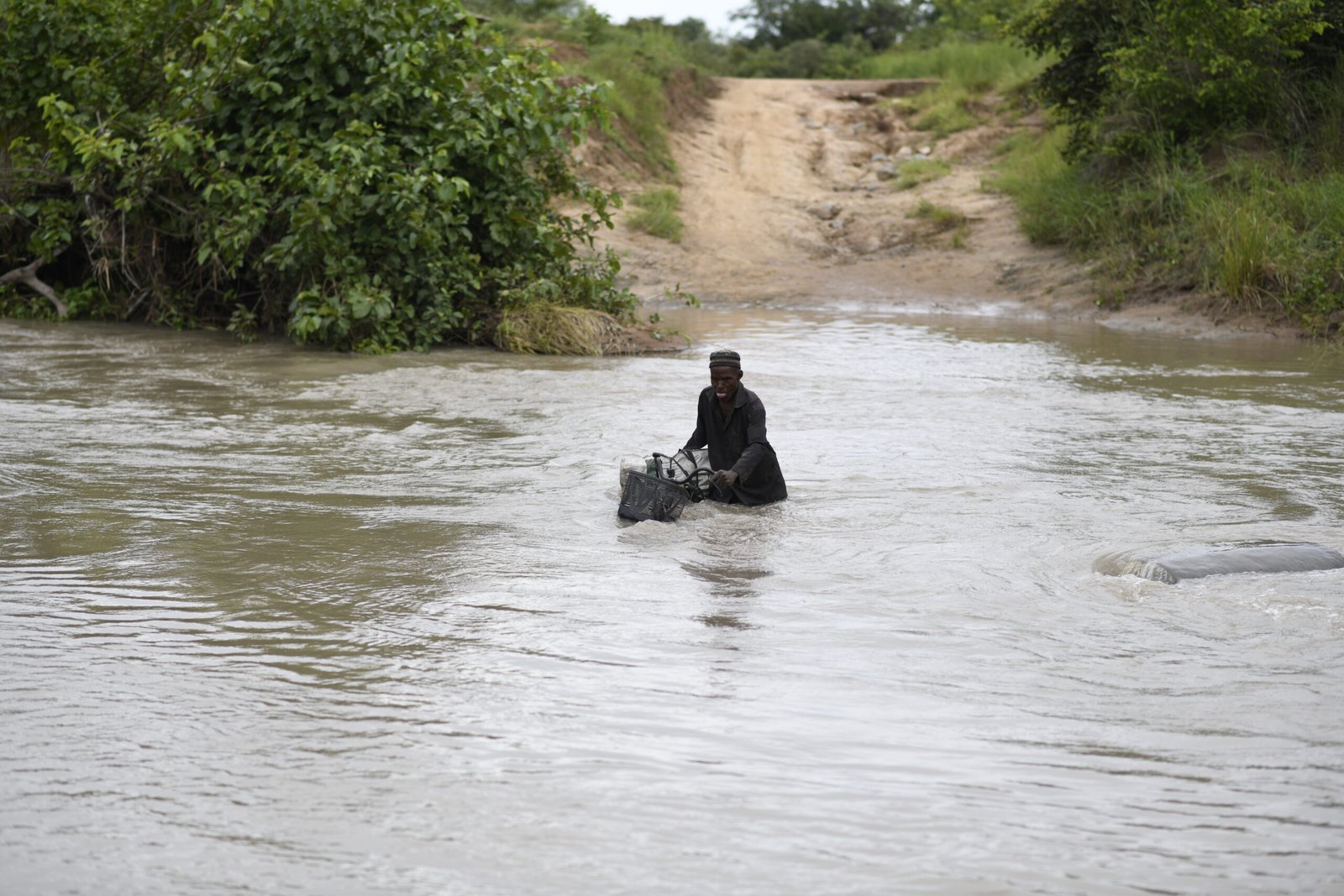
For many farming communities scattered along the White and Black Volta basins, the rainy season brings both promise and peril — a time when the blessings of rainfall merge with the dread of annual flooding triggered by the spillage of Burkina Faso’s Bagre Dam.
A few weeks ago, officials in Ouagadougou confirmed what residents in Northern Ghana had long feared — the controlled release of water from the Bagre reservoir.
While the measure is necessary to prevent the dam’s collapse, it has for decades spelled destruction downstream, leaving Ghana’s northern regions counting their losses year after year.
The story is all too familiar. Entire fields of maize, rice, and groundnuts vanish beneath raging waters. Mud-walled houses crumble under the force of the floods, while roads connecting villages disappear, schools close, and classrooms are turned into makeshift shelters for displaced families.
The National Disaster Management Organisation (NADMO) rushes in with mattresses, blankets, and bags of rice, but the relief items, though vital, are often insufficient compared to the magnitude of devastation. In Yagaba, for instance, some victims reportedly received no support at all due to limited resources.
“This year, at least there was some education on resilience and preparedness,” said Issah Yakubu, a farmer from the North East Region who lost his crops in last year’s floods. “But when the water comes, we lose everything — maize, rice, groundnuts. When it goes, there’s nothing left to eat or sell,” he lamented.
NADMO continues to urge residents in flood-prone areas across the Upper East, North East, Savannah, and Northern Regions to relocate to safer grounds. But for many, relocation is not an option. Their livelihoods are tied to the fertile riverbanks; abandoning their farms would mean abandoning the only source of income they know.
Last year alone, thousands of people were displaced across northern Ghana due to flooding.
Yet, amidst the destruction lies an irony. The same floods that wreak havoc also deposit nutrient-rich silt on farmlands, making them fertile for dry-season farming.
Agricultural experts argue that, with proper irrigation systems and government support, these communities could turn disaster into opportunity. “The spillage is both a challenge and a blessing,” said rice farmer, Aziz Zakaria. “If we had irrigation schemes, we could use this same water to grow crops in the dry season. The water that destroys can also sustain us,” he added.
Some have argued that the long-promised solution lies in the construction of the Pwalugu Multipurpose Dam in the Upper East Region — envisioned to serve as a buffer for excess water from Bagre, generate electricity, and irrigate thousands of hectares of farmland.
However, delays in implementation have left communities trapped in a yearly cycle of loss and recovery.
Civil society organisations have repeatedly called for a shift from relief-based interventions to long-term resilience strategies — strengthening infrastructure, empowering communities, and developing sustainable livelihoods.
The broader picture is even more concerning. With the global climate crisis intensifying, rainfall patterns across the Sahel have become increasingly erratic. Burkina Faso’s dam managers are often compelled to spill earlier, or even multiple times in a single season, to protect the integrity of the Bagre Dam.
The result is an unpredictable flood cycle that leaves Ghana’s northern communities living in constant fear and their futures washed away by forces beyond their control.
As the waters rose once again this year, displacing countless innocent families, one truth remains undeniable: until proactive measures are taken ahead of the next season, the Bagre Dam spillage will continue to shift from a yearly natural occurrence to what is truly a slow-motion, man-made disaster.
By Geoffrey Buta, Tamale
Join our WhatsApp Channel now!
https://whatsapp.com/channel/0029VbBElzjInlqHhl1aTU27










The Economic and Organised Crime Office (EOCO) has responded to the viral video showing its officers attempting to arrest the Member of Parliament for Manhyia South, Hon. Nana Agyei Baffour Awuah, at the Accra High Court.
In a statement signed by Head of Corporation Affairs, EOCO said the attempted arrest today, September 23, 2026, was in connection with an ongoing investigation.
According to the anti-graft agency, the MP had previously been invited on two separate occasions in February 2026 to assist with investigations but failed to honour the invitations.
“The Office had previously invited Hon. Baffour Awuah to assist with the investigation on two occasions in February 2026. The invitations were not honoured. The Office has since taken steps to secure his attendance in accordance with the law and the attempted arrest today represents one of the lawful steps,” the statement said.
EOCO clarified that its officers were acting in the lawful discharge of their statutory responsibilities when the incident occurred.
The Office revealed that the arrest could not be completed because officers assessed that any further action would have endangered public safety as the situation escalated at the court forecourt.
“During today’s attempted arrest, the situation escalated and the arrest was not successfully completed as officers assessed that a counter action would have endangered public safety,” EOCO stated.
The Office added that it has identified two persons who, based on video evidence circulating on social media, allegedly intervened to facilitate the escape of the MP.
“The conduct of these individuals is being assessed and the Office will take such lawful steps as may be appropriate,” the statement added.
EOCO also disclosed that after the failed arrest, Baffour Awuah proceeded to the precincts of Parliament to seek sanctuary, even though Parliament is currently on recess.
The Office emphasized that while it recognizes and respects the constitutional privileges and immunities of Members of Parliament, being an MP does not place anyone above the law.
“For the avoidance of doubt, Membership of Parliament does not, by itself, bring an investigation to an end or place an individual beyond the reach of the law. At the same time, EOCO will not take any step that is inconsistent with parliamentary privilege or any other protection provided by the Constitution,” the statement clarified.
EOCO assured the public that the investigation remains active and that it will review all circumstances surrounding Tuesday’s incident, including available video evidence, to determine its next steps.
The Office concluded by reaffirming its commitment to discharge its statutory mandate while respecting the Constitution, the rule of law, and the institutional privileges of Parliament.
By Edem Mensah-Tsotorme

The Zongo community in Tema has entered a new chapter following the historic installation of Alhaji Faisal Abdullah Masud as Sariki Zongo I of Tema, making him the first person to officially hold the title in the history of the industrial city.
Widely known in Tema as Alhaji Faisal Saltan (Alhaji Netro), his installation represents a significant moment for the numerous Zongo communities spread across Tema Manhean, Tema New Town, Community One, Bankuman, Ashaiman and surrounding areas.
For decades, these communities have been home to people from diverse ethnic and cultural backgrounds. The establishment of a unified traditional leadership structure under the Tema Sariki Zongo stool is therefore being seen as an opportunity to strengthen unity, representation and development across the various Zongo communities.
The coronation of Alhaji Faisal Abdullah Masud brought together traditional leaders, Islamic authorities, representatives of various ethnic communities and other stakeholders in a celebration of culture, unity and peaceful coexistence.
Representatives of communities including Dagomba, Frafra, Hausa, Kusaasi, Mamprusi, Kotokoli, Yoruba and other groups were represented at the historic occasion.
The event also reflected the long-standing relationship between Muslims and Christians in Tema, with members of both faiths participating in the celebration.
The occasion was therefore more than a traditional ceremony. It marked the beginning of a new traditional leadership structure intended to provide a stronger platform for dialogue, cooperation and development within the Zongo communities of Tema.
Alhaji Faisal Abdullah Masud combines traditional leadership with extensive experience in business, sports and community development.
He is the President of True Democracy F.C., a Division One League team, and the owner of 90’s Lounge. He also serves as CEO of Paramount Empire Trading and Investment Company Limited and Sultan Incorporation.
He is additionally involved in the hospitality and agricultural sectors as a hotelier and farmer.
His background in entrepreneurship and youth-oriented activities forms an important part of his vision for the development of the Tema Zongo communities, particularly in the areas of employment, skills development and economic empowerment.
As the first Sariki Zongo I of Tema, Alhaji Faisal Abdullah Masud has outlined a six-point development agenda focused on building a more united, peaceful and progressive Zongo community.
His first priority is unity and peace building, bringing together the various ethnic groups within the Tema Zongos and promoting dialogue to resolve chieftaincy and community-related disagreements, while strengthening relations with the Tema Traditional Council and government institutions.
He also places strong emphasis on youth empowerment and sports development, using his experience in football and business to create opportunities for young people through sports, hospitality, trading, agriculture and other forms of skills development.
Education and skills development are another key priority, with plans to support both Islamic and secular education, provide scholarship opportunities, reduce school dropout rates and connect young people to technical and vocational training programmes.
On economic empowerment and entrepreneurship, Alhaji Faisal intends to use his business experience to mentor entrepreneurs, support traders and market women, and promote greater financial inclusion within the Zongo communities.
His agenda also includes sanitation, health and social welfare, through community clean-up exercises, health screening programmes and support for vulnerable members of the community, particularly during Ramadan and Eid.
Finally, he is committed to community security and the fight against drug abuse, working with Imams, elders, youth leaders and the Ghana Police Service to address drug abuse, crime and other challenges affecting young people in the Zongo communities.

 Entertainment1 week ago
Rhythms On Da Runway returns November 28 with 16th edition themed ‘Unbound’
- News1 week ago
48 Engineer Regiment to be major sub-contractor on Accra-Kumasi Expressway, $2bn ready- Prez Mahama
- Entertainment1 week ago
Ohemaa Mercy’s Tehillah Experience outfit was priestly regalia, not costume – Management clarifies