Hot!
Africa’s Business Horoes (ABH) Prize Competition: Ghana’s Prince Agbata listed among top 50 finalists


● Mr. Prince Agbata
The top 50 finalists for the 2022 Africa’s Business Heroes (ABH) Prize Competition was announced on Monday, August 1.
The flagship philanthropic programme, established by the Jack Ma Foundation, identifies, supports and inspires the next generation of entrepreneurs who are making a difference in their local communities.
This year’s competition received more than 21,000 applications and saw applicants from across all 54 African countries with Mr. Prince Kwame Agbata, the Chief Executive Officer (CEO) of Coliba Waste Management Services Limited, as the only Ghanaian among the top 50 candidates.

The top 10 will be announced in October for the grand finale where they will pitch to global business legends and secure their share of the US$1.5 million prize.
While congratulating other African compatriots on the list, Mr. Agbata is excited to be part of the list as his company continues working to address plastic pollution in the country.
“Our drive to ensuring we put purpose over profit speaks volumes. It is no longer traditional recycling as usual; it is circular, innovative and creating equity across the value chain and I am proud to be at the epicenter,” he said in a LinkedIn post, after the announcement.
Ahead of the declaration of the overall winner, The Spectator delves into Prince’s background and what he and his company have been able to achieve over the years.
Background
Prince is a social entrepreneur, an industry consultant and expert in plastic waste recovery, processing and recycling with focus on the Africa continent and market.
He and his partner Mr. Kafui Honu Wisdom started Coliba in June 2016 after the loss of their best friend in the June 3 flood and fire disaster in Accra.
He is a software engineer by training and worked with some tech companies in Ghana prior to starting Coliba and continues to gain recognition for his work.
In 2015, he became an alumni of the President Obama Young African Leaders Initiative in Ghana and was later invited as scholar to the Mandela Institute of Development Studies on leadership in Tanzania.
In 2017, he won the Eco Hero Awards by Samsung Engineering in South Korea and was recently named Fellow of the International Youth Foundation Action Net programme in the United States of America (USA).
Prince says his mission “is to ensure that every single person in West Africa understands, and begins to refuse, reduce and most importantly recycle their plastic waste.”
He is passionate about topics of circular economy, recycling, climate change and sustainability and speaks strongly on these subjects on local and international platforms. He was part of the Mohammed Bin Rashid conference in Dubai in 2019 where he spoke on climate change and sustainability in waste management.
He received the top Sustainable Development Goals (SDGs) Innovator Award by the United Nations in May 2019 and addressed the UN ECOSOC committee on his work, highlighting the prospects and innovation in the waste and recycling sector. In addition to other recognitions, he was named in 2019 as one of the top 40 under 40 most influential young Ghanaian.
Company
Coliba, among other objectives, is “determined to ensure that every district in Accra owns a deposit and plastic buyback centre.” The company offers comprehensive industry-specific recycling services, quality control & sustainability solutions for businesses, corporations and households.
Aside their plastic waste collection and recycling solutions, the company is “helping to address the challenge of unemployment” by training young Africans — most of whom are women to tap opportunities in the plastic and recycling sector.
Prince says, the company since its inception, continues to contribute towards the achievement of the United Nations SDGs specifically goal “1, 3, 8, 10, 11, 12, and 13.”
“To meet the targets of these goals, Coliba prides itself as a one stop destination for all plastic waste recycling related solutions such as assisting clients start and setup domestic plastic recycling programmes, recovery, collection and recycling to various forms of plastic wastes and conversion into new products,” he added.
Mobile App
The CEO again highlights the Coliba App, a waste management web and mobile application that connects households and businesses with affiliated plastic waste collectors.
“With just a click, one is educated on how to start a recycle programme, request pickups and get paid for it. The App is available on Google Play Store but compatible in Ivory Coast,” he noted.
Coliba, he says, continues to contribute to government’s efforts at increasing the recycling rate from two per cent to 92 per cent by 2030 through tech-driven plastic recycling solutions. In line with this, he and his partners are working to build the largest plastic recycling park in West Africa.
Prince, on weekends, plays the violin and joins IDEA Africa, an non-governmental organisation he founded in 2013, to build community libraries in rural communities of Ghana.
By Ernest Nutsugah


The professor who spends his days exploring the intricacies of African languages found himself at the centre of a different kind of lesson on Friday, October 2, 2026. 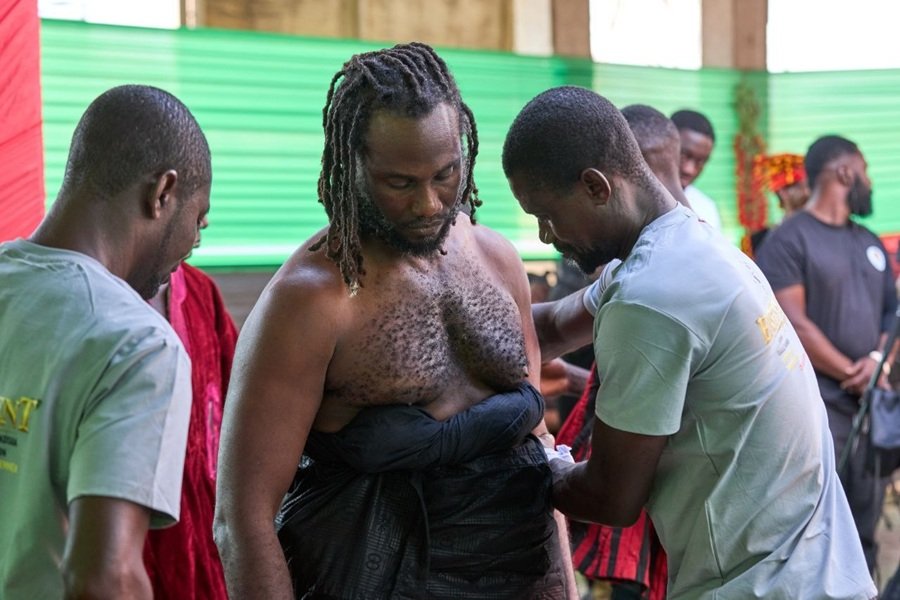
This time, there were no lecture notes, academic arguments or university classrooms. Instead, there was the weight of tradition, the rhythm of a community celebration and the solemnity of an oath at a royal palace.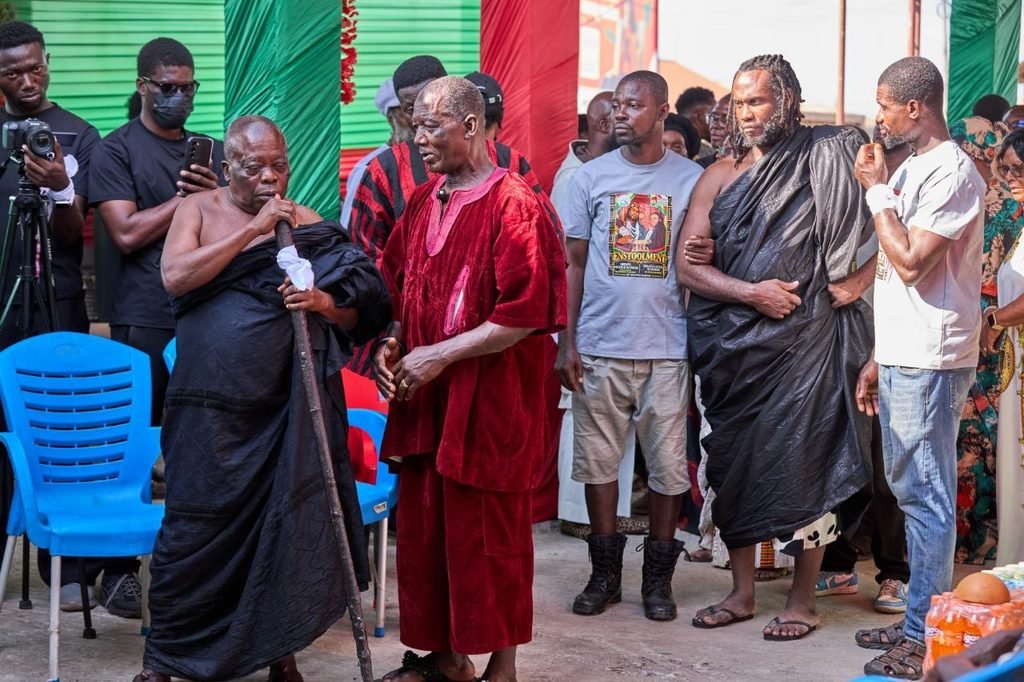
Professor Ọbádélé Kambon, a full Professor of African Linguistics at the University of Ghana, was enstooled as Apagyahene and Sunsum Ɔsahene of Akuapem Mampong in the Eastern Region in a ceremony that brought academia and traditional authority together.
For the professor, the occasion was more than a new title. It was a moment that connected his academic interests in African languages and indigenous knowledge with the living traditions of an Akan community.
The day’s events unfolded through a series of customary observances. Kambon was first taken to the compounds of the Ɔkyeamehene and Gyasehene, where the preparations for his installation continued.
Then came the application of hyire, the white kaolin powder associated with traditional rites.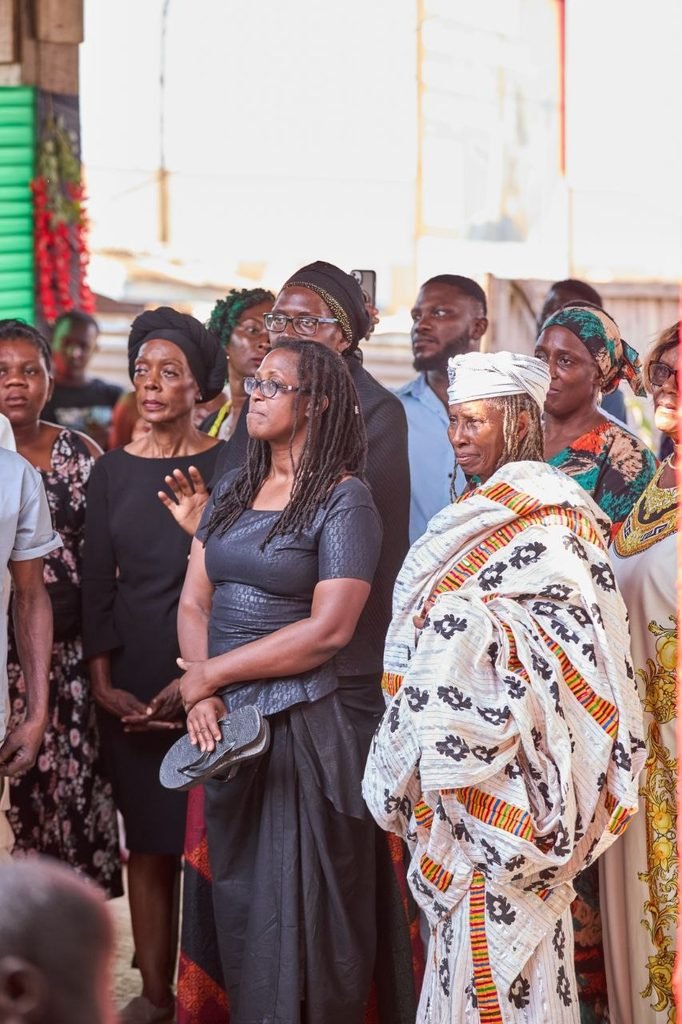
With the customary proceedings underway, the new chief was lifted onto the shoulders of celebrants and carried along the main thoroughfare of Akuapem Mampong.
The procession transformed the streets into a public stage for a ceremony rooted in the community’s traditional institutions.
There was something striking about the image, a university professor, accustomed to the measured language of academic discourse, being carried through the town in a display of traditional recognition.
Yet the celebration was not complete with the procession.
A ram was sacrificed at the Mamponghene’s compound before Kambon was taken to the palace, to swear the oath associated with his new offices.

The ceremony brought him formally into his roles as Apagyahene and Sunsum Ɔsahene.
Beyond the colourful proceedings, the titles themselves carry layers of historical meaning.
Kambon in his research explores the historical connections between Apagya and Akan political and military organisation.
Accounts cited in his work linked Apagya to an asafo, or military company, while historical writing traces an Apagya stool in Asante to the reign of Opoku Ware I in the eighteenth century.
These historical associations offer a glimpse into the institutions that have shaped Akan society over generations, although they do not automatically define the precise responsibilities of the office in Akuapem Mampong.
Kambon’s own professional life reflects a similar interest in preserving and examining African knowledge.
His work encompasses Akan language structure, naming practices across the Black world, proverbs and indigenous intellectual traditions.
Through Abibitumi, the platform he founded, he also promotes language learning, scholarship and cultural engagement.
But tradition was only one part of the story that day.
When the formal ceremony gave way to a reception, the occasion expanded into a celebration of three milestones: Kambon’s enstoolment, his promotion to full professor and his daughter Ama’s admission to the University of Ghana.
The gathering therefore carried a personal significance that went beyond the honours bestowed on one man. 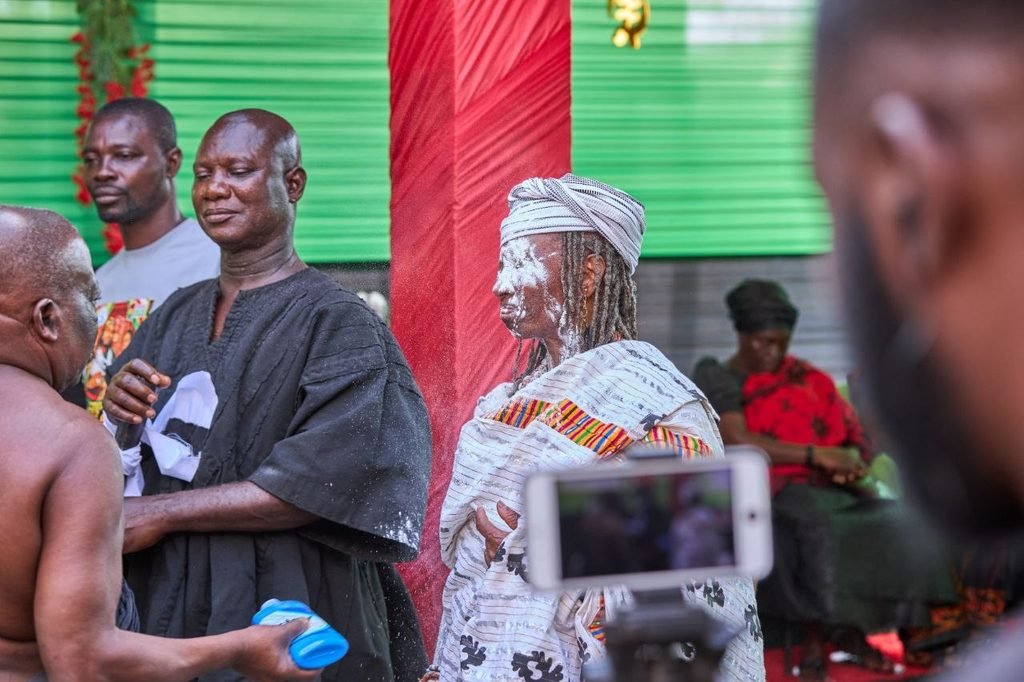
It celebrated professional advancement, the continuation of family aspirations and a connection to cultural heritage.
For a father, seeing a daughter gain admission to the same university where he holds a distinguished academic position offered another reason to celebrate.
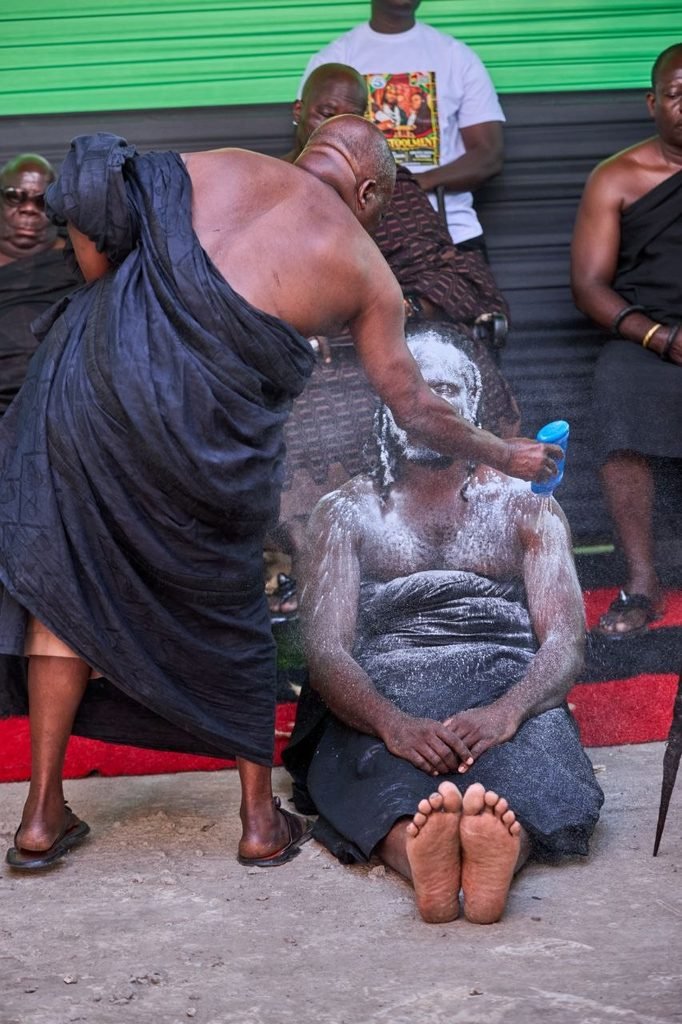
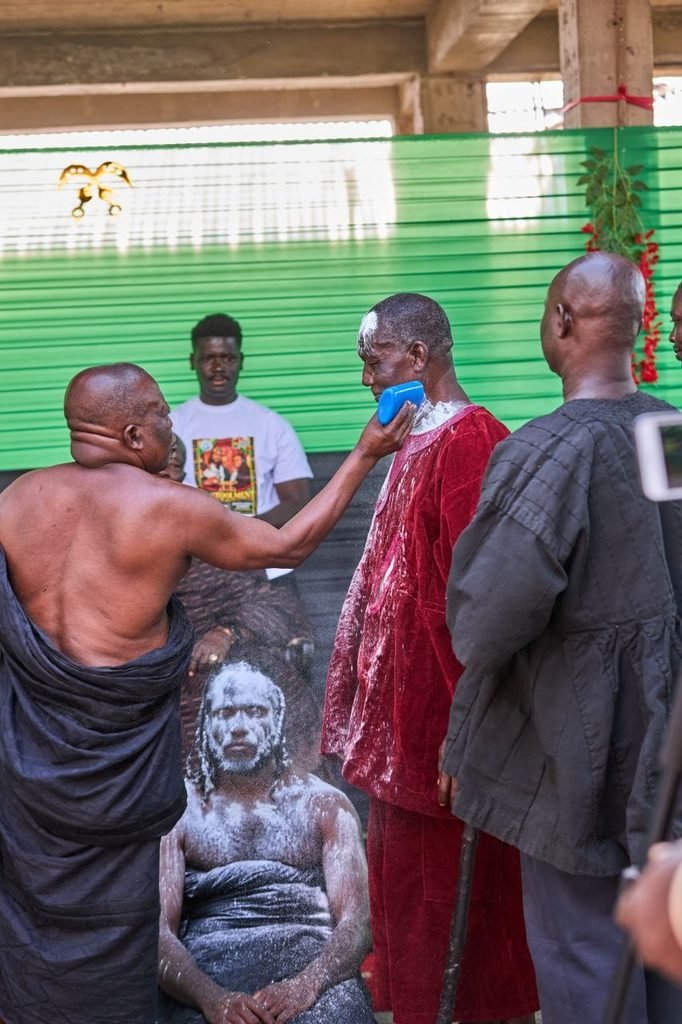
For the professor, the moment placed family achievement alongside his own professional and traditional milestones.
Kambon had already established a place in the traditional life of Akuapem Mampɔn through an earlier installation as Banmuhene Kyidɔmhene, recorded in 2017.
His latest enstoolment adds another chapter to that relationship.
In Akuapem Mampɔn, the day brought together the university, the palace and the family table in one celebration. And for Kambon, the journey from the lecture room to the traditional procession showed how scholarship, cultural responsibility and family achievement could converge in a single memorable occasion.
By Enoch Ntiamoah Siaw
SKIP THE QUEUE, TAP THE NEWS
You can now read the Ghanaian Times and The Spectator newspapers from the comfort of your device via TimesNewsPlus.
Join our WhatsApp Channel: https://whatsapp.com/channel/0029VbBElzjInlqHhl1aTU27

Intercity STC Coaches Limited has interdicted a driver captured in a viral video allegedly hitting a Sprinter bus during an overtaking manoeuvre at Pokuase before driving away from the scene.
In a public notice, the company described the driver’s conduct as unacceptable, stressing that it did not reflect the safety standards and professionalism it upholds.
Management said it had commenced an immediate investigation into the incident and identified the driver, who has been interdicted pending the outcome of the disciplinary process.
The company added that it was awaiting an official report from the Pokuase Police Command to help establish the facts surrounding the incident.
STC reaffirmed its commitment to passenger safety and responsible road use, while thanking members of the public for bringing the incident to its attention.
Management assured the public that appropriate action would be taken following the investigation.
By: Jacob Aggrey