News
Address By The President Akufo-Addo On Updates To Ghana’s Enhanced Response To The Coronavirus Pandemic

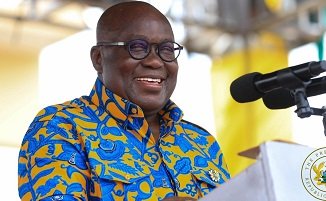
Address By The President Of The Republic, Nana Addo Dankwa Akufo-Addo, On Updates To Ghana’s Enhanced Response To The Coronavirus Pandemic, On Sunday, 28th May 2023
Fellow Ghanaians, good evening.
It has been some time since I last came into your homes, so I want to thank you for having me again tonight. I have come because of two important events that both occurred last week on 17th May. The first is an update on the COVID-19 pandemic; the second is the recent agreement we have reached with the International Monetary Fund (IMF).
Some three weeks ago, on 5th May, the World Health Organization (WHO) announced that COVID was no longer a public health emergency of global concern.

It had taken three years, five months and twenty days of unbelievable tumult, unrelenting pain and suffering and emotional turbulence of a world turned upside down, but we have at last heard the words for which we had all been praying. The scientists and health experts tell us that we no longer have a public health emergency of international concern.
They tell us also that there is evidence of reducing risks to human health from COVID-19 infections. This has led to the decreasing trend of COVID-19 related deaths, hospitalizations and intensive care admissions. The world has also achieved the long hoped-for immunity, and with improved clinical management, the experts say it is time to transition to long-term management of the COVID-19 pandemic.
In other words, we can now breathe that collective sigh of relief. For, even though we may still have to deal with sporadic, isolated outbreaks, the crisis itself has technically ended.
The pandemic trend in Ghana is similar to the general global trend as announced by WHO.
As at 15th May, 2023, there have been one thousand, four hundred and sixty-two (1,462) deaths attributable to Covid-19 in Ghana, with the last death being recorded on 8th January, 2023. These are not mere figures, or inconvenient statistics, they are dearly loved parents, sons and daughters, relations, friends and colleagues whom we shall continue to miss dearly. May their souls rest in perfect peace. I am glad to report that, currently, we do not have any critical or severe cases.
In general, since the first case was confirmed in our country on March 12, 2020, there have been one hundred and seventy-one thousand, seven hundred and fifty-eight (171,758) positive cases from two million, five hundred and thirty-eight thousand, one hundred and ninety-eight (2,538,198) tests. You would recall that we started the Covid vaccination campaign in March 2021 and, as at 25th May 2023, twenty-five million, one hundred and seventy thousand, three hundred and eighty-two (25,170,382) vaccine doses have been administered. There are ten million, five hundred and thirty-six thousand four hundred and twenty (10,536,420) fully vaccinated people, that is, 52.7% out of the twenty million (20 million) people target we had set, with four million, five hundred and ninety-nine thousand, eight hundred and eighty three (4,599,883) persons having received booster doses.
In the light of these facts, the COVID-19 Taskforce, which I chair, met on 17th May and took some far-reaching decisions on the measures we have put in place for the management of the pandemic, which were announced by the Ghana Health Service on 19th May. The most important of these decisions was that the COVID-19 pandemic was over in Ghana.
Thus, all the outstanding Covid-induced restrictions at our airports and all entry points have been lifted, and we are back to the pre-COVID situation as far as health entry requirements are concerned.
It will be recalled that, three years ago, we started with drastic measures and restrictions; the international airport was shut for months and our land borders were closed to human traffic for almost three years.
The hospitality industry was devastated, hotels and restaurants and other social gathering places were shut down, schools and universities and training institutions were shut down. Indeed, our world was turned upside down. That culturally defining Ghanaian symbol, the handshake, was prohibited and frowned upon and we were advised not to hug our children and our loved ones.
Churches, mosques and other places of worship were closed for months, and our beaches remained emptied of human activity. Fellow Ghanaians, even our funerals, that sacred Ghanaian ritual, were stopped and then attempts were made to change the tone and character of the funeral with the imposition of restrictions on how many can attend or be fed at the ceremony.
Fellow Ghanaians, throughout these trying times, I kept urging all of you to believe that this, too, shall pass. Dare I say that this too has passed? The emergency is over, and we can safely lift many of the oppressive restrictions we have had to endure, we can shake hands, we can hug, we can visit, and we no longer have to wear masks. But it is strongly recommended that we keep some of the measures imposed during the crisis and integrate them into our everyday lives because they have served us well and will continue to serve us well.
I urge you all to continue with the regular hand washing and other personal hygiene measures, so they become entrenched national habits. There has been a dramatic decrease in diarrhoea diseases, and we have not had any cholera outbreaks these past three years – these developments are attributable mostly to the hand washing and improved hygiene regimen in our communities. It does not hurt to wear a mask if you have a cold for example, it might protect those around you. If you are uncomfortable in a crowded and enclosed space, go out into the open and continue the new ways we have devised for outside entertainment. I hope there will be no argument that we should continue and institutionalize the periodic cleansing, disinfection and fumigation of markets. Never again should our markets be breeding grounds for rodents.
There are other ways in which this nightmare has brought some good dividends that must be acknowledged.
It has led to the strengthening of our disease surveillance system, and this has been manifested in recent months by our ability to deal, in a very rapid and aggressive way, with outbreaks of frightening diseases like Marburg, Lassa fever, Monkey Pox, before they could turn into serious public health catastrophes.
The pandemic also exposed some of the painful deficiencies we have, and forced us to take some brave and necessary decisions, like the expansion of our network of health facilities under Agenda 111.
I doubt very much that, but for the pandemic, the network of health laboratories with capacity to do PCR testing in our country would have expanded exponentially from the initial 2 to 67 laboratories nationwide.
And, Fell


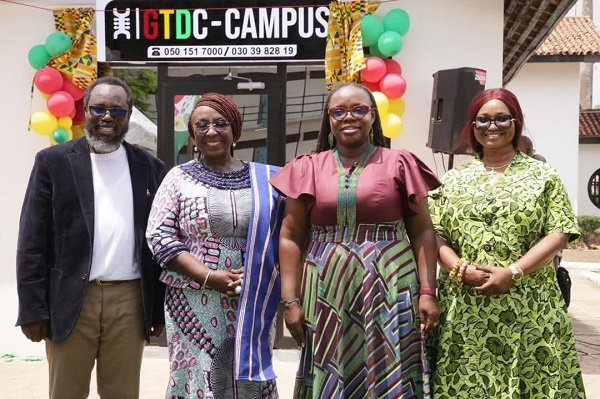
The Ghana Tourism Development Company, GTDC, under the leadership of Prof.Kobby Mensah has launched GTDC Campus Tourism Office at the University of Ghana.
The initiative aims to promote educational and domestic tourism by providing structured campus tour experiences showcasing key heritage sites, including the Archaeology Museum and the School of Performing Arts.
It will also offer students their first travel experience across the continent and inculcate in them love to visit Ghana’s heritage sites.
Addressing the gathering at the launch yesterday, the Minister of Tourism, Culture and Creative Arts, Abla Dzifa Gomashie, described tourism as a vehicle for education and heritage preservation, stressing that the sector must inspire citizens to value and protect national culture for future generations.
The minister highlighted tourism’s connection to disciplines such as history, the arts, economics and environmental science.
The minister further noted that the private sector is the engine of tourism economy, adding that the engines require fuel, which is talents.” by investing in these young people today, you are securing the quality, the innovation and competitiveness of our own industry for tomorrow.
She added that the establishment of the office represents a deliberate investment in the intellectual capital of the country.
The GTDC boss, Prof.Kobby Mensah, said,”at GTDC, we believe that if our tourism has to be sustainable, we have to promote domestic tourism and a very big part of it is getting students to appreciate tourism and helping them to organise tours.”
He added that the University of Ghana itself is a huge heritage site which must be explored.
Prof.Kobby Mensah noted that the initiative, which is one of many to be established across the country, is a joint partnership between GTDC and University of Ghana.
The Vice Chancellor of the University, Prof.Nana Aba Appiah Amfo, said the University is a custodian of heritage which goes beyond the structures and welcomed the establishment of the first Campus Tourism Office.
She was optimistic that the office would be put to good use to achieve the intended purpose.
The launch brought together Stakeholders reaffirming their commitment to nurturing future tourism and hospitality professionals.
By Edem Mensah-Tsotorme
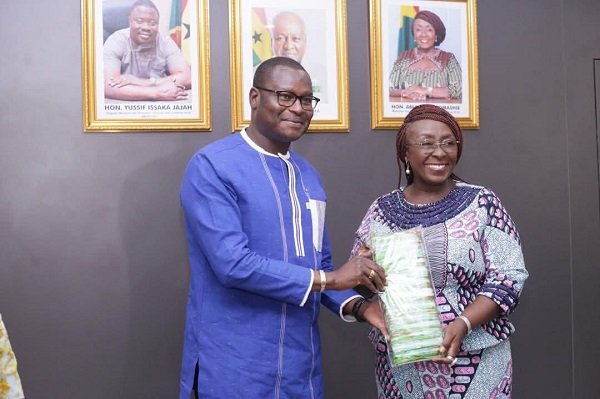
Ghana has officially accepted an invitation to serve as Guest Country at Burkina Faso’s 22nd National Culture Week in Bobo-Dioulasso from April 22 to May 2, 2026.
The invitation was extended by Burkina Faso’s Minister of Communication, Culture, Arts and Tourism, Gilbert Noël Ouédraogo, accompanied by the Ambassador of Burkina Faso to Ghana, H.E. David Kabré.
Receiving the delegation, Abla Dzifa Gomashie reaffirmed Ghana’s commitment to deepening cultural diplomacy and strengthening historic ties between the two nations.
She noted that the festival will create opportunities for young creatives, expand exhibition platforms and promote commercial exchange within the creative sector.
The event will feature cultural performances, a community village and gastronomy fair, an arts market, literary engagements, and a craft and trade fair.
Ghana’s participation is expected to further strengthen bilateral relations between John Dramani Mahama and Ibrahim Traoré, while fostering collaboration within the creative ecosystems of both countries.