News
‘Access to sanitary products, clean facilities, proper information not luxury’

- /home/u249204778/domains/spectator.com.gh/public_html/wp-content/plugins/mvp-social-buttons/mvp-social-buttons.php on line 27
https://spectator.com.gh/wp-content/uploads/2025/05/Dr-Agnes-Naa-Momo-Lartey-1000x600.jpg&description= ‘Access to sanitary products, clean facilities, proper information not luxury’', 'pinterestShare', 'width=750,height=350'); return false;" title="Pin This Post">
- Share
- Tweet /home/u249204778/domains/spectator.com.gh/public_html/wp-content/plugins/mvp-social-buttons/mvp-social-buttons.php on line 72
https://spectator.com.gh/wp-content/uploads/2025/05/Dr-Agnes-Naa-Momo-Lartey-1000x600.jpg&description= ‘Access to sanitary products, clean facilities, proper information not luxury’', 'pinterestShare', 'width=750,height=350'); return false;" title="Pin This Post">
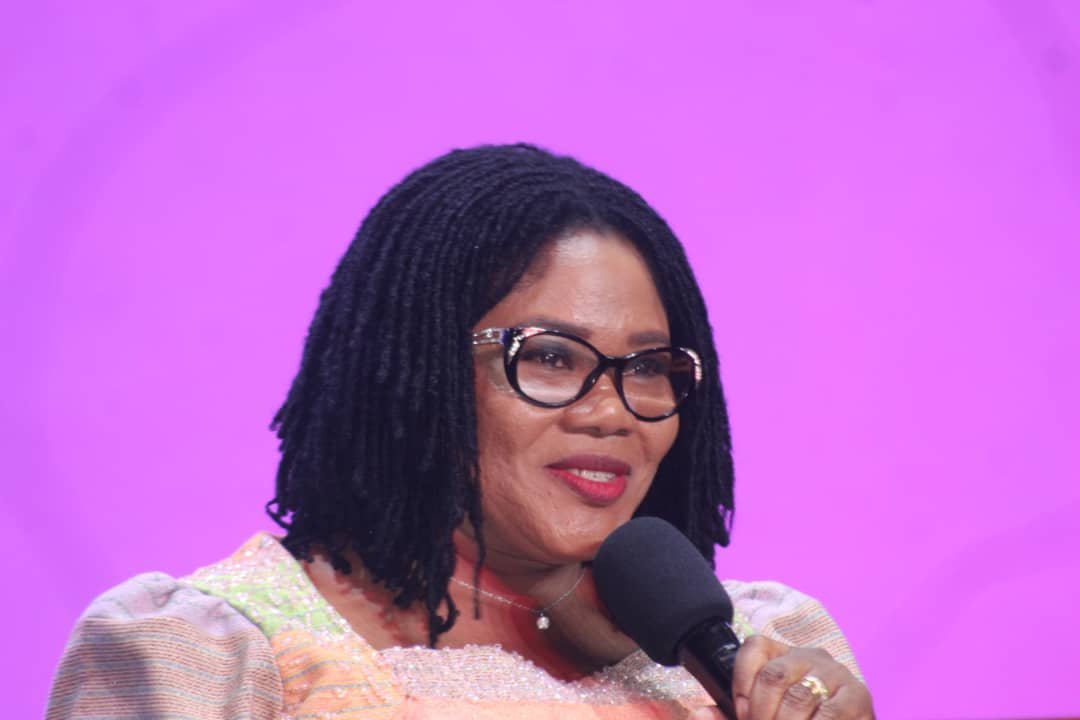
Access to sanitary products, clean facilities, and proper information is not a luxury but a right,” the Minister for Gender, Children and Social Protection, Dr Agnes Naa Momo Lartey, has said.
Dr Lartey explained that menstruation was a natural biological process and that no girl should be made to feel unworthy, excluded or ashamed because of it.
She said this in Accra last week when she addressed school girls drawn from selected basic and Senior High Schools (SHS) in the Greater Accra Region.
The event which was organised by Touching Lives of Girls Foundation International (TLGFI), a non-governmental organisation that focuses on promoting menstrual hygiene.
It formed part of activities to mark World Menstrual Hygiene Day (WMHD) which is observed on May 28 every year.
According to Dr Lartey, the theme for the year “Making menstruation a normal part of life by 2030,” was not just a call to action but a commitment to dignity, inclusion and equality.
She mentioned that the Ministry has harmonised and mainstreamed gender into social protection programmes and other governmental interventions to effectively support and protect the vulnerable and marginalised for national development.
“We are proud to stand at the forefront of efforts to improve menstrual hygiene management across Ghana and believe that ensuring access to menstrual products, accurate information and safe sanitary facility is not only a health issue but also a human right issue,” the Minister said.
She stated that menstruation was a natural and essential part of life and that it should never be a source of shame, stigma or fear.
She said in many communities, girls were forced to miss school, suffer in silence or use unsafe methods due to lack of access to sanitary products and information.
Dr Lartey mentioned the establishment of support systems to address sexual abuse, including the Ministry’s Orange Support Centre, the Buame App and dedicated free helplines to report abuse.
An Obstetrician Gynaecologist at St Dominic Hospital, Akwatia, Dr John Bosomtwe, also called for a more comprehensive and gender-sensitive approach to education and sanitation in schools, emphasising the crucial role that schools play in shaping the lives of young people, particularly girls.
He said schools need to go beyond academic instruction to provide an environment that nurtures and supports girls during their most vulnerable periods.
“Schools have a primary role of formation for all of us, especially the girls,” Dr Bosomtwe said. “We need to consider comprehensive education that addresses administration-related challenges in a way that is age-appropriate and sensitive to their needs.”
He commended the existing collaboration between schools and district health management teams under the School Health Programme (SHEP), describing it as a valuable framework that can be further explored and strengthened to benefit students.
Dr Bosomtwe stressed the importance of involving boys and male teachers in menstrual health education to foster empathy and support within the school environment.
By Esinam Jemima Kuatsinu






The Director of Legal Affairs of the New Patriotic Party (NPP), Gary Nimako Marfo, has questioned who will bear the cost of conducting presidential and parliamentary primaries following the Supreme Court’s ruling on the party’s delegate system.
Speaking to journalists, Mr. Nimako Marfo said he would not immediately comment on the ruling, adding that he wanted to wait for the full details before sharing his views.
“I don’t want to comment on it now. Let’s wait,” he said.
When asked about the Supreme Court’s decision that all members in good standing should vote in party elections, he shifted attention to the financial implications of implementing the ruling.
According to him, allowing all members in good standing to vote would increase the cost of organising internal party elections.
He questioned who would pay for the expanded electoral process.
“Who is going to pay for the cost of the elections?” he asked.
When a journalist suggested that political parties would bear the cost, Mr. Nimako Marfo replied, “Let’s wait and see.”
The comments come after the Supreme Court ruled that political parties should allow all members in good standing to vote in their internal elections, a decision that is expected to expand participation but also increase the financial and logistical demands of organising presidential and parliamentary primaries.
By: Jacob Aggrey

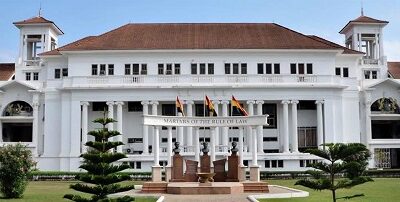
The Supreme Court of Ghana has declared the delegate system used by political parties to elect presidential and parliamentary candidates unconstitutional.
In a 5-2 majority decision delivered, the Court ruled that the long-standing system violates democratic principles and ordered all political parties to ensure every registered, card-bearing member participates in presidential and parliamentary primaries.
The ruling brings to an end decades of internal party elections conducted by a limited number of delegates.
The suit was filed by former Minister for Environment, Science, Technology and Innovation, Professor Kwabena Frimpong-Boateng; veteran politician Dr. Nyaho Nyaho-Tamakloe; and former Minister for Lands and Forestry, Dr. Christine Amoako-Nuamah.
The plaintiffs argued that the delegate system created inequality among party members by granting voting rights to a privileged minority while excluding ordinary members in good standing.
They told the Court that restricting voting rights to delegates was inconsistent with the democratic principles enshrined in the 1992 Constitution.
The Attorney-General’s Department supported the suit and urged the Court to adopt a “one member, one vote” approach.
In its submission, the State argued that political parties perform an important public function in Ghana’s democratic framework and that their internal electoral processes must reflect constitutional values of equality, participation and universal suffrage.
The Attorney-General further submitted that expanding voting rights to all registered members would strengthen accountability and deepen internal democracy within political parties.
The judgment means that going forward, presidential and parliamentary candidates will be selected by all registered members of a political party, instead of by delegates alone.
Political parties are expected to review their constitutions and structures to comply with the Court’s directive ahead of the 2028 general elections.
By Edem Mensah-Tsotorme