News
ACCESS Bank donates to Basic Schools in Bolgatanga

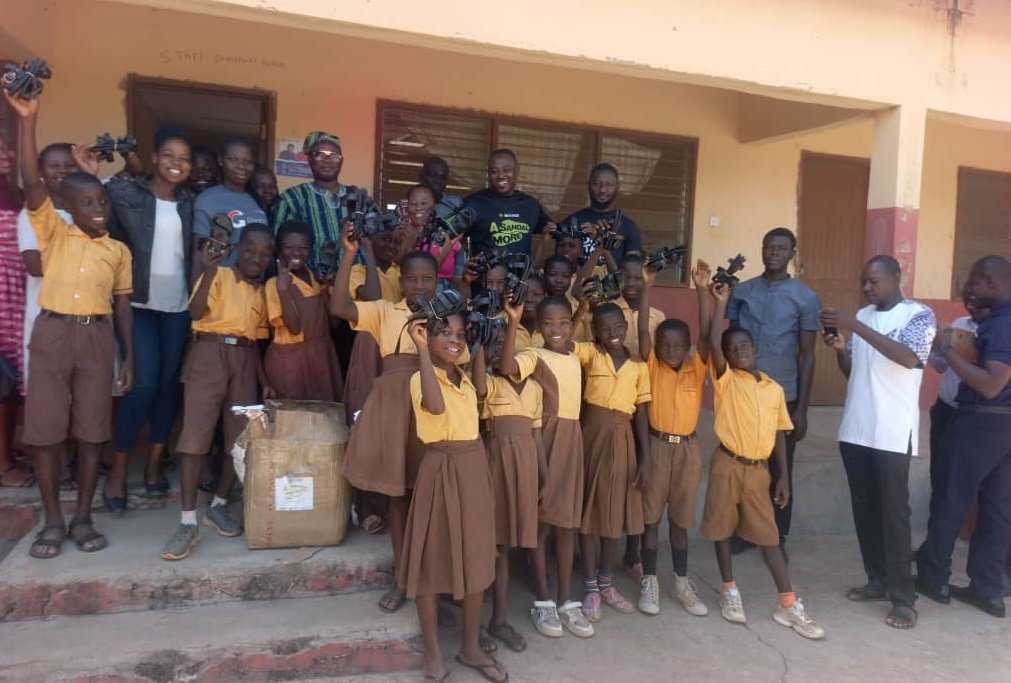
Two Basic schools in the Bolgatanga Municipality have received donations from Access Bank, Bolgatanga branch.
The donation, which was in the form of sandals distributed to the schools, was meant to ameliorate the challenge of schoolchildren from poverty-stricken communities trekking miles to school barefoot.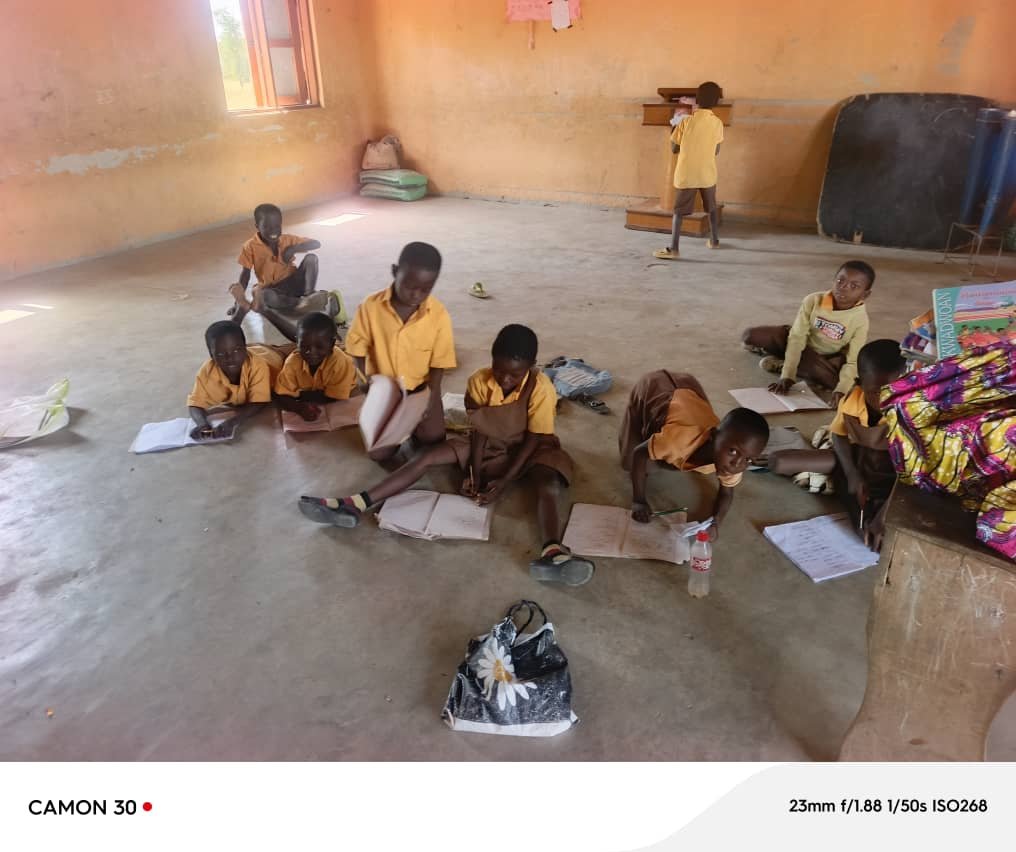
This altruistic gesture from the bank was honoured after the Municipal Chief Executive (MCE) for Bolgatanga, Roland Atanga Ayoo, engaged banks, financial institutions, and other benevolent individuals and organizations operating in the municipality to solicit their support for the growth and development of Bolgatanga.
Presenting 100 pairs of sandals to the Basiengo Kindergarten/Primary School and Yorogo-Akakiya KG/Primary School, respectively, at separate fora on Saturday in Bolgatanga Branch Manager, Alhassan Salifu Kahaar, said the gesture was part of the organization’s corporate social responsibility of giving back to society.
He said the bank, as a corporate institution, was touched by the precarious challenges confronting learners from underprivileged communities and families in the Bolgatanga Municipality and its environs.
“As a bank, this is a project that we undertake to reduce the burden on parents and guardians,” he pledged. “We know how parents struggle to put food on the table, let alone getting their wards sandals and other educational materials.”
At the Basiengo Primary School, located at Sherigu, Mr. Kahaar noted that the sandals are locally manufactured and eco-friendly.
“The sandals are made out of worn-out car tyres. We have tasked all staff members across the country to make their worn-out vehicle and motor tyres available, so we contract a private person to recycle them and produce sandals to be distributed to children from marginalized communities,” the Bolgatanga Branch Manager added.
He moreover said the bank had been engaged in the project for the past years, “and here in Upper East, we have actually visited orphanages like Mama Lardi Children’s Home at Sherigu in the Kassena-Nankana West District to make donations.”
He assured that the bank meant business in supporting education, health, and other areas of national life in the region to thrive, and would therefore extend the gesture to other schools in the future.
Felicia Adongo, Headmistress of the Basiengo KG/Primary School, commended Access Bank for the support, and equally lauded the MCE for selling the proposal to the bank and other benevolent organizations to intervene and address some challenges confronting the school.
She appealed to the bank to consider supporting the school with furniture, as some children had resorted to sitting on the floor during lessons because of a lack of desks.
The MCE, Mr. Ayoo, said he had recommended the two basic schools to receive the support because of the “seriousness” of their issues.
He pledged that the assembly was working around the clock to address the furniture problem affecting academic work at the Basiengo Primary School.
“I tout the Basiengo community for undertaking the construction of a Junior High School. The structure, a self-initiated project, needs government support, and that will be done in due course,” Mr. Ayoo promised.
He disclosed that the construction of the school would be put under the legacy projects in the municipality for expeditious execution, and asked staff members and learners to stay calm.
FROM FRANCIS DABRE DABANG, BOLGATANGA

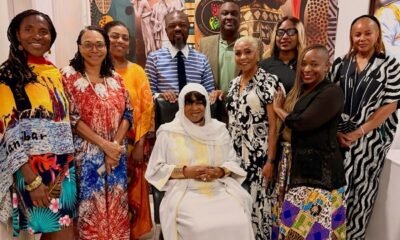






The Diaspora Affairs Office at the Office of the President has hosted a delegation of African diaspora women who are in Ghana ahead of a planned Presidential Conferment of Citizenship ceremony.
The Director of Diaspora Affairs, Kofi Okyere Darko, explained in a Facebook post that the visit was a gesture of appreciation by the delegation to the Government of Ghana for its continued efforts to reconnect Africans in the diaspora with their ancestral homeland.
He indicated that the ceremony, scheduled for next Monday, will officially grant Ghanaian citizenship to members of the delegation as part of the country’s broader engagement with the African diaspora.
The delegation was led by Erica Bennett, Founder of the Diaspora Africa Forum.
According to Mr Okyere Darko, her years of advocacy have played an important role in strengthening ties between Africa and people of African descent living abroad.
He noted that the group’s journey towards citizenship represents not only a legal process but also a cultural and spiritual return to their roots.
Also present at the meeting was Natalie Jackson, an attorney who is also expected to receive Ghanaian citizenship during the ceremony. She works closely with renowned civil rights lawyer Ben Crump.
Mr Okyere Darko emphasised that Ghana remains committed to strengthening relationships with the African diaspora and promoting unity, identity, and shared heritage among people of African descent worldwide.
By: Jacob Aggrey

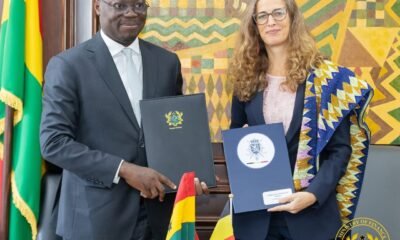
Ghana has signed a debt restructuring agreement with the Kingdom of Belgium as part of efforts to restore the country’s economic stability after the financial crisis that hit the nation in 2022 and 2023.
The Minister of Finance, Cassiel Ato Forson, today disclosed that he signed the agreement on behalf of the Government of Ghana.
He explained that Ghana experienced a very difficult period during the crisis, which forced the government at the time to declare a debt default.
However, he indicated that the country is now recovering and witnessing a significant economic turnaround.
According to him, stronger systems are also being put in place to ensure that Ghana does not return to such a situation again.
Dr Forson noted that the agreement with Belgium is the eighth deal Ghana has concluded with countries under the Official Creditor Committee as part of its external debt restructuring programme.
He expressed appreciation to the Government of Belgium for its support and partnership with Ghana during the process.
The Finance Minister thanked Carole van Eyll, Ambassador of Belgium to Ghana, for her role in strengthening relations between the two countries.
The agreement forms part of Ghana’s broader effort to restructure its external debts and stabilise the economy following the crisis.
By: Jacob Aggrey