Editorial
Illegal power connection

It is important for every Ghanaian to note that generation of income by government comes from the taxes we pay as well as other money paid into government chest such as payment for the consumption of electricity.
Unfortunately, many citizens try to cut corners by refusing to make payments for electricity they consume in their various homes. Some people do not pay for power at all whereas others make partial payment for the quantity consumed.
This is usually done through illegal power connections. Sometimes electrical cables are connected in such a way that they do not read into the meters installed, meaning that the bulk of the power consumed is not accounted and paid for.
It is unfortunate to note that sometimes these illegal connections are even carried out with the help of some unscrupulous officers of the Electricity Company of Ghana (ECG).
Yet ECG, unknowingly to some senior officers, dispatches teams to go into various places to find out about these illegal connections. It is good to carry out this exercise unannounced and also from time to time.
ECG top officials and management will have to look within the organisation and clear the mess often caused by some of the staff. Even in situations where ECG officials are not involved in such deals, those sent out to read meters and record them in various houses often turn blind eye to such illegal activity. They do this by accepting bribes and pretending that all is well with the customers when in fact this is not so.
What they fail to realise is that it is from the collection of electricity tariffs and other services supplied to their customers that constitute incomes to their organisation and make it possible for their staff to be paid.
If it were operating very efficiently, the company should have been able to generate more income and pay its workers at the end of every month, and also fulfill other commitments, without much difficulty. Unfortunately, this is not the case.
Many other public institutions also operate inefficiently and their managers tend to think of filling their own pockets first before carrying out their operations in line with their mandates. Such unfortunate developments should not be allowed to continue if the state is to derive maximum revenue and cater for all its citizens in the most appropriate manner.
To this end, all managers must sit up and plug leakages in the system, so that adequate resources can be generated by these institutions to fund their respective operations without any difficulty.
Certainly the nation will be able to perform better financially, if this is done and improve upon the welfare of everyone when it comes to road construction, quality healthcare, adequate compensation to workers, supply of equipment to all workers, as well as make the required inputs for developmental purposes.
The government is spear-heading a digitalisation programme and this must be made relevant to the operations of the public institutions, so that we will be able to move higher and enjoy better and quality lives.


Dear Editor,
I wish to draw the attention of the relevant authorities to the poor state of the railway crossing area of the Neoplan Station, near Kwame Nkrumah Circle in Accra, which is increasingly disrupting the smooth flow of traffic.
The damaged section of the road has become a major inconvenience to motorists, as vehicles are forced to slow down considerably when approaching the crossing to avoid damaging their tyres, wheels and suspension systems.
This situation causes unnecessary delays, particularly during peak hours when traffic volumes are high.
The crossing is an important route for commuters and commercial drivers who use the Circle area to connect to other parts of the capital.
The deteriorating road surface therefore affects not only individual motorists but also the general movement of vehicles through this busy transport hub.
Beyond the inconvenience, the situation could increase the risk of minor accidents as drivers brake suddenly or attempt to manoeuvre around damaged portions of the road.
I respectfully appeal to the Department of Urban Roads, the Accra Metropolitan Assembly and other relevant agencies to inspect the affected section and undertake urgent repairs to restore the smooth movement of traffic.
Timely intervention will reduce delays, improve road safety and make commuting through the Circle area more convenient.
Yours faithfully,
Concerned Citizen
SKIP THE QUEUE, TAP THE NEWS
You can now read the Ghanaian Times and The Spectator newspapers from the comfort of your device via TimesNewsPlus.
Join our WhatsApp Channel: https://whatsapp.com/channel/0029VbBElzjInlqHhl1aTU27
Dear Editor,
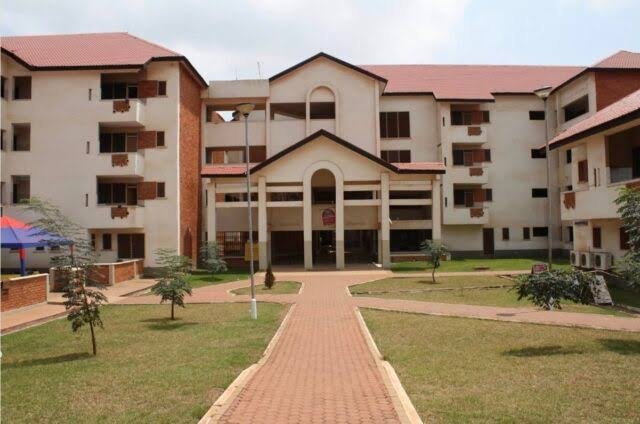
I wish to draw the attention of the authorities and the general public to the increasing cost of hostel accommodation, particularly for students in tertiary institutions.
The high cost of hostels has become a serious challenge for many students and their parents.
In some areas, hostel fees have increased significantly, making it difficult for students from low- and middle-income families to secure decent accommodation.
Apart from the hostel fees, students also have to pay for transportation, food, learning materials and other academic needs.
The rising cost of accommodation therefore puts additional financial pressure on families and, in some cases, forces students to live in overcrowded or poorly maintained facilities.
I believe hostel owners and relevant authorities must work together to ensure that accommodation remains affordable while maintaining acceptable standards.
Tertiary institutions should also consider expanding student accommodation and encouraging affordable private hostel projects.
The government and local authorities could further support the development of low-cost student accommodation through appropriate policies and incentives.
I therefore appeal to the Ministry of Education, tertiary institutions and other stakeholders to treat the issue as a matter of urgency.
Affordable and decent accommodation is essential to creating a conducive environment for students to study and succeed.
This has in a way also empowered the private people in the accommodation sector to take undue advantage of the situation to charge exorbitant rates for their services.
Kwame Ampiaw,
Accra
SKIP THE QUEUE, TAP THE NEWS
You can now read the Ghanaian Times and The Spectator newspapers from the comfort of your device via TimesNewsPlus.
Join our WhatsApp Channel: https://whatsapp.com/channel/0029VbBElzjInlqHhl1aTU27