News
Kindness, the nature of Heaven

- /home/u249204778/domains/spectator.com.gh/public_html/wp-content/plugins/mvp-social-buttons/mvp-social-buttons.php on line 27
Warning: Trying to access array offset on false in /home/u249204778/domains/spectator.com.gh/public_html/wp-content/plugins/mvp-social-buttons/mvp-social-buttons.php on line 27
&description=Kindness, the nature of Heaven', 'pinterestShare', 'width=750,height=350'); return false;" title="Pin This Post">
- Share
- Tweet /home/u249204778/domains/spectator.com.gh/public_html/wp-content/plugins/mvp-social-buttons/mvp-social-buttons.php on line 72
Warning: Trying to access array offset on false in /home/u249204778/domains/spectator.com.gh/public_html/wp-content/plugins/mvp-social-buttons/mvp-social-buttons.php on line 72
&description=Kindness, the nature of Heaven', 'pinterestShare', 'width=750,height=350'); return false;" title="Pin This Post">
FEW years ago when I was called to lead a unit of my church, I had a desire to visit those who were less active in the church and see if there was anything we could do to bring the blessings of the gospel into their lives. One day we visited a brother who told me the last time he had been to church was many years back and he did’t even remember the last time he went to church. Something had happened that day. A fellow member said some unkind words to him that he walked out of chapel and never returned. It was remarkable to me that an unkind word spoken many years back could have had such a profound effect. But it had. And, as a consequence, this man had never returned to church. Neither had his wife nor children. I apologised to him and expressed my sorrow that he had been treated that way. I told him how unfortunate it was that one word spoken in haste, and so long ago, could have the effect of excluding his family from the blessings that come from church activity. “After many years,” I told him, “it’s time the church made things right.” I did my best to do so. I reassured him that he was welcome and needed. I rejoiced when this man and his family eventually returned to church and became strong and faithful members. Kindness is the essence of greatness and the fundamental characteristic of the noblest men and women I have known. Kindness is a passport that opens doors and fashions friends. It softens hearts and moulds relationships that can last lifetimes. Kind words not only lift our spirits in the moment they are given, but they can linger with us over the years. Kindness is the essence of a celestial life. Kindness is how a Christlike person treats others. Kindness should permeate all of our words and actions at work, at school, at church, and especially in our homes. Jesus, our Saviour, was the epitome of kindness and compassion. He healed the sick. He spent much of His time ministering to the one or many. He spoke compassionately to the Samaritan woman who was looked down upon by many. He instructed His disciples to allow the little children to come unto Him. He was kind to all who had sinned, condemning only the sin, not the sinner. Yet His greatest act of kindness was found in His
atoning sacrifice, thus freeing all from the effects of death, and all from the effects of sin, on conditions of repentance.
The things you say, the tone of your voice, the anger or calm of your words; these things are noticed by your children and by others. They see and learn both the kind and the unkind things we say or do. Nothing exposes our true selves more than how we treat one another in the home. I often wonder why some feel they must be critical of others. It gets in their blood, I suppose, and it becomes
so natural they often don’t even think about it. They seem to criticise everyone—the way Ama sings in church, the way Brother Kofi teaches a lesson or plants his garden. Even when we think we are doing no harm by our critical remarks, consequences often follow. I am reminded of a boy who committed suicide and left a note saying his mother kept telling him that her life started down spiral when she gave birth to him. His husband left her and she became a single mother and always reminded her son about what he has brought into her life. One morning on his mother birthday this boy took his own life and left a note telling the mother that he’s gone so that she can have the life she wanted. As parents we need to be careful about what we say to our children. “Oh the kind words we give shall in memory live.” A church is not a place where perfect people gather to say perfect
things, or have perfect thoughts, or have perfect feelings. The church is a place where imperfect people gather to provide encouragement, support, and service to one another as we press on in our journey to return to our Heavenly Father. Each one of us will travel a different road during this life. Each progresses at a different rate. Temptations that trouble your brother may not challenge you at all. Strengths that you possess may seem impossible to another. Never look down on those who are less perfect than you. Don’t be upset because someone can’t sew as well as you, can’t throw as well as you, can’t row or hoe as well as you. We are all children of our Heavenly Father. And we are here with the same purpose: to learn to love Him with all our heart, soul, mind, and strength, and to love our neighbour as ourselves.
One way you can measure your value in the kingdom of God is to ask, “How well am I doing in helping others reach their potential? Do I support others in our communities and family, or do I criticise them?” If you are criticising others, you are weakening the community. If you are building others, you are building the community. As Heavenly Father is kind, we also should be kind to others. James E. Talmage, a man who is remembered for his doctrinal teachings, showed great kindness to a neighbour family in distress. They were complete strangers to him. Before he was an Apostle, as a young father, he became aware of great suffering at a neighbour’s home whose large family was stricken with the dreaded diphtheria. He did not care that they were not members of the church; his kindness and charity moved him to act. The Relief Society was desperately trying to find people
to help, but no one would because of the contagious nature of the disease. When he arrived, James found one toddler already dead and two others who were in agony from the disease. He immediately went to work, cleaning the untidy house, preparing the young body for burial, cleaning and providing for the other sick children, spending the entire day doing so. He came back the next morning to find that one more of the children had died during the night. A third child was still suffering terribly. He wrote in his journal: “She clung to my neck, ofttimes coughing [germs] on my face and clothing, … yet I could not pull her from me. During the half hour immediately preceding her death, I walked the floor with the little creature in my arms. She died in agony at 10 a.m.” The three children had all departed within the space of 24 hours. He then assisted the family with the burial arrangements and spoke at their graveside services.This he did all for a family of strangers. What a great example of Christlike kindness! When we are filled with kindness, we are not judgemental. The Saviour taught, “Judge not, and ye shall not be judged: condemn not, and ye shall not be condemned: forgive, and ye shall be forgiven.” He also taught that “with what judgement ye judge, ye shall be judged: and with what measure ye mete, it shall be measured to you again.” “But,” you ask, “what if people are rude?” Love them. “If they are obnoxious?” Love them. “But what if they offend? Surely I must do something then?”Love them. “Wayward?”The answer is the same. Be kind. Love them. Why? In the scriptures Jude taught, “And of some have compassion, making a difference.”Who can tell what far-reaching impact we can have if we are only kind? The gospel of Jesus Christ transcends mortality. Our work here is but a shadow of greater and unimaginable things to come. May we be models of kindness. May we ever live up to the words of the Saviour: “By this shall all men know that ye are my disciples, if ye have love one to another.”
“Kindness is the essence of greatness and the fundamental characteristic of the noblest men and women I have known. Kindness is a passport that opens doors and fashions friends. It softens hearts and moulds relationships that can last lifetimes.”
By Samuel Enos Eghan


Mr Issahak Ibrahim, the Atwima Mponua District Chief Executive (DCE), has stressed the need to invest in initiatives that will encourage school children to read at all times.
He said a nation that invested in reading invested in its future, since a reading child was a potential future leader.
Speaking at the District Reading Festival for 32 schools in the district, at Nyinahin, he said reading strengthened literacy skills and inspired young leaders to unlock their full potentials while nurturing a lifelong love for learning, which leads to success.
Mr Ibrahim, therefore, enjoined teachers, parents, pupils and all stakeholders in the district to inspire every child to discover the limitless possibilities that begin with the act of reading in order to make it reflect the shared commitment to building a generation of confident readers, critical thinkers and lifelong learners in the society.
He pledged his commitment to support and empower more children and help them to achieve higher educational laurels in the area, while championing the cause of reading among children to achieve the related benefits.
“I remain committed to supporting educational initiatives that would empower our children with the knowledge and skills they needed to succeed in an ever-changing world,” he stated.
The festival was organised by the District Directorate of Education in conjunction with the ISMAT Foundation, a local educational non-governmental organisation (NGO) founded by the DCE, to support needy learners in the district and beyond.
The festival was under the theme: “Turn a page to begin a journey.”
The festival was aimed at encouraging and motivating the interest of pupils in reading and general learning.
All the 32 participating pupils from four zones within the district received school bags, exercise books, pens, pencils, erasers, mathematical sets and certificates.
Lawal Kwame from the Botrampa D/A Basic and Sadique Bamba from the Mpasatia African Faith Preparatory schools in the Nyinahin Zone, emerged first in the KG One and two classes, whilst Alice Fosu, Beatrice Sarfowaa and Priscilla Agyemang from the Adiembra Anglican Basic School also in the Nyinahin Zone, came first from Basic One to Basic Three classes respectively.
Ernest Duah from the Mampong Abebrese D/A and Blessing Sika from the Sreso Presby School in the Sreso Zone as well as Eric Osei Agyemang from Adiembra Anglican Basic School came first in the Upper Primary department.
Ms Ama Adwubi Asafu-Adjaye, the District Director of Education, commended the DCE for the programme, which was the first of its kind after the year 2022 one, which was supported by the USAID.
She said a Basic One boy called Obed Awuku from Mampong Abebrese D/A Basic School climbed from the district through a Regional contest, won and placed second at the national level in the year 2022 as one Salam Mohammed of the Otaakrom D/A Islamic Basic School, who also emerged as the 2024 winner in the district also placed fifth among the 16 regional participants even though they had a very short notice for preparation.
She said other achievements encouraged her and her management to make the programme an annual event in June and July as part of the activities on their academic calendar and a source of pride for the district.
She, therefore, encouraged the teachers to work harder to produce talented kids for higher achievements from the area. -GNA
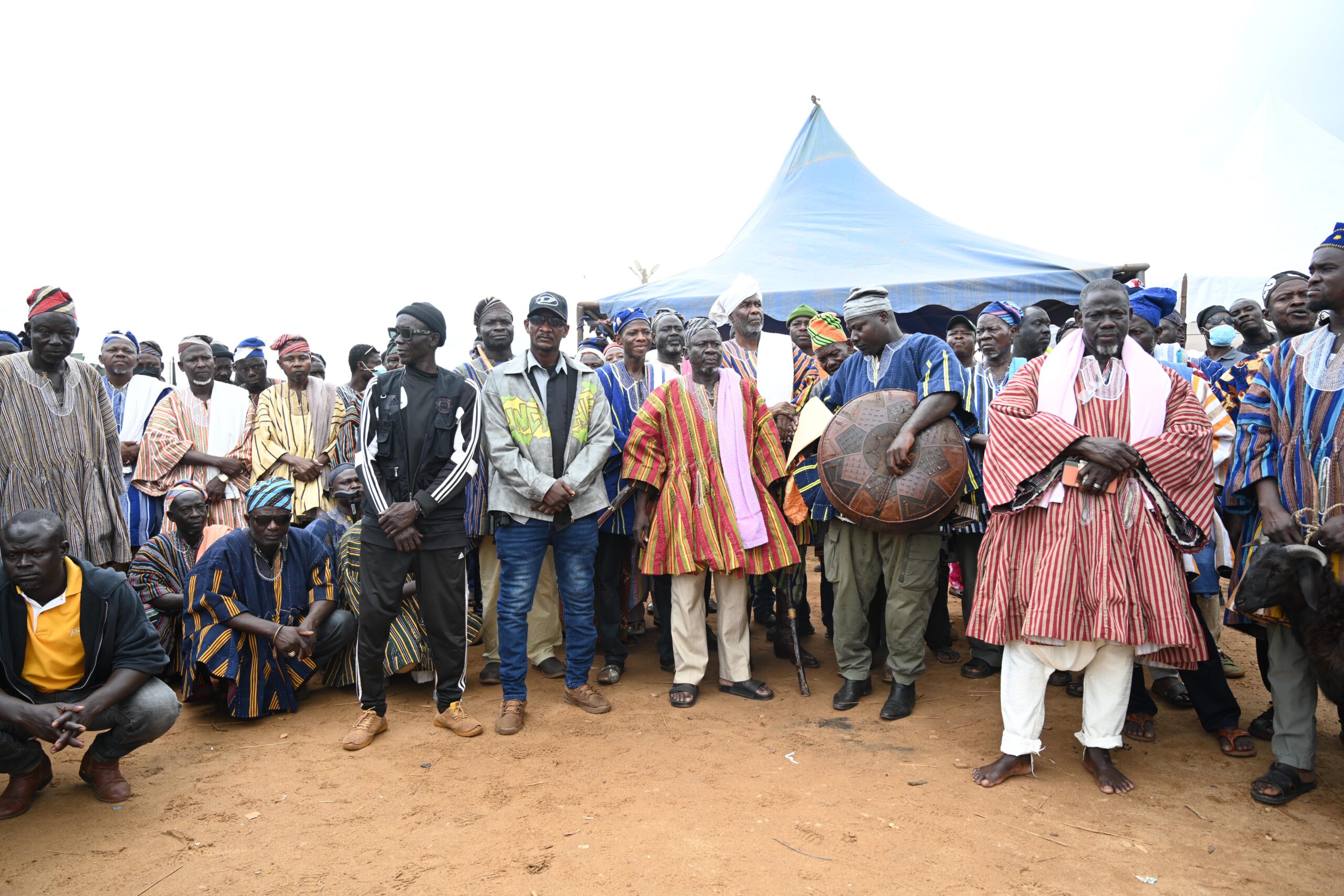
The forecourt of the Gbewaa Palace, was a mixture of rich tradition and emotional scenes as thousands of mourners concluded the three-day adua for the late Overlord of Dagbon, Ndan Yaa Naa Abukari II.
For the period, the Gbewaa Palace became the spiritual and cultural heartbeat of the Dagbon Kingdom as Islamic clerics, traditional rulers, politicians, security personnel and ordinary citizens united in prayer for the repose of the soul of the revered monarch.
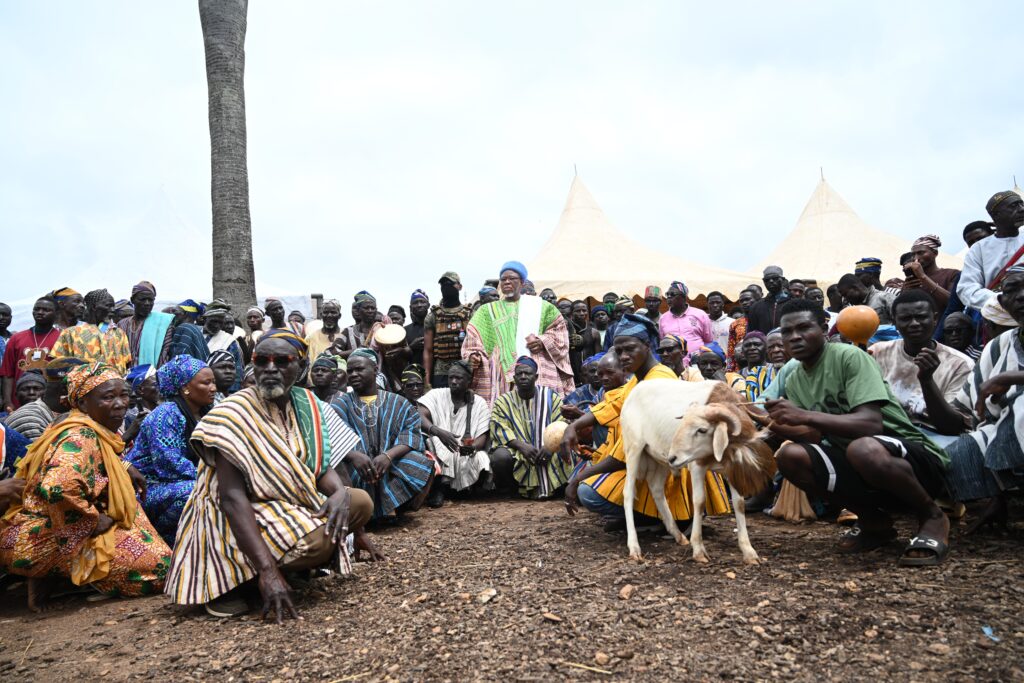
From dawn each day, streams of mourners, mostly dressed in traditional smocks and black attire, steadily filled the palace grounds and adjoining streets, transforming the royal seat into a sea of mourners.
Men, women, youth and children sat under canopies and open spaces while verses from the Holy Qur’an echoed across the palace, creating an atmosphere of reverence and reflection.
The air occasionally reverberated with ceremonial gunshots and traditional warrior displays, symbolising honour, bravery and the rich cultural heritage of the Dagbon Kingdom.
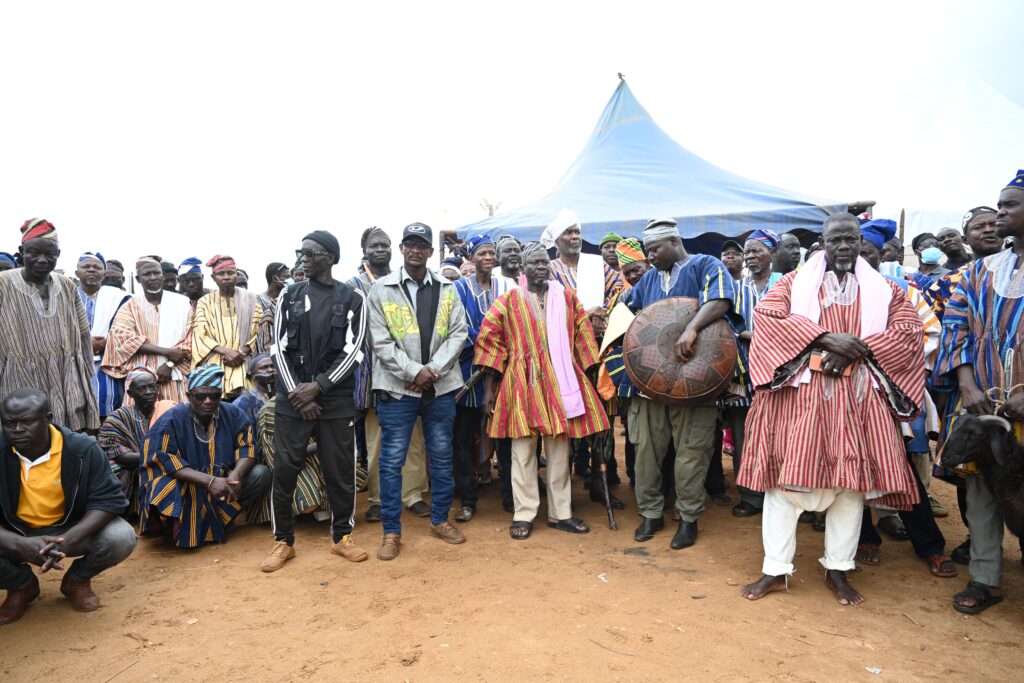

The adua, observed in accordance with Islamic tradition following the burial of the Yaa Naa, was attended by eminent Imams and Mallams who offered continuous prayers, seeking Allah’s mercy and eternal peace for the departed King.
Throughout the three-day observance, a steady flow of dignitaries visited the Gbewaa Palace to pay their respects and sign the book of condolence.
Among them were the Northern Regional Minister, Ali Adolf John Mburidiba; the Savannah Regional Minister, Salisu Be-Awuribe Issifu; and the National Chairman of the National Democratic Congress (NDC), Johnson Asiedu Nketia, who joined members of the royal family, traditional rulers and mourners in honouring the late Yaa Naa.

Security remained tight throughout the mourning period, with the Ghana Police Service deploying 450 personnel to ensure law and order.
The officers were stationed at strategic locations, including the Gbewaa Palace, major entry points into Yendi and other key installations, where they managed traffic, maintained public order and provided security for thousands of mourners and visiting dignitaries.
Beyond the official ceremonies, the event reflected the deep respect the people of Dagbon and Ghanaians at large had for the late monarch.
The conclusion of the three-day adua marks another important milestone in the funeral rites of the late Yaa Naa and signals the gradual transition towards the customary processes leading to the selection and enskinment of a new Overlord of the Dagbon Kingdom.
Although the formal three-day prayers have ended, mourning activities continue, with the seventh-day Islamic prayers expected to draw another large gathering of traditional authorities, government officials, religious leaders and well-wishers from across the country.
From: Geoffrey Buta, Yendi