News
UG Professor proposes Genes–Mind–Community model to improve kidney care in Africa


A Professor at the University of Ghana Medical School, Prof. Vincent Boima, has called for a major shift in the treatment and prevention of chronic kidney disease (CKD) in Ghana and across Africa, warning that the continent cannot rely on dialysis alone to manage the growing health burden.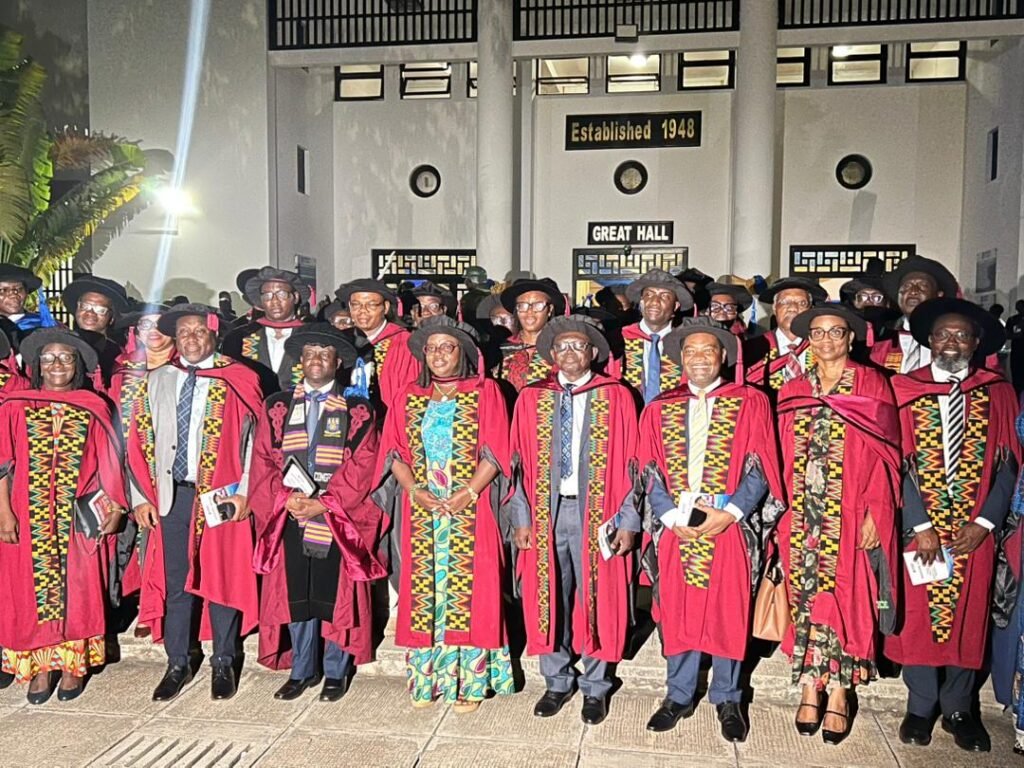
Delivering his inaugural lecture at the university’s Great Hall on Thursday, Prof. Boima stated that chronic kidney disease was more common in Africa than in many high income countries, with most patients seeking treatment only when the disease had reached advanced stages.
Speaking on the theme, “From Genes to Mind: Holistic Pathways to Precision Kidney Care for Africa,” he explained that hypertension and diabetes remained the leading causes of kidney disease in Ghana, where many younger and economically active people were being affected.
According to him, the high cost of dialysis, limited transplant facilities and unequal access to treatment raised concerns about whether many cases of kidney failure could have been prevented through earlier interventions.
Prof. Boima proposed what he described as the “Genes–Mind–Community” model, which combines genetics, mental health and community based healthcare approaches to improve kidney care in Africa.
He explained that the “Genes” pillar focused on understanding the role genetics played in kidney disease among Africans, particularly the APOL1 risk variants common in West Africa.
The professor noted that studies in Ghana and other West African countries had shown that many people carried high risk APOL1 genes, which increased the chances of developing non diabetic kidney disease when combined with factors such as infections, hypertension and environmental pollution.
However, he cautioned that genetic information should be used responsibly and ethically, stressing that it should improve treatment decisions without increasing stigma or inequality.
Prof. Boima therefore called for more African led research into kidney disease genetics, affordable testing methods for early detection and stronger health systems to prepare for future gene targeted treatments.
On mental health, he indicated that psychological wellbeing was an important part of kidney care because many patients with hypertension, chronic kidney disease and those on dialysis experienced depression, anxiety and emotional distress.
He explained that financial difficulties, irregular access to medication and weak follow up systems often worsened the mental health burden on patients, affecting their ability to continue treatment.
To address the problem, he proposed routine mental health screening in hypertension and kidney clinics, together with culturally sensitive counselling and support systems.
Prof. Boima stressed that psychological care should become part of chronic disease management rather than being treated as optional.
Touching on the “Community” pillar, he stated that prevention remained the most effective and affordable strategy for reducing kidney failure, stroke and heart disease in Africa.
He disclosed that community studies in Ghana had shown that large scale blood pressure screening programmes could identify many people living with undiagnosed hypertension.
Despite this, he pointed out that many patients struggled to continue treatment because of transport costs, long hospital waiting times, expensive medication and inadequate financial support.
Prof. Boima proposed decentralising healthcare through community based services and primary healthcare centres, while also empowering nurses, pharmacists and other non physician health workers to assist with prevention and treatment.
He further recommended the use of simple technologies such as text message reminders to help patients take medication, reduce salt intake, exercise regularly and attend medical appointments.
The nephrologist also encouraged the use of family and faith based support systems to improve treatment adherence and continuity of care.
Speaking on the state of kidney treatment in Ghana, Prof. Boima explained that dialysis remained the main form of kidney replacement therapy in the country, although treatment was expensive and available mainly in a few locations.
He observed that many patients paid for dialysis from their own pockets, creating serious financial hardship for families, while kidney transplantation services also remained limited.
According to him, these challenges highlighted the need for Ghana to focus more on prevention, primary healthcare and long term chronic disease management instead of depending heavily on dialysis centres.
He called for expanded National Health Insurance coverage for essential medicines and diagnostic services, improved data systems, stronger primary healthcare and policies to support mental health and ethical genetic care.
Prof. Boima concluded by urging African countries to lead a new era of “precision kidney care” that focused on people rather than only treating diseased organs.
The Vice Chancellor of the University of Ghana, Professor Nana Aba Appiah Amfo, commended Prof. Boima for his work, stating that the lecture had reshaped thinking on kidney healthcare in Africa.
She noted that the presentation highlighted the hidden financial and social costs of kidney disease and reinforced the need for healthier lifestyles, including reducing salt intake, exercising regularly and taking blood pressure checks seriously.
Prof. Appiah Amfo added that Africa must not only participate in precision medicine but should also help shape its future direction.
By: Jacob Aggrey










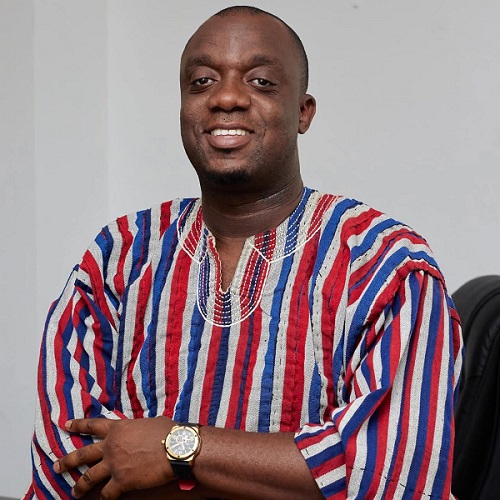
The New Patriotic Party (NPP) says it has successfully conducted constituency executive elections in 245 out of its 276 constituencies across the country.
The party’s General Secretary, Justin Kodua Frimpong, said the exercise recorded an 88.7 per cent success rate and was conducted peacefully in the constituencies where voting took place.
In an update posted on his Facebook page, he said elections in 23 constituencies were put on hold because of various disputes.
He added that four constituencies Ningo Prampram, Atwima Mponua, Obuasi West and Trobu could not hold their elections due to last minute challenges.
According to him, the party’s National Steering Committee will also review election activities in Afigya Sekyere East, Adansi Asokwa, Bantama and Asante Akyem Central.
Mr Frimpong said the National Secretariat is committed to resolving all outstanding issues to ensure the successful completion of the constituency executive elections.
He expressed appreciation to members of the party for their support and discipline throughout the exercise.
“We extend our sincere appreciation to all Patriots for their commitment, discipline, and support, which contributed to the successful conduct of these elections,” he stated.
By: Jacob Aggrey
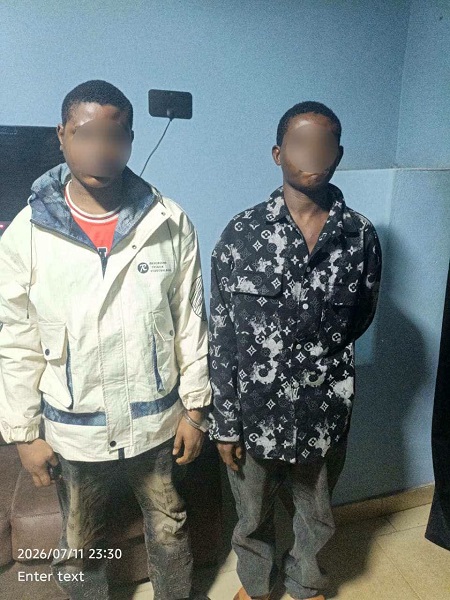
The Northern Regional Police Command has arrested two Nigerian nationals in connection with the murder of a 36-year-old Nigerian man at Sanzirigu in Tamale.
The suspects, identified as Daniel Victor Eze and David Oko Ewa, were arrested on Saturday, July 11, shortly after the body of Nkemujika Uzorchuku Eze was found in his bedroom.
According to the Police, preliminary investigations showed that the deceased lived in a three-bedroom apartment with his wife, Peace Uzorchuku, the two suspects and another Nigerian national, Godwin Nwafor.
The Police said officers began investigations after receiving a report that the deceased had been found lying in a pool of blood in his room.
A team that visited the scene found that he had suffered a deep cut to the forehead and had a towel stuffed into his mouth. The room had also been ransacked.
The Police said a wooden pestle believed to have been used in the attack, together with other items, was recovered from the scene for forensic examination.
The body was taken to the Tamale Teaching Hospital, where a medical officer confirmed him dead before it was deposited at the hospital mortuary for preservation and an autopsy.
According to the Police, intelligence-led operations led to the arrest of the two suspects at Tatale on the same day while they were allegedly attempting to escape into the Republic of Togo.
They were later handed over to the Tamale District Criminal Investigations Department to assist with investigations.
The Police said the suspects allegedly admitted during interrogation that they had conspired to kill the deceased because he had been withholding money they claimed was obtained through internet fraud.
A search conducted after their arrest led to the recovery of several items suspected to have been stolen from the deceased’s room, including mobile phones, laptop computers, a tablet, jewellery, clothing, wristwatches, personal documents and other valuables. The Police said the items have been kept as exhibits to support the investigations.
The suspects remain in Police custody and are expected to appear before court on Monday, July 13, to facilitate the ongoing investigations.
The Northern Regional Police Command said it remains committed to bringing everyone involved in the crime to justice and urged the public to provide credible information to help fight crime.
By: Jacob Aggrey