News
Lead contamination in products can cause anaemia, brain damage — UNICEF, FDA

- /home/u249204778/domains/spectator.com.gh/public_html/wp-content/plugins/mvp-social-buttons/mvp-social-buttons.php on line 27
https://spectator.com.gh/wp-content/uploads/2025/10/a73edc49-dcbc-4034-b675-829afa19a954.jpg&description=Lead contamination in products can cause anaemia, brain damage — UNICEF, FDA', 'pinterestShare', 'width=750,height=350'); return false;" title="Pin This Post">
- Share
- Tweet /home/u249204778/domains/spectator.com.gh/public_html/wp-content/plugins/mvp-social-buttons/mvp-social-buttons.php on line 72
https://spectator.com.gh/wp-content/uploads/2025/10/a73edc49-dcbc-4034-b675-829afa19a954.jpg&description=Lead contamination in products can cause anaemia, brain damage — UNICEF, FDA', 'pinterestShare', 'width=750,height=350'); return false;" title="Pin This Post">
Childdren and pregnant women in Ghana are unknowingly being exposed to toxic levels of lead in everyday products, a new study by UNICEF and the Food and Drugs Authority (FDA) has revealed.
The nationwide study, which covered all 16 regions, found dangerous levels of lead contamination in items such as cosmetics, food, and household products, posing significant threat to public health, particularly to children and women of childbearing age.
A statement on the report copied to The Spectator in Accra on Monday explained that several commonly used items contained alarmingly high concentrations of lead.
Lead, a heavy metal used in batteries, paints, ceramics, and other industrial materials, is highly toxic even in small quantities.
Experts warn that it can cause irreversible brain damage, developmental delays, learning difficulties, and behavioural problems in children.
The study stressed that there were no safe levels of lead in the human body.
Traditional eyeliners known locally as kaji kaji or kholi, which many mothers use to brighten their children’s eyes, had contamination levels tens of thousands exceeding permissible limits.
White baked clay, called shire, ayilor, or farinkasa and commonly consumed by pregnant women to ease nausea, also tested positive for lead contamination in about 25 per cent of samples, with the highest rates recorded in the North East and Greater Accra regions.
Ground turmeric, a staple spice used across Ghana, was found to be contaminated in 42 per cent of samples, with particularly high levels in the Greater Accra (84 per cent), Central (75 per cent), and Bono (60 per cent) regions.
Similarly, locally prepared corn-based cereal (Tom Brown) showed lead contamination in 4.4 per cent of samples, mostly from the Eastern Region.
Old plumbing systems and certain cookware were also identified as possible sources of exposure, as lead can leak into drinking water or food during cooking.
The health impacts are severe. Lead exposure can cause anaemia, stunted growth, hearing loss, seizures, and pregnancy complications such as low birth weight and miscarriage.
UNICEF has, therefore, called for immediate national action to address the crisis, calling for public awareness campaigns, stricter enforcement of product safety standards, and routine screening for lead exposure, especially among vulnerable groups.
UNICEF reaffirmed its commitment to supporting the Government of Ghana and relevant partners to eliminate lead exposure and safeguard the health of every woman and child.
By Esinam Jemima Kuatsinu
Join our WhatsApp Channel now!
https://whatsapp.com/channel/0029VbBElzjInlqHhl1aTU27









The Ghana Police Service has arrested a man suspected of running a romance scam that targeted women with false marriage promises, blackmail, and the non-consensual sharing of intimate images.
The suspect, Nana Yaw Bonsu Kwarteng, was arraigned alongside Sally Akosua Amoasah before the Accra Circuit Court 1 on charges of conspiracy to commit crime, defrauding by false pretences, and non-consensual sharing of intimate images.
According to preliminary investigations, Kwarteng posed as a pastor conducting online church services on Instagram. He allegedly told women that “God had revealed” they were his future wives.
To gain their trust, police say he went as far as meeting their families and presenting them with promise rings.
Investigators allege the suspect then obtained intimate images of some victims and used them to blackmail them for money.
He is also accused of introducing victims to a fake car tyre business. Under the pretext of shipping and clearing containers of tyres, he allegedly collected thousands of dollars from them before becoming unreachable.
Police further allege that Kwarteng shared the intimate images of some victims with his wife, Sally Akosua Amoasah, who is also accused of threatening the victims.
Seven victims have so far reported the matter to the Police. Investigations indicate the offences date back to 2021.
The court remanded Nana Yaw Bonsu Kwarteng into Police custody to reappear on August 6, 2026. Sally Akosua Amoasah was granted bail.
The Ghana Police Service says it continues to receive complaints from other possible victims.
The Service is urging anyone who may have had similar encounters with the suspect to report to the nearest Police station to assist with ongoing investigations.
By Edem Mensah-Tsotorme
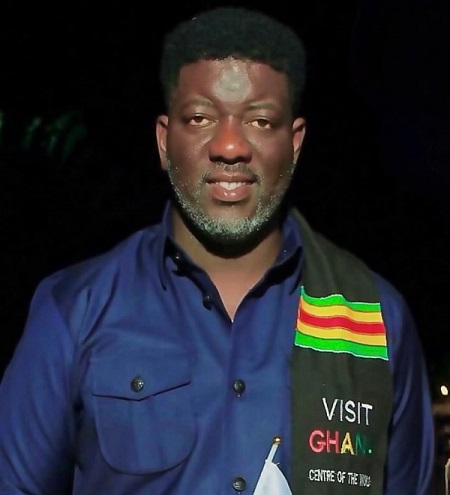
Ghana’s tourism industry is in mourning following the sudden death of Prince Anthony Bart-Appiah, a pioneering figure credited with helping to reconnect the African diaspora to the continent.
Prince Anthony passed away in the early hours of Saturday, July 26, 2026, at his private residence in Spintex, Accra.
He was instrumental in the development and promotion of “The Year of Return,” the flagship tourism campaign that invited members of the African diaspora to return to Ghana in 2019.
The initiative is widely regarded as a turning point that boosted Ghana’s tourism numbers and strengthened cultural ties with Black communities across the world.
Beyond his work with the GTA, Prince Anthony was the Chief Exexutive Officer (CEO) of Bridgezone, an agency dedicated to showcasing Africa to Western audiences and fostering cultural and business connections between the continent and the diaspora.
Colleagues describe him as passionate, strategic, and committed to telling authentic African stories that drive tourism, investment, and pride.
Widely known as Prince Anthony, he served as a Board Member of the Ghana Tourism Authority from 2025 to date.
A former British Army officer and a royal of the Akwamu clan, he brought discipline, vision, and a deep sense of heritage to every role he held
Prince Anthony was also a proud father to two teenagers, whom he deeply cherished.
In a statement, the *Ghana Tourism Authority extended its heartfelt condolences to the grieving family, friends, and all sympathizers.
“The tourism industry has lost a pioneering figure and a vital link to the diasporan community,” the statement read.
The statement further added that “We pray for strength for the family during this difficult time.”
Tributes have since poured in from tourism stakeholders, creatives, and diasporan groups who say Prince Anthony’s legacy will continue to shape how the world sees and experiences Ghana.
By Edem Mensah-Tsotorme