Features
Over the counter

- /home/u249204778/domains/spectator.com.gh/public_html/wp-content/plugins/mvp-social-buttons/mvp-social-buttons.php on line 27
https://spectator.com.gh/wp-content/uploads/2025/09/A-lot-of-people-are-guilty-of-self-medication-1000x600.webp&description= Over the counter', 'pinterestShare', 'width=750,height=350'); return false;" title="Pin This Post">
- Share
- Tweet /home/u249204778/domains/spectator.com.gh/public_html/wp-content/plugins/mvp-social-buttons/mvp-social-buttons.php on line 72
https://spectator.com.gh/wp-content/uploads/2025/09/A-lot-of-people-are-guilty-of-self-medication-1000x600.webp&description= Over the counter', 'pinterestShare', 'width=750,height=350'); return false;" title="Pin This Post">
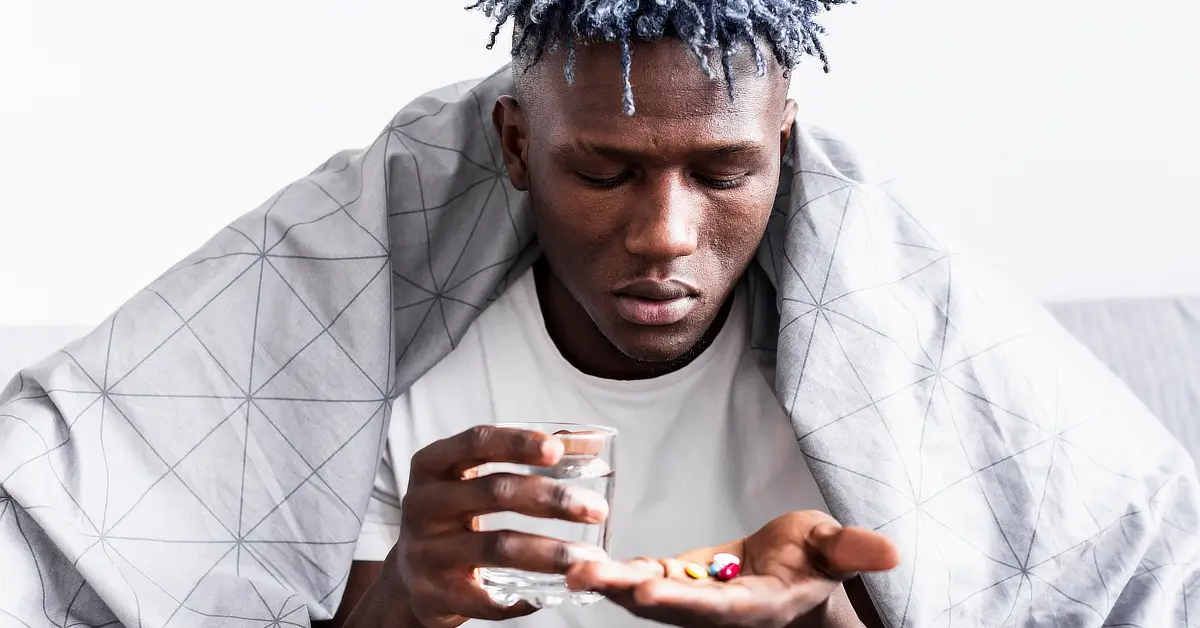
In Sikaman, I can bet that almost everybody you see is either a doctor or a pharmacist. If you’re sick, you don’t need to go to the hospital to see a doctor. Just see a friend and tell him your problem. “I have strong headache, bodily pains and loss of appetite.”
Your friend will look into your face and prophesy that you’re also suffering from constipation. Probably your nose looks like that of a chronic ‘constipator’.
“I can’t go to toilet”, you’d readily confirm.
“Don’t worry. Go and buy Chloroquine, four tablets, take two in the morning after koko and two in the evening. Also buy WL; if your stomach is hard take three, otherwise take two. Don’t forget and take four. Also don’t take it and go and board a bus to Kumasi or else you’ll set a national record.
See another friend with the same problem and he’d tell you to go and get Alagbin. “If there is no Alagbin, buy Drastin or Top Tabs. The malaria will go like water.
Meet yet another friend and he is likely to tell you, “Go and buy abom belt (terramycin or ampicillin). Take two straight. Wait for thirty minutes and balance it with three tots of raw akpeteshie. The fever will go long time. Me, this is how I cure my fever-o! Me I’ll never go to hospital and a nurse will be pricking my buttocks with a needle. I am not a fool”.
Somehow, all the four prescriptions by the unorthodox medical practitioners are effective but only to some extent. They can mask the disease called malaria and the patient will experience a sense of relief, but a relapse is inevitable.
In fact, if you’re sick of malaria and you ‘check’ a quarter of bitters, you’ll start sweating like a dock worker. Sweat will burst Alomele forth all over the body and will finally create an air-conditioner in the armpit, a sort of natural cooling system one can always rely upon.
The effect of this local alcohol which surpasses Russian Vodka in international status and ability to turn the human eye, will make you feel the malaria has been evicted from your system. In due course, you certainly will come to appreciate the fact that peters is not a cure for malaria.
From 6.30 p.m., go from one drugstore to another and you’ll see many people buying drugs over the counter. Only about five per cent of them buy with doctors’ prescription.
The rest are self-made, self-promoted doctors and pharmacists who buy butazolidin, malarex, chloroquine, phensic, baralgin, valium, cafenol, kaolin, anusol, chloramphenicol, anacin and many others by their own prescriptions.
Even you can buy syringes over the counter and that is why some herbalists are going about injecting anybody they see. In the process they distribute tetanus free of charge. They are very generous!
We are all guilty of self-medication including me Kwame Alomele. I don’t often cure my malaria by going to the doctor when I know I am also a doctor. The only difference is that I’ve not been to the medical school and sworn the Hippocratic Oath.
Although I realise that self-medication is bad, I’m compelled to do it because it saves me time. Kokotako says he self-medicates because it saves him from the wrath of private doctors who always want to empty his back pocket.
In developed countries over-the-counter drug purchases are forbidden. The druggist may sell you some pain killers and condoms if you want to have a showdown with your fiancée.
But to go to a pharmacist and say you want to buy Indocid without a doctor’s prescription is unheard of, and of course, you’d be given the marching off orders.
Self-medication is a form of drug abuse which must not be encouraged. This form of abuse is common in third world countries because families do not have their own doctors.
Ideally every family is supposed to have a family doctor who comes around periodically to examine the members, offer treatment and advice.
Any ailment is first relayed to him by phone and he gives appropriate advice. He is paid a regular fee, for these services. In Sikaman, only about one per cent of the population can afford the services of a family doctor. The money that would be used to pay the family doctor a week would be of better service if used to prepare groundnut soup that would last some three days.
So in the absence of the family doctor, many act in his stead and do their own by diagnoses, give their own prescriptions often by trial and error and risk wrong medication, under-doses, over-doses. After all, “All die be die”.
Perhaps if health services could be cheaply sought, self-medication will reduce. This brings to mind the idea of the National Health Insurance Scheme and its advantages. Certain diseases like heart ailment that need surgery to correct require between Gh¢ six and 10 million in terms of cost.
The Weekly Spectator has had to launch appeals for funds for those who need money to cure medical conditions including Hole-In-Heart. Some of these appeals will not be necessary if a National Health Insurance Scheme is in place to which anybody who values his health and life could contribute to and benefit therefrom.
This will also reduce the incidence of self-medication because your health needs will always be catered for whether you are suffering from kooko or stubborn constipation.
Perhaps, we’d want to know why the scheme is still not in place!
This article was first published on Saturday, October 15, 1994
Join our WhatsApp Channel now!
https://whatsapp.com/channel/0029VbBElzjInlqHhl1aTU2








After leaving the Sampson’s house, Kakraba picked up his phone and called Paa John, his buddy since senior high school.
‘Hey Kaks’, ‘Charlie what’s up. So how did it go with Eunice’s dad?’
‘Just as we thought, my brother. He asked me to sit down and interrogated me about my parents, my job, and even asked about my financial position. Charley, this Sampson family is so arrogant’.
‘So what did you tell him?’ ‘Nothing. Basically I mentioned my job with Development Partners, and my entry into the property business, but I told him that I had just started in what is certainly a high risk business which requires big capital, and that I hadn’t quite reached financial stability.
And he made it clear that being a former diplomat and due to his high social position, he would only entertain people of good financial standing around his children. In other words, I can come around the house as a friend, but certainly not as a potential suitor. He flatly disqualified me’. ‘Unbelievable. So will you continue to bring them all those goodies from the north?’
‘You know the goats, guinea fowls and foodstuffs I’ve been sending to you for distribution are very cheap up north, and I often visit the market centres where the big trucks are stationed, so it’s no big deal. Indeed, these days I don’t need to go to the market at all. I send MoMo to a guy at the market, and he buys them and pays a truck driver to deliver them to you, which you deliver to your mom, my home and Eunice’s home.
And as you know, the delivery to my home is intended for my sisters, for their restaurant. So let Mr Sampson and his folks enjoy my kindness for a little longer. Very soon I will vanish from their sights’. ‘What do you mean? Have you decided to leave Eunice?’
‘After the stories you have been telling me, do you want me to keep hanging on? I will stop by her place every now and then, maybe even take her and her two fellow terrorists to lunch or to jam, but I am easing myself out of her life. Her dad just gave me the perfect excuse’.
‘Actually, Kaks, Patricia and Amanda are quite harmless, if you ignore their pretenses about being among the most beautiful and best dressed ladies in Accra. All three are good looking, but they are certainly not among the prettiest. And their claim to be well dressed is absolutely crazy. But the dangerous person is Asantewa.
She’s the one pumping evil ideas into their minds. I wonder why three graduate girls sit down for a little witch like Asantewa to manipulate them. She has been in this business for some time, fixing rich and prominent people with girls and cashing in. We can call her a pimp’.
‘Paa John, many of her clients are not really rich or prominent, just greedy guys without self-confidence who pay for the connection with pretty, inexperienced girls. Eunice and her two friends are gullible, because I learnt that Asantewa is fixing them with a group of guys who talk a lot, but don’t even have decent businesses going’.
‘Let’s forget about these small mind girls and discuss something serious. How is business?’
‘Everything is fine up north. There are five sites in the Northern Region, after which I will tackle five each in Western North and Eastern Region. My work mainly involves supervising contractors, ensuring that they use the required materials and deliver to standard. I keep in regular touch with them, and help them to realize that mobilizing the right materials in good time saves them a lot of money.
This has gone down well. And I have an application which enables the funders to go online and see the actual progress of work. I try to be on site at crucial times, and they can always reach me when I’m down south. About the same thing is happening in Accra. We are working on ten buildings along two streets in Adabraka.
Lawyer Mills has been very helpful. The families know him very well, so they accepted the terms we offered. We offered them resettlement at Mensah Krom, and generous spending cash. They will get the final instalment when we complete the sale.
I have paid all the contractors, and made a big payment for the land after Nsawam. When I get full payment for the Adabraka project, I will concentrate on Nsawam, big time. I’ve reached agreement with the chief and his elders. I am building a decent school block and palace with community centre, then I will go on to the residential buildings. Two hundred houses’.
‘Kakraba, you are simply unbelievable. You just don’t give up. And Eunice doesn’t know who you are?’ ‘Not at all. Basically she sees me as regular guy with some extra change in his pocket, able to afford good entertainment. She wants a very rich guy who will spoil her, take her to Dubai and London every now and then. She doesn’t know that a good number of those guys are criminals’.
‘But she’s quite a well-mannered girl, and good looking. And she seems to like you a lot. So why don’t you have patience with her, and try to win her to your way of life?’
‘Paa John, you know I don’t really have the time. Eunice has two problems. She learnt snobbishness and arrogance from her parents, so it will not be easy. Moreover, together with her three friends they live in a world of their own. Very soon they will crash down to reality. So let me concentrate on my work. Hopefully I will soon meet a beautiful girl who will love me for who I naturally am.
By Ekow de Heer

The average modern Gold Coaster born and bred in Sikaman is an adventurous creature. Go to any part of the world and you’ll find Ghanaman diligently slugging it out either in the snow or in hot sweltering weather, earning a decent living.
Go to Guinea and see Ghanaman in the garb of a herbalist, curing the sick of various ailments. He makes the Guinean understand that not all diseases are caused by James Lucifer alias Jimmy Satan. On the contrary, most diseases are caused by kooko which can even attack the human nose and turn it upside down.
That kooko is also the cause of poverty and the internal bleeding of personal back-pocket economies. And that kooko can be cured using the chemistry underlying Sikaman herbal medicine which has been blessed by the gods of Larteh.
And before Ghanaman starts dispensing his herbal concoctions, he must attract the passing crowd with some Sıkaman-originated choreography, akin to a combination of adowa and agbadza, such that the dancer can easily dislocate a shoulder and start crying for his mother.
When the crowd is enough to form a quorum, Ghanaman must perform magic as a side-attraction, and proceed to sell his drugs. The drugs are genuinely made from potent herbs which the Pharmacy Board of Sikaman says it has no confidence in. Believe me, Ghanaian herbalists are practising in neighbouring countries like Guinea, Cote d’Ivoire, Sierra Leone and Benin, while we are discouraging them from practising in Sikaman.
Go to Las Palmas and see Ghanaman as a fisherman. He sails on Korean-owned boats and is forced to eat garlic and raw tuna for radiant health. The garlic is also supposed to protect him against witches. But sometimes, he is not good bedfellows with some Korean crew members, and once in a while a fight breaks out.
The typical Korean is a Kung Fu expert and before displaying a golden dragon data. He must first terrify Ghanaman with a Korean dance which consists of wild arms and leg throwing. But Ghanaman is usually not daunted. Why has he been eating cancer kenkey all years without developing cancer? It mean is a superhuman capable of countering Kun fu side-kicks to the ribs.
Anyhow Ghanaman’s most potent arsenal lies in his fists. If he is a southpaw, it mean left fist is probably insured and can cause damage. When Ghanaman lands a cassava blow and it lands on a Korean chest, it has the effect of a cruise missile. If there is no ceasefire a funeral cannot be ruled out.
Greenland
Go to Alaska and find Ghanaman there. Greenland, Iceland, Brazil, Argentina, Madagascar, everywhere and you’ll find him. He has become an international citizen and is generally lauded for his hardwork, sincerity and honesty.
However, some bad nuts are also condemned and despised.
The world and all its parts and corners are for the human race, and anyone can choose to live anywhere and earn a decent living so long as he doesn’t misconduct himself or become a social misfit and a law unto himself.
Sıkaman for instance accepts foreigners, and we are so liberal that people just come in through our borders and we welcome them with the best palmwine in town and goat light soup. Who cares about passports and visas? Our hospitality is, as it were legendary.
So we have Liberians, Nigerians, Sierra Leoneans, Togolese, Europeans, Americans, Scandinavians and Koreans in Sikaman. And some of them have misinterpreted our overzealous accommodation to mean “foolishness” and are misconducting themselves.
The newspapers carry stories of some unscrupulous Nigerians stealing, defrauding and collaborating with their Sikaman counterparts to rob people. You’ll find some good and law-abiding Liberians around but some other Liberians are in the business of fraud, robbery, money printing, money doubling, anything criminal.
Ghanaian hospitality can no longer be extended to such people. I do not think Ghanaians will be treated kindly either, when they misbehave anywhere in the world. Those who come from outside with the intention of bringing down their evil deeds and to practise them here professionally must be getting ready because Ghanaians are getting fed up with the menace.
These days, you’ll find strange people following you as soon as you emerge from a bank. If you are not careful, they’ll wrestle your briefcase from you and speed away in a waiting taxi.
Someone was just saying that many foreign criminals are flocking to Ghana because in their countries, they are enable to operate either because they are being looked for by the police for offences committed or fear instant justice at the hands of mobs. Ghanaians, it is said, are humanitarian in dealing with criminals.
Well, in some African countries, a thief who is being chased runs directly to the police station in his own interest and begs the officer at the counter to lock him up. Otherwise he’ll be lynched or be burnt to death. In Ghana, it is the opposite. The thieves run far away from the cop stations.
The criminals must reform and stay peacefully in Sikaman or quit. No court case!
This article was first published on Saturday September 5, 1998