News
Ghana’s blood supply falls short of annual needs — NBS


- /home/u249204778/domains/spectator.com.gh/public_html/wp-content/plugins/mvp-social-buttons/mvp-social-buttons.php on line 27
https://spectator.com.gh/wp-content/uploads/2025/07/National-Blood-Supply.jpg&description= Ghana’s blood supply falls short of annual needs — NBS', 'pinterestShare', 'width=750,height=350'); return false;" title="Pin This Post">
- Share
- Tweet /home/u249204778/domains/spectator.com.gh/public_html/wp-content/plugins/mvp-social-buttons/mvp-social-buttons.php on line 72
https://spectator.com.gh/wp-content/uploads/2025/07/National-Blood-Supply.jpg&description= Ghana’s blood supply falls short of annual needs — NBS', 'pinterestShare', 'width=750,height=350'); return false;" title="Pin This Post">
Ghana faces a severe shortfall in blood supply, collecting far less than the 300,000 units required annually, according to the National Blood Service (NBS).
Despite a population exceeding 30 million, annual collections remain under 200,000 units, typically around 180,000.
Dr Dilys John-Teye, Acting Head of the Southern Zonal Blood Centre, revealed this during an interview with the Ghana News Agency at the launch of the 2025 Nationwide Blood Donation Campaign by the Melcom Care Foundation in Accra.
The exercise is scheduled for Wednesday, July 23, at four selected schools; Thursday, July 24, across Melcom stores nationwide; and Saturday, July 26, at Accra, Achimota, and West Hills Malls, as well as the Melcom Mall at Spintex.
Dr John-Teye said fewer than 50 per cent of donations are from voluntary, non-remunerated donors.
“Many patients in need of blood, especially mothers in labour, accident victims, and children with severe anaemia, do not receive transfusions on time simply because the blood is not available,” she lamented.
Dr John-Teye explained that ideally, one per cent of the population should donate annually, adding that the ongoing reliance on family replacement donations reflects the national deficit.
“The ideal situation is for blood to be available in hospitals at all times, ready to be administered when emergencies strike. But the reality is that hospitals often run low, and patients are left waiting or turned away,” she added.
Describing hospital-led blood collection as “unfortunate but necessary,” she urged healthy individuals aged 17 to 60 to donate regularly to ease the strain on the health system and reduce preventable deaths.
Dr Ramesh Sadhwani, Managing Director of the Melcom Group of Companies, said the firm has partnered with the National Blood Service for over a decade to promote voluntary donations.
The company’s contribution has grown from 434 units in 2013 to 2,184 in 2023.
“Melcom’s commitment goes beyond corporate social responsibility; it reflects our values of compassion, patriotism, and service to humanity,”
He called on individuals, corporate bodies, and institutions to support the initiative and help cultivate a culture of voluntary blood donation across the nation. –GNA









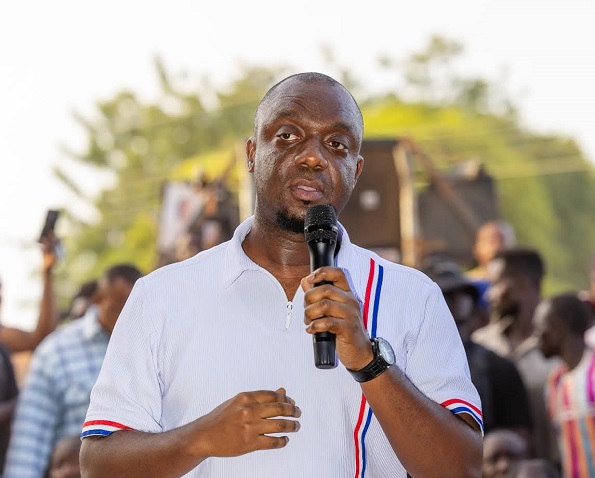
The New Patriotic Party (NPP) has strongly criticised the decision of the Court of Appeal to acquit and discharge former Chief Executive Officer of the Microfinance and Small Loans Centre (MASLOC), Sedinam Christine Tamakloe Attionu.
In a statement issued on July 30, 2026, the party described the ruling as a “travesty of justice” and claimed it was politically motivated.
The Court of Appeal on Thursday overturned her conviction and 10-year prison sentence, which had been imposed by the High Court in April 2024 on charges including stealing, causing financial loss to the state, money laundering and breaches of the Public Procurement Act.
According to the NPP, the former MASLOC boss was tried for five years and convicted after the High Court examined evidence relating to alleged financial irregularities during her tenure between 2013 and 2016.
The party noted that she left Ghana while the trial was ongoing and was later extradited from the United States, arriving in Ghana on June 9, 2026.
The NPP argued that the trial court had found that her actions caused a loss of nearly GH¢90 million to the state and that the evidence against her was substantial.
It questioned why the conviction was overturned barely seven weeks after her return to Ghana.
The party further accused the Attorney-General of using state institutions to protect people connected to the governing party.
It claimed that several cases involving persons affiliated with the government had been discontinued since January 2025 and that the acquittal of Madam Tamakloe Attionu was part of that pattern.
The NPP linked the decision to the ongoing case involving its Ashanti Regional Chairman, Bernard Antwi Boasiako, popularly known as Chairman Wontumi.
It called for his immediate acquittal and discharge, arguing that his conviction was also politically motivated.
The party demanded that the Attorney-General publish details of all cases involving persons linked to the governing party that have been withdrawn, discontinued or otherwise terminated since January 2025, including the reasons for those decisions.
It called on the Judicial Council and the leadership of the Judiciary to take steps to restore public confidence in the justice system.
The NPP said it would pursue all lawful avenues, including a possible review at the Supreme Court where applicable, to ensure accountability in cases involving public funds.
The party maintained that the fight against corruption must not be selective and that public resources belong to all Ghanaians.
By: Jacob Aggrey

Former Attorney-General Godfred Yeboah Dame has disagreed with the Court of Appeal’s decision to acquit former MASLOC Chief Executive Officer Sedina Tamakloe Attionu, insisting that the prosecution proved its case beyond reasonable doubt.
Mr Dame made the remarks after the Court of Appeal unanimously overturned her conviction and 10-year prison sentence.
He maintained that the evidence presented by the prosecution during the trial was credible and sufficient to support the conviction.
According to him, Ms Tamakloe absconded after she had been confronted with evidence led by the prosecution.
Mr Dame questioned the basis for the acquittal and suggested that the current Attorney-General should explain what led to the Court of Appeal’s decision.
He wondered whether the appeal had been strongly opposed by the state.
When asked whether he would advise the Attorney-General to challenge the ruling, Mr Dame answered in the affirmative.
“Oh, definitely,” he stated.
The former Attorney-General spoke about the ongoing criminal case involving former Finance Minister Ken Ofori-Atta.
He indicated that an application for stay of proceedings filed at the High Court had been dismissed, and that a fresh application had been filed at the Court of Appeal.
Mr Dame argued that the charge sheet in the case was defective and that the appellate court should determine the issue before the trial proceeds.
He further criticised the decision to hear the case during the legal vacation, describing it as an “unjustified haste” and saying such trials had not been conducted during vacation periods in the past.
Mr Dame said his legal team would formally protest the directive allowing the case to proceed during the vacation.
The Court of Appeal’s ruling in favour of Ms Tamakloe has become a major legal and political issue, with the Attorney-General’s Department already announcing plans to appeal the decision at the Supreme Court.
By: Jacob Aggrey