News
Let’s demonstrate to the Ghanaian people that NPP remains the best vehicle for national transformation — Annoh-Dompreh rallies NPP


- /home/u249204778/domains/spectator.com.gh/public_html/wp-content/plugins/mvp-social-buttons/mvp-social-buttons.php on line 27
https://spectator.com.gh/wp-content/uploads/2025/07/WhatsApp-Image-2025-07-22-at-12.01.31.jpeg&description=Let’s demonstrate to the Ghanaian people that NPP remains the best vehicle for national transformation — Annoh-Dompreh rallies NPP', 'pinterestShare', 'width=750,height=350'); return false;" title="Pin This Post">
- Share
- Tweet /home/u249204778/domains/spectator.com.gh/public_html/wp-content/plugins/mvp-social-buttons/mvp-social-buttons.php on line 72
https://spectator.com.gh/wp-content/uploads/2025/07/WhatsApp-Image-2025-07-22-at-12.01.31.jpeg&description=Let’s demonstrate to the Ghanaian people that NPP remains the best vehicle for national transformation — Annoh-Dompreh rallies NPP', 'pinterestShare', 'width=750,height=350'); return false;" title="Pin This Post">
The Member of Parliament for Nsawam-Adoagyiri and the minority Chief Whip in the 9th Parliament of Ghana, Frank Annoh-Dompreh, has charged the rank and file of the New Patriotic Party (NPP) to stay united and work hard as the party prepares for the 2028 general elections.
In a statement released on his Facebook page, the MP described the 2025 NPP National Congress held in Accra as a key moment in the party’s effort to strengthen its internal democracy and renew its structures.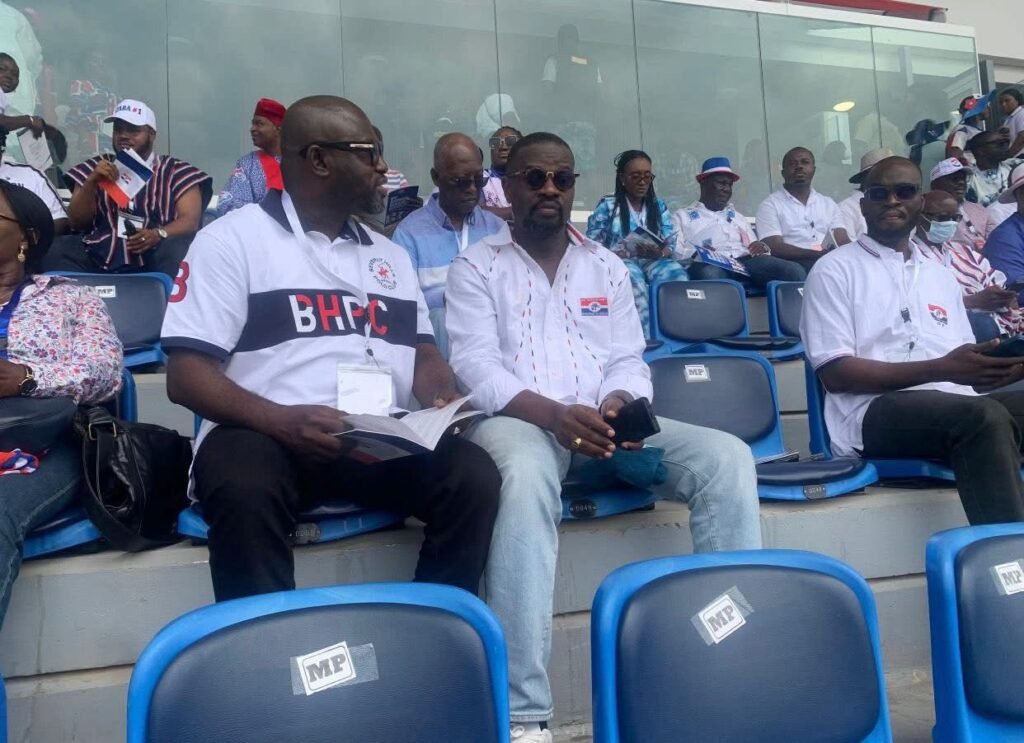
He said the congress was an important platform for party members from all parts of the country to come together in unity and discuss ideas for the future of the party.
According to him, delegates gathered in a spirit of patriotism and reaffirmed their commitment to the NPP’s ideals and values.
Mr.Annoh-Dompreh highlighted that several proposals were presented at the congress to amend the party’s constitution.
These proposals, he explained, were meant to make the party more transparent, inclusive, and better prepared for modern political challenges.
According to him, some of the proposed changes included adjusting the party’s regional executive election calendar to match national campaign periods, strengthening the roles of TESCON and diaspora branches, improving coordination between the party’s parliamentary caucus and national leadership, and increasing youth and women’s participation at all leadership levels.
“These forward-looking proposals reflect a party that is not only preparing to win elections but is also committed to internal reform and democratic accountability,” the MP noted.
He urged all party members and supporters to remain focused, engage one another in a positive way, and show Ghanaians that the NPP remains the best option for leading the country toward development.
“As we move toward the 2028 general elections, let us continue to work together and demonstrate to the Ghanaian people that the NPP remains the best vehicle for national transformation,” he added.
By Jacob Aggrey






The Director of Legal Affairs of the New Patriotic Party (NPP), Gary Nimako Marfo, has questioned who will bear the cost of conducting presidential and parliamentary primaries following the Supreme Court’s ruling on the party’s delegate system.
Speaking to journalists, Mr. Nimako Marfo said he would not immediately comment on the ruling, adding that he wanted to wait for the full details before sharing his views.
“I don’t want to comment on it now. Let’s wait,” he said.
When asked about the Supreme Court’s decision that all members in good standing should vote in party elections, he shifted attention to the financial implications of implementing the ruling.
According to him, allowing all members in good standing to vote would increase the cost of organising internal party elections.
He questioned who would pay for the expanded electoral process.
“Who is going to pay for the cost of the elections?” he asked.
When a journalist suggested that political parties would bear the cost, Mr. Nimako Marfo replied, “Let’s wait and see.”
The comments come after the Supreme Court ruled that political parties should allow all members in good standing to vote in their internal elections, a decision that is expected to expand participation but also increase the financial and logistical demands of organising presidential and parliamentary primaries.
By: Jacob Aggrey
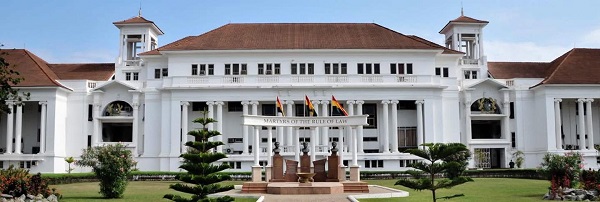
The Supreme Court of Ghana has declared the delegate system used by political parties to elect presidential and parliamentary candidates unconstitutional.
In a 5-2 majority decision delivered, the Court ruled that the long-standing system violates democratic principles and ordered all political parties to ensure every registered, card-bearing member participates in presidential and parliamentary primaries.
The ruling brings to an end decades of internal party elections conducted by a limited number of delegates.
The suit was filed by former Minister for Environment, Science, Technology and Innovation, Professor Kwabena Frimpong-Boateng; veteran politician Dr. Nyaho Nyaho-Tamakloe; and former Minister for Lands and Forestry, Dr. Christine Amoako-Nuamah.
The plaintiffs argued that the delegate system created inequality among party members by granting voting rights to a privileged minority while excluding ordinary members in good standing.
They told the Court that restricting voting rights to delegates was inconsistent with the democratic principles enshrined in the 1992 Constitution.
The Attorney-General’s Department supported the suit and urged the Court to adopt a “one member, one vote” approach.
In its submission, the State argued that political parties perform an important public function in Ghana’s democratic framework and that their internal electoral processes must reflect constitutional values of equality, participation and universal suffrage.
The Attorney-General further submitted that expanding voting rights to all registered members would strengthen accountability and deepen internal democracy within political parties.
The judgment means that going forward, presidential and parliamentary candidates will be selected by all registered members of a political party, instead of by delegates alone.
Political parties are expected to review their constitutions and structures to comply with the Court’s directive ahead of the 2028 general elections.
By Edem Mensah-Tsotorme