News
CNC launches Ebo Whyte Student Drama Competition

- /home/u249204778/domains/spectator.com.gh/public_html/wp-content/plugins/mvp-social-buttons/mvp-social-buttons.php on line 27
https://spectator.com.gh/wp-content/uploads/2025/06/A-scene-in-a-play-performance-by-Ebenezer-Secondary-School.jpg&description= CNC launches Ebo Whyte Student Drama Competition', 'pinterestShare', 'width=750,height=350'); return false;" title="Pin This Post">
- Share
- Tweet /home/u249204778/domains/spectator.com.gh/public_html/wp-content/plugins/mvp-social-buttons/mvp-social-buttons.php on line 72
https://spectator.com.gh/wp-content/uploads/2025/06/A-scene-in-a-play-performance-by-Ebenezer-Secondary-School.jpg&description= CNC launches Ebo Whyte Student Drama Competition', 'pinterestShare', 'width=750,height=350'); return false;" title="Pin This Post">
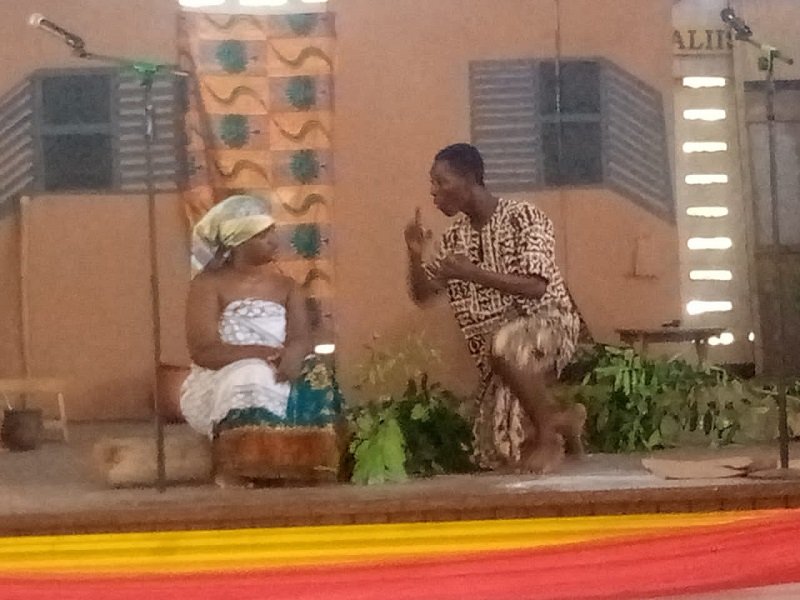
The Centre for National Culture (CNC), Accra, has launched this year’s edition of the CNCs Ebo Whyte Student Drama Competition at Accra Academy in Accra.
OrganiSed by the CNC in partnership with Roverman Productions, seven schools were to appear on day one of the zonal competition but four turned up with the others expected to join along the line.
The schools included Accra Academy, Accra Girls Senior High School, Kaneshie Technical Senior High and Ebenezer Senior High Schools all in zone one.
Following a completion of the five zonal competition, emerging finalists from each zone would converge at the National Theatre for the grand finale competition next month.
In an address, the Acting Regional Director for CNC, Mr Eric Ohene- Larbi, said the competition offers a unique opportunity for our young actors and actresses to learn, grow and shine.
He said the competition was a platform where participants were challenge to be bold, to express themselves, and to strive for excellence in the performing arts.
He said “Theatre Arts play a vital role in society and it allows us to tell stories, explore our identities, share our cultures and preserve memories.”
According to him, the mission of the CNC through this initiative is to nurture creative talents, build confidence and inspire critical thinking.
Mr Ohene- Larbi acknowledged the unwavering support of Roverman Production and the Playwright Uncle Ebo Whyte who have stood firmly by the centre since the concept of the competition was rolled out.
Mr Ohene Larbi urged benevolent organisations, individuals and major stakeholders who have the art of drama at heart to support the CNC to enable it promote Ghanaian culture and deepen our cultural heritage.
A student from Accra Academy, Master Daniel Mensah commended the organisers of the programme and urged authorities to sustain it to harness more talents for the entertainment industry.
BY SPECTATOR REPORTER






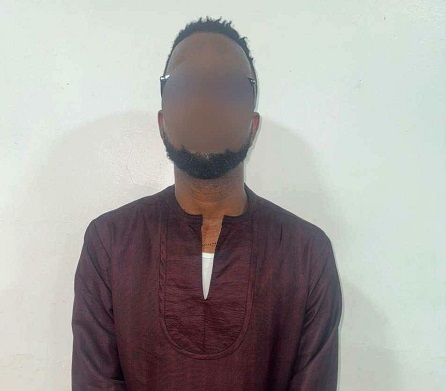
The Ghana Police Service has arrested a man suspected of running a romance scam that targeted women with false marriage promises, blackmail, and the non-consensual sharing of intimate images.
The suspect, Nana Yaw Bonsu Kwarteng, was arraigned alongside Sally Akosua Amoasah before the Accra Circuit Court 1 on charges of conspiracy to commit crime, defrauding by false pretences, and non-consensual sharing of intimate images.
According to preliminary investigations, Kwarteng posed as a pastor conducting online church services on Instagram. He allegedly told women that “God had revealed” they were his future wives.
To gain their trust, police say he went as far as meeting their families and presenting them with promise rings.
Investigators allege the suspect then obtained intimate images of some victims and used them to blackmail them for money.
He is also accused of introducing victims to a fake car tyre business. Under the pretext of shipping and clearing containers of tyres, he allegedly collected thousands of dollars from them before becoming unreachable.
Police further allege that Kwarteng shared the intimate images of some victims with his wife, Sally Akosua Amoasah, who is also accused of threatening the victims.
Seven victims have so far reported the matter to the Police. Investigations indicate the offences date back to 2021.
The court remanded Nana Yaw Bonsu Kwarteng into Police custody to reappear on August 6, 2026. Sally Akosua Amoasah was granted bail.
The Ghana Police Service says it continues to receive complaints from other possible victims.
The Service is urging anyone who may have had similar encounters with the suspect to report to the nearest Police station to assist with ongoing investigations.
By Edem Mensah-Tsotorme
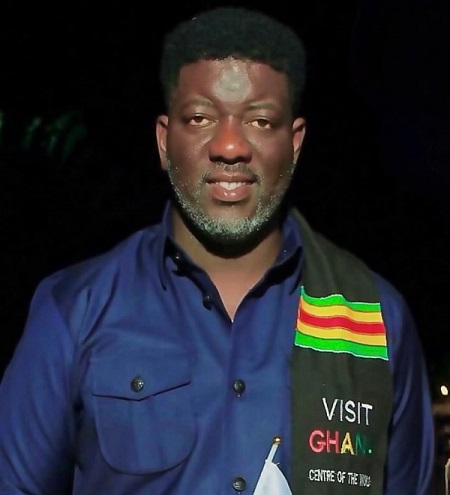
Ghana’s tourism industry is in mourning following the sudden death of Prince Anthony Bart-Appiah, a pioneering figure credited with helping to reconnect the African diaspora to the continent.
Prince Anthony passed away in the early hours of Saturday, July 26, 2026, at his private residence in Spintex, Accra.
He was instrumental in the development and promotion of “The Year of Return,” the flagship tourism campaign that invited members of the African diaspora to return to Ghana in 2019.
The initiative is widely regarded as a turning point that boosted Ghana’s tourism numbers and strengthened cultural ties with Black communities across the world.
Beyond his work with the GTA, Prince Anthony was the Chief Exexutive Officer (CEO) of Bridgezone, an agency dedicated to showcasing Africa to Western audiences and fostering cultural and business connections between the continent and the diaspora.
Colleagues describe him as passionate, strategic, and committed to telling authentic African stories that drive tourism, investment, and pride.
Widely known as Prince Anthony, he served as a Board Member of the Ghana Tourism Authority from 2025 to date.
A former British Army officer and a royal of the Akwamu clan, he brought discipline, vision, and a deep sense of heritage to every role he held
Prince Anthony was also a proud father to two teenagers, whom he deeply cherished.
In a statement, the *Ghana Tourism Authority extended its heartfelt condolences to the grieving family, friends, and all sympathizers.
“The tourism industry has lost a pioneering figure and a vital link to the diasporan community,” the statement read.
The statement further added that “We pray for strength for the family during this difficult time.”
Tributes have since poured in from tourism stakeholders, creatives, and diasporan groups who say Prince Anthony’s legacy will continue to shape how the world sees and experiences Ghana.
By Edem Mensah-Tsotorme