News
Govts urged to reform political systems to accommodate women

- /home/u249204778/domains/spectator.com.gh/public_html/wp-content/plugins/mvp-social-buttons/mvp-social-buttons.php on line 27
https://spectator.com.gh/wp-content/uploads/2025/06/Alhaji-Muntaka-flanked-by-other-participants-at-the-forum-1000x600.jpg&description= Govts urged to reform political systems to accommodate women', 'pinterestShare', 'width=750,height=350'); return false;" title="Pin This Post">
- Share
- Tweet /home/u249204778/domains/spectator.com.gh/public_html/wp-content/plugins/mvp-social-buttons/mvp-social-buttons.php on line 72
https://spectator.com.gh/wp-content/uploads/2025/06/Alhaji-Muntaka-flanked-by-other-participants-at-the-forum-1000x600.jpg&description= Govts urged to reform political systems to accommodate women', 'pinterestShare', 'width=750,height=350'); return false;" title="Pin This Post">
Governments have been advised to systemically reform political systems to elevate women’s participation in politics.
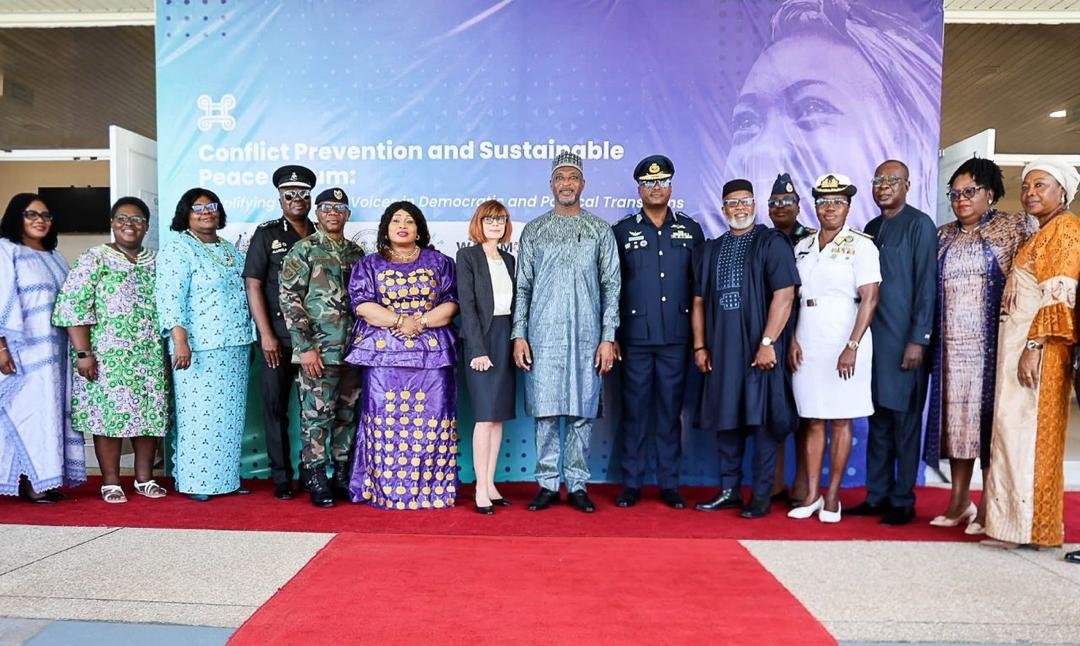
Dubbed the 2025 Conflict Prevention and Sustainable Peace Forum, the event brought together political leaders, diplomats, civil society actors, and regional experts from Ghana, Sierra Leone, Liberia, and Australia.
It was under the theme “Amplifying Women’s Voices in Democratic and Political Transitions,”
Also in attendance was Ghana’s Minister of The Interior, Mohammed Mubarak Muntaka who represented the President, John Dramani Mahama.
Addressing the delegates, the Liberia Ambassador to Ghana, Mrs Musu Ruhle, said true empowerment of women demands structural changes in political parties, electoral financing, customary law, and transitional justice.
Referencing Liberia’s post-war experience, she highlighted how grassroot women’s peace initiatives ended 14 years of conflict, yet many of those women remained excluded from decision-making.
“Democracy cannot survive unless women have an equal say; security will not be complete until every woman wherever she lives feels safe, heard, and respected,” she stated.
Adding her voice to the call, the Australia High Commissioner to Ghana, Mrs Berenice Owen-Jones, affirmed her country’s deepening engagement with Africa and its global leadership on peace building.
Ms Owen-Jones announced Australia’s increased voluntary contribution of $15 million annually to the UN Peace building Fund and its leadership in developing a Declaration for the Protection of Humanitarian Personnel, with support from Sierra Leone and other humanitarian actors.
Underscoring gender equality as “a primary predictor of peace, even more so than a state’s wealth or political system,” she reaffirmed Australia’s commitment to the Women, Peace and Security agenda.
Adding his voice, the Minister for The Interior, Mohammed Mubarak Muntaka, noted that, the government was commitment to peace, inclusive governance, and regional security to promote stability in the country.
“Peace is not merely the absence of war, it is the presence of justice, inclusive governance and respect for human dignity,” he said.
The Sierra Leone High Commissioner, Mohamed Hassan Kaisamba, urged governments to reform political systems to make room not just for women’s presence but for their power.
The forum held in Accra on Friday was organised by the Australian High Commission in partnership with the Embassy of Liberia in Ghana, the High Commission of Sierra Leone in Ghana, the West Africa Network for Peace building (WANEP) and the West Africa Democracy Solidarity Network (WADEMOS).
By Cecilia Yada Lagba

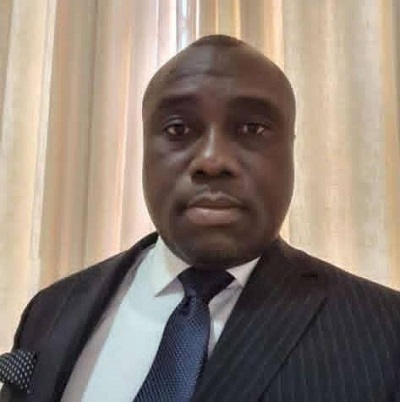
The Director of Legal Affairs of the New Patriotic Party (NPP), Gary Nimako Marfo, has questioned who will bear the cost of conducting presidential and parliamentary primaries following the Supreme Court’s ruling on the party’s delegate system.
Speaking to journalists, Mr. Nimako Marfo said he would not immediately comment on the ruling, adding that he wanted to wait for the full details before sharing his views.
“I don’t want to comment on it now. Let’s wait,” he said.
When asked about the Supreme Court’s decision that all members in good standing should vote in party elections, he shifted attention to the financial implications of implementing the ruling.
According to him, allowing all members in good standing to vote would increase the cost of organising internal party elections.
He questioned who would pay for the expanded electoral process.
“Who is going to pay for the cost of the elections?” he asked.
When a journalist suggested that political parties would bear the cost, Mr. Nimako Marfo replied, “Let’s wait and see.”
The comments come after the Supreme Court ruled that political parties should allow all members in good standing to vote in their internal elections, a decision that is expected to expand participation but also increase the financial and logistical demands of organising presidential and parliamentary primaries.
By: Jacob Aggrey
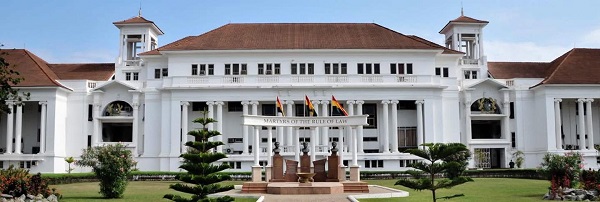
The Supreme Court of Ghana has declared the delegate system used by political parties to elect presidential and parliamentary candidates unconstitutional.
In a 5-2 majority decision delivered, the Court ruled that the long-standing system violates democratic principles and ordered all political parties to ensure every registered, card-bearing member participates in presidential and parliamentary primaries.
The ruling brings to an end decades of internal party elections conducted by a limited number of delegates.
The suit was filed by former Minister for Environment, Science, Technology and Innovation, Professor Kwabena Frimpong-Boateng; veteran politician Dr. Nyaho Nyaho-Tamakloe; and former Minister for Lands and Forestry, Dr. Christine Amoako-Nuamah.
The plaintiffs argued that the delegate system created inequality among party members by granting voting rights to a privileged minority while excluding ordinary members in good standing.
They told the Court that restricting voting rights to delegates was inconsistent with the democratic principles enshrined in the 1992 Constitution.
The Attorney-General’s Department supported the suit and urged the Court to adopt a “one member, one vote” approach.
In its submission, the State argued that political parties perform an important public function in Ghana’s democratic framework and that their internal electoral processes must reflect constitutional values of equality, participation and universal suffrage.
The Attorney-General further submitted that expanding voting rights to all registered members would strengthen accountability and deepen internal democracy within political parties.
The judgment means that going forward, presidential and parliamentary candidates will be selected by all registered members of a political party, instead of by delegates alone.
Political parties are expected to review their constitutions and structures to comply with the Court’s directive ahead of the 2028 general elections.
By Edem Mensah-Tsotorme