News
President Akufo-Addo Launches ‘Aquaculture For Food And Jobs’ Programme: A new dawn for Ghana’s agricultural sector

- /home/u249204778/domains/spectator.com.gh/public_html/wp-content/plugins/mvp-social-buttons/mvp-social-buttons.php on line 27
https://spectator.com.gh/wp-content/uploads/2024/07/f121c881-13a8-470e-856b-5da55a238bc4-1000x600.jpeg&description=President Akufo-Addo Launches ‘Aquaculture For Food And Jobs’ Programme: A new dawn for Ghana’s agricultural sector', 'pinterestShare', 'width=750,height=350'); return false;" title="Pin This Post">
- Share
- Tweet /home/u249204778/domains/spectator.com.gh/public_html/wp-content/plugins/mvp-social-buttons/mvp-social-buttons.php on line 72
https://spectator.com.gh/wp-content/uploads/2024/07/f121c881-13a8-470e-856b-5da55a238bc4-1000x600.jpeg&description=President Akufo-Addo Launches ‘Aquaculture For Food And Jobs’ Programme: A new dawn for Ghana’s agricultural sector', 'pinterestShare', 'width=750,height=350'); return false;" title="Pin This Post">
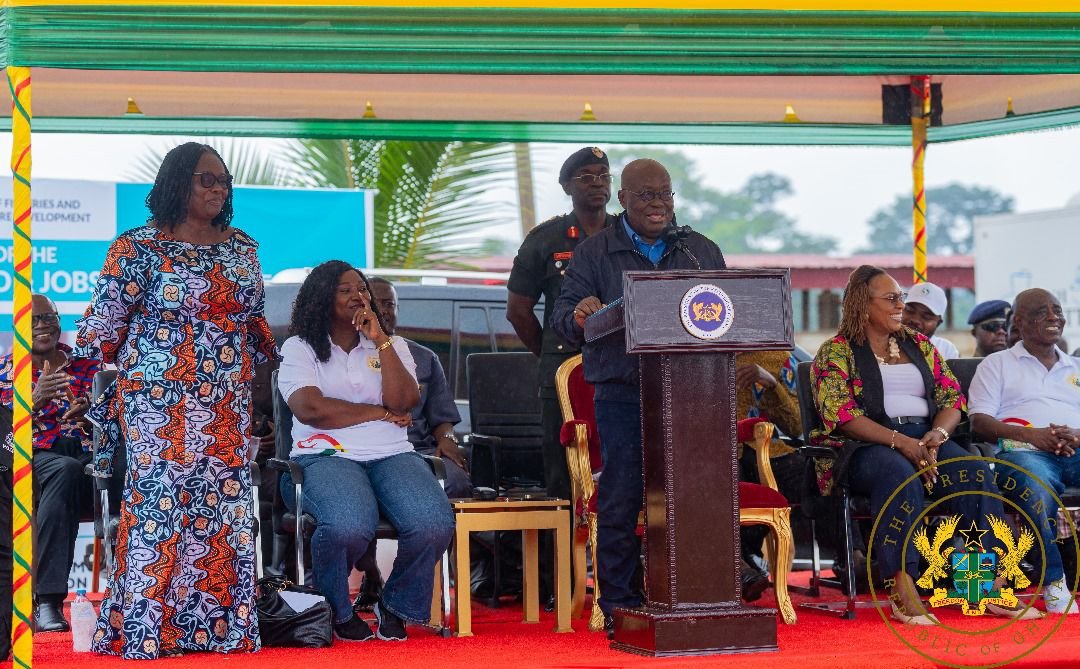
In a groundbreaking event held on Tuesday, July 30, 2024, at Nsuaem in the Central Region, President Nana Addo Dankwa Akufo-Addo unveiled the Aquaculture for Food and Jobs Programme.
Acknowledging the efforts of the Minister for Fisheries and Aquaculture Development, Hon. Mrs. Mavis Hawa Koomson, President Akufo-Addo praised her dedication and hands-on approach.
Her leadership has been instrumental in developing this project and implementing decisive initiatives such as the annual close season for fishing, which has restored fish stocks and promoted aquaculture as a viable economic sector.
President Akufo-Addo extended his gratitude to all partners, stakeholders, and dedicated teams working to make this project a reality, emphasizing the importance of collaboration in revolutionizing aquaculture in Ghana.
President Akufo-Addo emphasized the immense potential of aquaculture, stating that the sector is a critical component of the global food system.
As the programme was officially launched, President Akufo-Addo called on all Ghanaians to support this initiative, which promises to build a stronger, healthier, and more prosperous nation. “May God bless us all, and our homeland Ghana, and make her great and strong,” he concluded, marking the beginning of a new era in Ghana’s agricultural sector.
This initiative is a testament to the government’s commitment to sustainable development, food security, and job creation.
It marks a significant milestone in the nation’s agricultural sector, aiming to harness Ghana’s abundant water resources to provide sustainable livelihoods and enhance nutritional standards.
Aquaculture currently provides nearly half of the world’s fish supply, a figure that continues to grow as wild fish stocks diminish due to overfishing and environmental changes.
In Ghana, fish is a dietary staple, significantly contributing to the nation’s nutritional intake. However, the domestic supply falls short of the demand, resulting in substantial imports that strain the country’s foreign exchange reserves.
In 2022, Ghana’s fish requirement stood at 1.31 million metric tonnes, while domestic production was only 657,000 tonnes.
This shortfall necessitated the importation of 650,000 tonnes of fish, costing $311 million.
The Aquaculture for Food and Jobs Programme aims to bridge this gap by boosting local fish production, thereby reducing dependence on imports, conserving foreign exchange, and ensuring the availability of fresh, domestically-produced fish.
The programme’s impact extends beyond increasing fish production. It is poised to transform lives by creating thousands of jobs, particularly for the youth and women.
The initiative will provide training and support to aspiring fish farmers, equipping them with the skills and resources necessary for success.
It will also foster a network of fish farms across the country, enhancing Ghana’s capacity to meet the growing demand for fish and stimulating the development of related industries such as fish feed production, processing, and marketing.
By making fish more accessible and affordable, the programme will combat malnutrition and improve public health. Fish is a rich source of essential nutrients, and increasing its availability will significantly contribute to the nation’s nutritional standards.
This initiative is not only an economic driver but also a vital component in the fight against malnutrition.
The programme is being launched in partnership with R&B Farms Ltd., the largest inland fish farm in Ghana, operating on 26 hectares of land in Gomoa Central. Under this project, the government aims to train 10,000 youth in small-scale fish farming.
The ripple effect of this initiative is expected to generate an additional 50,000 jobs along the aquaculture value chain, encompassing fish feed production, equipment supply, fish processing, marketing, and distribution.
President Akufo-Addo called on private investors to seize the opportunities presented by this programme, highlighting the substantial market for fish and fish products.
With the right investments, the aquaculture sector can be transformed into a major economic driver.
Research institutions and universities will play a crucial role in providing the knowledge and technological innovations needed to enhance productivity and sustainability.
Under this programme, the government will provide youth with training and skills development in fish farming.
They will receive tarpaulin cages, fingerlings, and fish feed as seed capital, enabling them to start profitable fish farming businesses within six months.
The launch of the Aquaculture for Food and Jobs Programme signifies a bold step towards a brighter future for Ghanaian youth and women.
It aims to meet fish consumption needs, reduce import dependency, and provide meaningful employment.







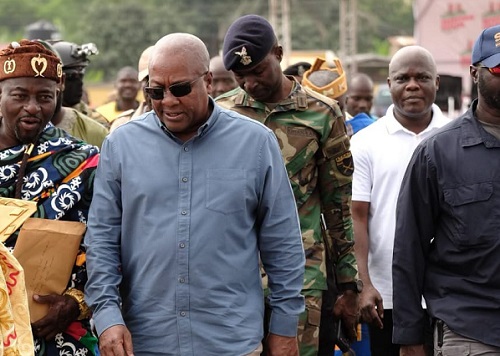
President John Dramani Mahama today cut the sod for the construction of a 24-Hour Economy Model Market in Juapong, North Tongu District, marking the commencement of a transformative project aimed at boosting local commerce, creating sustainable jobs, and driving economic growth in the Volta Region.
The sod-cutting ceremony formed part of the President’s two-day ‘Resetting Ghana Tour’ of the Volta Region.
Addressing residents and stakeholders, President Mahama described the proposed facility as a modern economic centre designed to empower farmers, traders, entrepreneurs, and small businesses.
He noted that beyond serving as a marketplace, the project will provide critical infrastructure for storage, processing, packaging, distribution, digital commerce, and access to financial services.
The President reaffirmed Government’s commitment to accelerating development across the Volta Region through strategic investments in roads, healthcare, education, agriculture, transport, markets, and agro-industrial initiatives.
He highlighted Juapong’s strategic location and economic potential, indicating that the town is well-positioned to emerge as a key commercial and industrial destination within the region.
As part of the flagship 24-Hour Economy programme, the Juapong Model Market will be among the largest facilities under the initiative.
The project has been designated as a Category Four Market, the highest classification within the programme, reflecting its significance to the region’s economic transformation.
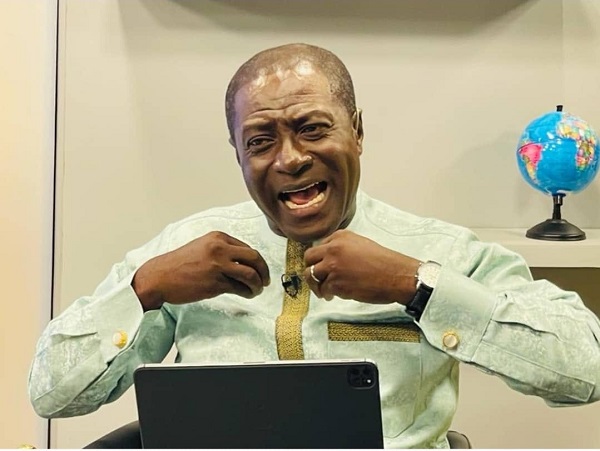
Broadcast journalist and aspiring National Democratic Congress (NDC) parliamentary candidate for Gomoa West, Blessed Godsbrain Smart, popularly known as Captain Smart, has pledged to embark on major infrastructure development if elected to represent the constituency in Parliament.
Speaking on Onua TV platform, Captain Smart said his priority would be to transform Gomoa West through extensive development projects.
“I will turn the constituency into a construction site,” he declared, stressing his commitment to improving infrastructure across the area.
Although much of his remarks focused on rallying supporters in local languages, he repeatedly assured residents that they would witness significant development under his leadership.
Captain Smart also urged party supporters to remain united and actively participate in the party’s internal activities ahead of the parliamentary primaries.
He expressed confidence in his bid and promised to work hard to improve the lives of people in Gomoa West if given the opportunity to serve as their parliamentary candidate.
By: Jacob Aggrey