Hot!
‘Ghanaman Time’ impeding development, leaders must set good example


- /home/u249204778/domains/spectator.com.gh/public_html/wp-content/plugins/mvp-social-buttons/mvp-social-buttons.php on line 27
https://spectator.com.gh/wp-content/uploads/2024/05/Gina2.jpg&description=‘Ghanaman Time’ impeding development, leaders must set good example', 'pinterestShare', 'width=750,height=350'); return false;" title="Pin This Post">
- Share
- Tweet /home/u249204778/domains/spectator.com.gh/public_html/wp-content/plugins/mvp-social-buttons/mvp-social-buttons.php on line 72
https://spectator.com.gh/wp-content/uploads/2024/05/Gina2.jpg&description=‘Ghanaman Time’ impeding development, leaders must set good example', 'pinterestShare', 'width=750,height=350'); return false;" title="Pin This Post">
Georgina Asare Fiagbenu
Lateness for work and other important activities appears to have garnered a place in the scheme of things for majority of Ghanaians.
The canker has sunk so deep in the Ghanaian DNA that it has been christened the ‘Ghanaman Time’, a parlance partially accepted among a certain class of people.
Upshots of this are the precious hours wasted at public events due to the late arrival of guests at events, especially the political elites whose absence means everyone must be held for hours.
But a Global Communication Expert, Mr Ben Dotsei Malor believes the lateness scourge was beginning to have a negative impact on various sectors of the country and largely, impeding development and calling for a change in attitude.
Mr Malor believes that one of Ghana’s major problems as far as development was concerned was her disrespect to time and unpunctuality.
Speaking at the latest online ‘Time Keeping Dialogue’ series on Sunday hosted by Head, Corporate Communications at MTN, Mrs Georgina Asare Fiagbenu, as part of efforts to address the challenge, Mr Malor called on leaders to set good examples by attending events on time.

The virtual conversation was under the theme, ‘Ghanaman Time’ to Greenwich Mean Time – Lessons from the Diaspora.”
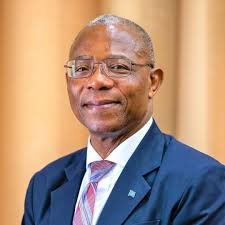
Mr Malor, Chief Editor of Dailies at the United Nations (UN) News and Media Division of the UN Department of Global Communications, said the canker was impeding development and Ghanaian leaders must be concerned.
“We have normalised the abnormal, accepted the unacceptable, tolerated the intolerable, defended the indefensible, and condoned what should be condemned. This is impeding our development,” he stated.
He said, it was regrettable that leaders attend events late and expect their subordinates to be on time.
The change, he said, must start with leadership so that they would be able to punish people for their lateness.
Mr Dotsei Malor proposed that, financial consequences must be attached to lateness to put people on their toes.
“When one loses a portion of his or her salary due to lateness, it would stop them from making excuses not to be at work early,” he stated.
Mr Malor acknowledged that the issue was not unique to Ghanaians, citing Ecuador, where in 2003 the government declared a state of emergency to address chronic lateness estimated to cost the country $2.5 billion annually.
However, the former BBC Editor said the issue was more damaging in Ghana compared to other countries.
Mr. Dotsei Malor asserted that the disrespect for time, where a programme scheduled for 10am-12pm eventually begins at 11:30am, was largely why most Ghanaians were poor and the economy, in a bad state.
“Being time-conscious means increased productivity, and productivity means efficiency. A lack of this results in inefficiency, lack of success, and other problems,” he stated.
According to Mr. Dotsei Malor, acknowledging the impact of time wasting was a step in eradicating the ‘Ghanaman time” that has persisted for years.

On her part, Kirstie Angsmann, a member of the Migrants Council and Women’s Commission in Freiburg, Germany, added that in Germany, the system is structured that excuses like ‘my car broke down’ or ‘I was stuck in traffic’ were not tolerated.
Mrs. Kirstie Angsmann, a Ghanaian woman married to a German, noted that Ghanaians needed to take every bit of their time seriously, just as it is done in Germany.
Mrs Georgina Asare Fiagbenu in her closing remarks, said more of such conversations would be held to address the challenge and ensure productivity across all sectors of the economy.
By Michael D. Abayateye



The Tema Regional Police Command has arrested a 32-year-old man for allegedly posing as a soldier and extorting money from unsuspecting members of the public at Ashaiman.
The suspect, identified as Bright Atsu Kudiabor, was arrested by the Ashaiman Police on Wednesday, September 16, 2026, at about 7:00 a.m.
According to the Police, he was arrested at an area known as “I Shall Return”, where he was allegedly parading himself as a soldier and demanding money from people.
The Police said Kudiabor, who is an ex-convict, was initially arrested by personnel of the Ghana National Fire Service in Ashaiman with assistance from other members of the public.
A search conducted on him after he was handed over to the Police reportedly led to the recovery of a set of military camouflage uniform.
The suspect is currently in Police custody and assisting with investigations.
The Tema Regional Police Command said he would be processed for court after investigations are completed.
The Police urged the public to remain vigilant and report anyone who falsely presents themselves as a soldier or a member of another security agency to deceive or extort money from the public.
By: Jacob Aggrey
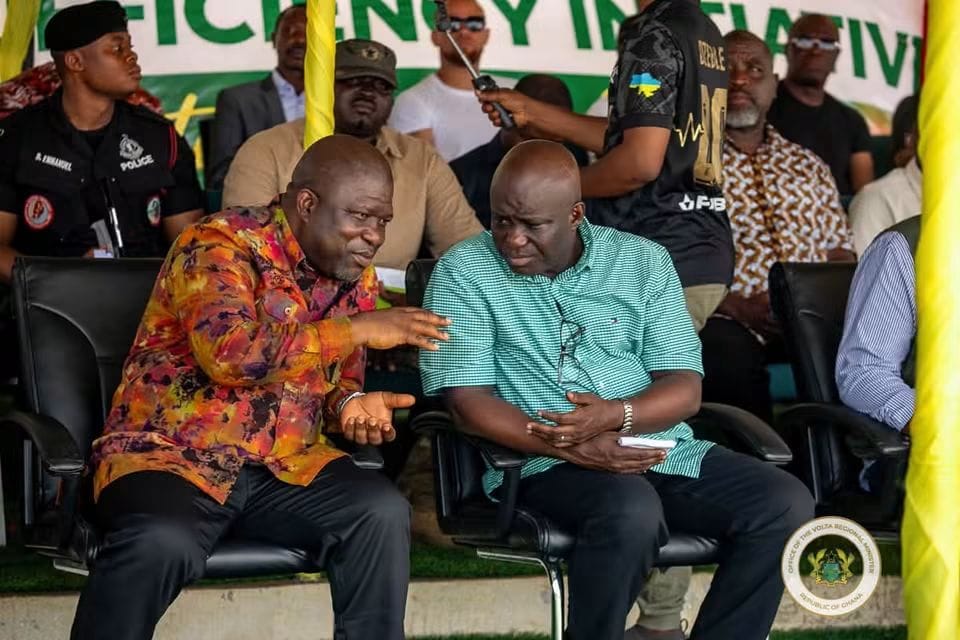
Volta Regional Minister, James Gunu, says the Volta Region holds enormous agricultural potential and efforts must be geared towards connecting farmers to the needed resources to unlock that potential.
He said focus must be on linking farmers to resources, technology, financing and markets to increase production, create jobs and build sustainable livelihoods.
Hon. Gunu made the remarks at the national launch of the Ghana Tomato Self-Sufficiency Initiative (GHATSI) held at Anloga in the Volta Region on Tuesday, September 15.
The initiative, under the theme “Produce at Home. Feed the Nation. Export the Surplus,” seeks to boost local tomato production, processing and marketing while reducing Ghana’s heavy reliance on imported tomatoes.
The launch was attended by the Minister for Food and Agriculture, Eric Opoku, his Deputy, John Setor Dumelo, Feed Ghana Coordinator, Bright Demordzi, Members of Parliament, traditional leaders, MMDCEs, farmers and other stakeholders.
Mr.Gunu expressed appreciation to the Minister for Food and Agriculture for the support announced for the region, including two excavators, 200 cartons of organic fertiliser, and GH¢200,000 for Ms. Kuatudzo Esther Dela, a tomato farmer and processor from Ziope.
He described the initiative as an important step towards making agriculture a stronger driver of food security, job creation and economic growth in the Volta Region.
By Edem Mensah-Tsotorme