Hot!
There’s no positive change since Ghana became oil producing country – Catholic Bishops’ President

- /home/u249204778/domains/spectator.com.gh/public_html/wp-content/plugins/mvp-social-buttons/mvp-social-buttons.php on line 27
https://spectator.com.gh/wp-content/uploads/2023/11/85741662-1dd8-47cb-bf97-9d7cfa1266da.jpeg&description=There’s no positive change since Ghana became oil producing country – Catholic Bishops’ President', 'pinterestShare', 'width=750,height=350'); return false;" title="Pin This Post">
- Share
- Tweet /home/u249204778/domains/spectator.com.gh/public_html/wp-content/plugins/mvp-social-buttons/mvp-social-buttons.php on line 72
https://spectator.com.gh/wp-content/uploads/2023/11/85741662-1dd8-47cb-bf97-9d7cfa1266da.jpeg&description=There’s no positive change since Ghana became oil producing country – Catholic Bishops’ President', 'pinterestShare', 'width=750,height=350'); return false;" title="Pin This Post">
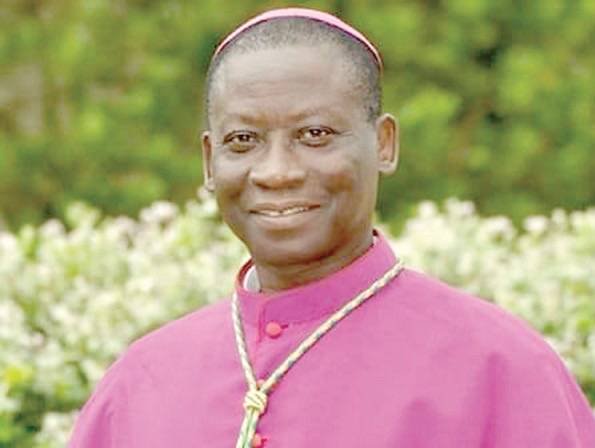
The president of the Ghana Catholic Bishop’s Conference, Rev. Matthew Kwasi Gyamfi, is not enthused about the current state of Ghana’s economy.
He said that despite Ghana producing oil and also being endowed with mineral resources, there is nothing to write home about the country’s wobbly economy.
“There have been no significant positive changes in the economy since we became an oil-producing country. What happened to the gold and other mineral resources? Why are most of our roads in such a deplorable state? Why do we keep going to the IMF? Why do we keep borrowing so much when we are a rich nation?”
He took a dig at successive governments for the level of deterioration in the country as well as the surge in corruption.
“Both governments keep borrowing, and we are now in a deep financial crisis. Why are we in this economic and financial quagmire? The massive uncontrolled corruption is suffocating the nation. It appears corruption is legalized. What should Ghanaians do since the existing form of democracy help only a few and leaves the majority behind? What about the impunity and arrogance of some politicians and their defence of corruption?”
“Should the constitution not be changed or bettered for it to work for all Ghanaians instead of for a few? Should the legal system not be re-equipped to uproot corruption? What about our Parliament where the interest of the people is sacrificed for personal and party interests? Why have we not implemented the findings of the Constitutional Review Committee?
“Can the governments explain to us why we are in this economic mess? What explanations can the two political parties give to Ghanaians for the unfavourable agreements we sign on our oil, minerals, power generation etc.? Countries that have these resources in abundance are rich. Why do we remain poor? Ghanaians no longer accept the old explanations that the Governments of Ghana have been giving.”
Rev. Matthew Kwasi Gyamfi made the remarks on Monday, November 13, 2023, at the opening ceremony of the 2023 plenary assembly of the Ghana Catholic Bishops’ Conference held in the Sunyani Diocese.
He said the political changes on the continent must be a wake-up call for politicians to amend “our constitution and legal systems in a peaceful democratic way, in a manner that makes the government work for the good of all the people of Ghana.”
Source: Citinewsroom.com



The Tema Regional Police Command has arrested a 32-year-old man for allegedly posing as a soldier and extorting money from unsuspecting members of the public at Ashaiman.
The suspect, identified as Bright Atsu Kudiabor, was arrested by the Ashaiman Police on Wednesday, September 16, 2026, at about 7:00 a.m.
According to the Police, he was arrested at an area known as “I Shall Return”, where he was allegedly parading himself as a soldier and demanding money from people.
The Police said Kudiabor, who is an ex-convict, was initially arrested by personnel of the Ghana National Fire Service in Ashaiman with assistance from other members of the public.
A search conducted on him after he was handed over to the Police reportedly led to the recovery of a set of military camouflage uniform.
The suspect is currently in Police custody and assisting with investigations.
The Tema Regional Police Command said he would be processed for court after investigations are completed.
The Police urged the public to remain vigilant and report anyone who falsely presents themselves as a soldier or a member of another security agency to deceive or extort money from the public.
By: Jacob Aggrey
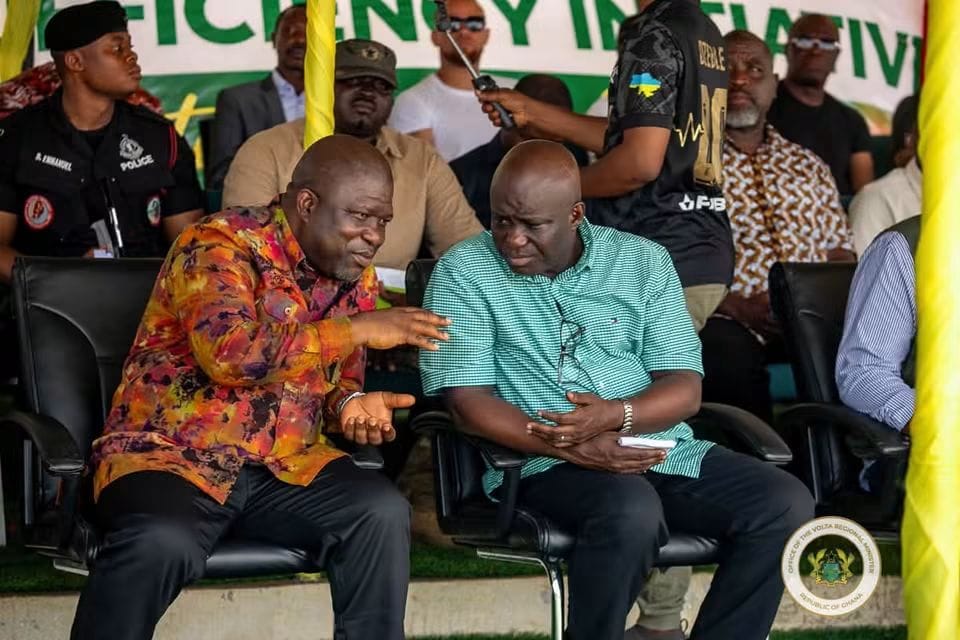
Volta Regional Minister, James Gunu, says the Volta Region holds enormous agricultural potential and efforts must be geared towards connecting farmers to the needed resources to unlock that potential.
He said focus must be on linking farmers to resources, technology, financing and markets to increase production, create jobs and build sustainable livelihoods.
Hon. Gunu made the remarks at the national launch of the Ghana Tomato Self-Sufficiency Initiative (GHATSI) held at Anloga in the Volta Region on Tuesday, September 15.
The initiative, under the theme “Produce at Home. Feed the Nation. Export the Surplus,” seeks to boost local tomato production, processing and marketing while reducing Ghana’s heavy reliance on imported tomatoes.
The launch was attended by the Minister for Food and Agriculture, Eric Opoku, his Deputy, John Setor Dumelo, Feed Ghana Coordinator, Bright Demordzi, Members of Parliament, traditional leaders, MMDCEs, farmers and other stakeholders.
Mr.Gunu expressed appreciation to the Minister for Food and Agriculture for the support announced for the region, including two excavators, 200 cartons of organic fertiliser, and GH¢200,000 for Ms. Kuatudzo Esther Dela, a tomato farmer and processor from Ziope.
He described the initiative as an important step towards making agriculture a stronger driver of food security, job creation and economic growth in the Volta Region.
By Edem Mensah-Tsotorme