Features
Putting an end to cross-border FGM practice… The role of advocates for girls’ protection

- /home/u249204778/domains/spectator.com.gh/public_html/wp-content/plugins/mvp-social-buttons/mvp-social-buttons.php on line 27
https://spectator.com.gh/wp-content/uploads/2023/09/Hajia-Nadia-Abaas-IV.jpe&description=Putting an end to cross-border FGM practice… The role of advocates for girls’ protection', 'pinterestShare', 'width=750,height=350'); return false;" title="Pin This Post">
- Share
- Tweet /home/u249204778/domains/spectator.com.gh/public_html/wp-content/plugins/mvp-social-buttons/mvp-social-buttons.php on line 72
https://spectator.com.gh/wp-content/uploads/2023/09/Hajia-Nadia-Abaas-IV.jpe&description=Putting an end to cross-border FGM practice… The role of advocates for girls’ protection', 'pinterestShare', 'width=750,height=350'); return false;" title="Pin This Post">
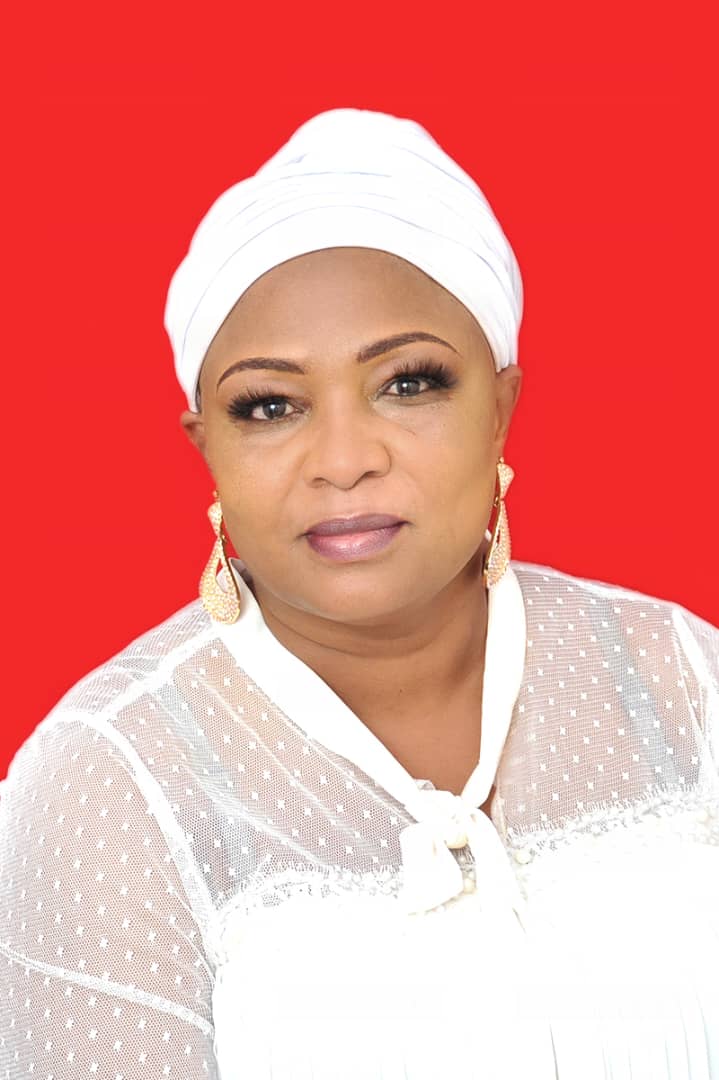
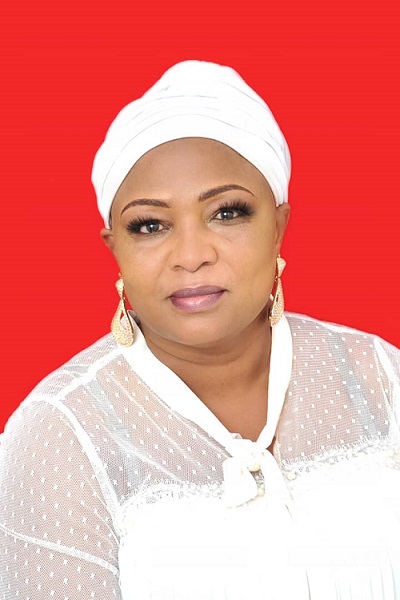
Hajia Nadia Abaas IV
Advocacy is a powerful tool that can be used to cause positive change in society by putting poli¬cy makers on their toes to discharge their duties satisfactorily.
Over the years, many advocates have used their voices to expose the rot in society and in the process saved thousands of lives.
In this same way, advocates for women and girls protection in Ghana can help fight Female Genital Mutila¬tion (FGM) to protect young girls from the devastating implication of the practice.
FGM, the practice of altering or injuring the female genitalia for non-medical reasons, is a deeply-root-ed cultural practice that continues to haunt many regions across Africa.
Despite efforts to eradicate the menace from Ghana, recent reports have revealed that young girls are taken to nearby countries like Burki¬na Faso to undergo the inhumane act before they are brought back to their respective families.
This calls for firmer action to be taken against this cross-border act to save victims.
It is good to know that the laws against the practice of FGM are well enforced, however if the purpose for the enforcement were not achieved, the whole motive of fighting FGM to protect our young girls will be lost.
Dealing with this danger of cross-border FGM would require wom¬en centered Non-Governmental Organ-isations (NGOs), advocates for girls’ protection, Civil Society Organisations (CSOs) and all well-meaning Ghanaians and Africans at large, to rise up and speak against the practice.
Speaking exclusively to The Spec¬tator, women empowerment advo¬cate, Hajia Nadia Abbas (IV) bemoaned the implication of such practices on young girls, and called on governments and international organisations to collaborate to create awareness pro¬grammes in affected regions.
According to her, cross-border collaboration among countries that encourage FGM was crucial, adding that governments must work together to exchange information, coordinate action and harmonise legislation to en¬sure that culprits do not escape legal consequences.
She indicated that religious and traditional leaders must also come out in their numbers to discourage actions that harm girls.
“We must call for the participation of all well-meaning members of the public in speaking against all forms of violence against humanity, includ¬ing this dangerous practice that is a human right violation.”
“I strongly believe that when everybody becomes an advocate for positive change, good results can be realised quickly,” she added.
Furtherance to that, she noted that men could join in the advocacy for the rights of women and work towards gender equity.
Hajia Nadia Abbas (IV) confirmed that she heard stories of young girls who were taken out of the country to neighbouring countries for them to un¬dergo FGM mainly because the police in those areas were on the look-out for culprits for such ill practices.
Advocates for women and girls’ rights stated that the fact that FGM had become a thing of the past in Ghana, did not mean authorities should relax; “We must be alert and arrest persons seen forcing girls out of the country for the barbaric act to be carried out on them. We must ensure we join forces with all our neighbour¬ing countries to put a permanent stop to this menace.”
Hajia Nadia Abbas (IV) who is also the Founder of Nadisco Foundation, a women centered NGO indicated that, when young girls are made aware about the severe health implication of FGM, which include urinary problems, complications during child birth and even death, they would stand up for themselves and report family mem¬bers who threaten to force them to undergo FGM.
MEN MUST JOIN THE FIGHT TO END FGM
On the International Day of Zero Tolerance for FGM which was marked in February 2023, the United Nations Populations Fund (UNFPA) called for partnership with men to join the fight against FGM.
When men join the fight against practices that affect women negative¬ly, success would be easily achieved, leading to an understanding that women and young girls also deserve to be respected and cherished.
By joining the fight against FGM, men demonstrate their commitment to their loved ones. Men can also challenge these harmful norms and attitudes by openly opposing FGM and promoting alternative practices that respect and uphold the rights of wom¬en and girls.
UNFPA’S REPORT ON FGM
The UNFPA has estimated that more than 200 million girls and women globally have undergone some form of FGM.
It also estimates 68 million girls are at risk of being mutilated be¬tween 2015 and 2030. A more recent study further revealed an additional two million girls to be at risk of this harmful practice due to the COVID-19 pandemic.
Further projections by the UNFPA showed that 4.3 million girls, world¬wide, this year remain at risk of FGM.
According to the UNFPA, this number is likely to reach 4.6 million by 2030, as conflict, climate change, rising poverty and inequality contin¬ued to hinder efforts to transform gender and social norms that underpin this harmful practice and disrupt pro¬grammes that help protect girls.
These revelations prove that all hands are needed on deck to save women and girls from this barbaric human rights violation.
The fight cannot be won if trans-border FGM practices were not checked.
By Raissa Sambou


THE POLICE force has produced some of the country’s best dancers, but when it comes to shooting, I cannot vouch for all of Peter Nanfuri’s men. Most of them are excellent marksmen, but as for some, they whimsically believe that a warning shot must be targeted at a human jaw to make it effective. The shot must warn the jaw not to misbehave.
Coming back to dancing, I must stand at ease and doff my hat to the police force. I do not know whether Honourable Peter dances stylishly. But I have attended at least two parties organised by policemen and I was doubly impressed by the rare showmanship of inspectors, superintendents, commissioners, constables and all. I called a corporal friend aside and asked whether dancing was part of the syllabus at Police College.
Indeed, I was overwhelmed, even awe-inspired at the high quality of individual choreographic spins, jerks, twists and turns. As the climax approached at one such party, a sergeant, determined to steal the show, almost ‘took to flight’ in one of Sıkaman’s most celebrated choreographic exhibitions. Virtually airborne, he combined traditional dance styles with Pentecostal boogie and ended up break-dancing, triggering off a standing ovation.
But it was a lady corporal who finally sent the crowd into a frenzy. She did not only belly-dance; her body was vibrating as if it had been connected to electricity. It was a marvel. I have never been so much impressed in life.
Actually, I do not know why police staff do not contest in national dance competitions. They can have a try at it, why not? Just like journalists planning to try their hands at boxing part-time, to supplement their income.
We’ve got some pen-pushers whom you could mistake for fierce welter-weights or formidable super-featherweight, Azumah Nelson type. We are also privileged to have a few southpaws and I’m thinking about getting into the heavyweight division and ask Kofi Coomson to be my sparring mate. The only problem is that I can’t guarantee the safety of his ribs, taking into consideration that he is not quite macho.
He’d have to ‘beef up’ before we meet.
Yes, returning to the palaver of the police, I must say unreservedly that some bad nuts are embarrassing the force. It is for very good reasons that the Police Administration is about to institute a special judicial tribunal to try its personnel who resort to rampant and careless use of firearms, to the extent that a warning shot into the air can mysteriously wind up someone’s liver.
On many occasions, I have been surprised because the police are well-trained and remember they once won a shooting contest, they beat the army and navy to second and third places. So how come that some of them mishandle weapons so childishly as to cause injury when there should be no cause for it?
The Inspector-General of Police’s embarrassment is evinced in his words. He observes that various accidents resulting from now indiscriminate “stray” bullets and warning shot give the impression that the police aren’t properly, trained in weapons handling.
“Members of the public have become so aggrieved and intolerant that they are not even prepared to listen to official explanations on how the accidents happened, “he said.
Well, until the police sort themselves out as to those who are hopelessly incompetent in handling weapons aim who are not, I do not think it would be prudent to make policemen use live ammunitions in public unless the situation really demands it. Other means of subduing recalcitrant are available – rubber bullets, blank shots, tear gas, etc.
When tear gas was recently used at Legon during a students’ demonstration, it was quite effective in dispersing them. I didn’t know student could run that fast on empty stomachs. Some did not eat breakfast before joining the demo, but when the tear gas came, they exhibited excellent footwork, taking off in Olympic fashion, Bravo!
In any case, the topic cannot be exhausted without reflecting on another aspect of the IGP’s speech at the opening of a refresher course for Police Inspectors. He noted that even if a police Officer suffers any form of death at the hands of a criminal in the course of protecting life and property, the tragedy of the policeman’s death does not evoke any sympathy whatsoever from the public.
I think that is a good point to ponder, and it brings into question the idea of self-defense on the part of policemen. Should a policeman, for instance, kill a criminal who is out to cause harm or death to him? It needs to be debated because both the policeman and the dangerous criminal have the right to life.
Anyhow, the embarrassment being caused to the IGP by some careless policeman is well expressed. The problem is that when a policeman fires a warming shot that causes injury, people do not blame only the policeman. They also blame the government. It is just like someone who blamed the government when his mother-in-law slapped him hard in the eye. I don’t know whether he wanted the government to receive the slap on his behalf.
At any rate, customs officers who are also trigger-happy and misuse weapons in the performance of their duties will be sanctioned. In fact, they’ll be sacked! Sounds deterring isn’t it?
This article was first published on Saturday November 14, 1998

Today, I focus on the theme of mental health and wellbeing among Ghanaian migrants in Finland, a move away from the topic of personalities or groups and their accomplishments within the Ghanaian community in Finland that I have been writing on.
In recent times, I have been thinking about the mental health of Ghanaian (and other) migrant parents’ social environments and the impact on their children’s wellbeing in Finland.
According to research, childhood disadvantage is associated with adult psychological distress, although the role of behavioural risk factors around it may be unclear.
Mental health is a huge problem in the world, according to the World Health Organisation (WHO). Studies have also shown that maternal, paternal and parental distress (i.e. both maternal and paternal distress) are associated with reduced linear growth of the children.
When things go bad, social child welfare interventions ensure that children are taken away (child removals) from the parent or parents for safe keeping.
In Finland, studies have examined how behavioural risk factors mediate the effects of childhood disadvantage on adult psychological distress. There is a correlation between parent and infant psychotherapy on maternal mental health and psychological functioning and children’s welfare. The question is: what is the situation with Ghanaian migrants and their health in Finland?
The focus of NGOs and migrant associations
The World Health Organisation (WHO) defines health as “a state of complete physical, mental, and social well-being and not merely the absence of disease or infirmity” (see www.who.int).
Finland has a very good healthcare delivery system and social services accessible to all residents in the country. Many migrants, including those in the Ghanaian community, are aware of these opportunities and are expected to take advantage of such chances.
As I wrote some time ago, a healthy migrant community is beneficial to the society as a whole. In Finland, public agencies, migrant associations and other non-governmental organisations (NGOs) have been giving health information in various channels— webinars, mass media (radio, TV, as well as the new media and others). Such actions are very helpful to the people.
It has been pointed out that factors that improve mental health and wellbeing must be supported. Migrants’ mental and general health or wellbeing are affected by many factors, including cultural ideas of health, illnesses, and the prevention, treatment and symptoms of illnesses (see www.thl.fi).
Advocacy by the civil society sector
I have recently been making inquiries about migrants’ health generally and wellbeing in Finland. Many people see the need for advocacy, to intensify education and create more awareness about health and wellbeing of migrants in Finland.
NGOs and other organisations as part of the civil society sector play a crucial role in supporting migrant health in Finland, completing public services by offering legal advice, mental health support, and specialized services for vulnerable groups. Such NGOs and social groups, including migrant associations, offer specialized support for migrant women, while others are involved in activities that address social exclusion issues that impact health.
Research and other reports indicate that NGOs and other social institutions advocate for the involvement of individuals and communities in health decision-making. It has been pointed out that migrants’ involvement in health decision-making requires explicit national policies that are implemented evenly across policy-making.
Integration
According to the Finnish health department, health and wellbeing are an important part of the integration process. Hence, it is accepted that factors to improve health and wellbeing must be supported.
Generally, migrant associations help the health authorities and formally create awareness among their members and other migrants, usually in collaboration with some Finnish institutions, and are thus an important tool for several migrants to be positively active and to get their interest and concerns heard.
As I wrote previously, the role of migrant associations acting as bridge-builders for the integration and inclusion of migrants through participation in the decision making process and by acting as a representative voice is highly appreciated in Finland.
The social media outlets have become an important means for disseminating information and it could be a key medium through which migrant groups or associations and other institutions could educate people.
A positive outlook on the Finnish healthcare system
As I keep saying, Ghanaian and other African migrants in Finland generally have a positive mind and hope for the best in life. They know that the Finnish healthcare system, one of the best in the world, has a comprehensive healthcare service that caters for every resident in the country.
Migrants know that as residents they can count on and readily access good healthcare service delivery in Finland. All they need to do is to go for regular medical checks and counselling since early diagnosis is key in the treatment of any illness. Adhering to treatment at the hospital is the key. Assigning spiritual interpretations could be detrimental. Thank you!
GHANA MATTERS column appears fortnightly. Written in simple, layman’s terms, it concentrates on matters about Ghana and beyond. It focuses on everyday life issues relating to the social, cultural, economic, religious, political, health, sports, youth, gender, etc. It strives to remind us all that Ghana comes first. The column also takes a candid look at the meanings and repercussions of our actions, especially those things we take for granted or even ignore. There are key Ghanaian values we should uphold rather than disregard with impunity. We should not overlook the obvious. We need to search for the hidden or deeply embedded values and try to project them.
With Dr Perpetual Crentsil