Features
Under nutrition, growth failure, overweight and micronutrient deficiencies

- /home/u249204778/domains/spectator.com.gh/public_html/wp-content/plugins/mvp-social-buttons/mvp-social-buttons.php on line 27
https://spectator.com.gh/wp-content/uploads/2023/08/thumbnail.jpg&description=Under nutrition, growth failure, overweight and micronutrient deficiencies', 'pinterestShare', 'width=750,height=350'); return false;" title="Pin This Post">
- Share
- Tweet /home/u249204778/domains/spectator.com.gh/public_html/wp-content/plugins/mvp-social-buttons/mvp-social-buttons.php on line 72
https://spectator.com.gh/wp-content/uploads/2023/08/thumbnail.jpg&description=Under nutrition, growth failure, overweight and micronutrient deficiencies', 'pinterestShare', 'width=750,height=350'); return false;" title="Pin This Post">
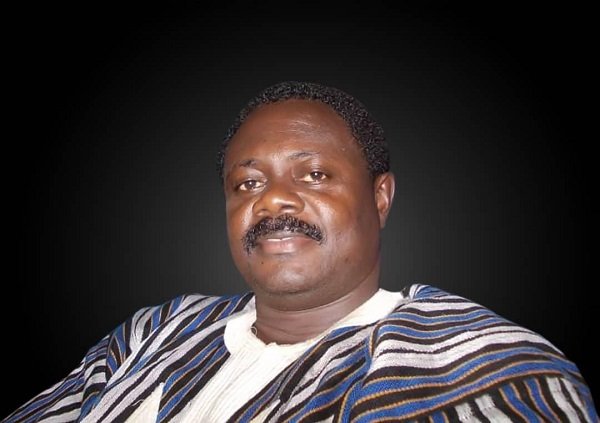
Ekow Grimmond Thompson, Emotional Surgeon
Under nutrition, growth failure, overweight, micronutrient deficiencies, and osteopenia (a condition that begins as you lose bone mass and your bones get weaker) happen when the inside of your bones become brittle due to loss of calcium. It is very common as you age.
Total bone mass peaks around age 35. Sometimes, osteopenia is a precursor to osteoporosis (nutritional comorbidities that affect the neurologically impaired child). Monitoring neurologically impaired children for nutritional comorbidities is an integral part of their care.
Early involvement by a multidisciplinary team of emotional surgery specialists, physicians, nurses, dieticians, occupational and speech therapists, psychologists, and social workers is essential to prevent the adverse outcomes associated with feeding difficulties and poor nutritional status.
Careful evaluation and monitoring of severely disabled children for nutritional problems are warranted because of the increased risk of nutrition-related morbidity and mortality. Neurological impairment refers to a broad spectrum of neurological disorders that are characterised primarily by gross and fine motor dysfunction and may be associated with cognitive or speech delay.
Under nutrition and overweight lead to increased health care use, hospitalisation, and physician visits, as well as diminished participation in home and school activities. Adequate nutritional support may restore linear growth, normalise weight, improve health and quality of life, reduce the frequency of hospitalisation, decrease irritability and spasticity (muscle and joint deformities/muscle stiffness causing movement to be less precise and making certain tasks difficult to perform/muscle fatigue/abnormal muscle tightness due to prolonged muscle contraction).
It is a symptom associated with damage to the brain or motor nerves, increase alertness, enhance developmental progress, improve wound healing and peripheral circulation, decrease the frequency of aspiration, and ameliorate gastro esophageal reflux (acid reflux occurs when the stomach contents back up into the esophagus and or mouth) in these children.
Children with neurological disabilities usually have progressive weight deficits due to fat loss, although muscle and visceral proteins are maintained. Some children demonstrate a lack of weight gain in the presence of linear growth, leading to a decreased body mass index (BMI). Others have progressive muscle atrophy (decrease in size and wasting of muscle tissues. With muscle atrophy, your muscles look smaller than normal.
Muscle atrophy can occur due to malnutrition, age, genetics, a lack of physical activity or certain medical conditions unresponsive to nutritional intervention because of their underlying disorder. Although neurologically impaired children usually are shorter and weigh less than unaffected children, a small proportion may be overweight based on weight-for-height or triceps skinfold thickness criteria.
The prevalence of overweight may be underestimated because weight-for-height gains are overlooked in the presence of a small body size or an aberrant distribution of body fat that may be present in some neurological disorders. Weight-for-height comparisons may be monitored less frequently than weight alone because of the difficulty obtaining accurate height measurements.
Non-nutritional factors including the type and severity of neurological disability, ambulatory status, and cognitive ability contribute to growth failure in neurologically impaired children. Children with seizures or spastic quadriplegia (a form of cerebral palsy that affects both arms and legs and often the trunk of the human body and face) and those who are non-ambulatory have lower height Z scores than children who lack these disabilities.
Children with spastic hemiplegia (a type of cerebral palsy that occurs when the condition of muscle stiffness impacts one full side of the body) have smaller measures of breadth and length on the affected side, suggesting that the neurological defect influences growth. Inherent genetic factors may be associated with permanent linear stunting. Height-for-age Z-scores may decrease with advancing age independently of weight-for-age Z-scores, suggesting that the effect of scoliosis (abnormal lateral curvature of the spine). It is most often diagnosed in childhood or early adolescence.
The spine’s normal curves which occur at the cervical, thoracic and lumbar regions in the sagittal plane contractures worsens over time. Height and weight Z-score deficits generally correlate well in neurologically impaired children, suggesting that nutritional factors contribute to their growth failure.
Nutritional status explains 10 to 15 percent of the variability in linear growth in children with cerebral palsy. Nutritional status has a stronger effect on linear growth in younger than in older children, attesting to the irreversible effects of long-term under nutrition on growth.



THE POLICE force has produced some of the country’s best dancers, but when it comes to shooting, I cannot vouch for all of Peter Nanfuri’s men. Most of them are excellent marksmen, but as for some, they whimsically believe that a warning shot must be targeted at a human jaw to make it effective. The shot must warn the jaw not to misbehave.
Coming back to dancing, I must stand at ease and doff my hat to the police force. I do not know whether Honourable Peter dances stylishly. But I have attended at least two parties organised by policemen and I was doubly impressed by the rare showmanship of inspectors, superintendents, commissioners, constables and all. I called a corporal friend aside and asked whether dancing was part of the syllabus at Police College.
Indeed, I was overwhelmed, even awe-inspired at the high quality of individual choreographic spins, jerks, twists and turns. As the climax approached at one such party, a sergeant, determined to steal the show, almost ‘took to flight’ in one of Sıkaman’s most celebrated choreographic exhibitions. Virtually airborne, he combined traditional dance styles with Pentecostal boogie and ended up break-dancing, triggering off a standing ovation.
But it was a lady corporal who finally sent the crowd into a frenzy. She did not only belly-dance; her body was vibrating as if it had been connected to electricity. It was a marvel. I have never been so much impressed in life.
Actually, I do not know why police staff do not contest in national dance competitions. They can have a try at it, why not? Just like journalists planning to try their hands at boxing part-time, to supplement their income.
We’ve got some pen-pushers whom you could mistake for fierce welter-weights or formidable super-featherweight, Azumah Nelson type. We are also privileged to have a few southpaws and I’m thinking about getting into the heavyweight division and ask Kofi Coomson to be my sparring mate. The only problem is that I can’t guarantee the safety of his ribs, taking into consideration that he is not quite macho.
He’d have to ‘beef up’ before we meet.
Yes, returning to the palaver of the police, I must say unreservedly that some bad nuts are embarrassing the force. It is for very good reasons that the Police Administration is about to institute a special judicial tribunal to try its personnel who resort to rampant and careless use of firearms, to the extent that a warning shot into the air can mysteriously wind up someone’s liver.
On many occasions, I have been surprised because the police are well-trained and remember they once won a shooting contest, they beat the army and navy to second and third places. So how come that some of them mishandle weapons so childishly as to cause injury when there should be no cause for it?
The Inspector-General of Police’s embarrassment is evinced in his words. He observes that various accidents resulting from now indiscriminate “stray” bullets and warning shot give the impression that the police aren’t properly, trained in weapons handling.
“Members of the public have become so aggrieved and intolerant that they are not even prepared to listen to official explanations on how the accidents happened, “he said.
Well, until the police sort themselves out as to those who are hopelessly incompetent in handling weapons aim who are not, I do not think it would be prudent to make policemen use live ammunitions in public unless the situation really demands it. Other means of subduing recalcitrant are available – rubber bullets, blank shots, tear gas, etc.
When tear gas was recently used at Legon during a students’ demonstration, it was quite effective in dispersing them. I didn’t know student could run that fast on empty stomachs. Some did not eat breakfast before joining the demo, but when the tear gas came, they exhibited excellent footwork, taking off in Olympic fashion, Bravo!
In any case, the topic cannot be exhausted without reflecting on another aspect of the IGP’s speech at the opening of a refresher course for Police Inspectors. He noted that even if a police Officer suffers any form of death at the hands of a criminal in the course of protecting life and property, the tragedy of the policeman’s death does not evoke any sympathy whatsoever from the public.
I think that is a good point to ponder, and it brings into question the idea of self-defense on the part of policemen. Should a policeman, for instance, kill a criminal who is out to cause harm or death to him? It needs to be debated because both the policeman and the dangerous criminal have the right to life.
Anyhow, the embarrassment being caused to the IGP by some careless policeman is well expressed. The problem is that when a policeman fires a warming shot that causes injury, people do not blame only the policeman. They also blame the government. It is just like someone who blamed the government when his mother-in-law slapped him hard in the eye. I don’t know whether he wanted the government to receive the slap on his behalf.
At any rate, customs officers who are also trigger-happy and misuse weapons in the performance of their duties will be sanctioned. In fact, they’ll be sacked! Sounds deterring isn’t it?
This article was first published on Saturday November 14, 1998

Today, I focus on the theme of mental health and wellbeing among Ghanaian migrants in Finland, a move away from the topic of personalities or groups and their accomplishments within the Ghanaian community in Finland that I have been writing on.
In recent times, I have been thinking about the mental health of Ghanaian (and other) migrant parents’ social environments and the impact on their children’s wellbeing in Finland.
According to research, childhood disadvantage is associated with adult psychological distress, although the role of behavioural risk factors around it may be unclear.
Mental health is a huge problem in the world, according to the World Health Organisation (WHO). Studies have also shown that maternal, paternal and parental distress (i.e. both maternal and paternal distress) are associated with reduced linear growth of the children.
When things go bad, social child welfare interventions ensure that children are taken away (child removals) from the parent or parents for safe keeping.
In Finland, studies have examined how behavioural risk factors mediate the effects of childhood disadvantage on adult psychological distress. There is a correlation between parent and infant psychotherapy on maternal mental health and psychological functioning and children’s welfare. The question is: what is the situation with Ghanaian migrants and their health in Finland?
The focus of NGOs and migrant associations
The World Health Organisation (WHO) defines health as “a state of complete physical, mental, and social well-being and not merely the absence of disease or infirmity” (see www.who.int).
Finland has a very good healthcare delivery system and social services accessible to all residents in the country. Many migrants, including those in the Ghanaian community, are aware of these opportunities and are expected to take advantage of such chances.
As I wrote some time ago, a healthy migrant community is beneficial to the society as a whole. In Finland, public agencies, migrant associations and other non-governmental organisations (NGOs) have been giving health information in various channels— webinars, mass media (radio, TV, as well as the new media and others). Such actions are very helpful to the people.
It has been pointed out that factors that improve mental health and wellbeing must be supported. Migrants’ mental and general health or wellbeing are affected by many factors, including cultural ideas of health, illnesses, and the prevention, treatment and symptoms of illnesses (see www.thl.fi).
Advocacy by the civil society sector
I have recently been making inquiries about migrants’ health generally and wellbeing in Finland. Many people see the need for advocacy, to intensify education and create more awareness about health and wellbeing of migrants in Finland.
NGOs and other organisations as part of the civil society sector play a crucial role in supporting migrant health in Finland, completing public services by offering legal advice, mental health support, and specialized services for vulnerable groups. Such NGOs and social groups, including migrant associations, offer specialized support for migrant women, while others are involved in activities that address social exclusion issues that impact health.
Research and other reports indicate that NGOs and other social institutions advocate for the involvement of individuals and communities in health decision-making. It has been pointed out that migrants’ involvement in health decision-making requires explicit national policies that are implemented evenly across policy-making.
Integration
According to the Finnish health department, health and wellbeing are an important part of the integration process. Hence, it is accepted that factors to improve health and wellbeing must be supported.
Generally, migrant associations help the health authorities and formally create awareness among their members and other migrants, usually in collaboration with some Finnish institutions, and are thus an important tool for several migrants to be positively active and to get their interest and concerns heard.
As I wrote previously, the role of migrant associations acting as bridge-builders for the integration and inclusion of migrants through participation in the decision making process and by acting as a representative voice is highly appreciated in Finland.
The social media outlets have become an important means for disseminating information and it could be a key medium through which migrant groups or associations and other institutions could educate people.
A positive outlook on the Finnish healthcare system
As I keep saying, Ghanaian and other African migrants in Finland generally have a positive mind and hope for the best in life. They know that the Finnish healthcare system, one of the best in the world, has a comprehensive healthcare service that caters for every resident in the country.
Migrants know that as residents they can count on and readily access good healthcare service delivery in Finland. All they need to do is to go for regular medical checks and counselling since early diagnosis is key in the treatment of any illness. Adhering to treatment at the hospital is the key. Assigning spiritual interpretations could be detrimental. Thank you!
GHANA MATTERS column appears fortnightly. Written in simple, layman’s terms, it concentrates on matters about Ghana and beyond. It focuses on everyday life issues relating to the social, cultural, economic, religious, political, health, sports, youth, gender, etc. It strives to remind us all that Ghana comes first. The column also takes a candid look at the meanings and repercussions of our actions, especially those things we take for granted or even ignore. There are key Ghanaian values we should uphold rather than disregard with impunity. We should not overlook the obvious. We need to search for the hidden or deeply embedded values and try to project them.
With Dr Perpetual Crentsil