News
Former President Mahama urges govt to withdraw Public Universities Bill …But govt disagrees


- /home/u249204778/domains/spectator.com.gh/public_html/wp-content/plugins/mvp-social-buttons/mvp-social-buttons.php on line 27
https://spectator.com.gh/wp-content/uploads/2020/06/PPEs-loaded-in-Airforce-plane-for-tertiary-institutions-ahead-of-reopening-today-.jpeg&description=Former President Mahama urges govt to withdraw Public Universities Bill …But govt disagrees', 'pinterestShare', 'width=750,height=350'); return false;" title="Pin This Post">
- Share
- Tweet /home/u249204778/domains/spectator.com.gh/public_html/wp-content/plugins/mvp-social-buttons/mvp-social-buttons.php on line 72
https://spectator.com.gh/wp-content/uploads/2020/06/PPEs-loaded-in-Airforce-plane-for-tertiary-institutions-ahead-of-reopening-today-.jpeg&description=Former President Mahama urges govt to withdraw Public Universities Bill …But govt disagrees', 'pinterestShare', 'width=750,height=350'); return false;" title="Pin This Post">
Former President John Dramani Mahama has called on the government to withdraw the Public University Bill from parliament because it will colonise the tertiary institutions and stifle their academic freedom.
“Should government proceed and pass the Bill into an Act of Parliament, I will not hesitate to initiate steps for its immediate repeal, as a matter of priority, if God willing I assume office as President in January 2021,” he said.
In a statement issued in Accra yesterday, the flagbearer of the National Democratic Congress (NDC) said: “In its current form, it is unclear what problems or challenges in higher education the bill seeks to resolve.
“What is certain howeverthat, the bill is seeking to colonise public universities in the country, undermine academic freedom, stifle scholarly initiative, and subject research and researchers to needless and unproductive government control.”
The bill, seeks to harmonise the finances, administration and governance structure of public universities with reasons for its drafting including that universities continue to veer off their core mandate and are misappropriating their resources.
The Ghana Academy of Arts and Sciences, University Teachers, some former vice-chancellors, individual academics in the universities among many other stakeholders, have kicked against it.
“The bill as it stands does not only risk undermining academic innovation and ingenuity; it will also jettison decades of scholarly excellence and adversely affect Ghana’s position as the preferred destination for international scholarly collaboration,” he said and asked the government to listen to the stakeholders.
In his view, instead of the bill, the universities need partnership that fosters academic freedom, enhances their efficiency and also invests in research and development.
He cited the COVID-19 rapid test kit innovation from the Kwame Nkrumah University of Science and Technology (KNUST) and their partner INCAS Diagnostics Company as one of such outcome that was begging for support.
“Our academics and students need support to focus on their core mandates of creating and sharing knowledge, not a Public Universities Bill that seeks to control and undermine the independence of our intellectuals and other researchers in state-owned universities,” he said.
Meanwhile, the Ministry of Education says the Public University Bill will not stifle academic freedom and undermine research and innovation when passed into law, as asserted by former President Mahama.
A rebuttal from the ministry issued by Rodney Nkrumah-Boateng, the press secretary to the sector minister, Dr Matthew Opoku-Prempeh said the bill had received the needed stakeholder inputs to make it robust.
“The ministry would like to put on record that it has extensively engaged shareholders on this matter, having invited, and received, memorandum from the various public universities and other stakeholders.”
“The ministry assures the general public that it is committed to the engagement process with the relevant stakeholders and is confident that eventually, the bill will receive the necessary approvals to enable it pass into law and help reform the tertiary landscape to the ultimate benefit of the nation,” it said.
According to the statement, the comments by former President Mahama “smacks of desperation” and that Ghanaians were expecting clear innovative policy alterative and not promises of reviews and abolitions of existing ones.
“Ex-President Mahama is entitled to speak on any matter but must first be educated and informed. It is wholly unacceptable for a person of his statute to pander to partisan politicking on such an important issue without ascertaining the facts simply because it is an election year,” it said.
Questioning if the Technical University Act passed by the Mahama-led administration, stifled academic freedom, the ministry said this government had done more to promote research.
It said this government had, in addition to the restoration of the Book and Research Allowance abolished by the NDC government, approved 200 per cent increase in research allowance from GH₵500 introduced by former President Kufour to GH₵1,500.
It said it had also laid before parliament, the Ghana Research Fund Bill to establish a fund to provide for funds and to support national research in tertiary and research institutions.
Source: Ghanaian Times

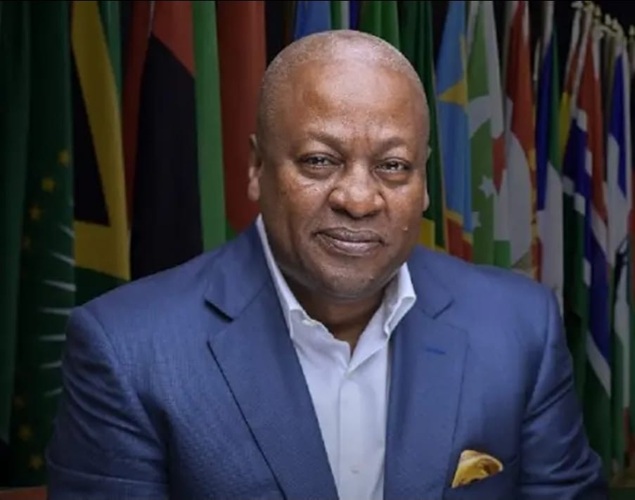
President John Dramani Mahama will be joining African heads of state, business leaders, investors and innovators shaping Africa’s next chapter, at the inaugural Alamein Africa Forum scheduled to take place from 2nd to 4th October 2026 in the historic city of Alamein on Egypt’s Mediterranean coast.
The three-day Alamein Africa Forum is established as a permanent African Business Forum to convene biennially in Egypt.
It is to become the continent’s premier gathering where political power meets entrepreneurial prowess, bridging the established engines of African growth with the new sectors defining its future.
Co-organised by the Government of Egypt, African Export – Import Bank (Afreximbank), the African Union and AUDA-NEPAD, it is expected to bring together more than twenty (20) heads of state and government representatives alongside business leaders, bankers and development institutions.
Ghana’s President, who on 23rd September 2026 declared Ghana is open for business in New York after ringing the ceremonial closing bell at the Nasdaq Stock Market will be leading the Ghanaian delegation, to include the Minister for Trade, Agribusiness, and Industry, Elizabeth Ofosu – Adjare, to the forum.
Other members of the Ghanaian delegation are the Head and Presidential Advisor for Ghana’s 24-Hour Economy and Accelerated Export Development Programme, Hon. Augustus Goosie Tanoh, Ghana’s Special Envoy to the Alliance of Sahel States, Colonel Larry Gbevlo – Lartey alongside key Ghanaian private sector players.
Bringing together leaders in politics, business and policy from across the continent, the Alamein Africa Forum will provide a unique opportunity to shape Africa’s growth agenda by aligning policy and investment priorities, mobilising partnerships for implementation and strengthening financing and investment pathways.
The private sector must become an integral part of Agenda 2063, the African Union’s strategic fifty-year masterplan to transform the continent. The private sector is the core economic engine required to turn the African 2063 from an aspirational government roadmap into realized infrastructure, jobs, and value-added trade.
By Chris KONEY
News
Contractors move to site to begin construction of 120-Bed Trauma Hospital at Bole – Felix Kwakye Ofosu

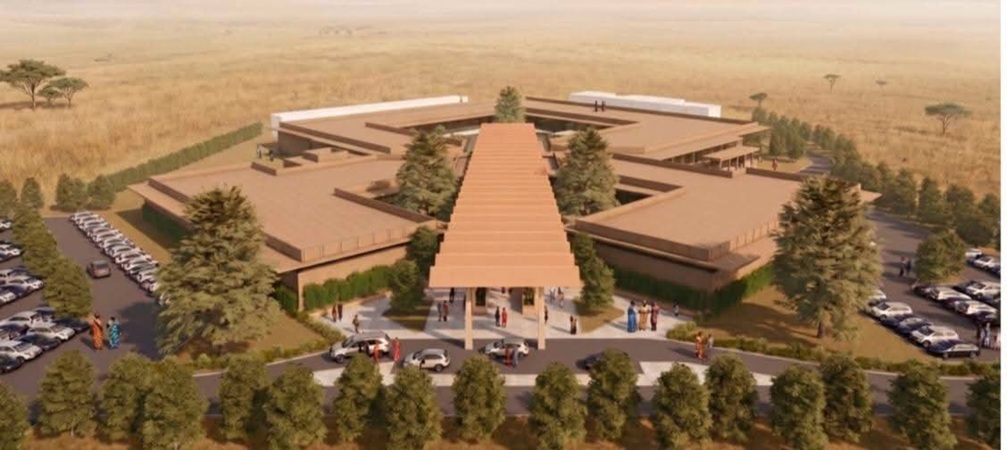
Minister for Government Communications, Felix Kwakye Ofosu, has revealed that contractors have moved to site to begin construction of a 120-bed Specialised Trauma and Emergency Hospital at Bole in the Savannah Region.
According to the Minister, the 16,000 square metre facility will be equipped with modern medical infrastructure to provide emergency and trauma care.
The hospital will have a 24-hour Accident and Emergency Unit, trauma resuscitation bays, emergency operating theatres, an Intensive Care Unit (ICU) and a High Dependency Unit (HDU).
It will also include specialised trauma wards, a burns treatment unit, orthopaedic and surgical units, as well as imaging and diagnostic facilities, among others.
By Edem Mensah-Tsotorme