News
South African president’s shame over surge in murders of women

- /home/u249204778/domains/spectator.com.gh/public_html/wp-content/plugins/mvp-social-buttons/mvp-social-buttons.php on line 27
https://spectator.com.gh/wp-content/uploads/2020/06/south-africa-president-cyril-ramaphosa.jpg&description=South African president’s shame over surge in murders of women', 'pinterestShare', 'width=750,height=350'); return false;" title="Pin This Post">
- Share
- Tweet /home/u249204778/domains/spectator.com.gh/public_html/wp-content/plugins/mvp-social-buttons/mvp-social-buttons.php on line 72
https://spectator.com.gh/wp-content/uploads/2020/06/south-africa-president-cyril-ramaphosa.jpg&description=South African president’s shame over surge in murders of women', 'pinterestShare', 'width=750,height=350'); return false;" title="Pin This Post">
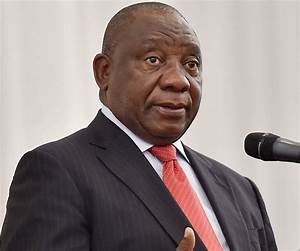
South Africa’s president Cyril Ramaphosa says it has been a “dark and shameful week” for his country following a surge in violence against women.
Mr. Ramaphosa’s remarks come after several femicides, including one woman who was eight months pregnant and found stabbed and hanging from a tree.
He noted they had occurred since some coronavirus restrictions were lifted, including a ban on the sale of alcohol.
The culture of silence around gender-based violence had to end, he said.
“Gender-based violence thrives in a climate of silence. With our silence, by looking the other way because we believe it is a personal or family matter, we become complicit in this most insidious of crimes,” President Ramaphosa said.
As many as 51 per cent of women in South Africa had experienced violence at the hands of someone they were in a relationship with, the president’s statement said.
Mr Ramaphosa condemned the brutality of recent killings, naming three of the victims, two of whom have become the subject of Twitter campaigns calling for justice:
.
The president said another young woman had been dumped under a tree in Johannesburg’s Soweto township on Friday.
Police later named her as Sanele Mfaba, sparking another hashtag that began trending on Saturday – #JusticeforSanelisiwe – calling for more to be done to protect women.
“The manner in which these defenceless women were killed points to an unconscionable level of barbarism and lack of humanity,” the president’s statement said.
“We note with disgust that at a time when the country is facing the gravest of threats from the [coronavirus] pandemic, violent men are taking advantage of the eased restrictions on movement to attack women and children.”
For two months, South Africa had one of the toughest lockdowns in the world.
“It is a dark and shameful week for us as a nation. Criminals have descended to even greater depths of cruelty and callousness. It simply cannot continue”
During that time alcohol was banned – it was argued that this would limit domestic abuse, prevent violence and ease pressure on hospitals.
On Thursday, Police Minister Bheki Cele linked rising crime to the partial lifting of alcohol sales on 1 June.
President Ramaphosa said he was deploying ministers to meet with community leaders nationwide to understand what exactly was fuelling the increase in crime.
“We need to understand what factors are fuelling this terrible trend and, as society as a whole, address them urgently,” he said.
Referencing a recent case where a man could not be prosecuted for allegedly murdering his girlfriend because of a lack of evidence, he urged people to report perpetrators.
– BBC

News
Relationship with Haruna Iddrisu and Muntaka remains intact despite reshuffle comment— Asiedu Nketiah

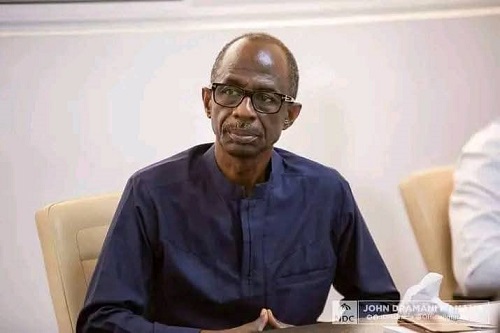
National Chairman of the National Democratic Congress (NDC), Johnson Asiedu Nketiah, says his relationship with Education Minister Haruna Iddrisu and Interior Minister Muntaka Mohammed-Mubarak remains strong despite reshuffling decisions that affected them.
Speaking in an interview on JoyNews on Tuesday, Aug. 4, 2026, Mr Asiedu Nketiah said he did not regret publicly discussing the reshuffle and insisted that his comments were truthful.
“It doesn’t change the truth whether some people accept it or not accept it. The truth remains the truth,” he stated.
He explained that his earlier comments were intended to show that there was no personal hostility between him and the two ministers.
According to him, he remains close to both men and continues to communicate with them regularly.
“I’m cool with my junior brother Haruna and Muntaka. We are moving together,” he said.
Mr Asiedu Nketiah noted that some people initially felt hurt by his public comments but added that many later realised that the issue had been exaggerated.
He said he believed no one should have been offended by the statement when considered in its full context.
The NDC chairman also disclosed that he had spoken with Mr Haruna recently and maintained regular contact with Mr Muntaka.
He added that he and the Interior Minister now joke about the incident whenever they meet.
Recounting one of their exchanges, Mr Asiedu Nketiah said he jokingly told Mr Muntaka after his appointment that he now had the power to arrest him.
According to him, the minister replied in a light-hearted manner that he might lose his position before he had the chance to do so.
Mr Asiedu Nketiah further explained that difficult political decisions could sometimes cause temporary pain but might still be necessary if they were intended to achieve a larger objective.
He maintained that personal relationships should not be destroyed by political decisions taken in the interest of the party.
By: Jacob Aggrey
The New Patriotic Party (NPP) has questioned the government’s planned GH¢2 per litre reduction in diesel prices, saying the measure is temporary and does not fully offset the increase in fuel prices over the past year and a half.
Addressing a press conference in Accra on Tuesday, Aug. 5, 2026, Chairman of the NPP Policy Co-ordination Committee and Member of Parliament for Ofoase-Ayirebi, Kojo Oppong Nkrumah, said diesel prices remained significantly higher than they were in January 2025 despite the announced reduction.
According to him, petrol sold for about GH¢15.13 per litre and diesel for about GH¢15.49 per litre in January 2025, while current prices remained above those levels even after the proposed relief.
Mr Oppong Nkrumah said the reduction “cushions part of the increase that has already happened” but does not reverse it.
The NPP criticised the Energy Sector Levies (Amendment) Act, saying the government imposed an additional GH¢1 levy on every litre of petroleum products in June 2025.
He noted that the levy took effect on July 16, 2025 and remained in force.
According to him, consumers had continued to pay the additional levy and were now receiving only a temporary reduction on diesel, while petrol prices were not benefiting from the same intervention.
Mr Oppong Nkrumah further argued that the diesel relief carried a fiscal cost because it reduced revenue that could otherwise be used for energy sector debt payments, road maintenance and deficit reduction.
He estimated that the latest intervention could cost about GH¢400 million in foregone revenue for one month.
The party also raised concerns about amendments passed by Parliament on July 31, 2026, which increased the Energy Sector Shortfall and Debt Repayment Levy on fuel oil and extended the Road Fund Levy to fuel oil.
While acknowledging the government’s effort to stop tax evasion, the NPP said the refund system for eligible industrial users had not yet been fully explained.
The party questioned how consumers who eventually bear the cost through higher prices would be compensated if companies later received refunds.
Mr Oppong Nkrumah also referred to a recent World Bank assessment that downgraded Ghana’s Energy Sector Recovery Programme from “Moderately Satisfactory” to “Unsatisfactory”.
He said the downgrade highlighted persistent losses at the Electricity Company of Ghana and the Northern Electricity Distribution Company and pointed to delayed reforms and governance challenges.
The NPP called on the government to publish the full fuel price build-up, disclose the source of financing for the diesel relief, provide details of any budgetary provision for the measure and explain how transport fares and prices of essential goods would be affected.
The party further proposed a transparent and rules-based fuel price intervention system with published fiscal limits, targeted support for public transport, food distribution, agriculture and fishing, and automatic sunset clauses linked to crude oil prices and exchange rates.
Mr Oppong Nkrumah said the NPP would pursue the matter in Parliament by filing urgent questions on the financing of the diesel relief and the continued application of the GH¢1 fuel levy.
He added that the party would monitor fuel levy collections, refunds to industry and movements in pump prices and would engage transport unions, businesses and consumer groups on the impact of current fuel policies.
By: Jacob Aggrey