News
African countries seek UN racism debate in wake of global protests

- /home/u249204778/domains/spectator.com.gh/public_html/wp-content/plugins/mvp-social-buttons/mvp-social-buttons.php on line 27
https://spectator.com.gh/wp-content/uploads/2020/06/Elisabeth-Tichy-Fisslberger.jpg&description=African countries seek UN racism debate in wake of global protests', 'pinterestShare', 'width=750,height=350'); return false;" title="Pin This Post">
- Share
- Tweet /home/u249204778/domains/spectator.com.gh/public_html/wp-content/plugins/mvp-social-buttons/mvp-social-buttons.php on line 72
https://spectator.com.gh/wp-content/uploads/2020/06/Elisabeth-Tichy-Fisslberger.jpg&description=African countries seek UN racism debate in wake of global protests', 'pinterestShare', 'width=750,height=350'); return false;" title="Pin This Post">
African countries called Friday on the UN Human Rights Council to urgently debate racism and police brutality in the wake of the global protests that followed George Floyd’s killing by an officer in the US.
In a letter written on behalf of 54 African countries, Burkina Faso’s ambassador to the UN in Geneva asked the UN’s top rights body for an “urgent debate” on “racially inspired human rights violations, police brutality against people of African descent and the violence against the peaceful protests that call for these injustices to stop.”
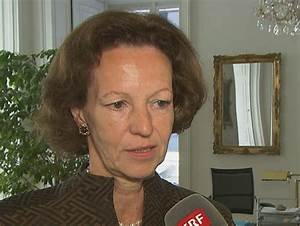
The letter, addressed to rights council president Elisabeth Tichy-Fisslberger of Austria, requested that this debate be held next week, when the council’s 43rd session resumes, after it was interrupted in March due to the COVID-19 pandemic.
It pointed to the case of George Floyd, a 46-year-old black man who died in police custody in Minneapolis on May 25 after a white officer, who has since been charged with murder, pressed his knee on his neck for nearly nine minutes.
call came after Floyd’s family, along with the families of other victims of police violence and over 600 NGOs this week called on the council to urgently address systemic racism and police impunity in the US.
For the council to consider such a request, it needs to have the backing of at least one country.
With the request now coming from a large group of states, “that increases the chances” it will take place, a council spokesman told AFP. Floyd’s death, which was caught on video and has sparked massive protests across the United States and around the world, “is unfortunately not an isolated incident, with many previous cases of unarmed persons of African descent suffering the same fate due to unchecked police brutality,” the letter said.
“Sadly, the fates of many other victims attracted no attention, as they were not captured on social media for all to see,” Ambassador Dieudonne Desire Sougouri wrote on behalf of the African Group at the council.
While the letter called for a debate on racism around the globe, it in particular highlighted the situation in the United States.
“The protests the world is witnessing are a rejection of the fundamental racial inequality and discrimination that characterise life in the United States for black people, and other people of colour,” it said.
A number of countries are expected to address Floyd’s killing and concerns about police violence and racism in the United States during the resumed 43rd council session even without a special debate.
But since the deadline for tabling fresh resolutions during this session expired back in March, they will only be able to call for concrete actions within the confines of this extraordinary debate.
FRANCE 24 with AFP

News
Relationship with Haruna Iddrisu and Muntaka remains intact despite reshuffle comment— Asiedu Nketiah

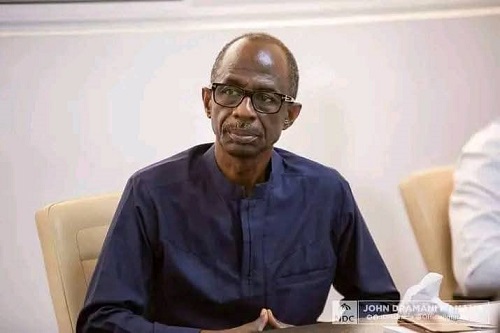
National Chairman of the National Democratic Congress (NDC), Johnson Asiedu Nketiah, says his relationship with Education Minister Haruna Iddrisu and Interior Minister Muntaka Mohammed-Mubarak remains strong despite reshuffling decisions that affected them.
Speaking in an interview on JoyNews on Tuesday, Aug. 4, 2026, Mr Asiedu Nketiah said he did not regret publicly discussing the reshuffle and insisted that his comments were truthful.
“It doesn’t change the truth whether some people accept it or not accept it. The truth remains the truth,” he stated.
He explained that his earlier comments were intended to show that there was no personal hostility between him and the two ministers.
According to him, he remains close to both men and continues to communicate with them regularly.
“I’m cool with my junior brother Haruna and Muntaka. We are moving together,” he said.
Mr Asiedu Nketiah noted that some people initially felt hurt by his public comments but added that many later realised that the issue had been exaggerated.
He said he believed no one should have been offended by the statement when considered in its full context.
The NDC chairman also disclosed that he had spoken with Mr Haruna recently and maintained regular contact with Mr Muntaka.
He added that he and the Interior Minister now joke about the incident whenever they meet.
Recounting one of their exchanges, Mr Asiedu Nketiah said he jokingly told Mr Muntaka after his appointment that he now had the power to arrest him.
According to him, the minister replied in a light-hearted manner that he might lose his position before he had the chance to do so.
Mr Asiedu Nketiah further explained that difficult political decisions could sometimes cause temporary pain but might still be necessary if they were intended to achieve a larger objective.
He maintained that personal relationships should not be destroyed by political decisions taken in the interest of the party.
By: Jacob Aggrey
The New Patriotic Party (NPP) has questioned the government’s planned GH¢2 per litre reduction in diesel prices, saying the measure is temporary and does not fully offset the increase in fuel prices over the past year and a half.
Addressing a press conference in Accra on Tuesday, Aug. 5, 2026, Chairman of the NPP Policy Co-ordination Committee and Member of Parliament for Ofoase-Ayirebi, Kojo Oppong Nkrumah, said diesel prices remained significantly higher than they were in January 2025 despite the announced reduction.
According to him, petrol sold for about GH¢15.13 per litre and diesel for about GH¢15.49 per litre in January 2025, while current prices remained above those levels even after the proposed relief.
Mr Oppong Nkrumah said the reduction “cushions part of the increase that has already happened” but does not reverse it.
The NPP criticised the Energy Sector Levies (Amendment) Act, saying the government imposed an additional GH¢1 levy on every litre of petroleum products in June 2025.
He noted that the levy took effect on July 16, 2025 and remained in force.
According to him, consumers had continued to pay the additional levy and were now receiving only a temporary reduction on diesel, while petrol prices were not benefiting from the same intervention.
Mr Oppong Nkrumah further argued that the diesel relief carried a fiscal cost because it reduced revenue that could otherwise be used for energy sector debt payments, road maintenance and deficit reduction.
He estimated that the latest intervention could cost about GH¢400 million in foregone revenue for one month.
The party also raised concerns about amendments passed by Parliament on July 31, 2026, which increased the Energy Sector Shortfall and Debt Repayment Levy on fuel oil and extended the Road Fund Levy to fuel oil.
While acknowledging the government’s effort to stop tax evasion, the NPP said the refund system for eligible industrial users had not yet been fully explained.
The party questioned how consumers who eventually bear the cost through higher prices would be compensated if companies later received refunds.
Mr Oppong Nkrumah also referred to a recent World Bank assessment that downgraded Ghana’s Energy Sector Recovery Programme from “Moderately Satisfactory” to “Unsatisfactory”.
He said the downgrade highlighted persistent losses at the Electricity Company of Ghana and the Northern Electricity Distribution Company and pointed to delayed reforms and governance challenges.
The NPP called on the government to publish the full fuel price build-up, disclose the source of financing for the diesel relief, provide details of any budgetary provision for the measure and explain how transport fares and prices of essential goods would be affected.
The party further proposed a transparent and rules-based fuel price intervention system with published fiscal limits, targeted support for public transport, food distribution, agriculture and fishing, and automatic sunset clauses linked to crude oil prices and exchange rates.
Mr Oppong Nkrumah said the NPP would pursue the matter in Parliament by filing urgent questions on the financing of the diesel relief and the continued application of the GH¢1 fuel levy.
He added that the party would monitor fuel levy collections, refunds to industry and movements in pump prices and would engage transport unions, businesses and consumer groups on the impact of current fuel policies.
By: Jacob Aggrey