Features
British monarchy and the African revolution

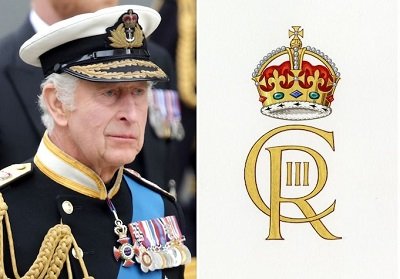
• King Charles III
On September 8 this year, the world was assailed by the news that the British monarch, Queen Elizabeth II, had died, aged 96. Easily the longest serving British monarch, Elizabeth II was the only British monarch the modern world has known, having served for 70 years as queen.
Her death means different things to different people. Some people think the monarchy should give way to a republican status, while others hold the view that it has guaranteed stability in the United Kingdom (UK). Some claim that it has become archaic in the face of current world politics and tenets of modern democratic practice.
There are yet others who believe that maintaining the monarchy is a drain on the British public purse since members of the royal family are taken care of by the taxpayer. It is said that the funeral of the queen cost a whopping £4 billion at a time the UK is experiencing an economic downturn.
A group calling itself the Young Communist League of Britain has issued a statement in response to the death of Queen Elizabeth II. “The death of Elizabeth Windsor highlights to our generation and working people across Britain that the abolition of the monarchy remains a pressing and important issue,” it said in part.
“It is fundamentally clear, now more than ever, that Britain must become a modern republic. A tiny interbreeding sect of a decaying aristocracy cannot and will never reflect the interests of working people in Britain…..the imposition of an obscenely wealthy, unrepresentative, unelected head of state is offensive to all working people. But this is not just a matter of important democratic and egalitarian principles,” it continued.
It did not end there. “The Royal Family’s wealth and the Crown estates, vast tracts of land and resources across Britain, are centuries of stolen wealth from the working people of this country and the oppressed and exploited peoples in Britain’s colonies……the monarch’s position as the head of state, not just of Britain, but of various former colonies and as head of the Commonwealth plays an important symbolic and ideological role in maintaining British imperialism around the world,” and advocates “…….the immediate abolition of the monarchy and its replacement with a democratically elected head of state.”
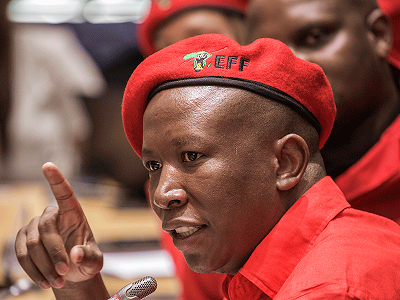
The firebrand leader of the Economic Freedom Fighters (EFF) of South Africa, Julius Malema, warned his country’s president, Cyril Ramaphosa, not to order flags to fly at half mast. If he did, his EFF would marshall people to raise them up all across the country. His beef was that the British plundered the resources of his country.
Many commentators speak of British atrocities in Africa, especially in South Africa, Kenya, Zimbabwe in the name of the Crown.
I confess that, personally, nothing about the British excites me, but I watched the Queen’s funeral with a journalistic interest. Forget about the Crown making money on every single slave sold in the Americas. Forget about the two Barclay brothers who made money as underwriters to slave ships and ended up setting up Barclays Bank from the proceeds, and later Liverpool FC. All blood money, if you asked me.
Yes, some of the expensive diamonds and emeralds that adorn the imperial crown might have been plundered in India and Africa. Some might have been gifts from coercive influence but what else would have been expected from the Brits?
Today, we grouse, rave and rant about what colonialism did to us. I do not yet know if we do this to massage our inadequacy and pain as a people or expect recompense. This behaviour is like closing the door to the barn after the horses have bolted.
Today, we elect leaders who plunder our resources far in excess of what the colonial Europeans did. We elect characters who take millions from multinational companies and grant them concessions to mine our minerals and our countries make less than 10 per cent from the proceeds.
I was sorely disappointed watching almost all leaders bussed to the Westminster chapel for the Queen’s memorial service. I wished to God that only our African leaders were bussed. I would have laughed loud and said, “You guys got your just desserts. Serves you right.” But that did not happen. If it did, that would jolt them into knowing how little they mattered in the geopolitical scheme of things. The final act of humiliation.
Those developed countries know some of our leaders for the rogues they are; for the frauds they are and for the plunderers and corrupt characters they are.
We elect leaders who dance to the tunes of the imperialists, yet shout their voices hoarse to their people about reparation for the obnoxious slave trade. We elect people who, assuming office, become overlords running roughshod over the people.
The whole nation becomes their ‘spoils of war’ that must be shared among lackeys, friends, family and bootlickers. They account to no one and, as a result, manipulate the system to keep winning elections.
How many foreign politicians syphon their countries’ resources into African banks, buy properties or invest in Africa? Our leaders do not have confidence in the countries they lead. And we turn around to blame everything on the characters that colonised us. Do we not have minds of our own?
All this has to change one way or another. And this I call the African Revolution. It must be a revolution of like minds among the youth and of the continent; be it francophone, anglophone, lusophone or any other phone.
The youth will rise up and declare that enough of the plundering is enough and will take leadership of the continent; and with one voice. It is an epoch I will love to live and witness. Thankfully, I am aware of the undercurrents.
Our young women who have been subdued into pigeonholes of subservience must strive for leadership roles as men. There are quite a number of young women leaders in many countries. And they are doing a good job too.
The African Revolution must question the usefulness of the Commonwealth. Who controls the wealth that is supposed to be common? If this group does not benefit our economic growth, let us walk out of it. How can a group of economic vampires sit on the comfort of their couches and determine how much they buy what we produce, yet determine what price we buy theirs?
These are the issues we must avert our minds to and bargain on equal terms. Because world trade is conducted in American dollars, the USA will never go to the IMF for a bail out; America will just print more dollars and still remain atop the food chain of economic might.
What stops Africa from a common continental currency? Even the talk of sub-regional currencies that has been on the table for decades has not seen any concrete action. The European Union has become a powerful trading and economic bloc, even if the British, in their egotistic nature, have exited. The African Revolution will take us there.
By Dr. Akofa K. Segbefia
Writer’s email address: akofa45@admin

I have often been saddened by the condition of Sikaman musicians. Of course, some are not musicians. They are jokers who think anybody who can sing a hymn is a musician. And why wouldn’t they think so when people think that every man wearing a rasta hair is a reggae musician?
Well, these days, almost everybody is dreaming of becoming a musician, even some ministers and parliamentarians. And it is never too late for them to begin learning the solfas and composing songs like “If You Do Good You Do For Yourself,” after all, life begins at 60 these days. If you die three years later, that’s your luck.
For the jobless, becoming a musical star is an everyday dream. They think when you are a music maker, you automatically break alliance with poverty. They are often mistaken.
I know people who claim they are musicians but are always fasting not because they are devout moslems or are on a hunger strike, but because even one square meal a day is a perpetual wahala. And the only drink they can afford is the poor man’s holy whisky which has a thousand names including ‘Nyame Bekyere’.
Even most of the popular musicians we see in town claiming they are foreign-based stars are more of hustlers than musicians. When they tell you they are going on tour abroad, it is a careful way of saying they are going overseas to scrub the whiteman’s toilet or pick tomato or apples to save their neck from musical poverty.
When they are back to Sikaman, they appear quite flamboyant with chains hanging all over them. They change the few dollars they have scraped, spread it around and promptly get broke. Then they can organise another ‘tour’. In between tours, they struggle to release an album and that levels them up a bit on the financial balance.
It all points to the fact that the life of the average musician isn’t quite organised. He has no calendar, no programme and no concentration on the job. He has to wash plates, become a waiter, janitor and toilet scrubber while finding time to make music. No musician succeeds in life that way.
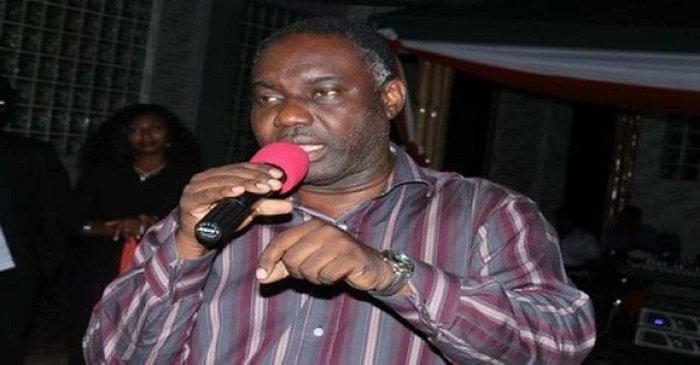
One musician I’ll always respect, who thinks deeper than the ordinary Sikaman musicians is Carlos Sakyi. He is not like the Kokoase guitar musicians who see the world just in terms of bitters, a willing girlfriend, constant supply of kokonte and jot.
Carlos, often loved for his percussive overtones in gospel music, and once a gospel-rock star, has studied the life of Sikaman musicians and has evolved a blue-print for a great improvement in their lives work, finances and comfort.
In short, he has simulated a Motown-style environment for musicians and his formula is working with accuracy with the five musicians he has started with. The blue-print is what has brought MEGASTAR into being. It was launched on September 15, 1995 at the National Theatre.
When it got launched, many probably thought Carlos was “too know or was dreaming more than he should and won’t think about himself. Anyhow, the MEGASTAR is now an institution musicians can look up to, a big phenomenon with lots of promise for struggling musicians.
Music business in the developed world is not the way we regard it cheaply here. A musician is never distracted by how his finances go; his contracts are entered, his engagements made, his interviews arranged, his personal security guaranteed.
Music is his business and that is where his mind is and his attention focuses. Other aspects of his life are programmed for him by his managers. They hire who has to light his cigarettes, massage him, drive his car and the one who will say “Good Luck” when he sneezes.
A bodyguard whose face is exactly like that of the devil is hired to scare off muggers, psychopaths and criminals in general. Sometimes his girls are organised for him.
So the only thing the musician does apart from sleeping and snoring is to concentrate on making music, and true to it, no one can succeed in any venture when he is distracted.
This is how the Michael Jacksons, Lionel Richies, Dolly Patons and Whitney Houstons have made it with dollars packed and over-flowing. They aren’t any better than Sikaman musicians. The only difference is that they know how to organise their lives.
I managed to corner Carlos Sakyi and asked him to tell me how MEGASTAR was doing. He is the Managing Director of Megastar Limited, a music company that has a board of directors and a chairman. Carlos Sakyi shares the proprietorship with a partner. Carlos himself was one great musician who played for a band that beat Eddy Grant on the charts.
“Megastar is in fact a concept born out of the idea that the future security of the Ghanaian musician which has always been in jeopardy can now be guaranteed. Artistes spend too much of their time doing things on their own, chasing money and not concentrating on music. So their full potential is never realised. Some are in fact producing at quarter-rate. That is why they aren’t making much headway,” he told me.
“Megastar is now giving them the chance of the lives. We handle the interviews of Megastar artiste, their press releases, costume, engagements and everything they hitherto used to do themselves. We get them exposed on M-Net and we have contacted BB to get on their programmes. We handle their finances pay them salaries and bonuses, so they only have to concentrate on music
“Most importantly,” he continued, “we do not make all the decisions. Management always meet with the musicians to take the decisions that affect them.”
But who are the Megastar musicians? One is the great Amakye Dede, a star from birth delivered onto the earth with music on his lips; he is the man who feeds hungry ears with musical salad and harmonic sausages. He is the recipient of many national awards.
Next is Naana Frimpong, a latter-day Carlos-groomed songbird with the voice of an angel. She sings to kill. Her beauty has charmed her audience and they stare and stare at her.
The sensational and fantalising Tagoe Sisters are the next. The twin music machine is one that has produced the cream, arguably the very best, of gospel music all these years. I hear they are inseparable; not even their better-halves can keep them apart. Are they Siamese? They dance, and when on stage, they move the crowd.
Then comes Reverend Yawson who is a known songwriter. He is imbued with the Holy Spirit, speaks in tongues and of course sings in tongues. He is God’s representative on the group.
What about my good friend and super-heavyweight, Jewel Ackah? He is a star figure. His appearance is awe-inspiring, his voice golden. A great delight to be-hold when at his best in stage-craftsmanship, he has beaten his contemporaries to it both on land and on sea.
They are the pioneers of the Motown idea. They are all releasing new albums this year. Let’s see how it all goes.
In recent years, the term “female rage” has gained significant traction, symbolising a collective shift in how women’s emotions are perceived and addressed.
This phenomenon is not merely a fleeting trend but a profound movement rooted in centuries of systemic injustices, personal betrayals, and societal expectations.
As women increasingly reclaim their anger, it is imperative to understand the multifaceted nature of female rage, its causes, and its implications for individuals and society at large.
The historical context of female anger
Historically, women’s emotions have been subject to dismissal, ridicule, and pathologisation. The term “hysteria,” originating from the Greek word for uterus, was used to describe women’s emotional states as irrational and uncontrollable.
This legacy of silencing and shaming has contributed to a culture where women’s anger is often suppressed or stigmatised.
However, with the rise of feminist movements, women are challenging these narratives, asserting their right to express anger and demand change.
The anatomy of female rage
Female rage is not a monolith; it is a complex and multifaceted emotion driven by various factors, including:
1. Societal expectations: The pressure to conform to traditional roles of passivity, politeness, and emotional labour.
2. Gender inequality and pay gaps: Frustration stemming from systemic discrimination in the workplace and beyond.
3. Sexual harassment and abuse: Trauma and anger resulting from pervasive violence and objectification.
4. Emotional labour and burnout: The unsustainable burden of managing emotions and responsibilities in personal and professional spheres.
5. Hormonal fluctuations: The impact of hormonal changes on emotional states, often overlooked or dismissed.
The power of anger: Reclaiming female rage
Far from being a destructive force, female rage can be a catalyst for change. When acknowledged and channelled constructively, anger can drive advocacy, policy reform, and resistance against inequality.
The #MeToo movement, women’s marches, and increased representation in politics are testaments to the power of collective female anger.
Addressing the Stigma: Towards a more inclusive dialogue
To fully harness the potential of female rage, society must address the stigma surrounding women’s anger. This involves:
1. Validation and recognition: Acknowledging women’s emotions as legitimate and worthy of attention.
2. Creating safe spaces: Providing platforms for women to express anger without fear of backlash.
3. Education and awareness: Challenging stereotypes and promoting understanding of women’s experiences.
4. Support systems: Offering resources and support for women dealing with trauma and systemic injustices.
Conclusion
The age of female rage is a moment of profound transformation, where women’s anger is no longer silenced but celebrated as a force for justice.
By understanding the roots of female rage and addressing the societal structures that fuel it, we can move towards a more equitable and compassionate world.
The journey is complex, but the destination-a society where women’s emotions are respected and their voices are heard is worth the struggle.
References:
[1] Chemudupati, P. (2022). _The Rage of Women: A Historical Perspective_.
[2] Traister, R. (2018). _Good and Mad:
By Robert Ekow Grimond-Thompson