Features
The recurring xenophobia in South Africa

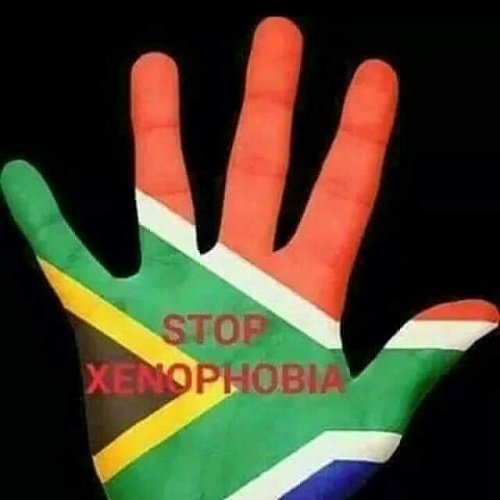
I am an unapologetic Pan-Africanist. I love my roots, first as Ewe, Ghanaian and then African. Even if I had the chance I would not take on another nationality. I am no racist either, and I hate to see one group of people look down on another. Though, the news of imminent xenophobic attacks must be worrying.
I have followed the history of South Africa for as long as I can remember. The first I heard of that country was one Chaka Zulu. It turned out he was a King of the Zulu kingdom, King Chaka. He was said to be a fierce and ruthless warrior king and tyrant who loved to see his own people killed at a whim, according to the narrative at the time.
I again read of the arrival of the Boers in that country in 1652 and later, the domination of the natives by the settlers. As time went on, a system of government was introduced that made the blacks/natives subservient to the settlers/Boers/whites; a system christened Apartheid. It took a lot of agitation by the rest of the world, especially the rest of Africa, and economic strangulation for the whites to relinquish their political hold on the country.
Under Apartheid, the only source of release for the blacks was through music, aside of their compatriots who took the fight to the Boers. It was then easy to describe South African music as music of suffering people. Their music was distinct and it brought emotions to us who knew of their suffering. We simply called it Zulu music.
The vocals, instruments and the rhythms carried a certain bone-chilling resonance that caught one’s attention. It still has same effect on those of us old enough to know what South Africa was going through.
We heard of freedom fighters like Govan Mbeki, Walter Sisulu, Nelson Mandela, Albert Luthuli and many more. Archbishop Desmond Tutu fought the system from within. Some were in prison and others fled the country and fought the cause from exile. By his oratory, courage and principle, Mandela became the face of the struggle against the Apartheid regime. His persona loomed large even from the notorious Roben Island prison.
The Sharpville Massacre, followed later by the murder of Steve Biko on September 12, 1977, gave impetus and momentum to the struggle. All of Africa took the fight to the world, asking for the isolation of South Africa from all world events, including sports and trade. Many countries, including Ghana, hosted their exiles, educated some of them and trained quite a number in the art of the military.
However, the blacks were not denied formal education; their textbooks tailored in servitude to the whites and their businesses. The men broke their backs in the mines and the women were mostly domestic servants to the whites. The rest of us felt their pain.
Trumpeter Hugh Masekela came to Ghana after his divorce from his then wife, Miriam Makeba, who later married African-Amerrican civil rights activist, Stokely Carmichael with whom she settled in Conakry, Guinea. Masekela and Makeba projected their cause to the world with their music.
When I saw Mandela on our High Street in Accra in 1992, I could see in his aura a man destined to champion a purpose. The Madiba did not mean for his people to become xenophobic in their national life. Sadly, that is what has lately become an annual affair in south Africa.
A friend told me only recently that we should have allowed the whites to continue their domination of the blacks if we knew this is how we shall be repaid for our support for the black cause.
Now, whites, coloured and Indians are accepted even if they are visitors or legally resident in that country. Africans of other nationalities, irrespective of their immigrant status, are regarded as foreigners and must be attacked, their businesses destroyed or are hounded out of the country.
It makes sense for us to feel betrayed and angered by the xenophobic attacks on other Africans in South Africa. But wait a minute: do those folks know the role played by the rest of Africa in their struggle against Apartheid? If they knew, I believe the narrative will be different.
Did the likes of Mandela, Govan Mbeki and others tell their people about those other countries that supported their struggle? None that I heard of. Even in his autobiography, Long Walk To Freedom Mandela only mentioned his military training in Libya in passing. Because the whites controlled the media in that country at the time, the blacks had no idea who were fighting for them from outside.
As far as they were concerned, it was their struggle. Not even the role of neighbours Zambia, Mozambique and Zimbabwe was known to them. So, citizens of these neighbours who are in South Africa are seen as parasites feeding on their country’s wealth and depriving them of job opportunities.
West Africans, especially Nigerians and Ghanaians, have distinct features from the Southern Africans, so they are easier targets.
Until their textbooks are rewritten to reflect the true history of the global fight for their freedom, many South Africans, in their ignorance, will blame “foreigners” for all their conditions. Their government must make it a clear policy to tell the story truthfully for the education and understanding of their people. This needs a conscious effort to accomplish.
But if their leaders are as ignorant as the people they lead, the likelihood of South Africa facing isolation once again is on the horizon. After all, migrant labour is known to have helped in developing economies worldwide.
I suggest to governments whose citizens are mostly affected by these xenophobic attacks make a representation to the South African government to tell its citizens what role their countries played in that country’s anti Apartheid struggle. The rest of Africa needs South Africa as it also needs the rest of us.
Personally, I have no appetite for visiting South Africa under a cloud of unannounced burst of anger and revulsion towards foreigners. If our countries had refused to shelter their exiled freedom fighters, where would that country be at this point in their history?
Instead of getting angry at this behaviour of these people, I pity them rather. I pity them because if they continue on this trajectory, by the time the realisation of reality dawns on them, there will not be even one friend standing by their side.
I do not yet know if the African Union (AU) has said anything about this phenomenon in South Africa, a country that wants to be known as Azania. Asking the leaders of South Africa to rein in this emerging rowdyism cannot be tantamount to interference in that country’s internal affairs.
What does it profit these people to attack foreigners, loot their property and live off the spoils of the attack and when all is finished, regroup and launch fresh attacks? Then the cycle continues. Meanwhile, South African businesses are opening up all over the African continent without hindrance, so what is their beef with foreigners?
South Africa risks isolation if their leaders look on while this becomes a national character. If that is what they want, the choice is entirely theirs.
By Dr. Akofa K. Segbefia
Writer’s email address: akofa45@yahoo.com


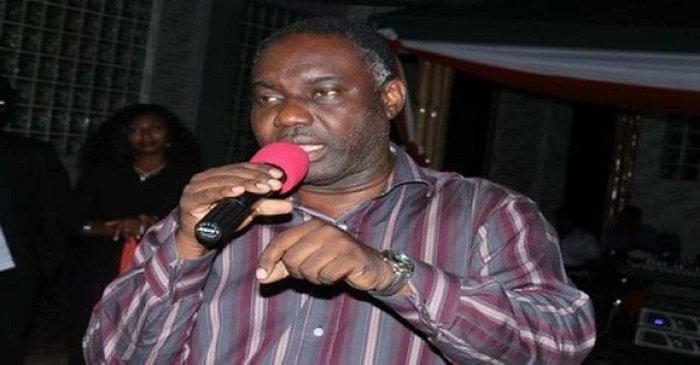
I have often been saddened by the condition of Sikaman musicians. Of course, some are not musicians. They are jokers who think anybody who can sing a hymn is a musician. And why wouldn’t they think so when people think that every man wearing a rasta hair is a reggae musician?
Well, these days, almost everybody is dreaming of becoming a musician, even some ministers and parliamentarians. And it is never too late for them to begin learning the solfas and composing songs like “If You Do Good You Do For Yourself,” after all, life begins at 60 these days. If you die three years later, that’s your luck.
For the jobless, becoming a musical star is an everyday dream. They think when you are a music maker, you automatically break alliance with poverty. They are often mistaken.
I know people who claim they are musicians but are always fasting not because they are devout moslems or are on a hunger strike, but because even one square meal a day is a perpetual wahala. And the only drink they can afford is the poor man’s holy whisky which has a thousand names including ‘Nyame Bekyere’.
Even most of the popular musicians we see in town claiming they are foreign-based stars are more of hustlers than musicians. When they tell you they are going on tour abroad, it is a careful way of saying they are going overseas to scrub the whiteman’s toilet or pick tomato or apples to save their neck from musical poverty.
When they are back to Sikaman, they appear quite flamboyant with chains hanging all over them. They change the few dollars they have scraped, spread it around and promptly get broke. Then they can organise another ‘tour’. In between tours, they struggle to release an album and that levels them up a bit on the financial balance.
It all points to the fact that the life of the average musician isn’t quite organised. He has no calendar, no programme and no concentration on the job. He has to wash plates, become a waiter, janitor and toilet scrubber while finding time to make music. No musician succeeds in life that way.
One musician I’ll always respect, who thinks deeper than the ordinary Sikaman musicians is Carlos Sakyi. He is not like the Kokoase guitar musicians who see the world just in terms of bitters, a willing girlfriend, constant supply of kokonte and jot.
Carlos, often loved for his percussive overtones in gospel music, and once a gospel-rock star, has studied the life of Sikaman musicians and has evolved a blue-print for a great improvement in their lives work, finances and comfort.
In short, he has simulated a Motown-style environment for musicians and his formula is working with accuracy with the five musicians he has started with. The blue-print is what has brought MEGASTAR into being. It was launched on September 15, 1995 at the National Theatre.
When it got launched, many probably thought Carlos was “too know or was dreaming more than he should and won’t think about himself. Anyhow, the MEGASTAR is now an institution musicians can look up to, a big phenomenon with lots of promise for struggling musicians.
Music business in the developed world is not the way we regard it cheaply here. A musician is never distracted by how his finances go; his contracts are entered, his engagements made, his interviews arranged, his personal security guaranteed.
Music is his business and that is where his mind is and his attention focuses. Other aspects of his life are programmed for him by his managers. They hire who has to light his cigarettes, massage him, drive his car and the one who will say “Good Luck” when he sneezes.
A bodyguard whose face is exactly like that of the devil is hired to scare off muggers, psychopaths and criminals in general. Sometimes his girls are organised for him.
So the only thing the musician does apart from sleeping and snoring is to concentrate on making music, and true to it, no one can succeed in any venture when he is distracted.
This is how the Michael Jacksons, Lionel Richies, Dolly Patons and Whitney Houstons have made it with dollars packed and over-flowing. They aren’t any better than Sikaman musicians. The only difference is that they know how to organise their lives.
I managed to corner Carlos Sakyi and asked him to tell me how MEGASTAR was doing. He is the Managing Director of Megastar Limited, a music company that has a board of directors and a chairman. Carlos Sakyi shares the proprietorship with a partner. Carlos himself was one great musician who played for a band that beat Eddy Grant on the charts.
“Megastar is in fact a concept born out of the idea that the future security of the Ghanaian musician which has always been in jeopardy can now be guaranteed. Artistes spend too much of their time doing things on their own, chasing money and not concentrating on music. So their full potential is never realised. Some are in fact producing at quarter-rate. That is why they aren’t making much headway,” he told me.
“Megastar is now giving them the chance of the lives. We handle the interviews of Megastar artiste, their press releases, costume, engagements and everything they hitherto used to do themselves. We get them exposed on M-Net and we have contacted BB to get on their programmes. We handle their finances pay them salaries and bonuses, so they only have to concentrate on music
“Most importantly,” he continued, “we do not make all the decisions. Management always meet with the musicians to take the decisions that affect them.”
But who are the Megastar musicians? One is the great Amakye Dede, a star from birth delivered onto the earth with music on his lips; he is the man who feeds hungry ears with musical salad and harmonic sausages. He is the recipient of many national awards.
Next is Naana Frimpong, a latter-day Carlos-groomed songbird with the voice of an angel. She sings to kill. Her beauty has charmed her audience and they stare and stare at her.
The sensational and fantalising Tagoe Sisters are the next. The twin music machine is one that has produced the cream, arguably the very best, of gospel music all these years. I hear they are inseparable; not even their better-halves can keep them apart. Are they Siamese? They dance, and when on stage, they move the crowd.
Then comes Reverend Yawson who is a known songwriter. He is imbued with the Holy Spirit, speaks in tongues and of course sings in tongues. He is God’s representative on the group.
What about my good friend and super-heavyweight, Jewel Ackah? He is a star figure. His appearance is awe-inspiring, his voice golden. A great delight to be-hold when at his best in stage-craftsmanship, he has beaten his contemporaries to it both on land and on sea.
They are the pioneers of the Motown idea. They are all releasing new albums this year. Let’s see how it all goes.
In recent years, the term “female rage” has gained significant traction, symbolising a collective shift in how women’s emotions are perceived and addressed.
This phenomenon is not merely a fleeting trend but a profound movement rooted in centuries of systemic injustices, personal betrayals, and societal expectations.
As women increasingly reclaim their anger, it is imperative to understand the multifaceted nature of female rage, its causes, and its implications for individuals and society at large.
The historical context of female anger
Historically, women’s emotions have been subject to dismissal, ridicule, and pathologisation. The term “hysteria,” originating from the Greek word for uterus, was used to describe women’s emotional states as irrational and uncontrollable.
This legacy of silencing and shaming has contributed to a culture where women’s anger is often suppressed or stigmatised.
However, with the rise of feminist movements, women are challenging these narratives, asserting their right to express anger and demand change.
The anatomy of female rage
Female rage is not a monolith; it is a complex and multifaceted emotion driven by various factors, including:
1. Societal expectations: The pressure to conform to traditional roles of passivity, politeness, and emotional labour.
2. Gender inequality and pay gaps: Frustration stemming from systemic discrimination in the workplace and beyond.
3. Sexual harassment and abuse: Trauma and anger resulting from pervasive violence and objectification.
4. Emotional labour and burnout: The unsustainable burden of managing emotions and responsibilities in personal and professional spheres.
5. Hormonal fluctuations: The impact of hormonal changes on emotional states, often overlooked or dismissed.
The power of anger: Reclaiming female rage
Far from being a destructive force, female rage can be a catalyst for change. When acknowledged and channelled constructively, anger can drive advocacy, policy reform, and resistance against inequality.
The #MeToo movement, women’s marches, and increased representation in politics are testaments to the power of collective female anger.
Addressing the Stigma: Towards a more inclusive dialogue
To fully harness the potential of female rage, society must address the stigma surrounding women’s anger. This involves:
1. Validation and recognition: Acknowledging women’s emotions as legitimate and worthy of attention.
2. Creating safe spaces: Providing platforms for women to express anger without fear of backlash.
3. Education and awareness: Challenging stereotypes and promoting understanding of women’s experiences.
4. Support systems: Offering resources and support for women dealing with trauma and systemic injustices.
Conclusion
The age of female rage is a moment of profound transformation, where women’s anger is no longer silenced but celebrated as a force for justice.
By understanding the roots of female rage and addressing the societal structures that fuel it, we can move towards a more equitable and compassionate world.
The journey is complex, but the destination-a society where women’s emotions are respected and their voices are heard is worth the struggle.
References:
[1] Chemudupati, P. (2022). _The Rage of Women: A Historical Perspective_.
[2] Traister, R. (2018). _Good and Mad:
By Robert Ekow Grimond-Thompson