Hot!
Russian Embassy only protecting its sovereignty; global economic challenges is due to Ukraine invasion – Stephen Amoah


- /home/u249204778/domains/spectator.com.gh/public_html/wp-content/plugins/mvp-social-buttons/mvp-social-buttons.php on line 27
https://spectator.com.gh/wp-content/uploads/2022/04/Stephen-Amoah-850x424-1.jpg&description=Russian Embassy only protecting its sovereignty; global economic challenges is due to Ukraine invasion – Stephen Amoah', 'pinterestShare', 'width=750,height=350'); return false;" title="Pin This Post">
- Share
- Tweet /home/u249204778/domains/spectator.com.gh/public_html/wp-content/plugins/mvp-social-buttons/mvp-social-buttons.php on line 72
https://spectator.com.gh/wp-content/uploads/2022/04/Stephen-Amoah-850x424-1.jpg&description=Russian Embassy only protecting its sovereignty; global economic challenges is due to Ukraine invasion – Stephen Amoah', 'pinterestShare', 'width=750,height=350'); return false;" title="Pin This Post">
A member of the Finance Committee in Parliament, Stephen Amoah, has stated that Russia’s attempts to dissociate itself from the current economic challenges in Ghana is only a move to protect its reputation.
He said it is undeniable that Russia’s invasion of Ukraine has exacerbated global economic difficulties, a situation that has caused hikes in general goods and services in Ghana.
The Nyieso MP was reacting to a statement by the Russian Embassy, which attributed the current hardship to the high demand and rising prices of food, raw materials and transportation services as part of the post-Covid-19 recovery.
It argued that difficulties in economies started before the invasion of Ukraine because there has been a steady trend of happenings on the global stage in the last two years.
But in defence of government’s stance, the NPP MP said the move by Russia is only meant to save face.
“There is this ongoing IMF forum in Washington, and member countries have had the opportunity to speak on their countries’ economies, I mean their sovereignties, and all of them are attributing the challenges they are having today to too many factors.
“One, the Covid; two, the war in Ukraine, and I think the authorities from Russia are aware of all these facts and these assertions or claims.
“Of course, they have their prerogatives or exclusive rights to manage the reputations of their sovereignty or their country,” he told JoyNews in an interview.
The Nhyiaeso lawmaker noted that “diplomatically, they wouldn’t want to associate anything untoward or going on against the war with or to their war – they wouldn’t want to see that.”
Inasmuch as any country would have defended its reputation, Mr Amoah stressed that “the facts remain untouched” and that Russia’s invasion of Ukraine has had significant impacts on countries across the world.
What happened?
Vice President Dr Mahamudu Bawumia, while addressing Ghanaians on the state of the economy at the National TESCON Training and Orientation Conference on April 7, noted that aside from the Covid-19 pandemic, the Russia-Ukraine war is adversely affecting the Ghanaian economy.

He noted that the prices of food supplies have shot up because the two countries that are exporters of commodities such as wheat, and grains, have withheld supply due to the crisis.
“The Russia-Ukraine conflict has exacerbated the increase in commodity prices. Russia and Ukraine together account for 30% of global wheat exports; the longer the conflict ensues, the greater the disruption to global food supplies. The conflict is also likely to slow down global growth.
“According to the AfDB, the price of wheat has shot up by 62% since the war began, the price of fertiliser is up by 300%, and the price of maize is up by 36%. Here in Ghana, some 60% of our total iron ore and steel imports are from Ukraine; Russia accounts for some 30% of Ghana’s imported grains, 50% of flour, and 39% of fertiliser.
“So we are directly affected by the Russian-Ukraine war. Unfortunately, we do not know when it would be over,” he said.
But in a statement on Twitter on Monday, the Russian Embassy in Ghana disagreed, saying it cannot be blamed for the current price hikes.
The current situation in the food markets is not a result of two months of this year, but a steady trend of at least two years. Food prices started rising in mid-2020 and reached an all-time high in February 2022.
“This is a real market shock caused by high demand and rising prices on food, raw materials, and transportation services, including freight, in the post-Covid recovery period,” the Embassy tweeted.
Recent reports have indicated that about 10,000 people have lost their lives following the Russia-Ukraine war.
Several sanctions have been imposed on Russia by developed countries.
Most countries say the Russia-Ukraine war is directly affecting their economies and agricultural value chain.
Source: www.myjoyonline.com



The Tema Regional Police Command has arrested a 32-year-old man for allegedly posing as a soldier and extorting money from unsuspecting members of the public at Ashaiman.
The suspect, identified as Bright Atsu Kudiabor, was arrested by the Ashaiman Police on Wednesday, September 16, 2026, at about 7:00 a.m.
According to the Police, he was arrested at an area known as “I Shall Return”, where he was allegedly parading himself as a soldier and demanding money from people.
The Police said Kudiabor, who is an ex-convict, was initially arrested by personnel of the Ghana National Fire Service in Ashaiman with assistance from other members of the public.
A search conducted on him after he was handed over to the Police reportedly led to the recovery of a set of military camouflage uniform.
The suspect is currently in Police custody and assisting with investigations.
The Tema Regional Police Command said he would be processed for court after investigations are completed.
The Police urged the public to remain vigilant and report anyone who falsely presents themselves as a soldier or a member of another security agency to deceive or extort money from the public.
By: Jacob Aggrey
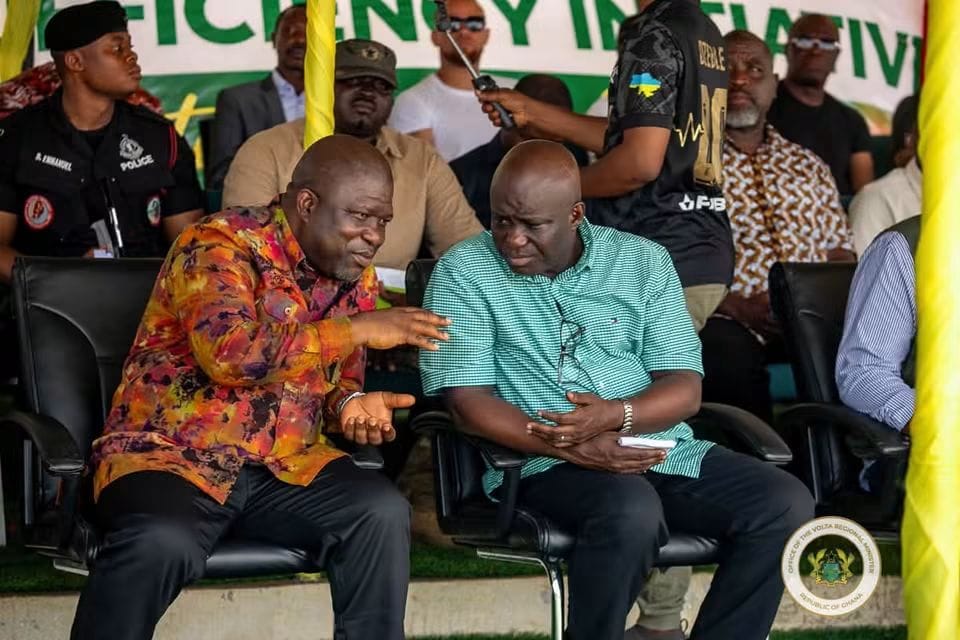
Volta Regional Minister, James Gunu, says the Volta Region holds enormous agricultural potential and efforts must be geared towards connecting farmers to the needed resources to unlock that potential.
He said focus must be on linking farmers to resources, technology, financing and markets to increase production, create jobs and build sustainable livelihoods.
Hon. Gunu made the remarks at the national launch of the Ghana Tomato Self-Sufficiency Initiative (GHATSI) held at Anloga in the Volta Region on Tuesday, September 15.
The initiative, under the theme “Produce at Home. Feed the Nation. Export the Surplus,” seeks to boost local tomato production, processing and marketing while reducing Ghana’s heavy reliance on imported tomatoes.
The launch was attended by the Minister for Food and Agriculture, Eric Opoku, his Deputy, John Setor Dumelo, Feed Ghana Coordinator, Bright Demordzi, Members of Parliament, traditional leaders, MMDCEs, farmers and other stakeholders.
Mr.Gunu expressed appreciation to the Minister for Food and Agriculture for the support announced for the region, including two excavators, 200 cartons of organic fertiliser, and GH¢200,000 for Ms. Kuatudzo Esther Dela, a tomato farmer and processor from Ziope.
He described the initiative as an important step towards making agriculture a stronger driver of food security, job creation and economic growth in the Volta Region.
By Edem Mensah-Tsotorme