News
527,932 BECE candidates placed in SHSs, TVET institutions

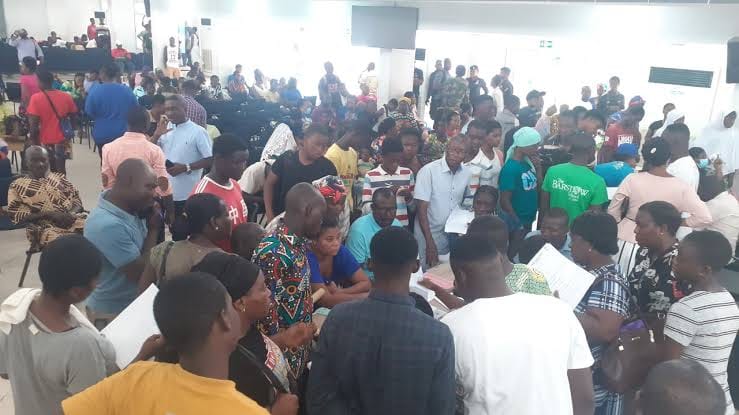
A total of 527,932 candidates have been successfully placed in Senior High Schools (SHSs), Senior High Technical Schools (SHTSs), and Technical and Vocational Education and Training (TVET) institutions for the 2026/2027 academic year.
The figure represents approximately 87.3 per cent of the 604,567 candidates who qualified for placement after the 2026 Basic Education Certificate Examination (BECE).
The Deputy Minister for Education, in a press statement on the 2026 Computerized School Selection and Placement System (CSSPS) results, announced that the placemepnt results were released at 10:00 p.m. on September 4, 2026.
Of the candidates placed, 276,521 are females and 251,411 are males.
A total of 623,072 candidates sat for this year’s BECE, representing an increase of 19,744 over the 603,328 candidates who wrote the examination last year.
The Deputy Minister explained that although the system had 859,828 declared vacancies, many candidates concentrated their first-choice selections on highly subscribed Category A schools.
According to the statement, 313,283 candidates selected Category A schools as their first choice, compared with 176,614 for Category B schools, 123,577 for Category C schools, and 995 for participating private SHSs and SHTSs.
However, Category A schools had 76,417 declared vacancies, while Category B and Category C schools had 250,366 and 468,652 vacancies respectively.
He explained that the figures showed that the main challenge was not a lack of spaces in the secondary education system, but a mismatch between the schools candidates preferred and where vacancies were available.
“While 313,283 candidates expressed a first preference for Category A schools, the declared vacancies in those schools stood at 76,417,” the statement noted.
The Deputy Minister also announced that 57,259 candidates had not met the requirements for automatic placement.
The figure includes 3,372 candidates who did not sit for the examination, 35,382 who obtained a score of 9 in either English Language or Mathematics, and 18,505 who obtained a score of 9 in both subjects.
He said candidates who obtained a score of 9 in either English Language or Mathematics, or in both subjects, would be allowed to use the self-placement system to select schools and programmes with available vacancies.
However, the 3,372 candidates whose results are unavailable will not be placed at this stage. They will be given a second opportunity to resit the examination before progressing along the appropriate educational pathway.
The Deputy Minister urged affected candidates and their parents not to lose hope, but to take advantage of the self-placement opportunity and consider the full range of available schools and programmes.
He also encouraged parents and guardians to guide their children in making choices based on available vacancies, programmes offered, location, and their educational needs.
For the 2026/2027 academic year, 85 private Senior High Schools are participating in the Free SHS programme.
The statement indicated that the participation of the private schools would provide additional options for candidates and help reduce pressure on highly subscribed public schools.
Candidates undertaking self-placement have therefore been encouraged to consider participating private SHSs alongside available public SHSs, SHTSs, and TVET institutions.
The Deputy Minister further announced that placement resolution centres had been established at the regional and national levels to assist candidates and parents with genuine placement challenges.
Parents and candidates have been advised to first seek assistance from the Ghana Education Service (GES) or Ghana TVET Service offices at the regional level.
For cases requiring national-level intervention, the GNAT Hall in Accra has been designated as the National Placement Resolution Centre.
He said technical teams had been deployed to assist candidates, parents, and guardians and address genuine placement challenges as efficiently as possible.
The Deputy Minister also announced that the CSSPS had been upgraded to include an admission portal, allowing parents and guardians to enrol their children and download admission forms without travelling to schools.
He cautioned heads of schools against admitting or enrolling students outside the placement system, warning that violators would face appropriate sanctions.
He explained that such admissions could create data discrepancies and disbursement challenges for schools.
The Deputy Minister stressed that school placement was free and warned parents, guardians, and candidates not to pay money to anyone who promised to secure or change a placement.
“There is no legitimate protocol placement that requires the payment of money,” he stated.
He urged anyone who demanded money in exchange for a placement to report the matter to the Ghana Police Service or the Office of the Special Prosecutor.
Parents and candidates were also advised to protect their placement credentials and avoid giving them to unauthorised persons.
The Deputy Minister congratulated all candidates who participated in the 2026 BECE and urged parents and guardians to support their children in making realistic school choices.
He said the government would continue to invest in infrastructure, teachers, teaching and learning resources, school leadership, and educational outcomes across the secondary education system.
He added that the ultimate objective was to build a system in which every school became a school of choice, every learner had a pathway to progress, and no Ghanaian child was denied the opportunity to develop their potential.
By: Jacob Aggrey








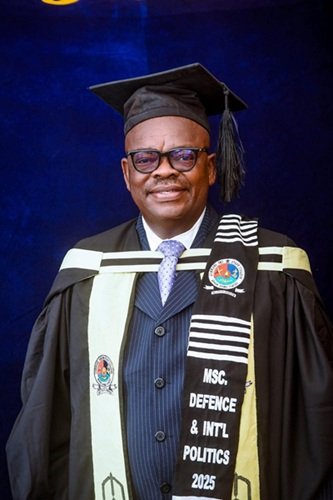
Management and staff of Owass FM have announced the passing of media personality, comedian and politician Seth Kwame Dzokoto following a medical emergency during a live morning show discussion at the station earlier today.
According to the station, Dzokoto was participating in a panel discussion on its morning show “Oman Nkoso” when he suddenly took ill and collapsed.
A statement from the station said its team immediately rushed him to the hospital for medical attention, but he was pronounced dead by the attending medical doctor upon arrival.
“We are deeply saddened by this unfortunate incident, which occurred in the course of our regular programming. Our thoughts and prayers are with his family, loved ones, colleagues, and all those who have been affected by his passing,” the statement said.
Management acknowledged that information about the incident is already circulating in the public domain, but appealed to the public and colleague media houses to respect the privacy of the bereaved family and refrain from circulating unverified information or speculation regarding the circumstances of his death.
Owass FM extended its heartfelt condolences to the family of Seth Kwame Dzokoto.
By Edem Mensah-Tsotorme

The State through the Attorney General (AG) has filed an appeal at the Supreme Court challenging the suspension of the trial in the case of The Republic v Hanan Aludiba and Faiza Seidu.
On Monday, the Court of Appeal suspended the trial in the case. But the prosecution says it has filed an appeal against the suspension order.
According to the update, the law does not allow a criminal trial to be suspended simply because an accused person has complained about some of the charges on the charge sheet, particularly when those complaints were dismissed as meritless.
It argues that if the Court of Appeal’s decision is allowed to stand, no prosecution will ever be possible, since all it would take for a trial to be suspended is an accused person complaining about anything on the charge sheet.
By Edem Mensah-Tsotorme