Features
Where is their honour? (Part 2)


- /home/u249204778/domains/spectator.com.gh/public_html/wp-content/plugins/mvp-social-buttons/mvp-social-buttons.php on line 27
https://spectator.com.gh/wp-content/uploads/2022/06/Tony-Yeboah-Pix.jpg&description=Where is their honour? (Part 2)', 'pinterestShare', 'width=750,height=350'); return false;" title="Pin This Post">
- Share
- Tweet /home/u249204778/domains/spectator.com.gh/public_html/wp-content/plugins/mvp-social-buttons/mvp-social-buttons.php on line 72
https://spectator.com.gh/wp-content/uploads/2022/06/Tony-Yeboah-Pix.jpg&description=Where is their honour? (Part 2)', 'pinterestShare', 'width=750,height=350'); return false;" title="Pin This Post">
In the Bible, specifically in Mark 6:4, the Lord Jesus makes a very poignant statement when He says a prophet is not without honour except in his own country. Jesus makes this remark to the people of Nazareth, the town where He grew up, as they refused to believe in his teaching because they considered him one of themselves and, therefore, without authority to preach to them.
When Jesus makes that assertion, what He simply means is that people are highly regarded for their talents and accomplishments everywhere except in their own country, among their own people. If you still did not get the picture, do not look far. Just check Ghana’s record.
The nation’s penchant to consign its heroes to oblivion once they leave the stage is, to say the least, mean. It seems the rule in Ghana is, out of sight, out of mind. The list of national heroes who have been so shabbily treated is long and still growing.
In the previous article, I mentioned some of them including globally acclaimed Ghanaian doctors like Professor Felix Konotey-Ahulu and Professor Kwaku Ohene-Frimpong, whose pioneering research and findings about the dreaded sickle-cell disease, have led to breakthrough treatment options for anxious patients and medical institutions hoping for some advancement in the search for solutions.
And what have we, as a nation of their birth, done to acknowledge their feats? Apart from periodic invitations for them to come and deliver lectures, what national monuments have been mounted in their honour? Can we not establish research centres at the teaching hospitals and name them after these icons of international stature?
In collaboration with international partners, Prof. Ohene Frimpong helped establish a pilot project for newborn screening for sickle cell disease in Kumasi and Tikrom, the first such screening in Africa. He died on May 7, 2022, after a very illustrious career during which he rose to become the President of the Sickle Cell Disease Association of America. He is gone. Where is his honour?
Last week. I mentioned also Professor F.K. A. Allotey, a Mathematical and Nuclear Physicist with a worldwide appeal,who has gone into the annals of global greatness with the discovery in 1973 of a technique named after him. It is known as the Allotey Formalism, a technique that is used to determine matter moves in outer space. Are we educating our youth about such great men now that they are no more? Where is their honour?
Other great people I referred to in the previous article included D.K. Poison, the first Ghanaian professional boxer to win the world featherweight title who, instead of being honoured, was robbed of his purse of $45,000, (not $40,000 as I said last week), by the government of the military junta led by General I.K. Acheampong.
According to the government, Ghana had run short of foreign exchange to import essential commodities for its citizens, and so it was taking the money as a loan. Gen. Acheampong was overthrown by Gen. F.W.K. Akuffo in a palace coup. And even though Akuffo, as a member of the previous government, was aware of the transaction, did not refund the money before he himself was overthrown by Flt. Lt. J.J. Rawlings.
For 45 years, Poison chased his money in the corridors of power to no avail until the current president, Nana Akufo-Addo instructed the Finance Ministry to refund it to him and listen to this:“on humanitarian grounds.” What? That is ruining an apology with an excuse.
I talked about the need to name the FIFA project at Prampram after C.K. Gyamfi for his pioneering role in the development of football in Ghana. Today, the emphasis is on former Ghana international, Anthony Yeboah, a football ambassador who took Germany by storm, and became the first black man to win the Bundesliga goal king title twice on the trot, raising aloft the image of Ghana.
Anthony Yeboah played for Eintracht Frankfurt from 1990 to 1995, scoring 68 goals in 123 matches. He started cautiously with 15 goals in the1992-93 season, placing a respectable fourth on the Bundesliga goal king chart, before exploding with more goals.
The next season, that is, 1993-94 season, he won the Bundesliga goal king with 20 goals. The following season, he scored 18 goals to retain his goal king title. That was the time when top strikers like Ulf Kirsten were at their peak, but Tony Yeboah still came tops.
His exploits on and off the field have left an indelible imprint on the hearts of the lovers of the beautiful game in Germany, especially in Frankfurt. High rise buildings and iconic structures have his murals splashed conspicuously on them in a kind of cult worship which has not abated even after about three decades that he ended his career in Germany. Some of his followers have tattooed his iconic number 9 on their bodies.
What makes his achievement even greater is the fact that Tony Yeboah accomplished all this greatness against all odds, under severe intimidation and discrimination, including monkey noises and other racist chants as he touched the ball. Anybody could have been too demoralised to continue under such antagonistic atmosphere, but not Tony Yeboah. He persevered and won them over with his goals and his pen.
He wrote a very scathing letter criticising racism in German football as evil. He roped in his compatriot, Tony Baffoe and another African player, Souleymana Sane to support that worthy cause.Thankfully, the letter received publicity in Germany’s leading sports paper, the Bild and subsequently in other papers, too.
It was like a tsunami, and it shook German football to its foundation and led to changes in the system. The German Football Federation embarked on a campaign with the catchphrase: “My friend is a foreigner.” Tony Yeboah even went on to become the captain of Eintracht Frankfurt, a black man for that matter, who was previously reviled. Call it from zero to hero.
On May 18, 2022, Eintracht Frankfurt sponsored Tony Yeboah, the only black man among a group of legends of the club to Seville, Spain, to watch the finals of the Europa Cup final between his former team and Rangers of Scotland.
Frankfurt lifted the trophy, its first such major cup in 42 years, and honoured Tony Yeboah by presenting it to him briefly. It did not end there. The team took him to Germany for about a week to celebrate with the players and the people of Frankfurt. Talk about remembering heroes! This is how.
In 1914, at the outbreak of the First World War, Lawrence Binyon, an English poet, wrote a poem to honour the soldiers at the war front. Now, countries all over the world, including Ghana, read portions of it during Remembrance Day parades to commemorate when armistice was signed to end the war.
Portions of the poem read as follows:
They were staunch to the end against odds uncounted,
At the going down of the sun and in the morning
We will remember them.
As the stars are known to the night;
As the stars that shall be bright when we are dust,
Moving in marches upon the heavenly plain,
As the stars that are starry in the time of our darkness,
To the end, to the end, they remain.
Tony Yeboah continues to remain a star in Germany. Eintracht Frankfurt continues to remember him. But in Ghana, the rule still holds: Out of sight, out of mind. A prophet is, indeed, without honour in his own country.
By Tony Brempeh

“A woman who abandons her baby in a dustbin at Kasoa Lorry Station is not always a wicked woman. Sometimes, she is a wounded woman whose mind has broken, whose family has rejected her, and whose society has left her with only one terrible option: disappear or be disgraced.”
That is the hard truth Ghana must hear.
In the last 10 days alone, our nation has been confronted with the same painful headline, twice.
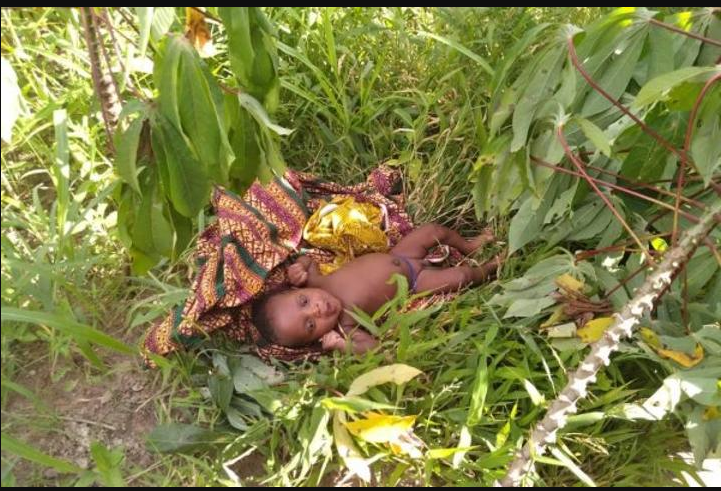
Case 1 – Kasoa Main Lorry Station, Central Region: A newborn baby girl was found abandoned inside a dustbin at the public toilet of the Kasoa Main Station. A woman who went to use the facility discovered the infant and raised an alarm. Commercial drivers and bystanders quickly retrieved the baby and rushed her to the Kasoa Polyclinic for emergency medical care.
Case 2 – Asante Bekwai, Ashanti Region: On Thursday morning, August 20, 2026, a two-week-old neonate was reportedly abandoned by an unknown nursing mother at Bekwai in the Ashanti Region. Residents who came across the child raised the alarm. The baby was admitted to the Bekwai Government Hospital as police commenced investigations.
Let me be clear from the start: Newborn abandonment is wrong. It is dangerous. It is criminal. And it can kill. This article does not excuse it. But if we only arrest and shame, we will never stop it. We must treat the root, not just punish the fruit.
What exactly is newborn abandonment? – The two definitions
The Legal Definition: Under Ghana’s Criminal Offences Act, 1960 (Act 29), Section 96, and the Children’s Act, 1998 (Act 560), abandonment of a child under 12 years is a criminal offence. It is classified as exposure and abandonment, punishable as a misdemeanor or felony. The law sees the mother as a perpetrator.
The Psychological definition: In clinical textbooks, newborn abandonment is defined as the intentional, permanent relinquishment of all parental rights, care, and responsibilities over an infant within the first 28 days of life without making formal, legal arrangements for care.
To understand this crisis properly, we must not confuse it with child abandonment. Newborn abandonment happens within 0-28 days of life, often driven by acute panic, denial of pregnancy, or postpartum psychosis where the attachment bond never formed. Child abandonment, on the other hand, involves toddlers to teenagers where a bond existed but collapsed over time due to chronic poverty, family breakdown, or parental burnout. One is an acute crisis of the first month; the other is a chronic breakdown over years. Both are harmful, but they need different interventions.
Psychologically, newborn abandonment is the ultimate rupture of the primary attachment bond. Think of a 19-year-old university student who secretly gives birth alone in her hostel room, wraps the crying baby in a polythene bag, and drops it at a refuse dump at midnight. That is not just a crime scene; it is a scene of extreme panic and psychological dissociation.
Why would a mother carry a baby for 9 months and then abandon it?
This is the question every Ghanaian asks. If you wanted to abandon it, why not abort? The answer is deeply psychological:
1. The psychodynamics of denial of pregnancy: This is a profound defense mechanism, not a lie. The mother’s subconscious mind completely rejects the reality of the pregnancy. She does not gain weight normally, feels no kicks, does not seek antenatal care, and genuinely convinces herself she is not pregnant until sudden, shocking labour pains take her by surprise in a toilet or bedroom.
2. Fantasy of a dissolving problem: This is called cognitive avoidance. She believes “my boyfriend will come back,” “my mother will forgive me,” or “something miraculous will happen before birth.” So she waits, paralyzed, until the baby is here.
3. Barriers to safe abortion: Deep religious guilt, moral anxiety, fear of dying from a back-alley abortion, lack of money for a safe procedure, and family laws force her to carry to term even when she feels incapable.
4. The shock of reality and acute panic: Upon delivery, the physical presence and crying of the newborn shatters all denial. Confronted with immediate exposure, shame, and reality, her brain enters a trauma response — “fight, flight, or freeze.” For many, it becomes “flight” — physically escape the threat of exposure to survive socially. That is why babies are left in places where others will find them -lorry stations, churches, hospitals.
Source:
Counselor Prince Offei, CPAC’s founder, is a leading Mental Health Professional, Marriage Counsellor, Author, ADR Expert/Arbitrator, and Spectator Newspaper Columnist. He writes on relationships, marriage, parenting, special needs support, and their connection to mental health. For therapy, counselling, or enquiries, contact Counselor Prince & Associates Consult (CPAC) in Accra on 0559850604 / 0551428486.
SKIP THE QUEUE, TAP THE NEWS

You can now read the Ghanaian Times and The Spectator newspapers from the comfort of your device via TimesNewsPlus.
Join our WhatsApp Channel: https://whatsapp.com/channel/0029VbBElzjInlqHhl1aTU27
Features
Environmental stewardship is an act of worship: The Islamic response to climate change, environmental degradation (Part 4)

The environmental consequences of illegal mining have reached alarming levels in Ghana. Several major rivers, including the Pra, Ankobra, Offin, Birim and Tano, have experienced significant pollution from illegal mining activities, increasing the cost and complexity of water treatment while threatening the availability of potable water for millions of citizens (Water Resources Commission, 2024; Ghana Water Limited, 2024). These developments underscore the urgent need for stronger environmental governance and collective action.
Islam equally emphasises accountability in governance. The Prophet Muhammad (peace be upon him) taught that every leader is responsible for those under his or her authority (Sahih al-Bukhari, Hadith 7138; Sahih Muslim, Hadith 1829). This principle extends to public officials entrusted with environmental regulation, traditional authorities responsible for communal lands, mining companies, local assemblies, and community leaders. Environmental protection cannot succeed
where accountability is absent.
At the same time, addressing galamsey requires more than law enforcement. Sustainable solutions must tackle the underlying socio-economic realities that drive individuals into illegal mining. Many young people are motivated by unemployment, poverty, and limited economic opportunities. Islamic principles of social justice therefore call for the creation of alternative livelihoods through sustainable agriculture, vocational training, responsible small-scale mining under strict environmental standards, entrepreneurship, and skills development. Environmental protection and economic empowerment should not be viewed as competing priorities but as complementary goals that promote human dignity and national development.
Faith communities also have an indispensable role to play. Mosques, churches, schools, traditional councils, and civil society organisations possess significant influence in shaping public attitudes and behaviours. Imams, in particular, should consistently remind congregations that wealth acquired through actions that destroy communities and Allah’s creation cannot be regarded as a blessing. Religious education should cultivate environmental ethics alongside spiritual devotion, reinforcing the understanding that protecting rivers, forests, and farmlands is an expression of gratitude to Allah and a fulfilment of the trust of Khalifah.
Ultimately, the struggle against galamsey is more than a campaign to protect natural resources; it is a struggle to uphold justice, preserve human dignity, and honour the trust that Allah has placed upon humanity. Lasting solutions will require strong governance, responsible citizenship, sustainable economic opportunities, and renewed moral leadership. Only when these elements
work together can Ghana safeguard its natural heritage for present and future generations.
Water conservation, waste management and sustainable development: Practical expressions of Islamic stewardship
Religious education should cultivate environmental ethics alongside spiritual devotion, reinforcing the understanding that protecting rivers, forests, and farmlands is an expression of gratitude to Allah and a fulfilment of the trust of Khalifah.
Ultimately, the struggle against galamsey is more than a campaign to protect natural resources; it is a struggle to uphold justice, preserve human dignity, and honour the trust that Allah has placed upon humanity. Lasting solutions will require strong governance, responsible citizenship, sustainable economic opportunities, and renewed moral leadership. Only when these elements
work together can Ghana safeguard its natural heritage for present and future generations.
Islam is not merely a religion that condemns environmental destruction; it also provides practical guidance for preserving and sustaining the natural world. Through its teachings on moderation, cleanliness, conservation, and responsible consumption, Islam cultivates an environmental ethic that remains remarkably relevant to contemporary challenges such as water scarcity, pollution, waste management, and climate change. These teachings encourage Muslims to become
responsible custodians of Allah’s creation in both private and public life.
Water conservation: A sacred responsibility
Water occupies a unique position in Islam as the source of life and an essential element of worship. Allah says, “And We made from water every living thing. Then will they not believe?” (Qur’an 21:30, Sahih International). This verse reminds believers that water is not merely an economic resource but a divine blessing upon which all living creatures depend. The importance of water is further reflected in Islamic acts of worship. Muslims perform ablution (wudu) before the five daily prayers and ritual bathing (ghusl) under prescribed circumstances.
Yet, despite its central role in purification, Islam strongly discourages wastefulness. The Prophet Muhammad (peace be upon him) once advised one of his companions not to waste water while performing ablution, even when using water from a flowing river (Sunan Ibn Majah, Hadith 425). This timeless guidance establishes the principle that abundance does not justify extravagance.
Conservation remains a religious obligation regardless of the apparent availability of natural resources.
This Prophetic teaching carries profound implications for contemporary Ghana. Illegal mining has severely polluted many rivers, increasing the cost of water treatment and limiting access to safe drinking water for numerous communities. Climate change has also intensified seasonal variability in rainfall, placing additional pressure on freshwater resources (IPCC, 2023). Against this
backdrop, conserving water is no longer simply an environmental preference—it is a moral imperative grounded in Islamic teaching.
Water conservation should therefore become a shared responsibility among households, educational institutions, industries, and places of worship. Simple practices such as repairing leaking pipes, harvesting rainwater, protecting riverbanks, avoiding contamination of water bodies, and promoting efficient irrigation contribute to safeguarding one of Allah’s greatest blessings. Every effort to preserve water is an investment in public health, food security, and the
wellbeing of future generations.
Unfortunately, indiscriminate disposal of refuse remains a significant challenge in many communities. Plastic waste clogs drainage systems, contributes to flooding during the rainy season, pollutes rivers and beaches, and threatens marine ecosystems. Open burning of waste further degrades air quality and poses serious health risks, particularly for children and the elderly (UNEP,2024).
The author is Chief Imam of Katamanso Municipal and Certified Counsellor and Governnace Expert.
SKIP THE QUEUE, TAP THE NEWS
You can now read the Ghanaian Times and The Spectator newspapers from the comfort of your device via TimesNewsPlus.
Join our WhatsApp Channel: https://whatsapp.com/channel/0029VbBElzjInlqHhl1aTU27