News
USAPECC holds Cooking Competition for Technical Universities

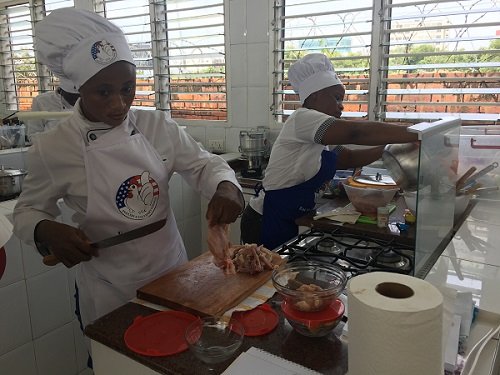
Some of the students preparing their meal
Ten students from various technical universities across the country put their cooking prowess to a test in a biennial culinary competition last week in Accra.
The competition was organised by the USA Poultry & Egg Export Council (USAPECC).
The ten contestants were among 80 other students who had earlier undergone a two-day hands-on training under the tutelage of renowned American Chef David Bonom. They were tasked to prepare a main meal and a dessert with USA chicken and processed egg respectively.
Chef Rutherford Opoku-Boahene and his staff from the Labadi Beach Hotel were also among the trainers and judges for the culinary competition.
The participating institutions were Cape Coast, Tamale, Bolgatanga, Ho, Accra, Kumasi, Takoradi, Koforidua, and Sunyani Technical Universities.
In the end Ms Victoria Armah, a level 200 hospitality and management student of Koforidua Technical University was adjudged the overall winner of this year’s edition of the National American Chicken Cooking Competition for Technical Universities.
She was presented with a certificate, numerous culinary products and a four-month industrial internship with the Labadi Beach Hotel under the supervision of the first Ghanaian Chef, Rutherford Opoku-Boahene at a five-star hotel.
Chef Bonom praised the students for their desire to become excellent chefs in the future and showed delight over their capacity to think creatively and offer something special to their talent.
He stated that the goal of the training was to sharpen the skills of the students in culinary and also provide them with a taste of Western recipes to use in their kitchen when they become chefs.
Chef Kofi Agyekum, one of the judges said such training offered opportunities for the youth to develop their culinary skills, expand the culinary industry in the country and ultimately prepare them for careers in the cooking industry.
Whilst the 10 contestants battled it out in the kitchen, the other 80 students were on industrial tour with their Heads of Department at Newrest Ghana.
The USAPECC has been conducting informative campaigns across the country driving loyalty, product awareness and consumer education.
The latest campaign is to educate students from Technical universities on nutritional benefits of poultry products.
By Portia Hutton-Mills



AngloGold Ashanti Obuasi Mine has broken ground on a modern 1,500-seater multipurpose assembly hall and a secured main gatehouse for New Edubiase Senior High School, in the Adansi South District.
The project, being executed by local contractor AA Engineering and Construction, is expected to be completed within 17 months and forms part of the Mine’s 10-Year Socio-Economic Development Plan (SEDP) — a strategic framework for delivering sustainable development in its host communities.
Beyond the expansive assembly hall, the facility will house a fully integrated administrative complex featuring a dedicated sound room, a 16-seater staff eatery, and suites for the Headmaster and Assistant Headmaster, a bursar’s office, an 18-seater conference room, a 24-seater staff common room, six faculty office spaces and ancillary stores and washrooms.
Speaking at the groundbreaking ceremony, the Mine’s Director of Sustainability Management, Edmund Oduro Agyei, reaffirmed the company’s commitment to improving educational outcomes in host communities through impactful and sustainable investments.
The Edubiasehene, Guahyia Oduropanin Birikorang, commended the Mine for the investment, saying the project demonstrated that the company’s development agenda extended well beyond its immediate operational areas.
The Headmaster of New Edubiase SHS, Mr Christopher Appiah Mensah, described the intervention as timely and transformative, noting it would address longstanding infrastructure deficits, improve conditions for teaching and learning, and create adequate space for academic and social gatherings.
“This will greatly enhance administrative efficiency and improve the overall welfare of both staff and students,” he said.
The facility is also expected to boost the school’s capacity to host national examinations and major events, and strengthen its standing as a centre of academic excellence within the district.
From Kingsley E. Hope, Kumasi
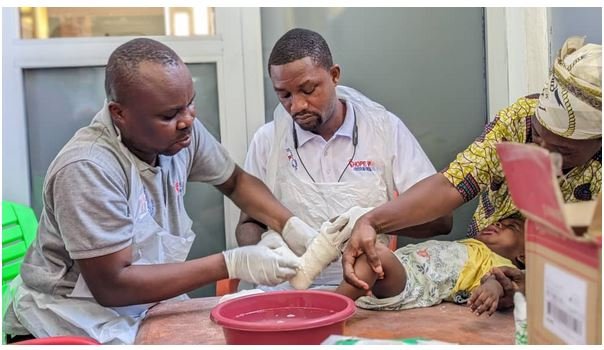
Stakeholders have been urged to help raise awareness and eliminate the stigma often associated with clubfoot, a treatable condition which occurs in children.
Parents are to seek early treatment for the condition while policymakers strengthen support for early detection, disability inclusion, and child health services in the country.
Clubfoot is a condition present at birth in which one or both feet are twisted inward and downward. If left untreated, experts say a child may face lifelong challenges with walking, which could affect education, employment, and social inclusion.
In Ghana, an estimated 1,000 babies are said to be born with clubfoot every year.
In commemoration of the World Clubfoot Day, marked on June 3 every year, stakeholders create awareness about the condition and, among other things, celebrate the dedication of health professionals who ensure children receive treatment.
In a release copied to the Ghana News Agency, Nana Afua Adutwumwaa Adjetey, Programme Manager, Ghana Clubfoot Programme, noted that many families were unaware of the free treatment available for the condition in Ghana. 
She observed that the lack of awareness continued to delay treatment for children who could have received prompt and life-changing care at no cost.
Treatment, she said, was provided free of charge for children under age five at Christian Health Association of Ghana (CHAG–Hope Walks) partner clinics across the country.
More than 9,000 children born with clubfoot had received treatment and care through the programme over the past 18 years.
“The treatment follows the internationally recognised Ponseti Method, which uses a series of gentle casts to gradually correct the position of the foot, followed by a brace to maintain correction and prevent relapse. When treatment begins early, success rates are extremely high,” Madam Adjetey explained.
“For many children, the journey begins with a health worker who identifies clubfoot at birth and makes a referral. A few moments of observation can change the course of a child’s life forever.”
“Clubfoot is not a curse; it is not caused by wrongdoing…it is a medical condition that can be treated successfully. Families should never feel ashamed to seek help.”
The Programme Manager said children born with the condition deserved equal opportunities, dignity, and inclusion, and called on communities to support parents rather than “judge them.” -GNA