News
Health advocate calls for tax waver on sanitary products


- /home/u249204778/domains/spectator.com.gh/public_html/wp-content/plugins/mvp-social-buttons/mvp-social-buttons.php on line 27
https://spectator.com.gh/wp-content/uploads/2023/08/Ms-Minnow-e1691064201345.jpg&description=Health advocate calls for tax waver on sanitary products', 'pinterestShare', 'width=750,height=350'); return false;" title="Pin This Post">
- Share
- Tweet /home/u249204778/domains/spectator.com.gh/public_html/wp-content/plugins/mvp-social-buttons/mvp-social-buttons.php on line 72
https://spectator.com.gh/wp-content/uploads/2023/08/Ms-Minnow-e1691064201345.jpg&description=Health advocate calls for tax waver on sanitary products', 'pinterestShare', 'width=750,height=350'); return false;" title="Pin This Post">
Ms Minnow
A health advocate Ms Wilhemina Minnow has called on government to support the fight against period poverty by wavering taxes on menstrual products.
This she said would make such products affordable and make them more accessible to girls especially those from disadvantaged backgrounds .“Addressing menstrual poverty through improved access to menstrual products, proper hygiene facilities, and comprehensive menstrual education is crucial to empowering young girls and ensuring their over-all wellbeing,” she added.
She bemoaned that there were many girls who miss school during their periods due to the lack of sanitary pads, leading to a negative impact on their education and potential opportunities.
Ms Minnow who is also a health professional mentioned that menstrual discomfort and fear of leaks could discourage young girls from participating in extra-curricular activities like sports, limiting their overall engagement and self-confidence.
“We cannot afford to put young girls through the pain of societal stigmatisation and shame surrounding menstruation because this can lead to emotional distress and can also affect their mental health to a large extent.”
“If policy makers do not ensure an end to menstrual poverty, a time will come that we cannot find any confident young girl especially in deprived communities. Poor girls will lose confidence even before they become women. This is unacceptable,” she stressed.
Throwing more light on health risks associated with poor menstrual hygiene, the health advocate stated that using unhygienic materials during menstruation could increase the risk of infections and other health issues including, chronic candidiasis, Urinary Tract Infections (UTI), infertility and even birth complications.
She said, it is therefore very important for young girls to receive frequent education on the significance of proper menstrual management to promote overall wellbeing.
“Providing comprehensive and age-appropriate menstrual health education, both at home and in schools, to empower girls with knowledge about menstruation, hygiene and overall menstrual health is very important.”
“Also, teaching them about menstrual tracking is necessary to help them understand their cycles, which can help identify irregularities and potential health issues,” she added.
According to the healthcare giver, engaging boys and men about menstruation could equally help promote empathy and understanding while creating a more inclusive and supportive environment.
By Raissa Sambou


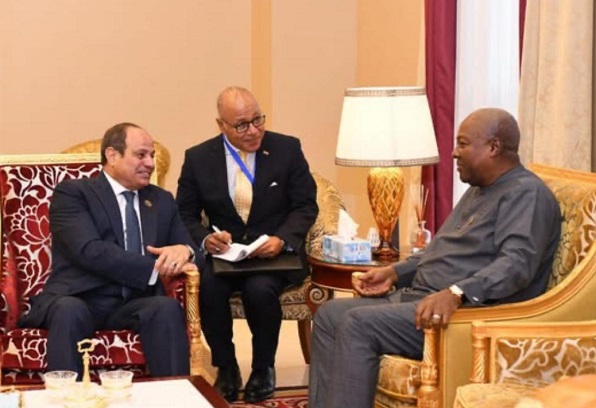
Egypt will host Africa’s new flagship business summit this October, as leaders from across the continent converge in the newly built smart city of New Alamein for the inaugural Alamein Africa Forum.
The forum is scheduled for October 2-4, 2026 in New Alamein, Egypt’s fourth-generation coastal megacity.
The city combines advanced infrastructure, modern residential districts, international universities, cultural landmarks, and major tourism and investment projects under one master plan.
Dubbed “the continent’s premier gathering where political power meets entrepreneurial prowess,” the forum is expected to bring together over 20 African Heads of State and Government, senior leaders from leading international and regional financial institutions, and key players driving transformation across Africa’s most critical sectors.
Co-organised by the Government of Egypt, African Export-Import Bank, and AUDA-NEPAD, the Alamein Africa Forum is designed as a permanent biennial platform to advance strategic partnerships and unlock investment across Africa and global markets.[Afreximbank]
The agenda will focus on sectors defining Africa’s future: infrastructure, energy, digital transformation, manufacturing, critical minerals, health markets, and intra-African trade*.
The programme will feature high-level plenary sessions, sector-focused panels, closed-door roundtables, and structured B2B and B2G meetings aimed at facilitating concrete deals and long-term partnerships.
Special sessions will also highlight Egypt’s role as a regional hub and gateway to African markets.
The inaugural forum will be held in parallel with the 2026 African Union Mid-Year Coordination Meeting and the 33rd Annual Meetings of Afreximbank.
Organizers say the forum will serve as a launchpad to translate the African Union’s 50-year strategic master plan, Agenda 2063, into concrete projects, policies and partnerships that will define Africa’s economic trajectory for the next decade.
“In an era of shifting alliances and rising volatility, Africa can no longer afford to be a bystander in decisions that shape its own economic future,” organizers stated.
The forum aims to place the private-sector agenda at the heart of AU decision-making, lower investment risk, unlock capital, and build cross-border partnerships to strengthen Africa’s resilience to external shocks.
Located on Egypt’s Mediterranean coast, New Alamein represents Egypt’s vision for smart, sustainable urban development. Hosting the forum there is expected to showcase the city as both a symbol of African modernization and a hub for investment and innovation.
By bringing public and private sector leadership into one alliance, the Alamein Africa Forum is positioned to become Africa’s go-to space for turning commitments into implementation.
By Chris KONEY, for Egyptian Embassy, ACCRA.
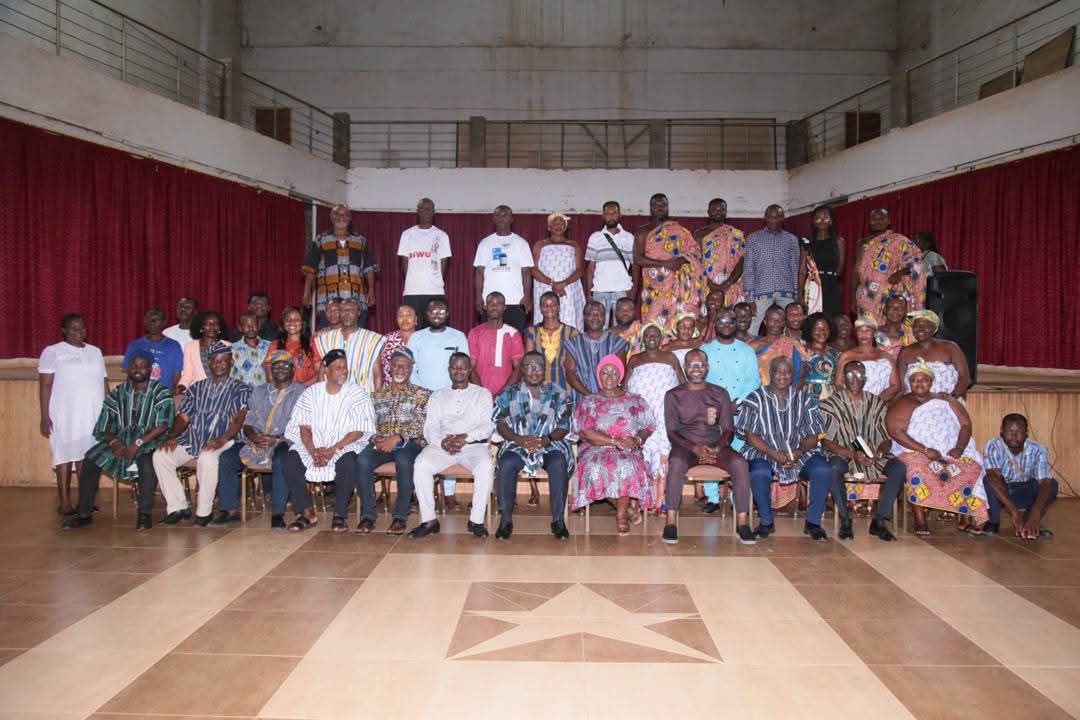
Tourism, Culture and Creative Arts Minister, Abla Dzifa Gomashie, has called on stakeholders in the Bono Region to raise the bar on professionalism and patriotism if the region is to unlock its full tourism potential.
Speaking during a familiarisation tour of the region, the Minister met with staff of the Centre for National Culture (CNC) and Metropolitan, Municipal and District Chief Executives (MMDCs).
The engagement focused on how to position Bono as a leading cultural and tourism destination in Ghana.
Gomashie challenged public institutions to take a cue from the private sector by improving service delivery and embracing efficiency.
“Our institutions must be intentional about the way we serve the public,” she said, adding that “We need stronger collaboration and public-private partnerships to attract the right investment and build the tourism infrastructure that will make Bono competitive.”
The Minister urged MMDCs to work hand-in-hand with the Ministry and its agencies to identify, develop and promote key tourist attractions in their districts.
She also stressed the importance of preserving cultural heritage while creating an enabling environment for investors in tourism, culture and the creative arts.
The Minister added that “Tourism is not just about beautiful sites. It is about stories, about our heritage, and about the opportunities we create for our people.”
“This work we do today is not for ourselves alone. It is for Ghana and for generations yet unborn,” she noted.
Dzifa Gomashie further called on all stakeholders to build on the foundation inherited from previous leaders and leave behind a stronger, more vibrant sector.
The tour forms part of the Ministry’s efforts to decentralize tourism development and ensure every region benefits from Ghana’s growing creative economy.
By Edem Mensah-Tsotorme