Hot!
There is no food shortage in Ghana – Minister of Agric debunks reports

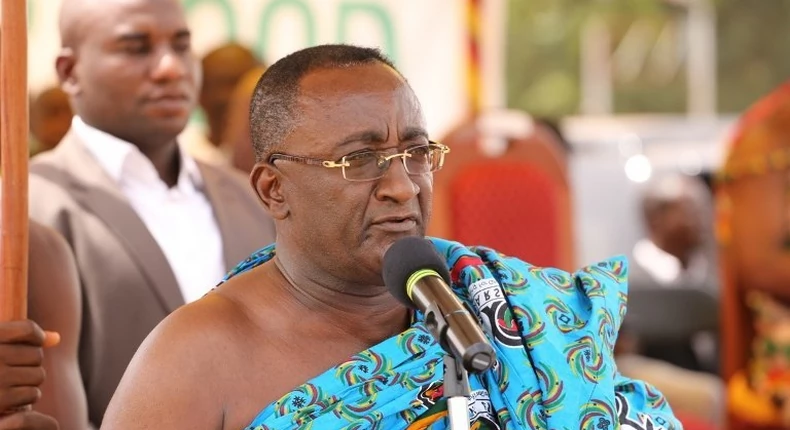
The Minister of Agriculture, Dr. Owusu Afriyie Akoto, has rubbished off reports that the country is currently facing food shortages.
He said the Ghanaians should disregard such reports because there is an abundance of food in the country.
Addressing the staff of MOFA and farmers in the Eastern Region as part of his official tour, Dr. Akoto said linking high food prices with shortage is non-existent.
“There is no food shortage in Ghana as is being speculated, the food situation in the regions is enough evidence, however, we recognise that food is relatively expensive due to external factors.”
The Minister said, the increase in prices of food commodities is not because of the government’s policies, but external factors such as the increment of imported chemicals and other external factors beyond their control.
“We are encouraging farmers to switch to organic fertilizers produced locally to reduce the impact of fertilizer shortage on food production and urged the far west to switch quickly to the use of compost.”
On financing from the banks, Dr Afriyie Akoto hinted that the government is looking at alternatives to compel banks to lend a portion of their loans to farmers to improve production.
That, he said is to address farmers’ inability to acquire loans from the banks adding that several efforts to the banks had proved futile over the years and the banks preferred to give loans to business people than farmers.
Inflation in Ghana recently moved to a record 27.6% in May, data from the Ghana Statistical Service showed.

Compared to the 23.6 percent recorded in April, this represents a four percentage points jump in the inflation rate.
The latest development means that in the month of May 2022, the general price level was 27.6% higher than in May 2021.
Month-on-month inflation between April 2022 and May 2022 was 4.1%
The Consumer Price Index for May 2022 was 162.8 relative to 127.6 in May 2021.
Also, food inflation rose again to a record 30.1 percent compared to 26.6 percent recorded in April while Non-food inflation stood at 25.7 percent in May, compared to 21.3 percent recorded in the previous month.
The inflation for imported goods was 28.2%, which is higher than the 24.7% recorded for April 2022, while the inflation for locally produced items was 27.3%, up from the 23.0% recorded in April 2022.
Source: www.pulse.com.gh


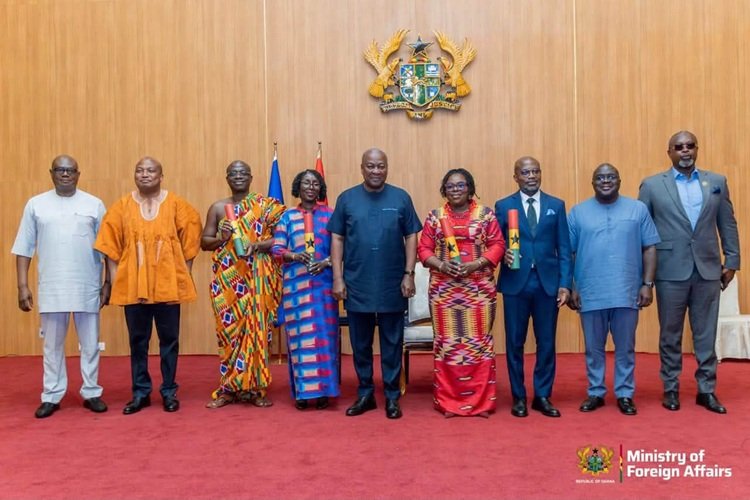
President John Dramani Mahama has commissioned four career diplomats as ambassador-designates to represent Ghana in four countries.
The commissioning ceremony took place on Friday, October 16, 2026.
The new envoys are Her Excellency Nana Antwiwaa Dodoo, Ambassador-Designate to Angola; His Excellency Louis Kwame Obeng, Ambassador-Designate to Qatar; Her Excellency Evelyn Korantemaa Ofosu-Amable, Ambassador-Designate to Israel; and His Excellency Jedidiah Reuben Adogla, Permanent Representative-Designate to Switzerland.
President Mahama charged them to advance Ghana’s national interests through strategic partnerships, economic diplomacy, investment mobilization, and expanded access to international markets.
He said Ghana’s diplomatic engagements must deliver tangible economic benefits, create jobs, and strengthen the country’s standing on the international stage.
The four envoys are career diplomats with over 27 years of experience.
On behalf of her colleagues, Her Excellency Nana Antwiwaa Dodoo thanked the President for the confidence reposed in them and pledged their commitment to emulate his leadership and deliver on the mandate given to them.
By Edem Mensah-Tsotorme
The professor who spends his days exploring the intricacies of African languages found himself at the centre of a different kind of lesson on Friday, October 2, 2026. 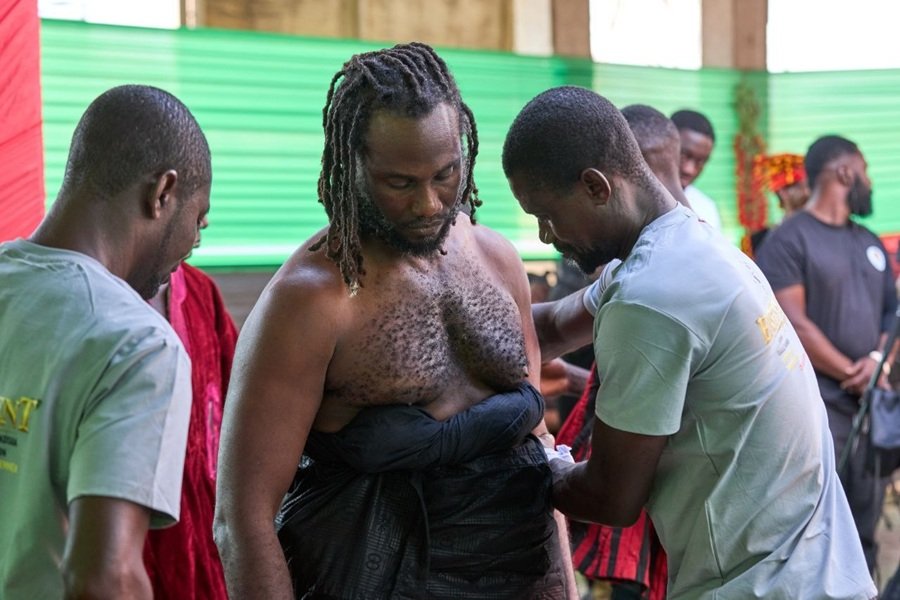
This time, there were no lecture notes, academic arguments or university classrooms. Instead, there was the weight of tradition, the rhythm of a community celebration and the solemnity of an oath at a royal palace.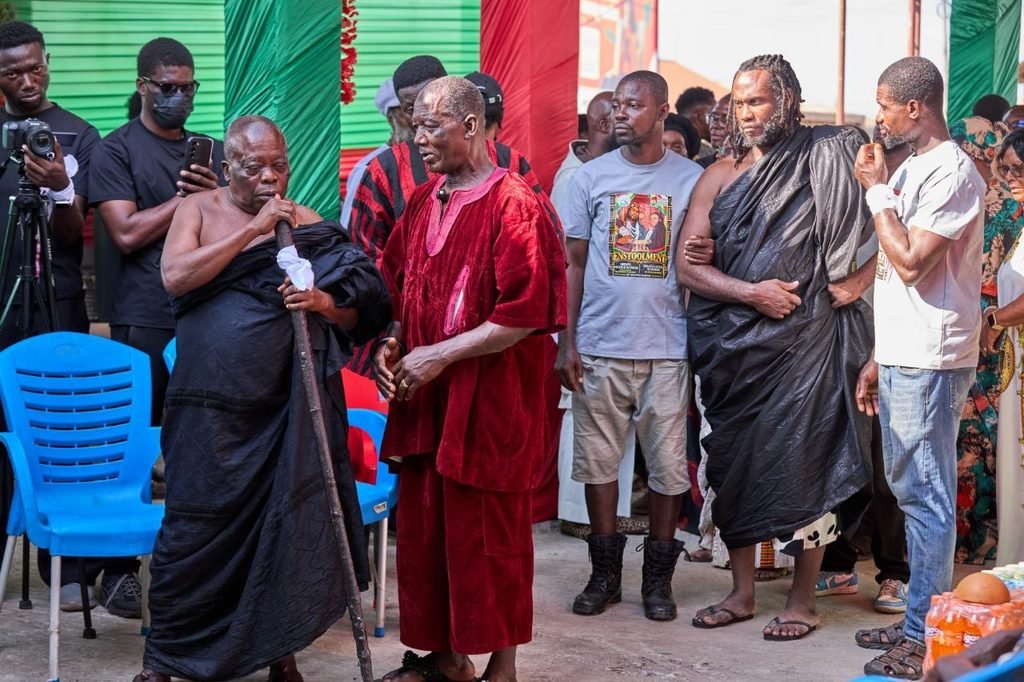
Professor Ọbádélé Kambon, a full Professor of African Linguistics at the University of Ghana, was enstooled as Apagyahene and Sunsum Ɔsahene of Akuapem Mampong in the Eastern Region in a ceremony that brought academia and traditional authority together.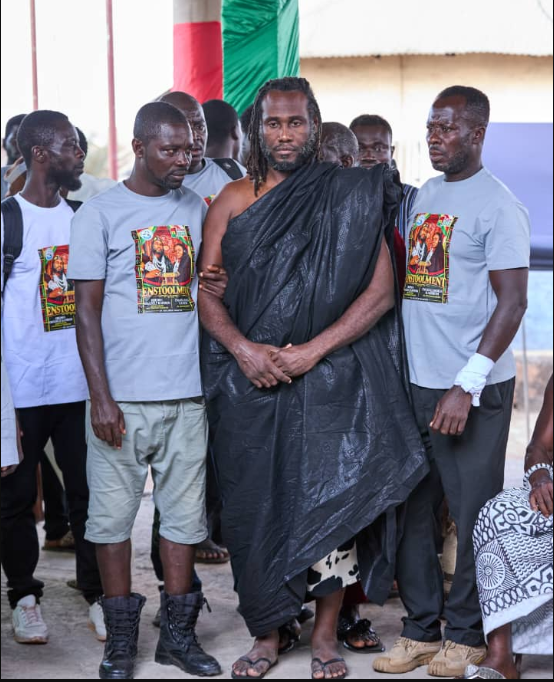
For the professor, the occasion was more than a new title. It was a moment that connected his academic interests in African languages and indigenous knowledge with the living traditions of an Akan community.
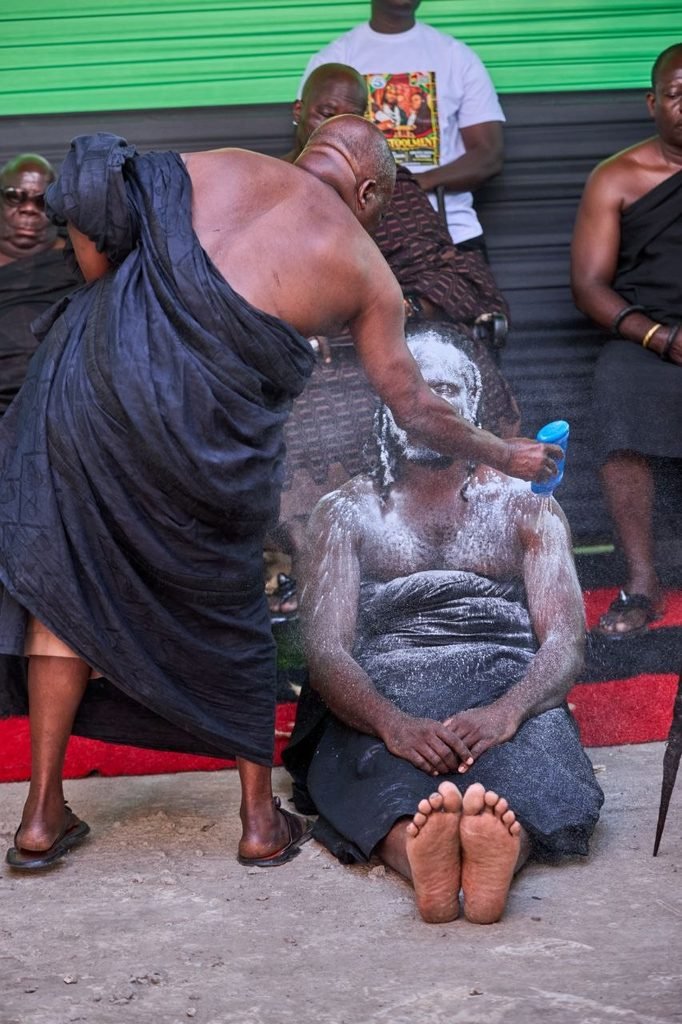
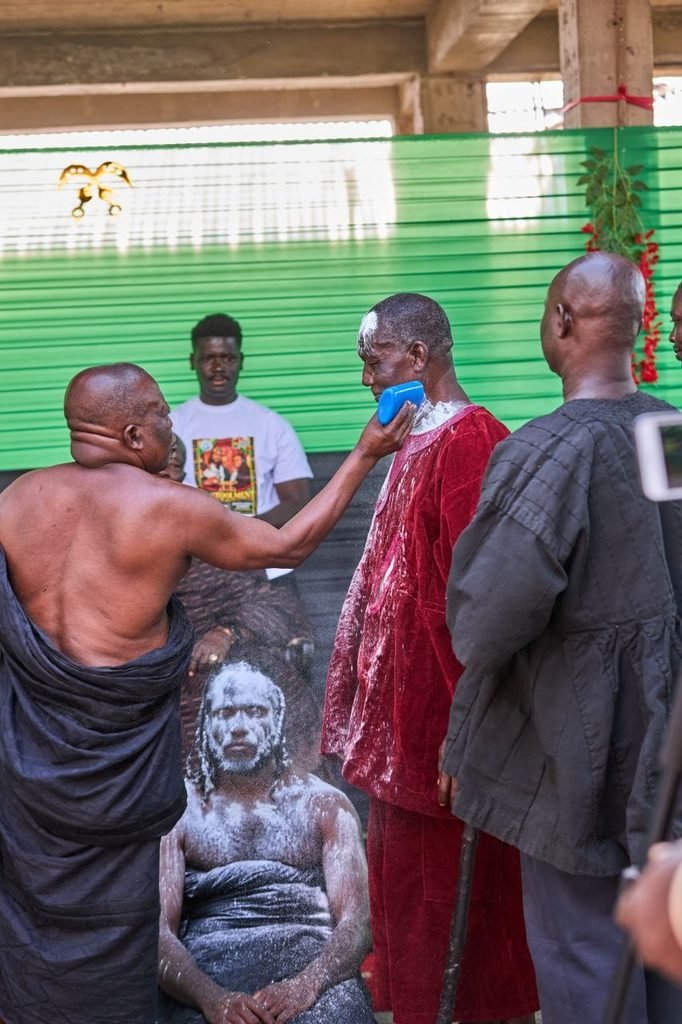
The day’s events unfolded through a series of customary observances. Kambon was first taken to the compounds of the Ɔkyeamehene and Gyasehene, where the preparations for his installation continued.
Then came the application of hyire, the white kaolin powder associated with traditional rites.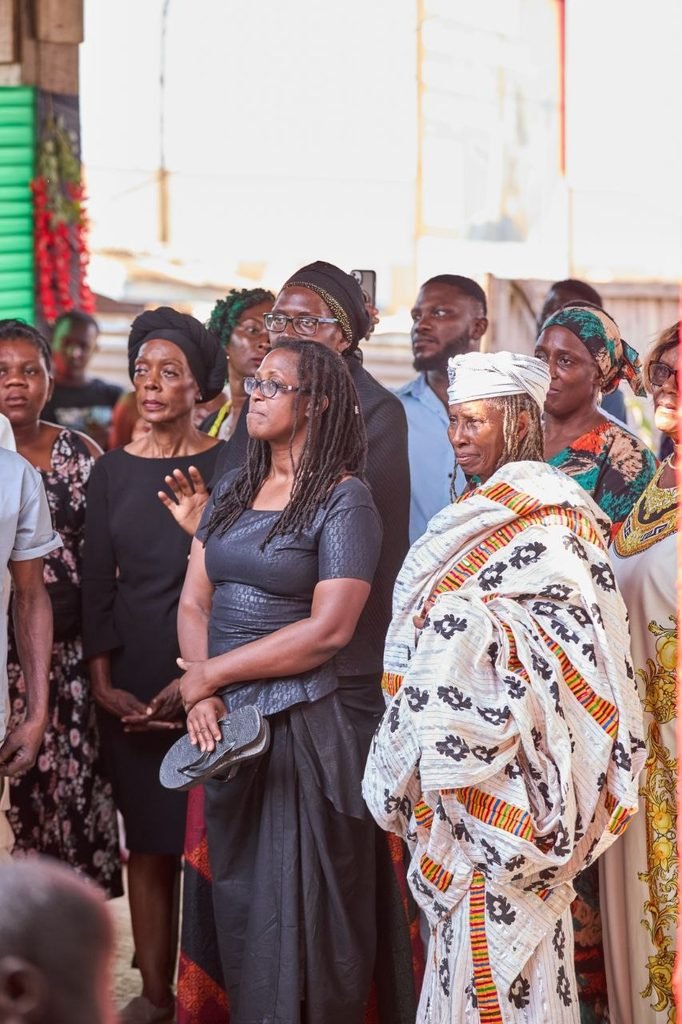
With the customary proceedings underway, the new chief was lifted onto the shoulders of celebrants and carried along the main thoroughfare of Akuapem Mampong.
The procession transformed the streets into a public stage for a ceremony rooted in the community’s traditional institutions.
There was something striking about the image, a university professor, accustomed to the measured language of academic discourse, being carried through the town in a display of traditional recognition.
Yet the celebration was not complete with the procession.
A ram was sacrificed at the Mamponghene’s compound before Kambon was taken to the palace, to swear the oath associated with his new offices.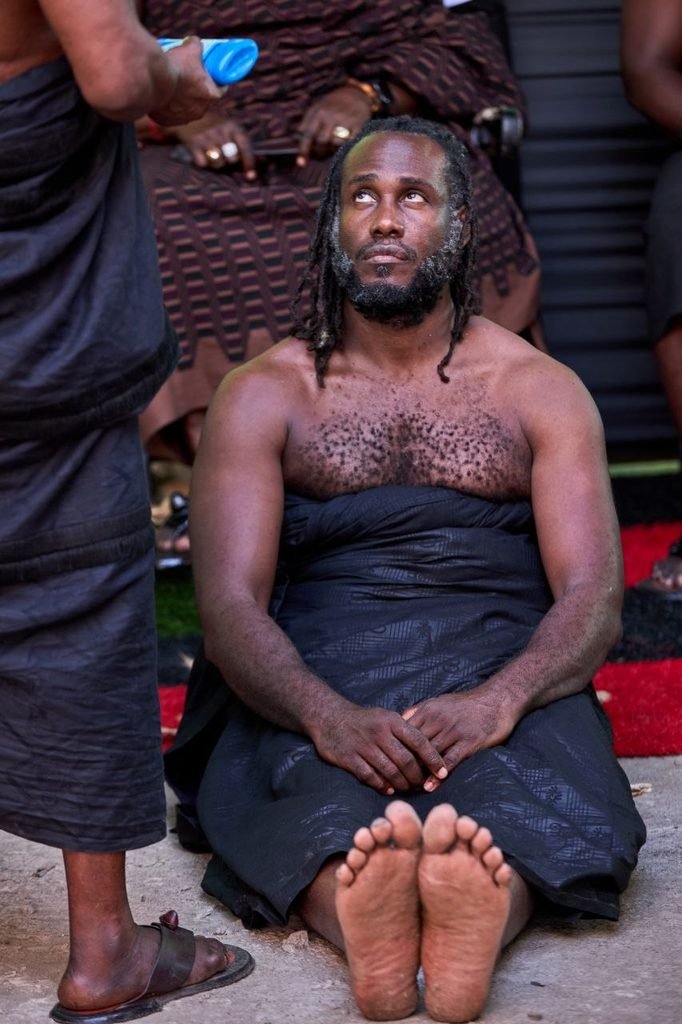

The ceremony brought him formally into his roles as Apagyahene and Sunsum Ɔsahene.
Beyond the colourful proceedings, the titles themselves carry layers of historical meaning.
Kambon in his research explores the historical connections between Apagya and Akan political and military organisation.
Accounts cited in his work linked Apagya to an asafo, or military company, while historical writing traces an Apagya stool in Asante to the reign of Opoku Ware I in the eighteenth century.
These historical associations offer a glimpse into the institutions that have shaped Akan society over generations, although they do not automatically define the precise responsibilities of the office in Akuapem Mampong.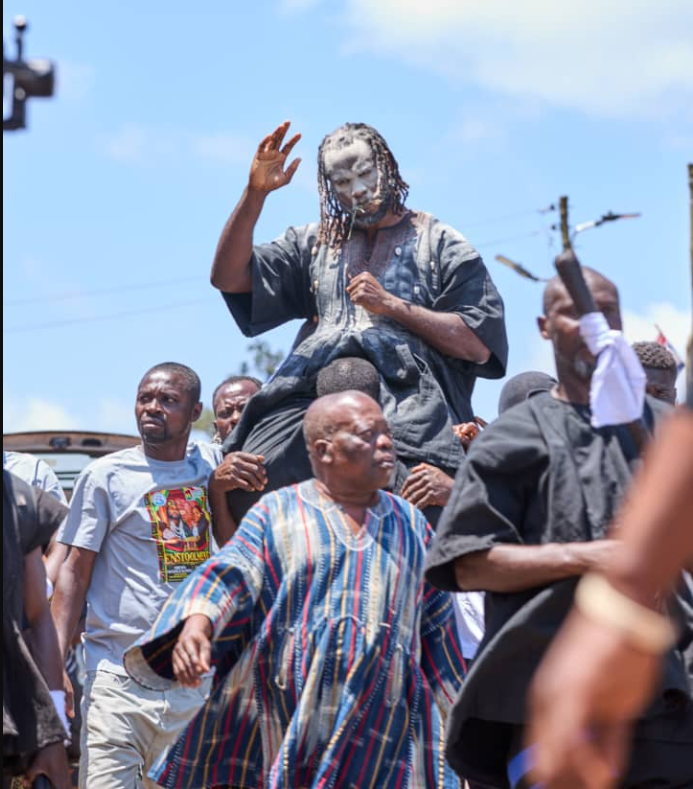
Kambon’s own professional life reflects a similar interest in preserving and examining African knowledge.
His work encompasses Akan language structure, naming practices across the Black world, proverbs and indigenous intellectual traditions.
Through Abibitumi, the platform he founded, he also promotes language learning, scholarship and cultural engagement.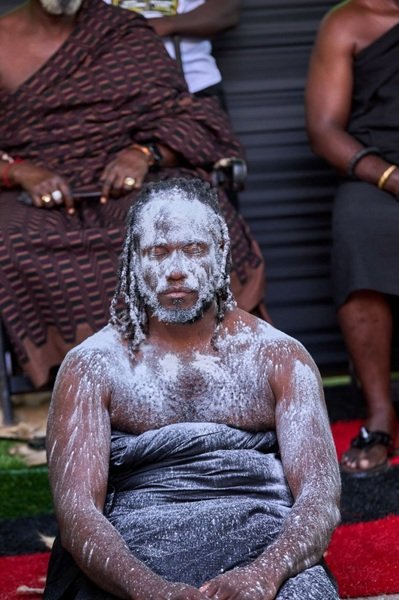
But tradition was only one part of the story that day.
When the formal ceremony gave way to a reception, the occasion expanded into a celebration of three milestones: Kambon’s enstoolment, his promotion to full professor and his daughter Ama’s admission to the University of Ghana.
The gathering therefore carried a personal significance that went beyond the honours bestowed on one man. 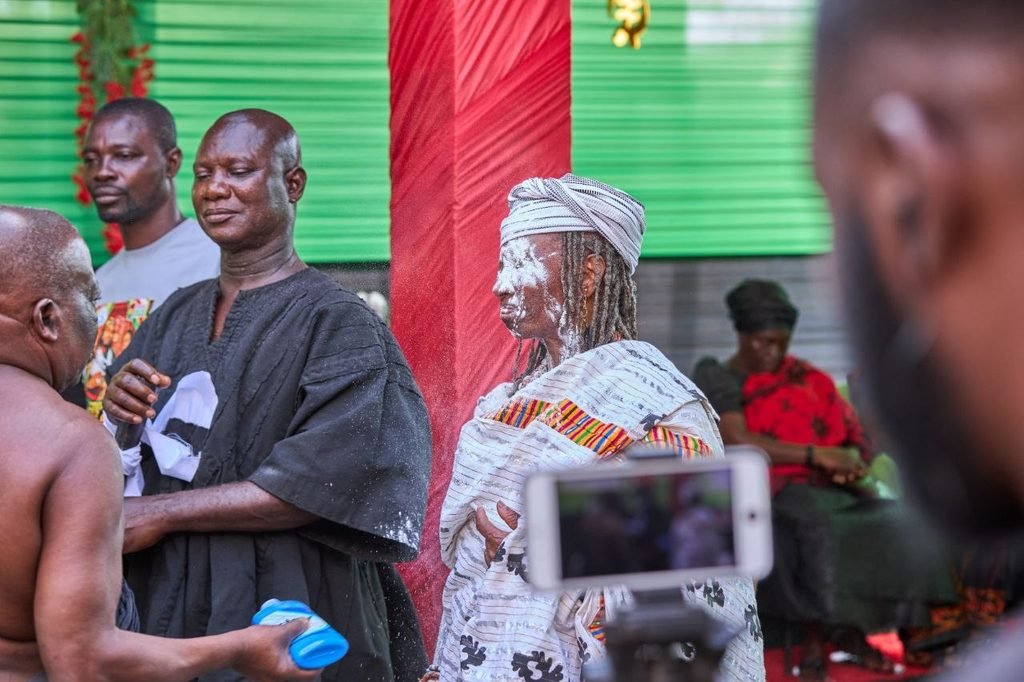
It celebrated professional advancement, the continuation of family aspirations and a connection to cultural heritage.
For a father, seeing a daughter gain admission to the same university where he holds a distinguished academic position offered another reason to celebrate.
For the professor, the moment placed family achievement alongside his own professional and traditional milestones.
Kambon had already established a place in the traditional life of Akuapem Mampɔn through an earlier installation as Banmuhene Kyidɔmhene, recorded in 2017.
His latest enstoolment adds another chapter to that relationship.
In Akuapem Mampɔn, the day brought together the university, the palace and the family table in one celebration. And for Kambon, the journey from the lecture room to the traditional procession showed how scholarship, cultural responsibility and family achievement could converge in a single memorable occasion.
By Enoch Ntiamoah Siaw
SKIP THE QUEUE, TAP THE NEWS
You can now read the Ghanaian Times and The Spectator newspapers from the comfort of your device via TimesNewsPlus.
Join our WhatsApp Channel: https://whatsapp.com/channel/0029VbBElzjInlqHhl1aTU27