The virus that eats Africa?

Why is the African continent so rich yet Africans are so poor? The continent has every natural resource under the sun, including diamonds, gold, oil, natural gas, uranium, platinum, copper, cobalt, iron, bauxite and cocoa beans. And the human resource as well, else our forebears would not have been taken into slavery to build many of the advanced economies we know today.
Where from the gold that backs the currencies of Europe? Where will America be today, but from the sweat and toil of our forebears who were forcibly taken into slavery and bondage and who broke their backs on the cotton and corn fields of that continent? It is not a statement of fact that we sold our own kinsmen into slavery. The colonialists set up agents on our continent to ambush and abduct what they termed ”Prime Negroes” for their slave ships; the forts and castles were their trading posts.
Question is: who owned the forts and castles? However, to rave and rant, or even gross over the episode might not help the African cause today, but history must help us know how far we have come. The Church and the British Crown commissioned most of the slave ships and took financial benefits on every single slave that was landed in the Americas. The Barclay brothers were the financial underwriters of the operation. They were later to convert into the Barclays Bank.
Indeed, the Blacks were not seen as humans. Rather, they were commodities owned by plantation owners and branded with flaming irons the way cattle are branded. Discussing the slave trade must not be a cold intellectual process. Instead it must be discussed in the context of one human’s inhumanity to another. After having deprived the African continent of a chunk of its human resource, these people descended on the land itself to pillage the minerals and other resources.
Our chiefs were too happy to receive schnapps and mirrors from the Europeans only to give out land for them to mine our minerals. In some cases the Europeans fought to take these minerals forcibly. One account has it that one chief was so enamoured of a mirror, because of the ‘magic’ of seeing his black face and a bucktooth grin of mouth with a wide diastema that he offered many women in his chiefdom to the “White Man.”
Africa has not recovered from all that has been done to it. There is not a sign that it will, sadly. There are many reasons for this assertion. For example, the River Congo has the capacity to supply the whole African continent a continuous hydro power for 50 years at the minimum, but these Western powers will ensure instability in that region so this never happens. So it is with cobalt, diamonds and other resources of the Congo Basin. The armed terrorists in that region are all funded by these powers through their multinational corporations who, under the cover of darkness and the pretext of mediation, mine these precious minerals from the earth.
For example, Cobalt is primarily used in lithium-ion batteries, and in the manufacturing of magnetic, wear-resistant and high-strength alloys. The compounds give a distinctive deep blue colour to glass, ceramics, inks, paints and varnishes. Uranium is a very important element because it provides the nuclear fuel used to generate electricity in nuclear power stations. It is the major material from which other synthetic trans-uranium elements are also made.
Platinum is used extensively for jewelry. Its main use, however, is in catalytic converters for cars, trucks and buses. Bauxite is aluminium-rich ore that is used for aluminium production and for production of refractory materials, chemicals or cements. All the above named minerals are expensive. However, Africa does not determine how much its resources should be sold; this is determined by the Western powers.
The West tell us that Africa has 30 percent of the world’s mineral resources. It is their way of telling us that we have only a third of the global mineral riches. Africa has more than this. Even if Africa has a third, that’s enough to make every African live way above the poverty line by Western standards.
We all know the value of cocoa. I do not want to overstate that here. All of West Africa have cocoa. But the price, as usual, is determined by the buyers. And our cocoa farmers are the poorest while the dealers in the West are the multi-millionaires who call themselves the connoisseurs of the cocoa industry. Another question is: how has Africa offended the rest of the world? The answer is very likely that we were too complacent and very satisfied with what we had, or probably we sat on such wealth without knowing it.
There is nowhere in history that Africans did not know the value of gold, diamonds and cocoa. The ancient empires of Mali, Songhai and Ghana were ruled by men who knew the value of their precious resources. The European propaganda presented Africa as a land of savages. There were more savages in Europe and the Caucuses than anywhere else in human history. They engaged in more fratricidal wars than any other continent. Agreeably, there were ethnic wars in Africa, but not on the scale of Europe.
Today, they control the largest arsenal for information dissemination and, therefore, are able to churn out news of famine, disease, deprivation and squalor in Africa. The African story from Africa is drowned in the cacophony of their noisome propaganda machinery. Their aim is to shoot down any rising star from the continent. They take pride in boasting to have eliminated the likes of Kwame Nkrumah, Patrice Lumumba, Sylvanus Olympio and, lately, Muamar Gadhafi.
The greatest pain in the backside of Africa is France. The French have a finger on each and every one of their former colonies on the African continent, save Guinea Conakry. These Gaullists never gave their colonies independence without a fight. At a point every francophone African leader was a member of the French Parliament, a policy that kept them in their controlling agenda. Until francophone
Africa completely cuts off its umbilical cord from France, economic, political, social and communal unity will remain an African pipe dream.
It is francophone Africa that enriches France. Without this, France might surpass Portugal as the poorest European country, so they have every reason not tolet go of their hold on their former colonies. The French are adept at propping up African despots in power so long as they serve French interests. It is so with the West. Their economic interests supersede all else, even if hundreds will die as a result.
After pillaging the continent’s resources, they set up funds through which they channel an infinitesimal percentage of all they make and ‘donate’ them to us as aid to fight disease, poverty and squalor. I am told Ghana makes less than 13 percent from its gold export, and almost same percentage from oil. And our governments are content with stipends from these countries as budget support, donor support, soft loans and all manner of nomenclature to convince their people that these sharks are friendly countries?
Unfortunately, it is our educated elite who are most brainwashed by these Western Powers. Is there any African leader who does not own a home or mansion in the West? Is there an African chief who does not own a home or mansion in the European capitals? Which Western leader owns property in Africa? Meanwhile, our resources enrich those countries, yet we need a lot of our currency to get just a few of theirs.
Our leaders meet and pontificate on what Africa can do for itself and tell us we must unite. Unite for what, if I may ask? If we can unite to tell the West that enough of their plundering is enough, I will be hopeful. If we have to unite to tell the West that we want to determine how much we sell our resources, there will be hope. If we have to unite to tell them we own the resources and they cannot come for them at their convenience, there will be hope for our continent.
If we can untie and tell them they cannot take our raw gold, diamonds, bauxite, manganese and, more so, our cocoa without first putting up factories to process them here, there will be hope. We need jobs for our people, not handouts. We cannot continue to create jobs for their citizens out there while our university graduates walk the streets in search of jobs after their parents have toiled in the cocoa plantations to educate them.
Unfortunately, Africa has leaders who rather want to own their people instead of serving them. They kill to either remain in power or take power. We have chiefs who are not for their people. These are people who help the West to destabilise their own countries at every turn. Until Anglophone, Lusophone, Francophone (or any other phone) Africa speaks with one voice our continent will remain a fertile ground for the geopolitics of Europe, America, Russia and China.
To these powers, Blacks are just a virus that must be annihilated so they can take full control of the continent. I wonder if there is any other time for the launch of the African revolution and renaissance than now. These powers are the virus Africa needs to eliminate.
By Dr. Akofa K. Segbefia
Writer’s email address:
akofa45@yahoo.com
.


In a world where fathers are increasingly consumed by work and the pursuit of financial security, Bishop Michael Quartey, the Regional Overseer of the Perez Chapel International, has urged fathers to prioritise spending quality time with their children.
This, he said makes them develop trust, love and sense of security in building confident responsible adults.
Bishop Michael Quartey made this known in an interview with The Spectator ahead of the Father’s Day celebration tomorrow.
He noted that while many fathers are providing the financial needs of their families, children also require emotional support, guidance and quality time from their fathers.
“A lot of children are engaged in a lot of negative things just because of the absence of their fathers and it is about time we sit up.”
Bishop Quartey explained that fatherhood goes beyond meeting financial obligations and involves being physically and emotionally present in the lives of their children.
“Fathers serve as role models whose actions and decisions often influence the values and attitudes of their children” he disclosed.
He also elaborated that regular communication, participation in school activities and involvement in children’s daily life could significantly strengthen family bonds and contribute to the overall well –being of the children.
He added that though the modern day fathers are doing so well, we need to continue to change the narrative by putting in extra effort in the upbringing of our children.
“Being a father is a great joy and it is very necessary for fathers to be celebrated because they go through a lot,” he indicated.
Mr Quartey used the opportunity to encourage all fathers to continue doing their best and pray for their children as well.
By Linda Abrefi Wadie

The Black Stars got Ghanaians rocking all night on Wednesday after overcoming a doggedly determined Panama side in their Group L clash of the ongoing FIFA 2026 World Cup.
Ghana versus Panama followed the group opener that saw England maul Croatia 4-2 in another entertaining game.
The group opener was more enjoyable as goals flowed like the rains; but Ghana against Panama was something else.
The first half came in two halves as Panama created a lot of tensed moments for the Black Stars who appeared quite sluggish and slow in their build-ups.


Perhaps, they were overawed by the pace and physicality of the Central American side who showed courage, athleticism and some finesse in their control of the game.
Within that period, goalkeeper Lawrence Ati-Zigi was Ghana’s brightest performer, pulling some breathtaking saves to deny Panama an early lead.
At this time, the atmosphere became quite placid and anxious with some faithful on their knees, praying for a divine attention.
But when the Black Stars warmed themselves into the game, they showed glimpses of the attributes that made them one of the formidable sides in global football.
They didn’t just control the game; they passed well, they showed they also had pacey men upfront, and most importantly, defended well.
Despite the struggle to create clearer opportunities, they went close with the few that came their way until the referee’s whistle went for half time.
In the second half, the reason why the appointment of Carlos Queiroz as Black Stars coach was celebrated by followers of the game was manifested with his effective substitutions that changed the course of the game.
Benjamin Asare replaced Ati-Zigi and all of a sudden, the Ghana defence suddenly had moments to breathe.
Then came Fatawu Ishahaku who replaced another speedster Kamaldeen Sulemana. He swapped position with Antoine Semenyo who moved to his favourite left side that allows him to perform his cut-ins to deliver his incisive thunderbolts.
At this moment, the right and left full backs of Panama knew no peace. They asked for trouble and Queiroz gave them.
For Brandon Asante, Queiroz would need no prophet to forewarn that he must be a starter against England, a side that requires Ghana to make great use of even the half chances and set pieces because they are blessed with superior talents across the various positions and can harm easily.
As it became a ding dong battle with Panama showing signs of fatigue, one commentator remarked; “At this stage of the game Ghana looks more likely to score.”
That sounded like a folktale to the faint-hearted whose joy had been just the wearing the national jersey and identifying as a patriotic Ghanaian.
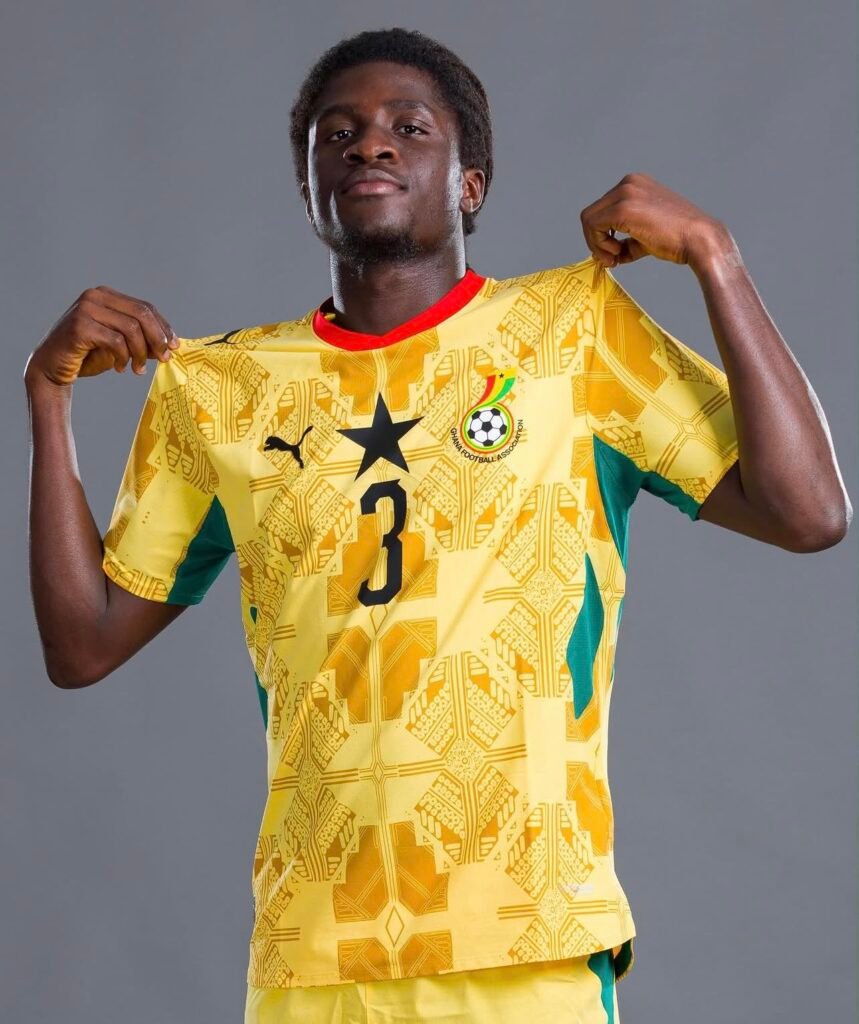
In the dying embers of the game, the goal came. Caleb Yirenkyi brutally finished off a brilliant team goal that involved Brandon Asante and Antoine Semenyo in the build-up.
That erupted the vuvuzela sounds, supported by firecrackers; truncating the sleep of both young and old, and those that have jokingly expressed fears about watching the Black Stars since Asamoah Gyan’s ill-fated penalty miss against Uruguay in the 2010 edition in South Africa.
The victory is no indicator that the team is suddenly up there or has ‘arrived’ as is touted in the local parlance.
Admittedly, there is a lot of work to be done and the focus now would certainly be on some of the flaws identified in the first game.
But more importantly, the celebration witnessed across several viewing centres and homes; the joy seen among friends, family and ordinary fans sends one message that Ghanaians still love their national team.
Passing through town some hours after the game, a lot of people were seen shopping for all manner of paraphernalia, obviously to be counted among the real faithful.
And while the fans celebrate, one question resonates across-who is Caleb Yirenkyi?
Such questions may be genuine because he is among a host of the players that are not so familiar to Ghanaian fans because they did not feature for our local clubs in the Ghana League.
For this purpose, this column offers a piece of information about him.
Caleb Marfo Yirenkyi is a midfielder that plays for Danish Superliga club, Nordsjælland.
He was born in Bechem, Ahafo Region, and a product of the Right to Dream Academy, which he joined in 2017 at the age of 11.
Yirenkyi received his first call-up to the Ghana senior national team for the 2025 Unity Cup.
Gradually, he has become an unsung hero in the team having scored just two vital goals for the Black Stars – one against Wales in the last international friendly and the second against Panama.
That said, the Black Stars’ victory seem to have rekindled the faith and belief in the team and Ghana football entirely. This feeling must be sustained when they face England in what could become a defining moment in the campaign.
By Andrew Nortey